




Influencer
How Luke Elsman Made Gym Humor Commercial for Brands Like Gymshark, Helimix, and Ghost

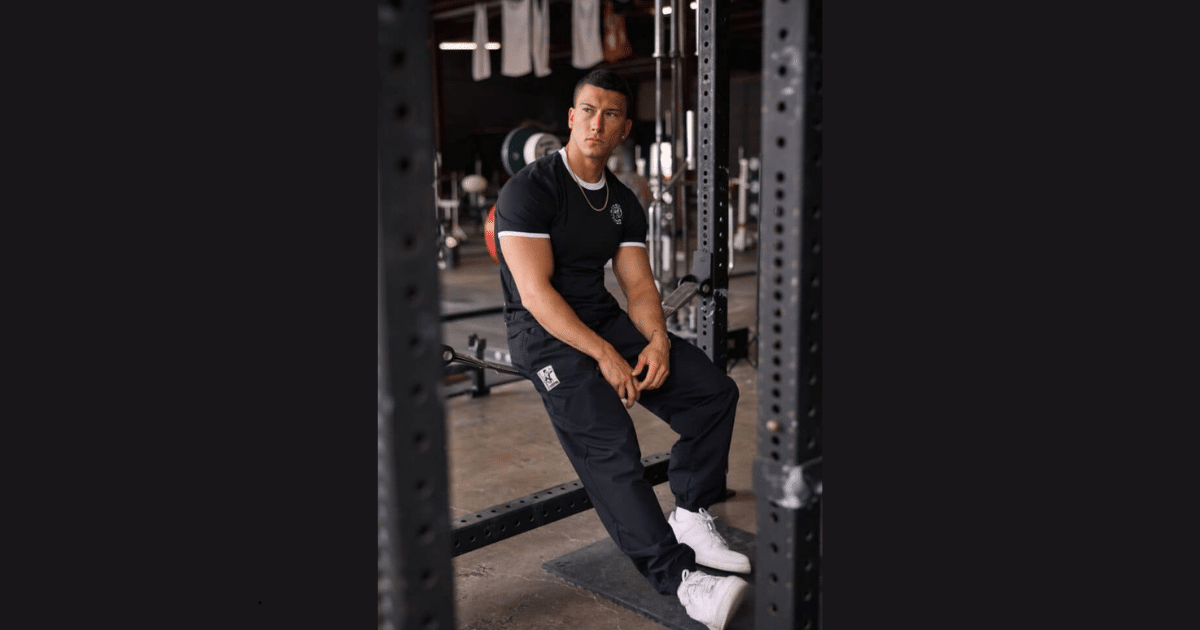
A few years ago, a mentor told Luke Elsman that no major brand would ever want him. He was, at the time, well into building an audience around gym humor, a niche the industry had largely written off as uncommercial. Today, he is a Gymshark athlete, a brand partner to Shop GLD, Helimix, and Ghost Lifestyle, and a creator with 2.5 million followers who has turned comedy into one of fitness’s most brand-friendly propositions.
Luke, 28, is a fitness creator and entrepreneur based in New Jersey. Born with Puerto Rican and German roots, he grew up in the weight room before most of his peers had a gym membership, shaped in no small part by a father who lifted in the basement not for aesthetics or competition, but simply because he loved it. That unglamorous, private relationship with the sport became the template for everything Luke would eventually produce online.
Since 2014, he has posted across YouTube, TikTok, and Instagram. In 2021, he shifted toward comedy, embedding relatable skits into gym content at a moment when fitness creators were largely chasing transformation aesthetics.
“I always just wanted to be able to create something big on social media that was true to me and true to my passion,” he says.
What Luke built instead was something rarer: a creator identity durable enough to survive the algorithm, credible enough to attract major fitness brands, and honest enough that he has never felt like a fraud doing it.
A Basement, a YouTube Channel, and No Backup Plan
Luke’s entry into content creation was not a pivot away from something else. It was an extension of who he already was. His father’s basement gym instilled a philosophy he still carries: lift because you love it, not because someone is watching.
“He definitely still trains with that same mindset,” Luke says of his father. “That’s what got me into the gym. I started training for the love of weightlifting and the love of breaking new personal records.” When he eventually gravitated toward bodybuilding alongside strength training, he saw it not as a departure but as an evolution. “I’m not a competitor, but I compete with myself.”
By 2014, he was documenting that private obsession on YouTube. Audiences were small, and revenue was nonexistent, but Luke found the work itself sufficient. The early community, however modest, confirmed something.
“Even with a small community, it really motivated me just to have a few people tell me, you got me into the gym, you motivated me to get a gym membership,” he says. “That’s what matters the most.”
The Comedy Pivot That Was Never Really a Risk
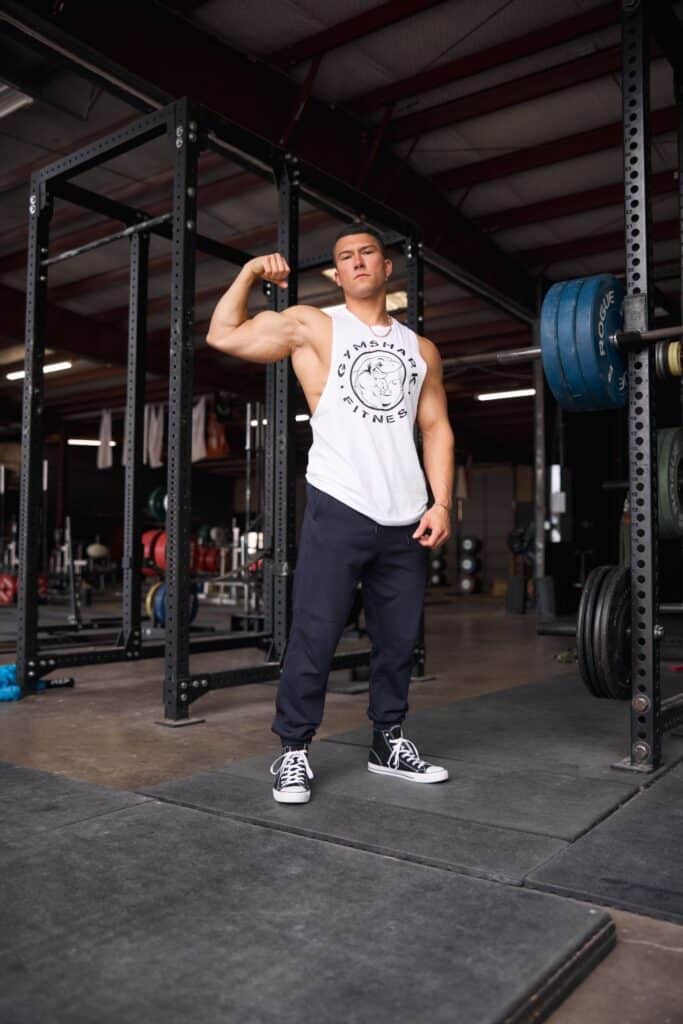
In 2021, Luke shifted into comedy, producing gym skits that leaned into stereotypes, relatable scenarios, and character work. From the outside, it read as a calculated rebrand. From Luke’s perspective, it was barely a bet at all.
“When I did these things, it was never about, ‘this needs to work,'” he says. “I’m going to do it anyway. Enjoy it. And if nothing comes about it, that’s fine because I at least could say I tried.”
He believes that the move worked because it never required abandoning fitness. Early attempts skewed too comedic, but Luke quickly found the merge point, keeping the gym as the setting, the subject, and the anchor. A video pitting a gym employee against an MMA fighter crossed 18 million views on YouTube.
He is precise about the order of his identity and why it matters. “I think first for me comes the gym. First for me was always the gym and then the comedy,” he says. “Lifting weights is just a part of who I am at this point. For me to stop doing that, it would almost be like, who is Luke Elsman anymore?”
That sequencing is not incidental. It is the positioning argument he makes to every brand he works with. A comedian who lifts is, commercially, someone else entirely.
One Video, Three Platforms, No Exceptions
Luke’s platform strategy is built around a simple premise: the same short-form video belongs everywhere, and adapting it for each platform is a waste he has no interest in.
“There’s no real reason to almost waste a video if that video’s on Reels,” he says. “It doesn’t mean you can’t find a different audience that’ll enjoy it on YouTube Shorts as well, because everyone has their platform of choice.”
Long-form content, by contrast, stays exclusive to YouTube, where Luke produces extended challenges and training content. It is the platform he identifies as the hardest to grow, and the one he credits short-form comedy for cracking.
When he reflects on what actually built his community, he is straightforward about the limits of trend-chasing. “I started on trends. I definitely did on TikTok,” he says. “But when I feel like I started to gain more of a community and people really started to like my stuff is when I make original content.”
What Brands Get Wrong When They Send a Brief
Luke’s partnerships with Gymshark, Shop GLD, Helimix, and Ghost Lifestyle share a common thread: none of them required him to stop being himself. He measures brand briefs first by how much creative latitude they offer, and most fall short of what he considers functional.
“Some brands want you to do everything a certain way, very strict, sort of like strip some of the humor out because it’s not necessarily ad-friendly,” he says. “And some brands are really cool to work with and kind of give you that freedom and say, hey, listen, we trust you.”
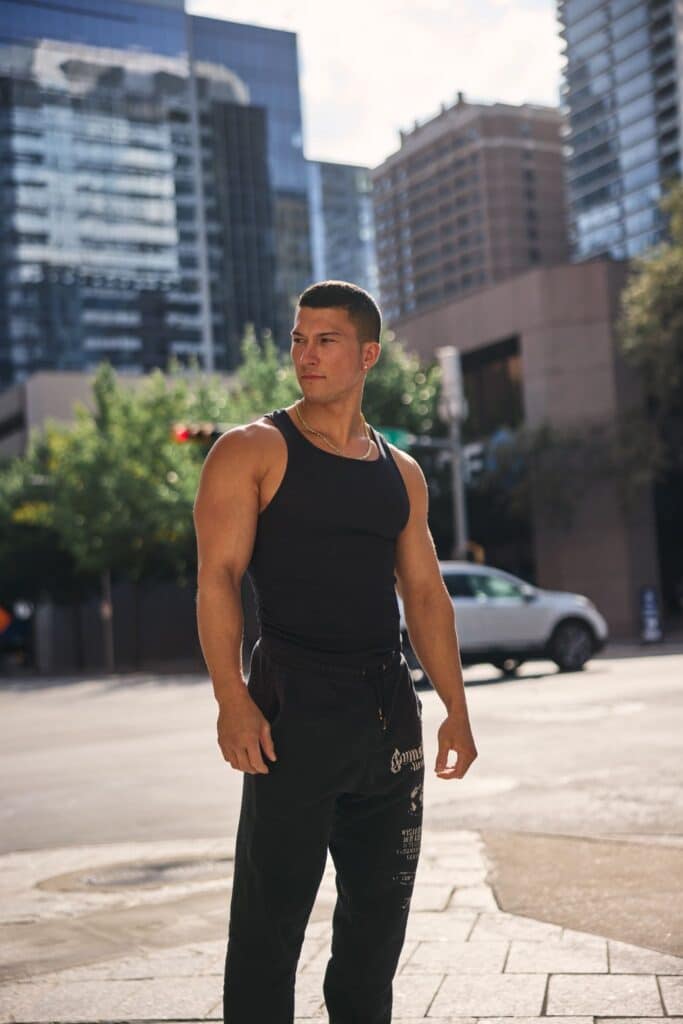
He promotes sponsorships within skits rather than through standalone advertisements, integrating products into the scenario itself. Gymshark, for instance, appears in his videos as the clothing he actually wears, not as an interruption. He is equally clear about what he declines. Offers that feel inauthentic to his identity get rejected regardless of the fee.
“I don’t want to feel like a fraud,” he says. “I don’t like that feeling of feeling like I’m just doing it for the money.”
What makes a brand relationship last, he argues, comes down to who you are actually dealing with internally. “If you can build a relationship with the internal teams and the owners, that’s what makes it last,” he says. “Loyalty, of course, but loyalty can only go so far.”
Why Relatable Outlasts Aspirational in Fitness
The fitness creator space is crowded with miraculous transformation content, aggressive supplement sales, and physiques that function more as advertisements than education. Luke built his audience explicitly in opposition to that model, and he has a theory about why the approach has held.
“I’ve been working and doing my authentic approach for multiple years, and it’s not nearly as exhausting as if you’re putting up a fake face and being just a salesman,” he says. “Because I never wanted to build a social media following to be a commercial.”
He acknowledges that some brands still chase metrics over authenticity, prioritizing follower counts and short-term sales figures. But his reading of where that approach leads is direct.
“People burn out because it’s not them. They don’t love doing it, but it’s something that, yeah, I can do this for a year,” he says. “I just don’t think that approach is as sustainable.”
His own content conversion logic follows the same thread. Rather than hard-selling, he creates conditions over time in which his audience chooses to support him. “I think that over time people become a fan of you and they’ll want to support you even if they don’t necessarily care about the brand,” he says.
Building Something That ‘Lives Past Luke’
A decade into content creation, Luke is focused on what comes next, which, notably, he is not willing to name yet. He has been developing something outside his existing content and fitness presence, a project he describes with unusual care.
“I want to build a brand that can live on past Luke,” he says. The ambition implies something his current model does not guarantee: a business that does not require him to keep showing up.
He has also expanded into coaching through a collaboration with Xeela® Fitness, a three-month transformation program that uses AI to personalize meal guidance, training plans, and progress tracking. The podcast he co-hosts, “Thinking with a Pump,” extends his reach into long-form conversation with figures from fitness, business, and social media. Each extension points in the same direction: depth over volume, ownership over reach.
What he describes as his goal is not a follower count or a revenue figure. It is something closer to the reason he started. “I just genuinely thought, because I felt like I loved it more than most people, that I could get to that level,” he says, recalling the YouTubers he watched before he became one. “They’re making a life out of doing what they love, and this is what I love as well.”
“I’ve gotten to a point where I’m living part of the dream that I’ve always dreamt,” he says. “And I don’t think it’s over.”
Photo credit: Gymshark
Subscribe to Our Newsletter
Check Out Our Podcast