


Strategy
Ashley Brock Says Creators Need Paid Media Skills as Organic Reach Weakens

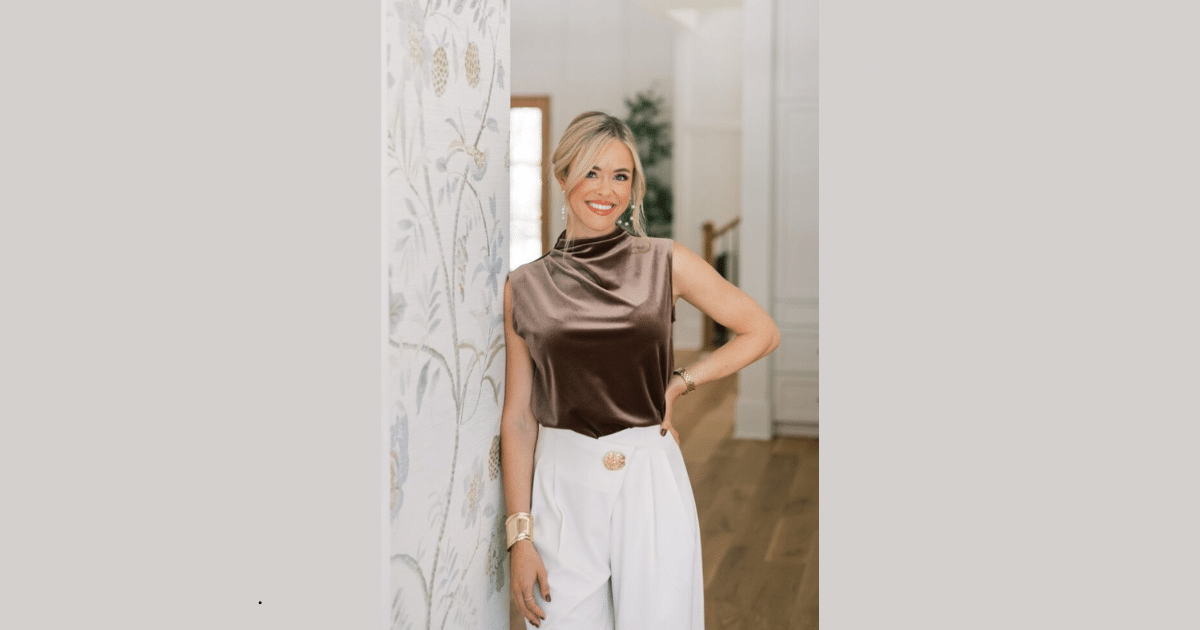
Organic reach built the Creator Economy. Ashley Brock believes it won’t sustain it.
As organic distribution becomes less reliable, the Atlanta-based founder of Paid Ads Academy argues that creators and entrepreneurs who cannot manage their own paid media are heading toward a structural ceiling.
“My clients are coming to me saying, ‘My leads are down, my sales are down,’” Ashley says. “And you have to run ads. You have to run ads on Pinterest, Amazon, and other platforms. Organic is not going to last.”
Ashley launched Paid Ads Academy in May 2022 after more than a decade inside agencies and media companies, where she managed upward of $200 million in ad spend for Fortune 500 clients, worked directly with CMOs, and taught digital marketing at General Assembly. The company, now a team of roughly 15, reported about $200,000 in its first year, grew to $1.4 million after hiring a team, then hit $7 million the following year. Ashley says the business is now tracking toward $10-$12 million.
Rather than running ads for clients, Paid Ads Academy teaches entrepreneurs and their teams to bring that function in-house across Google, Meta, YouTube, TikTok, Pinterest, LinkedIn, Spotify, Amazon, and what Ashley describes as emerging ChatGPT ads.
The Agency Model’s Structural Blind Spot
Ashley’s critique of the outsourced ads model is not about quality. It is about incentives and access.
An agency managing ten accounts cannot give any one client the attention or data visibility that an in-house operator can. “They can’t see the sales that are rolling in today,” she says. “They can see what’s in the ads manager, but they can’t see what’s behind the scenes. When you can see behind the scenes and know how it connects to the ads, it gives you deeper access to the data that lets you make better decisions.”

The other structural gap is risk tolerance. Agencies default to incremental budget increases, typically 10% to 15% at a time, because they are managing liability across many clients. An entrepreneur operating solo can move differently. “If you can tolerate risk, you can make bigger gains way more quickly,” Ashley says. “There are fewer people you need approval from. You just say, ‘I approve. Let’s make the change.’”
She describes her company’s own growth as a proof point. “How can someone go from $200,000 to $12 million in four years?” she says. “Because we 10x’d the budget and did the illogical thing that chatbots won’t tell you to do.”
Platform Literacy Is Becoming a Competitive Moat
One of Paid Ads Academy’s core arguments is that treating all ad platforms as interchangeable is the most expensive mistake a business can make.
Ashley maps platform selection to business type. A brick-and-mortar should direct the majority of budget to search-intent platforms, primarily Google or ChatGPT, where purchase intent is high. An online business might find YouTube, TikTok, and Instagram more effective as primaries, with search as secondary. “You need to be where they are when the intent is the highest,” she says.
The depth of expertise required per platform is also expanding. Rather than relying on one expert coach, Ashley now staffs specialists by platform, recently bringing on a Meta, Funnels, and AI Performance Coach, and currently hiring a Director of Google and YouTube Strategy. “The best investments are in experts in all of these areas,” she says. “Having access to all of that is what differentiates what we do.”
For product-based businesses operating on TikTok Shop, Instagram Shopping, and YouTube Shopping, she emphasizes creator-led creative over product-only ads. “I want to see people in the product, and I want to see the owner,” she says. “Who are you? Why did you start this business? The story differentiates product and service businesses.”

The Influencer Economy’s Paid Media Knowledge Gap
The creator-brand partnership model has a measurement problem that Ashley traces directly to an information asymmetry.
Brands often assess creator value through follower counts. Ashley argues that platforms, which have access to performance data at scale, understand something most brand marketers still do not: trust and community behavior matter more than raw audience size. “Someone could have 150,000 followers with not a great audience versus 50,000 with a strong audience,” she says. “There’s a gap in what credibility actually costs.”
The breakdown in creator-brand partnerships, she says, usually happens at two points: brands undervaluing the creator’s existing relationship with their audience, and creators not understanding enough about paid media to negotiate informed terms. “A lot of times brands are taking advantage of influencers,” she says. “They’ll pay them something, then spend six figures on the ad that’s actually converting. The gap is off.”
Her advice to brand CMOs evaluating a creator who runs their own paid media: look at the ads library before signing anything. “You want to make sure the influencer is really sold on what they’re selling,” she says. “You can’t sell what you’re not sold on.”

Why AI Does Not Change the Human Calculus
Ashley runs Paid Ads Academy as an AI-first company, using it daily across operations. But she draws a line at what automation can replace in advertising decisions.
“AI will say, ‘Stop spending money, this is not working,’” she says. “The human will say, ‘No, if you don’t run this ad, people will never see these other ones. AI is going to see you spend a thousand dollars and get no sales. I’m going to see that you got a thousand dollars, and now all those people you’re retargeting and they will buy. Don’t pause that ad.’”
The same applies to knowing when to intervene with a client or student. “AI and automation can often indicate when personalization is needed,” she explains. “If someone hasn’t been joining calls, they’re struggling. That’s the perfect time to incorporate a human connection.”
Her framing of AI as a signal layer rather than a decision layer is part of a broader argument she makes about skill ownership: tools can accelerate expertise, but they cannot substitute for it.
Building Toward a New Default
Ashley’s longer-term thesis is that outsourcing paid ads is a default that will eventually shift, particularly as the gap between organic and paid performance widens, and more entrepreneurs see in-house capability as a competitive asset rather than an operational burden.
“What it looks like is people just defaulting to the new automatic of acquiring a skill versus outsourcing it,” she says. “Ads don’t just bring you clients. They bring you the team.” She points to her own hiring: several members of her 15-person staff found the company through ads on LinkedIn, Instagram, and TikTok.
Her target for Paid Ads Academy is $100 million in revenue. She describes the path there as tied to becoming a household name in ads education, the way other training brands have in adjacent spaces. Whether that accomplishment arrives on her projected timeline depends, in part, on whether the Creator Economy learns what she learned inside agencies: that reach without distribution control is a temporary advantage.
“Divorce yourself from how long something should take,” Ashley says. “There is no boundary or limit. You can achieve things that are abnormal.”
Subscribe to Our Newsletter
Check Out Our Podcast