


Strategy
From 800 Attendees to 32,000: How Dream Con Became a Creator-Led Pop Culture Platform

Eight years ago, four organizers behind Dream Con spent a full year planning an event in Waco, Texas, and sold 800 tickets. A few years later, the convention sold out its first wave in ten minutes. Last year, it drew 32,000 people to Houston, turning a grassroots anime and gaming gathering into one of the fastest-growing creator-led pop culture events in the U.S.
Founded by John Newton and Mark Phillips, with support from Jay Sutton, Trish Phillips, and the broader RDCWorld collective, Dream Con began as a response to a gap in representation at existing conventions. It now spans gaming, anime, sports, music, film, and comedy, with partners including YouTube, Twitch, Coca-Cola, and Under Armour.
“Before Dream Con was even created, there was an interest in seeing more representation from our community in these different spaces,” John says. “Mark basically said, ‘What if instead of trying to find other places to integrate into, why not just create our own and bring people to us instead?’”
Dream Con returns to Houston’s George R. Brown Convention Center for its second consecutive year, July 10-12, 2026.
Houston as Home Base
Houston’s reception in 2025 stood apart from every previous city. “We saw more support from people who were already in the city,” John says. “Houston’s City Controller welcomed us with a certificate, and there were opportunities to do different things that I didn’t even know were possible.”
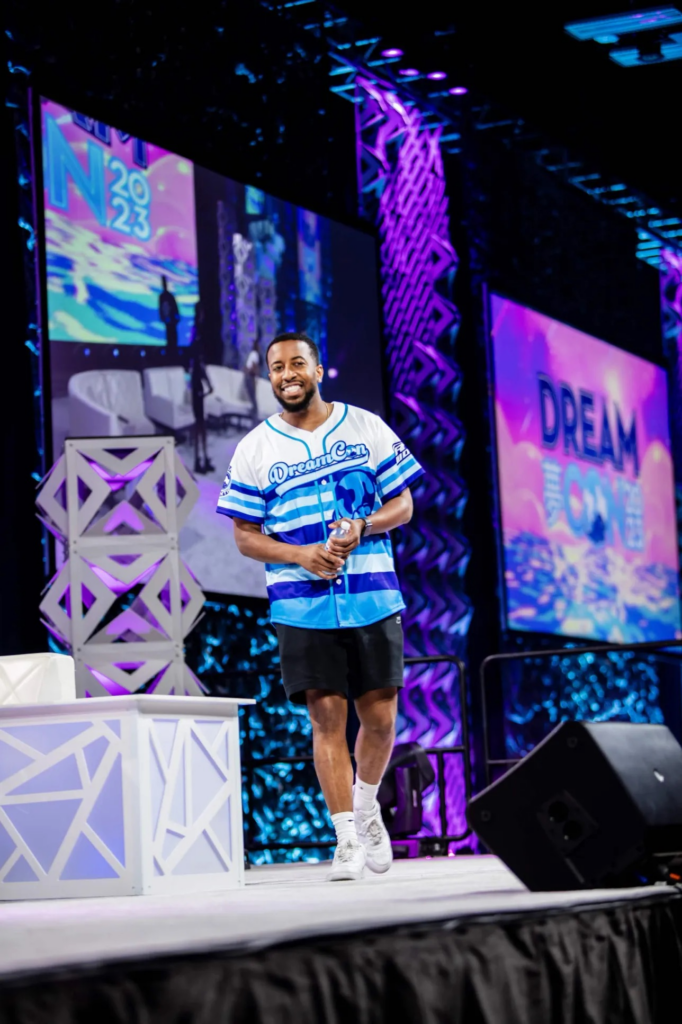
Photo: John Newton
The city’s cultural density and demographic profile, which John describes as “very diverse” and “very hustle-oriented,” made it a natural fit for Dream Con’s audience.
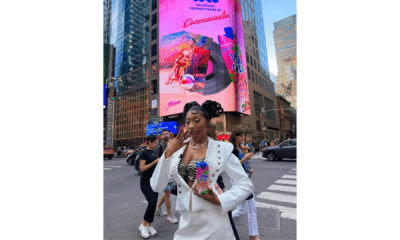
The 2025 edition offered an early signal of the platform Dream Con is building. Megan Thee Stallion attended, delivered a panel, and announced her involvement in creating an anime. “That was like a great opportunity for us to be the space where she was able to feel comfortable to say that,” John says. The announcement extended Dream Con’s reach well beyond its physical footprint.
Megan Thee Stallion At Dream Con 2025
The team frames the event’s long-term relationship to Houston in terms of legacy, pointing to AstroWorld as a reference point: something Houstonians remember as definitional to their city. “We would like for Dream Con to be the event where the dreamers can come, talk, and meet somebody who could really change their life,” John says. The ambition extends beyond the convention weekend.
The team sees Houston as a potential launchpad for whatever Dream Con becomes next, whether that means a touring model, additional programming throughout the year, or international expansion. “Getting into this city could be the source of the next pivot for whatever goes beyond,” John says.
Scaling Intimacy: The Operational Challenge of a 30,000-Person Event
The jump from 6,000 attendees in Arlington to 20,000 in Austin was the first moment the event’s original character came under real pressure. “It was just an extreme amount of growth,” John says. “Growing pains begin to be involved.” As Dream Con’s footprint expanded further, the event’s core appeal, the direct access between fans and creators, became harder to protect. Early editions were built around proximity. That dynamic grew more complicated as the venue and headcount scaled.
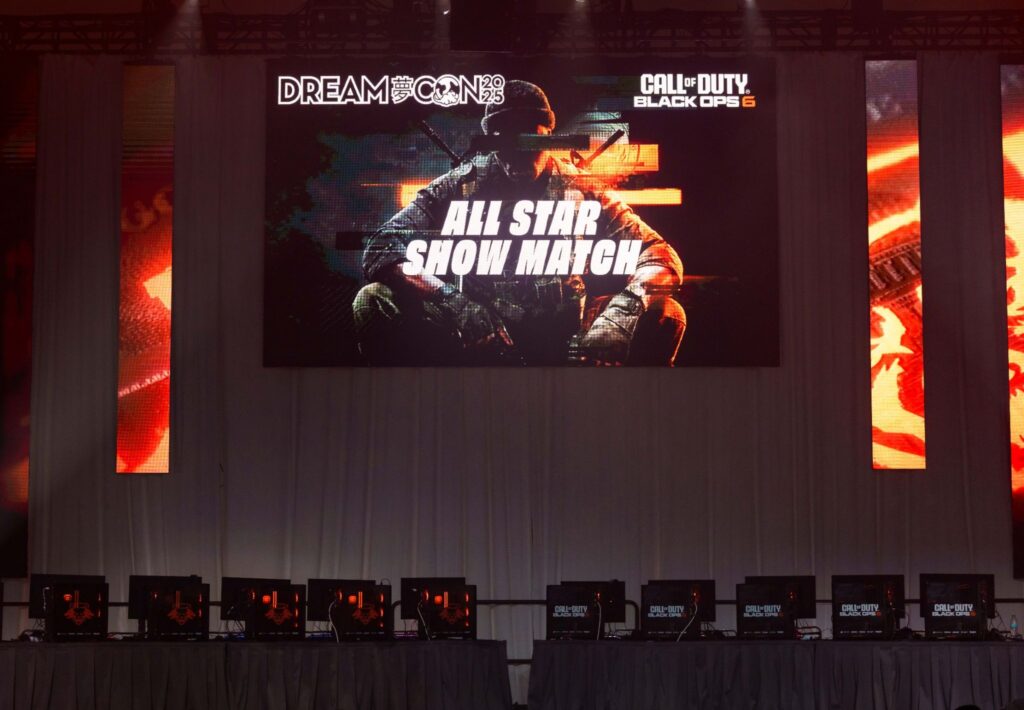
Photo: All-Star “Call of Duty” Game
“The earlier years of Dream Con were really focused on the intimacy between the direct access that attendees had with the creators and talent,” John says. “Now, you kind of have to build your own schedule in the app. You really have to pick and choose what you want to go to.”
Managing audience expectations at scale has become a deliberate communications challenge. When a room holds 1,000 people, and 30,000 are attending, some will miss the sessions they came for. “We basically overwhelm you on purpose, just in case you don’t get to certain things,” John says. “You should come because the foundation is just being there, dream chasing, and engaging in all the other things.”
Line management, fire marshal coordination, and room turnover have become significant operational variables. “There are just so many things that you start to realize and learn over time,” John says. The event’s team has developed increasingly structured systems to handle what he describes as the recurring learning curve of each new edition.
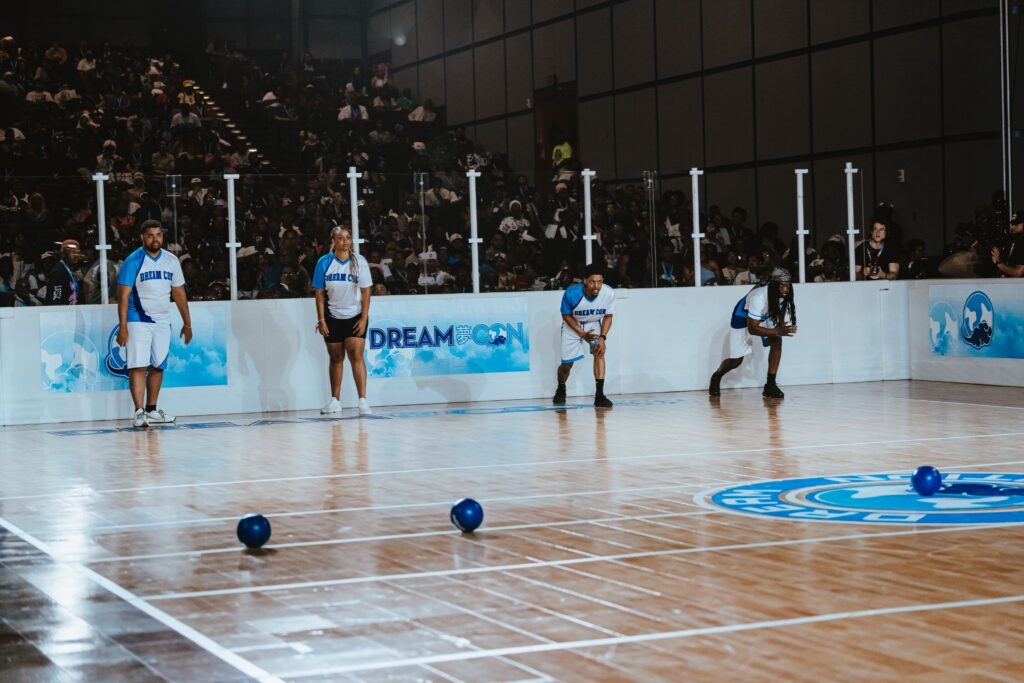
Photo: All-Star Dodgeball Tournament
Creators as the Convention’s Core Architecture
From its founding, Dream Con built its programming logic around creators rather than treating them as marketing ornaments. The initial formula was straightforward: book creators with genuine interest in anime and gaming, then let their audiences follow. What emerged over time was a layered creator infrastructure that extends beyond headliners.
Dream Con now runs a creator application program, offering smaller or overlooked creators a path into event programming. “There might be areas where we need more creators, and it kind of gives us an inventory of people that we can look at,” John says. The event also partners with YouTube and Twitch on dedicated creator programming, in addition to hosting educational workshops designed for creators who don’t have access to peers or industry mentors in their daily lives.
“This is the time to get advice from creators who are successful and understand the ins and outs of different areas of interest,” John says. “Maybe they can’t find it anywhere else because they don’t necessarily have other creator friends just readily present.”
The team treats Dream Con itself as a creator entity. “When I think about Dream Con’s social strategy, it’s just easier to think of Dream Con as a creator,” John says. “It’s an entity that has a social presence that drops content and updates, and there just happens to be an IRL component.”
Programming Like a Film Production
When John explains how Dream Con builds its annual lineup, he reaches for a film analogy: the event is the movie, the talent are the actors, sponsors are the funding, and attendees are the opening-day audience.
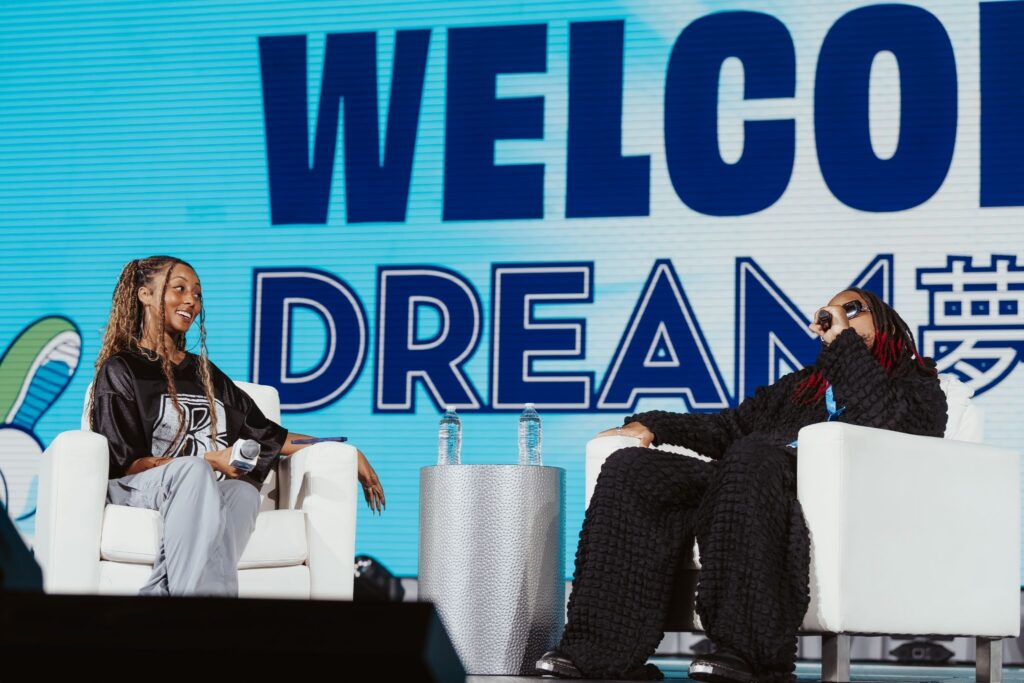
Photo: “Breaking the Mold” Fireside Chat
“There are a lot of similarities between building Dream Con and creating a film,” he says. “This programming event, this is the movie. Sponsors, that’s the funding. The attendees are the viewers, showing up in person.”
That framework shapes talent selection. Rather than booking names purely by follower count or cultural cachet, the team maps creators to specific programming pillars, then asks who fits each component best. “We try to be intentional with stepping a little bit further out, exploring different areas, and finding new faces,” John says. “People are going to get older, people have other things going on. We want to make sure we continue to keep our cast fresh.”
Toward an Industry Platform
The 2026 programming reflects how Dream Con’s ambitions have expanded. A Live Voice Acting Talent Search, developed in partnership with Martian Blueberry co-founder Carl Jones, gives emerging performers a direct pathway to professional opportunity, with the winner featured in an upcoming Martian Blueberry project.
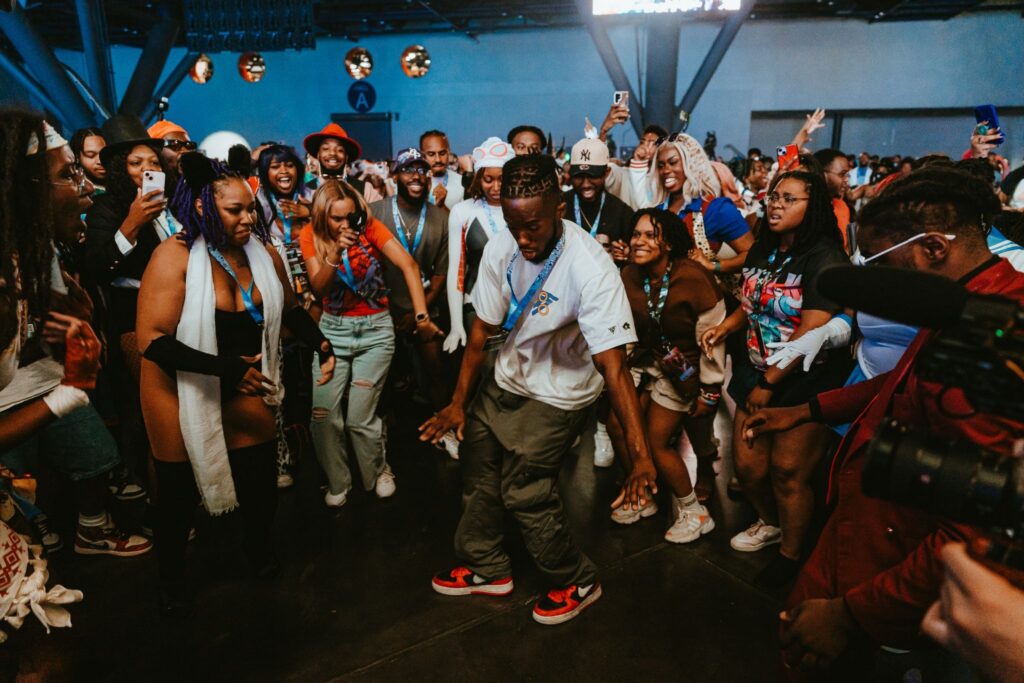
Photo: Bae Brigade Battle
A Music Star Search offers aspiring artists the chance to open at Touch Grass Music Fest. An expanded film festival invites creators to submit work for screening at Dream Con, with prizes of up to $1,200.
On the talent side, six Black Power Rangers spanning three decades will appear together for the first time at a single convention: Walter Jones, Karan Ashley, Nakia Burrise, Brandon Jay McLaren, RJ Cyler, and JT Fite, representing every era of the franchise from the original 1993 Mighty Morphin series through the Lionsgate reboot.
Emmy-nominated producer, actress, and writer Issa Rae will take the main stage for a fireside chat, her first appearance at a convention of this kind. Voice actors Cree Summer and Phil LaMarr round out the talent roster. A first-of-its-kind Play-to-Earn badge model lets competitors earn additional days at the event by advancing in tournament brackets.
“Dream Con is more than a convention,” John says. “It’s a room full of people who are all chasing something. We want to make sure that when they walk through those doors, they leave closer to whatever that thing is.”
Looking further out, the team sees potential for international expansion, a touring model, and adjacent production ventures. “Can it branch out to other entities? Can we create a production company? Can we have some sort of a tour where we hit each of these cities with certain pieces of Dream Con throughout the year?” John says. “Dream Con is very flexible. We have a really great fan base and people who are willing to give things a shot.”
Building What Lasts
Eight years in, the Dream Con team sees its guiding principle as staying relatable to the people who needed it most when it started. The event that was once searching for representation at other conventions now faces the opposite problem: managing the expectations of a growing audience that treats the weekend as the anchor of its cultural calendar.
“Now that selling tickets isn’t really the issue,” John says, “it’s more about figuring out how to stay relatable to the smaller guys, because we were all there at one point.”
The expansion of Dream Con’s programming, its creator development infrastructure, and its emerging role as a platform for industry announcements all point toward the same underlying logic: build something that gives dreamers a place to show up and be seen, and let the commercial layer follow.
“We’re trying to change the world,” John says. “This is really our way, one of the many ways that we feel like we can create an elastic impact that can hopefully live beyond even our lives currently.”
All photos are from DreamCon 2025
Subscribe to Our Newsletter
Check Out Our Podcast