





Strategy
‘Race to Glory’: How FOX One Used Creator Trust to Reach Gen Z at the FIFA World Cup

FOX One’s challenge at the 2026 FIFA World Cup wasn’t distribution. As part of FOX Sports’ exclusive U.S. coverage of all 104 matches, the platform reached viewers who already had access. What it needed was a generation of viewers it had never reliably reached, and a way to get there without content that looked or felt like advertising.
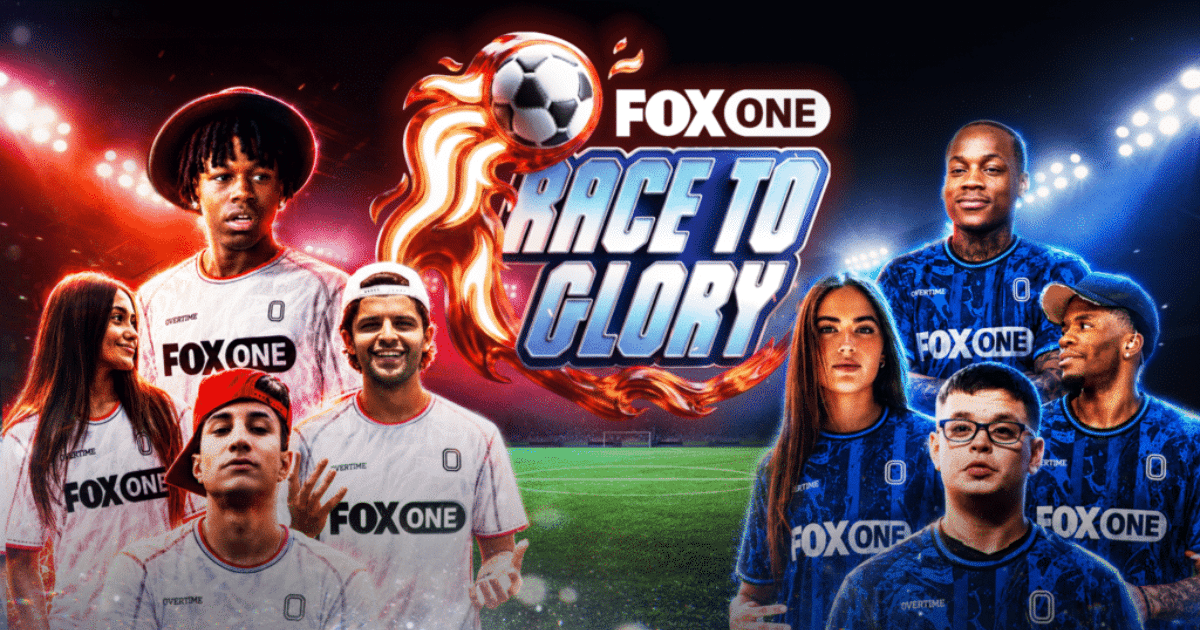
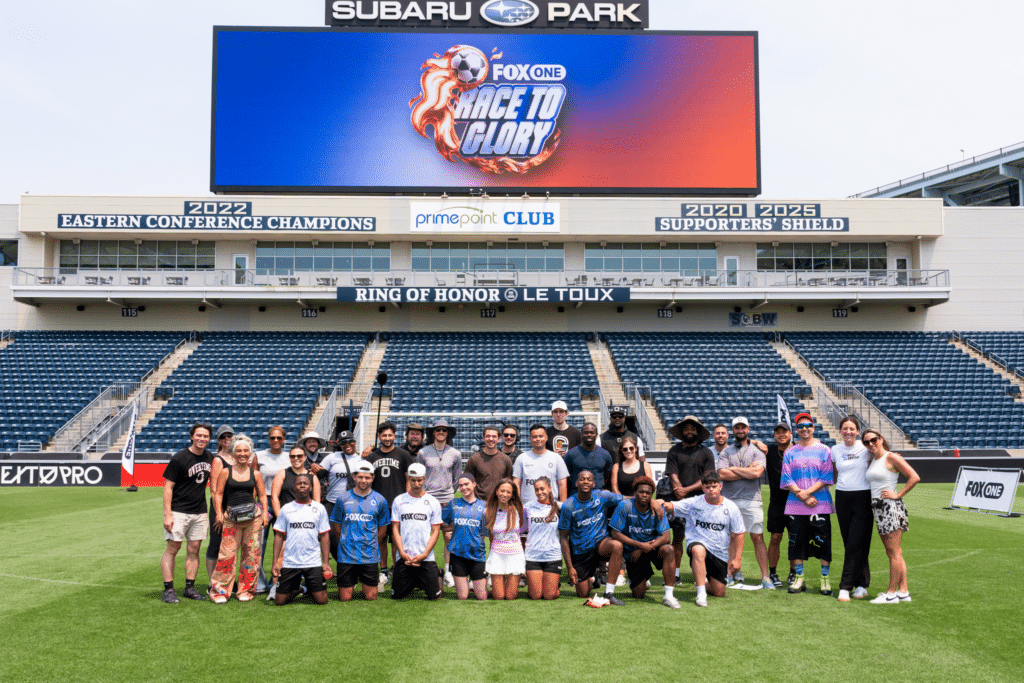
“Race to Glory,” an unscripted short-form creator competition produced by Brooklyn-based Overtime, was the answer FOX One landed on. The social-first sports media company built the series for FOX One’s streaming platform over six weeks across four World Cup host cities, fielding eight streaming personalities in soccer-adjacent challenges across dedicated social channels. The campaign ended with 156 million views, 8.6 million engagements, and a 5.5% engagement rate across over 1,200 posts.
“It was audience math,” says Annie Leanse, Senior Director of Subscriber Acquisition and Brand Media Marketing at FOX One. She had sent a formal request to multiple potential partners seeking something capable of breaking into a younger demographic; Overtime’s existing audience was a direct demographic match, and the company’s pitch moved well beyond a standard influencer activation.
Peter Olson, Overtime’s Senior Director of Content, oversaw “Race to Glory’s” creative production and held everything the series made to a single standard. “So much of the time it’s easy to end up creating something that ticks these boxes and satisfies this promotion,” he says. “But you actually take a step back, and you’re like, does anyone actually want this?”
By the close of the World Cup window, the series had generated more TikTok views than every Major League Baseball team, every Major League Soccer team, and 28 of 30 NBA teams during the same period, according to Tubular data cited by Overtime.
Reach Was Not Enough
FOX One ran traditional paid media across digital channels throughout the World Cup, in parallel with “Race to Glory.” The two strategies were solving different problems.
Annie draws a precise line between scale and audience fit. “Scale isn’t the same as relevance to the younger demo,” she says. She was looking for content that felt native to the platforms’ younger audiences already used, not advertising that interrupted their feeds. “That’s the gap Overtime closed,” Annie says. “Not more reach, but the right reach, with voices that audience already trusts.”
FOX One was not purchasing distribution it lacked. It was accessing credibility with a demographic that tunes out unfamiliar sponsored content at a rate paid media cannot offset.
Streamers, Not Soccer Stars
Overtime’s candidate list had no traditional sports credentials, and that was the point.
Peter’s content team built the lineup by analyzing which streaming personalities had already generated positive audience responses on Overtime’s own channels. He explains that Overtime’s Gen Z and Gen Alpha viewers spend hours daily with streamers, a level of engagement that has elevated the category into something that functions like celebrity with this demographic. “Streamers are the superstars to our audience in a way that we’ve never seen before,” he says.
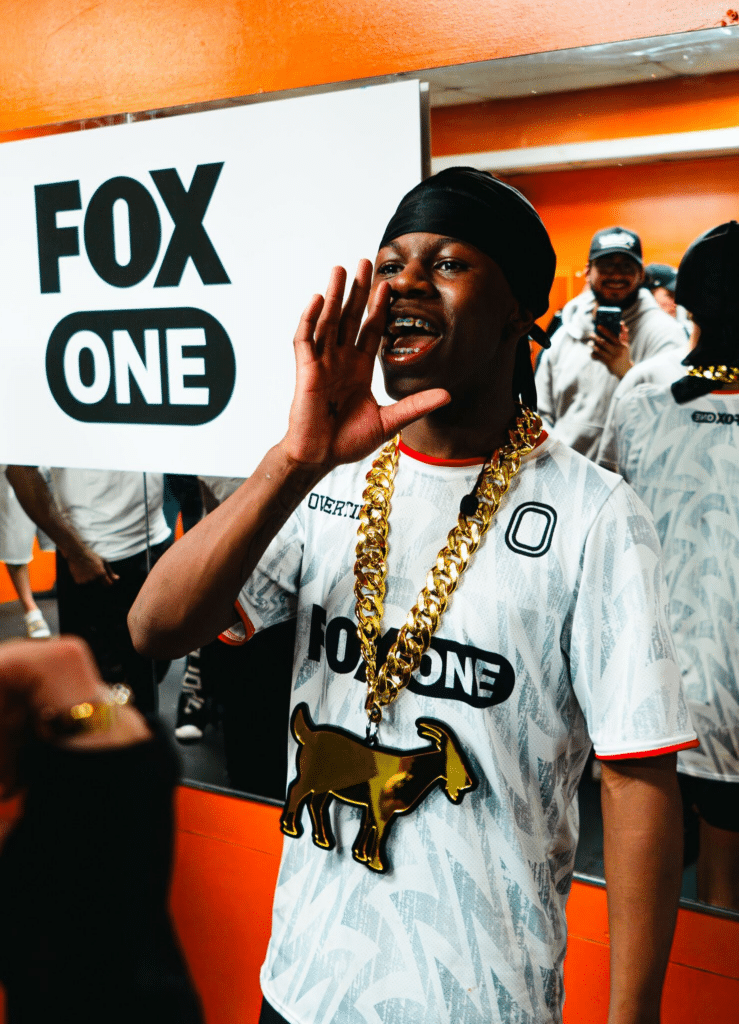
The final cast included Rakai and Tylil as team captains, Sketch, winner of best sports streamer at the 2024 Streamer Awards, and five others drawn from the same world. None of them had conventional soccer credentials. Overtime submitted its preferred list; FOX One approved every name without modification.
For FOX One, the logic was the same as Overtime’s: this was the audience, and these were the people it already watched. “FOX One thankfully just greenlit all of them, which I think was incredibly courageous,” Peter says.
Built for Two Audiences
Roughly half of the challenges in “Race to Glory” involved soccer. Annie describes the balance as a way to position the show for two audiences simultaneously: World Cup followers who might engage with soccer content, and the existing fanbases of the streaming personalities who had no particular connection to the tournament.
“We also didn’t completely rely on the tournament,” she says, so that a viewer encountering the series in their feed would find it engaging regardless of whether they were following the Cup.
Peter’s clearest example is the Diamond Gym challenge. Diamond Gym is a New Jersey training facility known for demanding programming and two prominent trainers. Months before “Race to Glory” began filming, Rakai and Tylil had separately visited the gym. A storyline emerged from those visits: Rakai quit the workout and left; Tylil stayed. The show brought both back without telling them in advance. “When we brought them back, and they took off their blindfolds and realized they’re at Diamond Gym, it was like the sequel that everyone wanted,” Peter says.
Trust the Talent
Overtime planned approximately 30 challenges before filming began and adjusted the lineup as production progressed. The structure had guardrails; creative execution largely stayed with the talent.
“These streamers are the best in the world at making content,” Peter says. “If we give them the freedom to operate in a way that they feel natural, then we’re going to get the best moments.” When contestants found unintended routes through challenge courses, the production team leaned into the results rather than ruling them out, treating unscripted outcomes as content rather than problems.
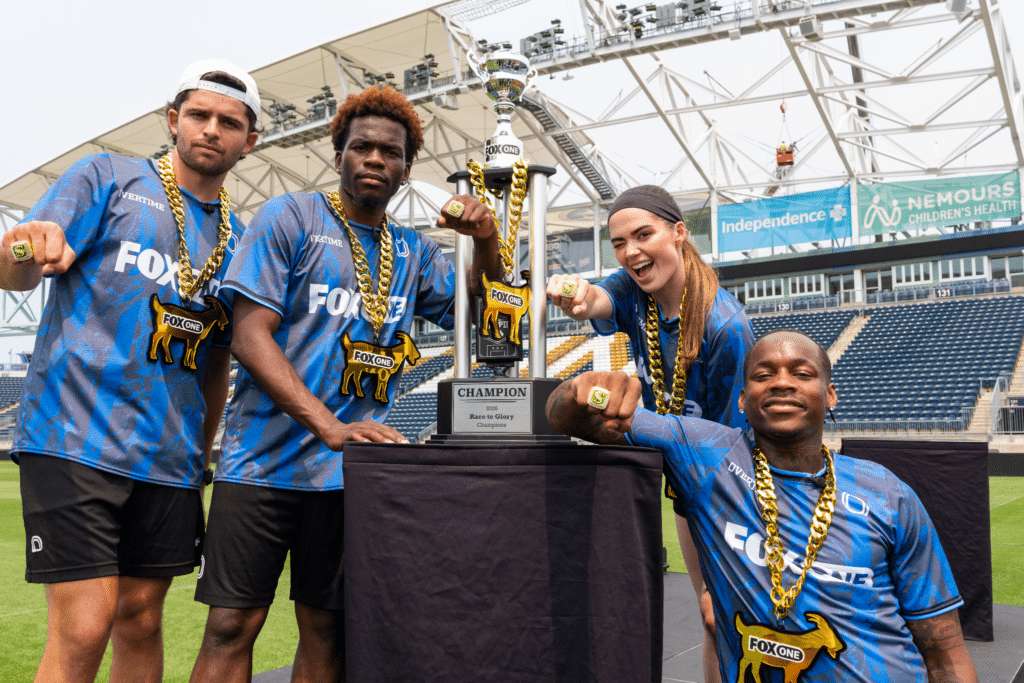
Distribution across three account layers reinforced that creative philosophy. Overtime organized the series across the “Race to Glory” account, dedicated team accounts for Mud United and Aura City, and Overtime’s main channels.
On TikTok, Peter was not concerned about fragmentation. “The TikTok algorithm is very good at pushing stuff to the right audience, regardless of which account it’s posted on,” he says. The team accounts served a secondary function, giving deeply invested viewers a layer of character-specific content that would not appear on the main channels. “If someone is really deeply invested in the show, they could go to Aura City to get personality content they won’t find on main,” Peter explains.
The Numbers That Exceeded the Pitch
Annie knew by the end of the first week that “Race to Glory” had passed the benchmarks set during planning. Across the full World Cup window, the series produced 38 posts with more than one million views and seven posts with over four million views.
The seven posts clearing four million matched the NFL’s total on TikTok during the same June 1 to July 21 period and exceeded the MLB’s, according to Tubular data cited by Overtime. During that window, the “Race to Glory” account generated more TikTok views than every MLB and MLS team. The Mud United account averaged 70% more views and 60% more engagements per video than the official U.S. Soccer TikTok account, also per Tubular. On Overtime’s main channel, “Race to Glory” posts outperformed U.S. sports media averages by 70% in views and engagements per post.
The engagement rate figure that stood out to Annie was the 5.5% across all branded content. “The fact that we had a 5.5% engagement rate with all of the branding just made me feel like it was such a relief,” she says.
What FOX One Learned From Overtime
“Race to Glory” finished its run with metrics both parties frame as evidence of a replicable model, not a one-time result specific to the World Cup.
Annie describes the Overtime partnership as part of a shift in how FOX One is approaching social distribution. “We know that social is what’s breaking through to consumers more and more,” she says. Her interest extends beyond repeating the campaign’s format to understanding what Overtime’s creator-native production approach looks like from inside, and how FOX One can incorporate it going forward. “How can we be part of a company like Fox and evolve to work with companies like Overtime more and learn from their social strategies?” she asks.
Peter’s view of where sports media is heading treats the formats as additive rather than competitive. Different platforms and content types each serve a distinct part of how younger audiences consume sports, in his reading, and no format displaces another. The question “Race to Glory” leaves open for FOX One is whether that kind of volume, built on that level of creator trust, holds outside the structural pressure of a major tournament. “It all plays a different, but valuable, role,” he says.
Subscribe to Our Newsletter
Check Out Our Podcast