





Strategy
Influencer Marketing Didn’t Blow Up, Five Years of Deal Data Shows It Matured Instead


Influencer Marketing has been called the “Wild West” of digital advertising long enough to become a conference-panel reflex. A new data study from G&B Digital Management and Bobbie, drawing on five years of G&B’s proprietary deal records, makes the numerical case that the description no longer fits.
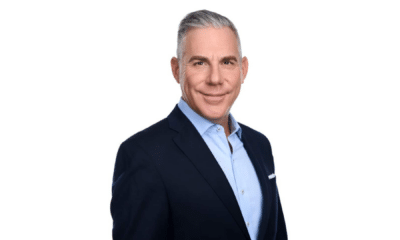
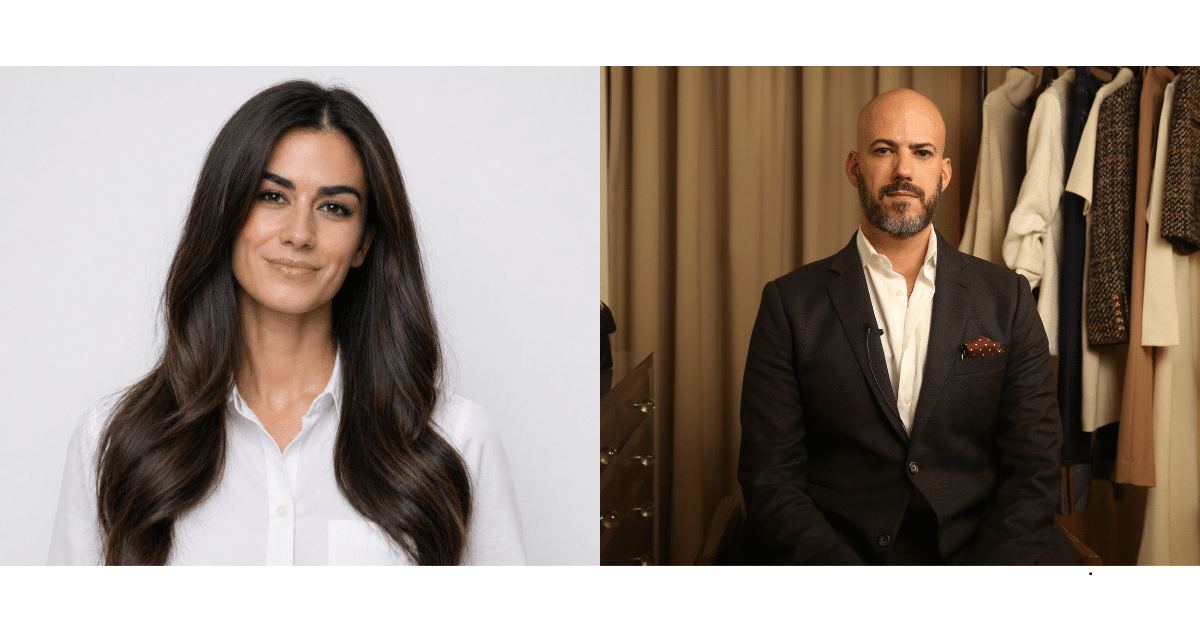
The study is the work of Kyle Hjelmeseth, founder and CEO of G&B Digital Management, and Monica Caponigro, Founding Managing Director of Influencer Marketing agency Bobbie. Kyle founded G&B in Los Angeles in 2015 and has built it into a 120+ creator roster executing more than 3,000 brand partnerships annually across lifestyle, fashion, beauty, and food. Monica, who previously led Nordstrom’s Creator Center of Excellence and served as SVP of Digital Influencer Strategy at Hunter, founded Bobbie in 2025. The New York agency focuses on creator and Influencer Marketing programs for brands ranging from startups to major retailers.
“We’re tired of hearing it’s the ‘Wild West’ of marketing,” Kyle says. “We’ve been here creating the foundation of this place.”
Their report, “Taming the Wild West: The New Laws of Creator ROI,” argues that Influencer Marketing did not blow up overnight. It grew through three measurable structural shifts: rising contract values, compressing deal timelines, and a growing share of repeat brand-creator relationships.
For Kyle, releasing G&B’s proprietary deal data publicly was a deliberate act. He believes talent management firms holding this data have an obligation to share it. “I don’t think anybody from a talent management firm has released its data,” he says. “That would be, kind of, a first.”
HEADSHOTS
From $2,500 to $50,000 for the Same Post
The most direct evidence of change, Monica argues, is what pricing looked like a decade ago. Two creators with equivalent follower counts could quote wildly different rates to the same brand with no shared rationale. “One person might have come to us and said, ‘I’ll charge you twenty-five hundred,’ and then the exact same basically equivalent creator would have been like, ‘I’ll charge you fifty thousand,'” she says. “There really just were no rules and benchmarking because it didn’t exist.”
Kyle describes early brand behavior as “throwing spaghetti against the wall.” His first managed creators would receive outreach spanning luxury labels and fast-fashion retailers in the same week, with no apparent targeting logic. Some brands demanded granular performance data upfront; others sent $50 and some product samples with no stated objective. Both approaches coexisted because there was no shared standard for what a deal was supposed to accomplish or cost.
The report’s primary dataset shows average creator contract values growing from $3,065 in 2019 to $7,400 in 2025, which the report characterizes as approximately 95% growth over five years. Monica’s first instinct was to attribute the increase partly to inflation. She quickly complicated that read. “The deals are getting more complex,” she says. “There’s more value, and the results speak for themselves.”
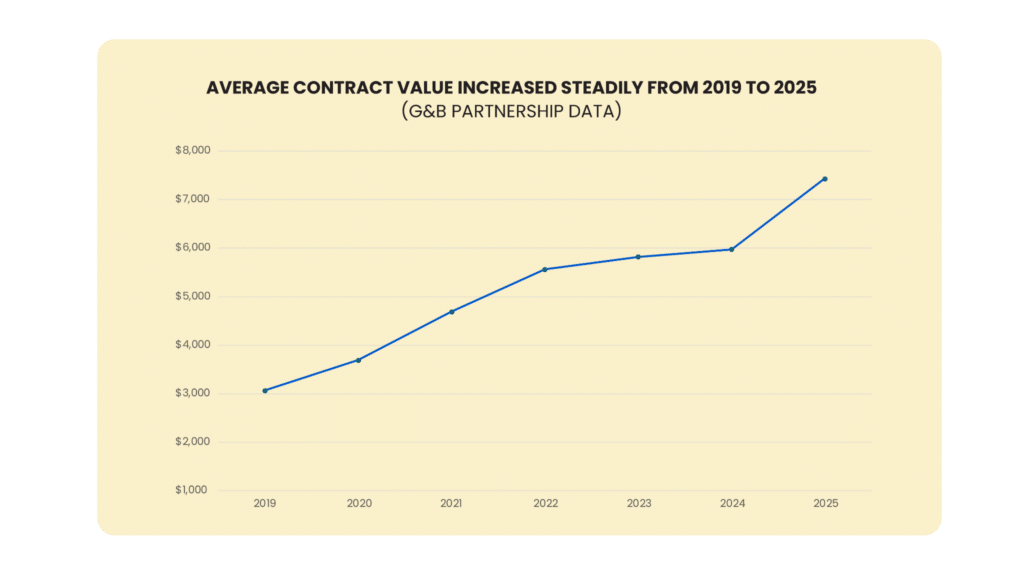
Kyle argues the numbers also serve a legitimizing function for the industry. “It’s not crazy to go from three thousand to seven thousand,” he says. “If you’re doing what you’re supposed to be doing, you’re sowing back into your communities, you’re growing.” Growth in contract values was not confined to a single vertical. Technology brands posted the highest five-year compound annual growth rate in the dataset at 18.2%, while entertainment came in lowest at 10.0%. All categories moved in the same direction.

What Compressed Deal Timelines by Nearly 40%
Between 2021 and 2024, the average time from contract signing to content completion fell from 80.75 days to 51.56 days, a 36% reduction. Kyle identifies several compounding factors. With more than 80% of G&B’s deal flow coming through agencies, contract language has standardized to the point where most agreements read from similar templates. “Most contracts are pretty standard as far as what they’re looking for,” he says. “The time it takes to redline and move through contracts has dropped a millionfold since I first started.”
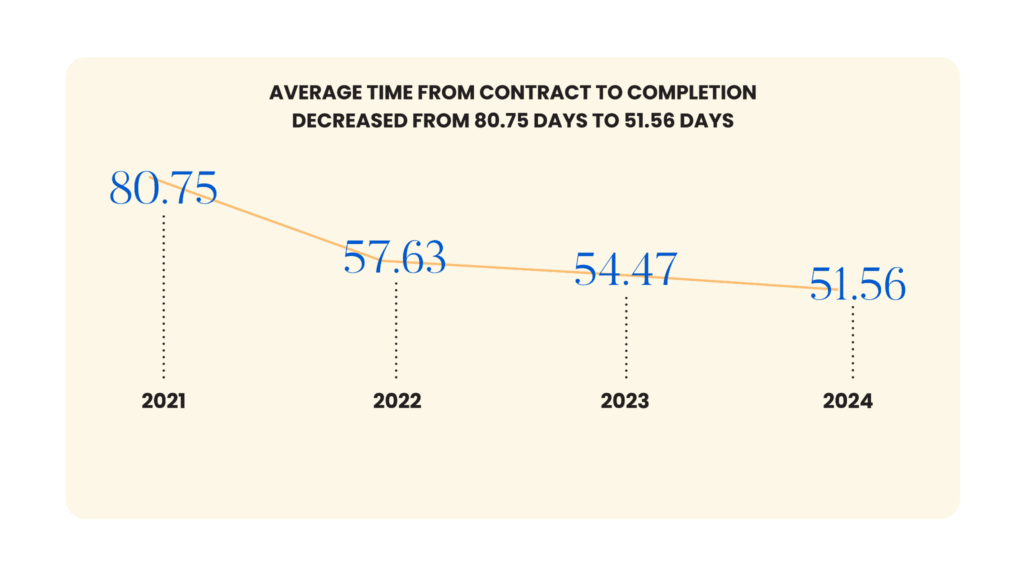
Creator-side professionalism has developed in parallel. Creators who have been in the industry for several years now arrive at campaigns with workflow systems, milestone awareness, and faster turnaround than their predecessors.
Monica identifies repeat partnerships as a structural driver the data captures indirectly. When a brand and a creator have already executed two or three campaigns together, the legal terms are largely settled, the brief is shorter, and the creator’s familiarity with the brand’s voice narrows the revision cycle. “If I’ve worked with one of Kyle’s talents five times before,” she says, “that agreement is going to take us a matter of minutes.”
Deal activity in the G&B dataset grew from 1,800 completed partnerships in 2020 to 3,100 in 2024. Kyle attributes much of that volume increase to efficiency gains compounding at the mid-tier level, a segment he argues is the most active in the entire Creator Economy and the most underreported.
One in Four Partnerships Repeats, and Kyle Is Done With the Word ‘Test’
The report finds that 24% of brand-creator relationships in the G&B dataset include multiple engagements. Monica reads that number as evidence of progress and as a remaining gap. “One in four partnerships are now repeat,” she says. “But that also leaves three in four that are not.” She notes the jump in repeat partnerships from 2023 to 2024 was larger than earlier year-over-year changes, which she takes as evidence that longer-term programming is gaining structural adoption.
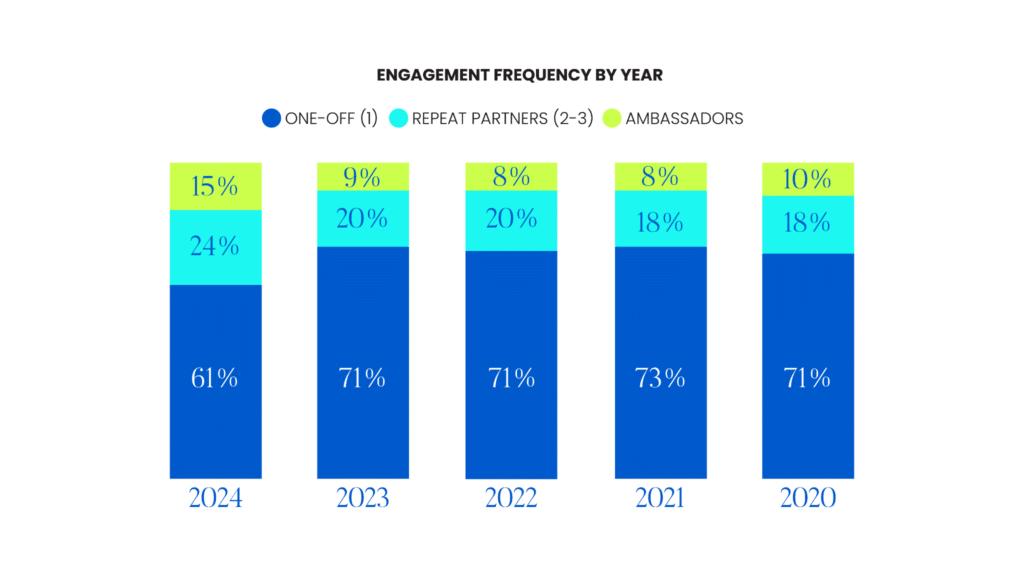
Kyle’s objection to prevailing industry practice goes beyond the data. He argues that framing a first deal as a “test” is not a neutral description of an initial campaign. “I would go on the record and say that I think the term ‘test’ is offensive,” he says. “Do you want to test for your job?” In his experience, test framing rarely comes with shared performance targets and frequently precedes ghosting or below-market rates, a structural disincentive built into the language of the pitch before any content is produced. His prescription: enter a first deal with explicit alignment on what a successful outcome needs to show to earn a second.
Monica frames the case for repetition in terms of what the data shows about audience behavior. A first post introduces a brand to a creator’s followers. A third or fourth activation is where sustained belief forms. “By that last point,” she says, “you really genuinely believe that the creator uses the product.”
Mega Creators Earn More. Smaller Ones Earn More Per Follower.
A 2025 snapshot of 94 G&B creators shows a predictable top-line pattern: mega creators with more than one million followers averaged $473,000 in brand-partnership revenue, compared to $291,000 for macro creators, $148,000 for mid-tier, and $116,000 for micro creators. The less obvious finding is that revenue per follower runs in the opposite direction, with smaller tiers generating more efficient returns on a per-audience basis.

Monica draws on her time at Nordstrom to illustrate the point. Some micro-level creators with modest followings drove six-figure sales outcomes for the retailer. “You would never have thought,” she says, “but they drove like six-figure sales for Nordstrom.” Her practical takeaway is that brands should match creator tier to campaign objective rather than defaulting to reach. Kyle adds a counterpoint about unpredictability: a creator who does not regularly post about a particular category can generate outsized purchase intent from a single relevant post because her audience engages that day. “You can’t discount macros, mid micros, whatever, because they can surprise you,” he says.
The ability to be surprised, in Kyle’s view, is not a measurement failure. It is part of the channel’s value, and no amount of benchmarking data can fully eliminate it.
Execution Is the New Competitive Advantage
The report’s concluding argument is that access to creators is no longer a differentiator. Discovery tools are widely available, pricing has standardized, and practically every brand at scale now runs influencer programs. “Now just about every single brand in the world is doing Influencer Marketing,” Monica says. “So it comes down to the brands that are doing it right, really well.”
She defines that standard as maintaining the quality of briefing, vetting, and creator relationship management even as timelines compress. Speeding up the process without cutting those fundamentals is, in her view, the actual execution challenge. “We’re executing Influencer Marketing at speed, but we’re not compromising quality,” she says. Both Kyle and Monica identify the human element as the variable most at risk as AI tools enter influencer workflows. Their shared position is that automation should accelerate process, not replace relationship management.
Monica hopes the current period will be defined by brands learning that technology and human judgment are not substitutes. “I hope the data shows this was the moment brands realized that, as AI became more embedded in marketing and decision-making, the human element became more valuable, not less,” she says in written responses following the interview. Kyle frames the same period in structural terms. “The entire creator space has officially professionalized,” he says. “This moment will be remembered as the tipping point, the year the Creator Economy truly grew up.”
Image source: G&B, Bobbie
The full report is available here
Subscribe to Our Newsletter
Check Out Our Podcast