




Influencer
How Autotuned Vids Turned a Viral TikTok Format Into a Music Business

When an auctioneer clip remixed by Autotuned Vids reached 14 million TikTok views last month, the account’s first move was not to find a brand partner. It was to locate the auctioneer.
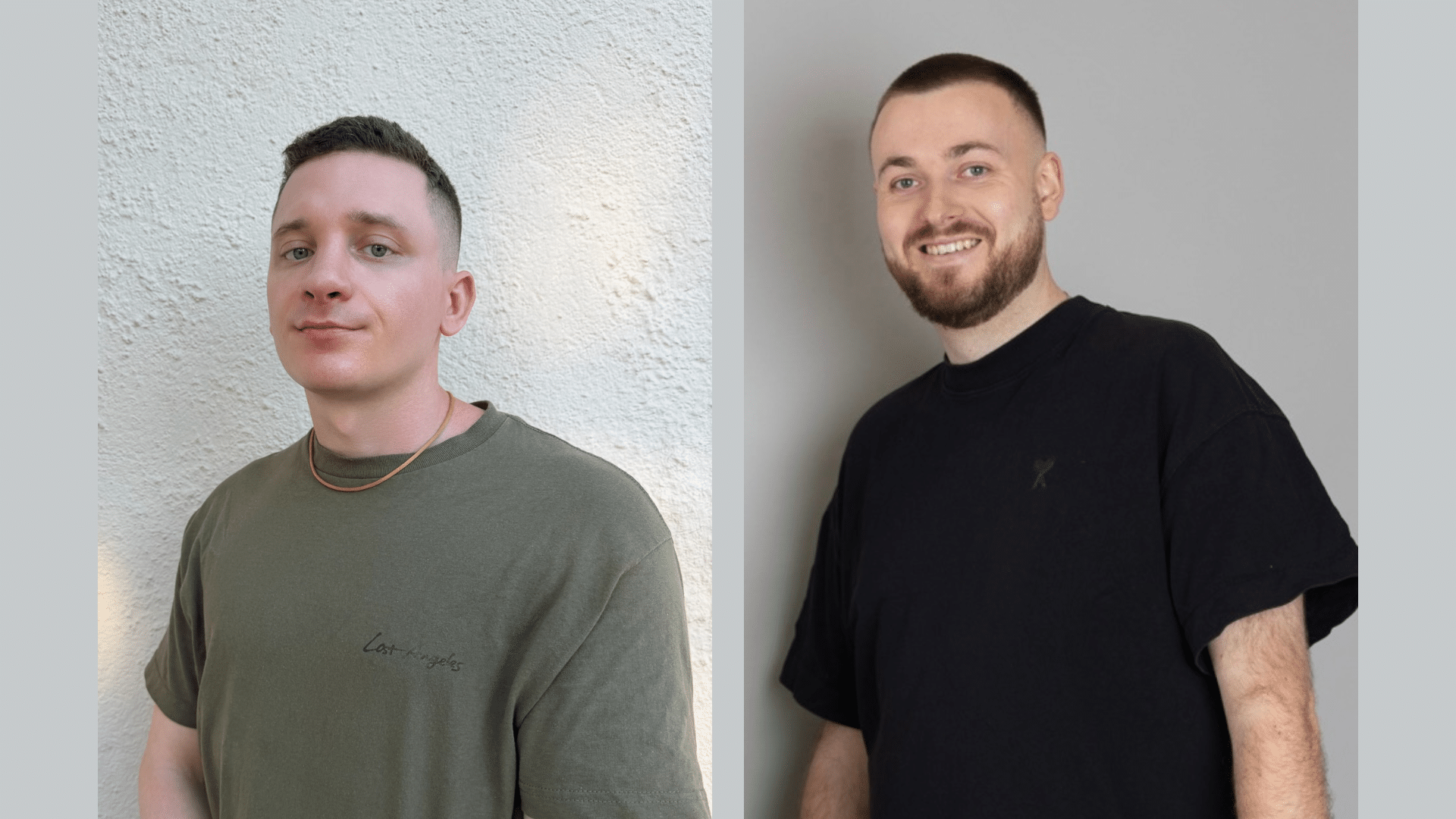
For Jake Gitt and Luke Conibear, the duo behind the account, a viral moment is when the work starts, not where it ends. “Autotuned Vids can be viewed as a meme page,” Jake says, “but on the other hand, we own the rights to the music. If something goes viral on the page, we get in touch with who’s in the video, we get it cleared, we figure out how to capitalize on the viral moment, and then get it on streaming services.”
Jake is a Los Angeles-based artist manager with a decade in the music industry, having worked at Red Light Management and The Shalizi Group and managing acts including Sikdope, ENNE, and Duke & Jones, the London-based house music duo that Luke forms one half of. The two have worked together since 2015. When COVID eliminated touring in 2020, they needed a TikTok presence that did not depend on live shows. Luke taught himself video editing through YouTube tutorials without any AI tools, and the format emerged: find a clip with strong vocal energy, build an original beat around the speaker’s rhythm, and post. The account now draws on fan submissions, the team’s own scroll, and existing viral moments to generate a daily upload queue across multiple platforms.
Six years later, Autotuned Vids carries 2.7 million TikTok followers, an Instagram account at 213,000 (launched roughly a year ago), and a YouTube channel that grew from approximately 15,000 to 64,000 subscribers over the past year. Behind those numbers is a growing catalog of original music cleared for streaming, a commitment to crediting and compensating rights holders, and a set of brand and celebrity partnerships in various stages.
Every Voice Has a Built-In Tempo
The production process begins with a measurement. When a clip arrives, Luke’s first step is to calculate the speaker’s natural cadence.
“Everyone, when they’re speaking, they usually have a certain BPM to them,” Luke explains. He times the clip against an online BPM calculator, typically finding a range of 90 to 110 beats per minute, then identifies the key the person is speaking in using tuning software. The tempo informs the genre: 90 BPM tends toward hip hop; 150 BPM opens toward something more energetic.
Once key and tempo are established, Luke builds outward, starting with drums, then chord progressions, then arranging the most compelling vocal moment to land within the first three seconds of the video. “If the funniest part of a video happens 20 seconds into the video,” he says, “I chop it, switch it around so that it happens earlier to keep people interested.” The result is an original instrumental, composed specifically for that speaker’s unscripted voice.
The channel owns the beats. That ownership is what makes the catalog commercially viable once clearances are in place, and it is what Jake says separates Autotuned Vids from the category of account that applies pitch correction as an effect rather than building music around a voice.
The Clearance That Built the Catalog
The clearest illustration of the model came with “My Money Don’t Jiggle Jiggle,” which went viral in 2022 after a Louis Theroux clip from the “Chicken Shop Date” podcast was remixed and posted. The account gained hundreds of thousands of followers in a few days. Shakira performed a dance to the song on “The Tonight Show with Jimmy Fallon.” Megan Thee Stallion and Snoop Dogg posted about it.
Before any of that happened on streaming services, Jake had to find everyone who held a stake in the sound. Louis Theroux’s team responded within a couple of days. The harder search was for a duo named Reese and Bigalow, who had rapped alongside Theroux in a 2000 documentary about the Atlanta rap scene. Jake contacted Bigalow via Instagram. A Neil Diamond interpolation in the track required a separate clearance. Once all clearances were resolved, the song went to streaming. “We like to do it ethically and make sure that everyone has a portion of the publishing or the master or whatever they’re involved in,” Jake says.
That infrastructure now applies to every song with commercial potential. When the auctioneer clip from this year generated its traffic, the auctioneer’s daughter emailed the account asking for a tag. Jake connected with him, brought him to a studio session, and released one song with Toya McLeod on Spotify. Three additional recordings are in the catalog. Jake is also in discussions with celebrities and networks about pre-arranged deals that would allow a TikTok remix to reach streaming services without case-by-case licensing delays. “That world where most of our TikTok songs are also on Spotify and Apple and Beatport,” he says.
Surviving Six Years of Algorithm Change
Luke’s clip-selection process runs on two inputs: what is currently trending and what has worked in the past. He monitors TikTok and Instagram as a user, identifying cultural moments, upcoming releases and seasonal themes before they peak. When “The Simpsons” released a Fortnite collaboration, the account remixed a Simpsons clip to land within that search traffic. Halloween and Christmas prompt themed content on a predictable schedule.
During slow periods, the playbook is to return to proven formats. “When there’s the dry spell, I would usually tend to go back to something that’s worked in the past to kind of kick it off again,” Luke says. Gordon Ramsay remixes have been reliable across the account’s history. The auctioneer trend, which started in May, broke a slow stretch and produced the channel’s second-most-viewed clip of the year.
With TikTok’s algorithm shifting over the last few years, the account has had to move with it, partly because the format can attach itself to whatever content is already performing. “If the algorithm changed, the videos that other people would upload would change as well,” Luke notes. Platform diversification adds a layer: Instagram and YouTube are not replacements for TikTok, but they reduce dependency on any single surface. Jake considers YouTube’s user base more commercially engaged, even if the platform’s algorithm is harder to break. “Those fans are extremely engaged, and they really pay attention to the pages that they’re following,” he says.
The no-controversy rule is a deal prerequisite as much as a creative one. “We steer clear of anything controversial. We stay out of politics or anything that could be viewed as negative,” Jake says. The brands, networks and celebrities the account is in discussions with would not partner with a channel carrying a contentious archive. Keeping the content family-friendly keeps the deal pipeline open.
From Meme Format to Music Credential
Jake’s long-term goal for Autotuned Vids extends past streaming royalties. He wants the account to function as a signal of cultural legitimacy. “If we auto-tune a video or remix a video, people look at it like they got the endorsement from Autotuned Vids,” he says.
The Abby Lee Miller collaboration shows what that looks like in practice. A remix of a clip featuring the “Dance Moms” personality cleared for streaming as “Walk Walk Woohoo,” and Miller now plays it as her entrance music during tour performances. A song that started as a TikTok clip moved into a live event context.
Luke sees a parallel track for his production work. Autotuned Vids exposes his range (hip-hop, reggaeton and genre-adjacent instrumentals) to an audience that would not find him through Duke & Jones’ house music catalog. The account functions as a production portfolio visible to anyone who watches. “You get eyes on your talent without sending it to people,” he says, expecting that exposure to attract placement inquiries from artists who discover the channel on TikTok.
“It’s creating this bridge between music and film and TV and celebrities,” Jake says, “in a wholesome, euphoric way.”
Subscribe to Our Newsletter
Check Out Our Podcast