




Influencer
‘Success Story’ Host Scott Clary Breaks Down How His Podcast Generates Over $1M a Year

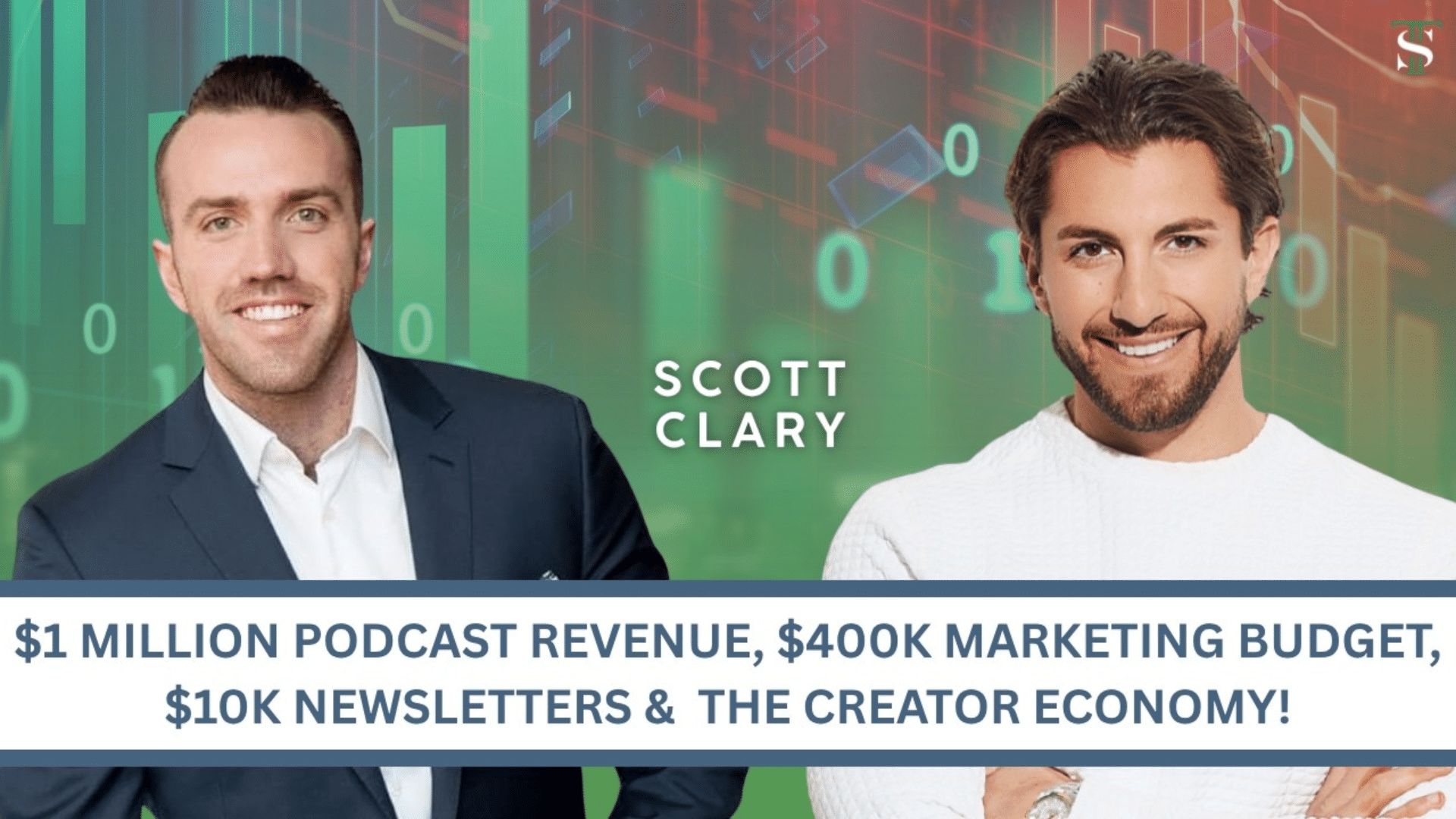
Scott Clary, host of the “Success Story” podcast, laid out the mechanics behind his media business in a wide-ranging interview on Jason Tartick’s “Trading Secrets” podcast. According to Clary, his show pulls in 2.4 to 2.5 million downloads a month; he spends roughly $400,000 annually on his social media operations; and his newsletter carries 320,000 subscribers. Across the conversation, Clary detailed the specific tactics and numbers behind that business, from content volume to advertising rates to how a much smaller creator in his network has built a seven-figure licensing operation around watermarked collaborations. Here are eight takeaways from the interview:
- Clipping Long-Form Content Is His Entire Distribution Strategy
Clary publishes 30 to 40 pieces of content a day, almost all of it sourced from clipping his own long-form podcast episodes into short-form cuts for Instagram, TikTok, YouTube Shorts and Snapchat Spotlight. “It’s just reps,” he said. “There is no one piece that went super viral. It’s just been relentless.” He runs an in-house editing team on salary rather than paying per-thousand-views, which he said is the more common model among streamers hiring young editors to find the most viral 30-second window in a multi-hour recording.
- Paid Spend Only Works Behind Content That’s Already Proven Itself
Clary said he never boosts content to find out if it works. He boosts content that has already demonstrated it works organically, then uses that same creative as the paid ad. “I think that what people should do is they should take the content that performs the best and use that as paid ad creative,” he said. Asked whether running paid ads damages organic reach, he was direct: “It’s because your content sucks.” Creators who only grow through paid spend, he argued, never learn what makes content work in the first place, and lose their reach entirely once the budget stops.
- He Tests Ideas Cheaply Before Scaling Them Into Bigger Formats
Clary writes five or six short posts a day across X, Threads, and Facebook as a low-cost way to find out which ideas resonate before investing more production time in them. “One of those tweets will significantly outperform the others,” he said. The winning idea then becomes a podcast talking point, a newsletter section, or a dedicated short-form video. “That idea hits. So I’m going to talk about it on a show.”
- His Podcast Clears $1M/Year on CPM-Based Advertising
Clary monetizes primarily through CPM deals rather than platform ad revenue. As a business-focused show, he said he can average $30 to $35 CPM, and up to $40 with strong negotiation. “I make just over a million,” he said of the podcast’s annual revenue, adding that this was “more than most podcasters.” His newsletter, with 320,000 subscribers, charges $7,000 to $10,000 for a dedicated send and $3,000 to $5,000 for a banner placement.
- Negotiating a Percentage of a Brand’s Ad Spend Is Rare but More Lucrative Than a Flat Fee
Clary said most creator contracts stop at usage rights and whitelisting, meaning the brand pays to run a creator’s organic content as paid media. He noted that few creators push further to negotiate a cut of the ad spend itself. “A lot of creators don’t negotiate a percentage of ad spend,” he said. “It’s tougher to work in with the brands, but then once you do it, it’s significant,” since the creator then earns on every dollar the brand spends boosting that content, not just the original fee.
- A Smaller Creator Reportedly Earns Millions Through Watermarked Collaborations
Clary described a creator with about 100,000 Instagram followers who charges a single brand $100,000 a month to watermark its logo on reels, then collaborates with much larger influencers so the watermark rides along onto their pages. “He’s found out so he charges for an audience much smaller than mine, $100,000 a month for one brand to watermark a reel,” Clary said, putting that creator’s total annual revenue, combining watermarking, CPM and percentage-of-ad-spend deals, at $7 million to $8 million. Clary noted that he has not verified the figures himself.
- He Sees Celebrities Partnering with Creators as a Relevance Strategy
Asked why figures like Tom Brady are increasingly working with creators rather than staying at arm’s length from the format, Clary tied it to his broader thesis that proximity builds trust. “To stay relevant, to stay top of mind in 2026 and beyond, you have to make yourself more accessible, not less,” he said, pointing to Kevin Hart’s roasts and podcast collaborations as the same pattern. “The biggest relevant celebrities that are still being spoken about right now, they are doing it with creators. They are participating in the Creator Economy.”
- He Views Trading Attention for Equity as an Underused Exit Path for Creators
Beyond direct monetization, Clary said creators can use their platforms to take equity stakes in the businesses they promote rather than just collecting fees, citing Steven Bartlett’s investment in Huel as a model. “Just because you have your own audience and your own business does not mean that that’s the only thing that you have to exit,” he said. “Creators can also invest not just with money but with attention.”
Subscribe to Our Newsletter
Check Out Our Podcast