





Strategy
How AI Search Is Redefining Creator Value for Brands, According to Deloitte Digital’s Jenny Kelly

When Deloitte Digital‘s content practice pulled discoverability data for a brand client, one result stood out: a YouTube creator with roughly 1,200 followers was generating outsized visibility in large language model search results, while accounts with far larger audiences were not. The brand had not sought out that creator. The LLMs had.
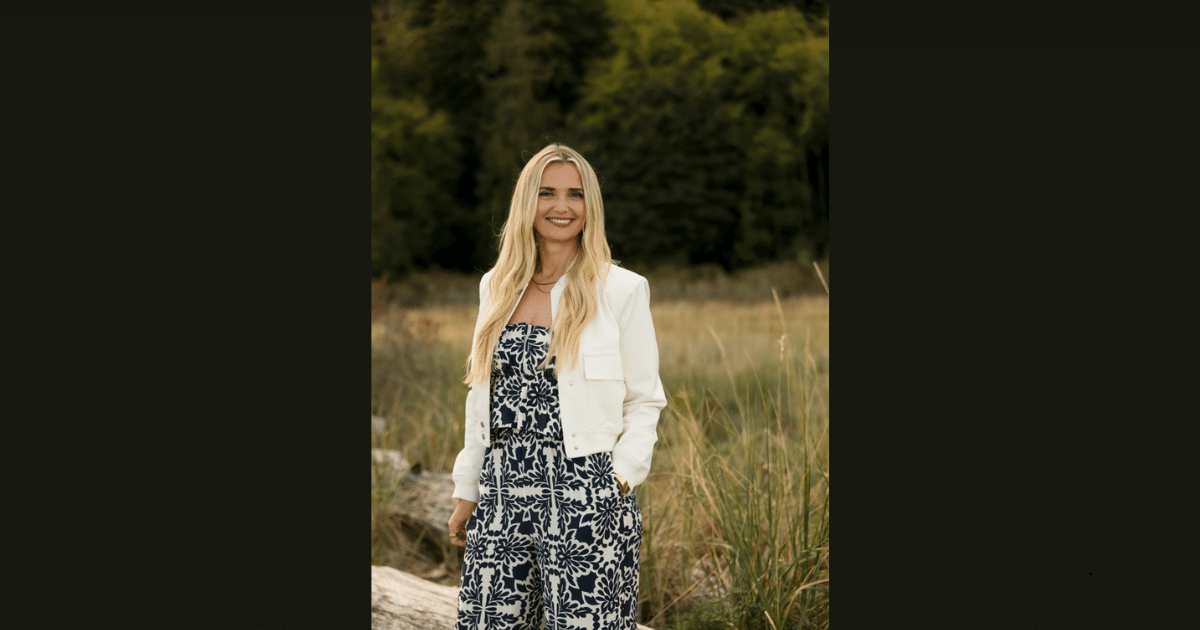
Jenny Kelly, Head of Content, Creator and AI at Deloitte Digital, treats that example as a window into a mismatch in how brands currently evaluate creator partnerships. Over 12 years at Deloitte Digital, where she leads content, creator, and AI strategy for the firm’s marketing practice, Jenny has watched brands cycle through successive platform shifts. AI-powered search, she argues, is distinct from those earlier cycles. It does not simply add a new channel to the marketing plan. It changes what the plan is built on.
“AI caused marketing teams to start thinking about the future differently,” Jenny says. As brands grasped that they needed to be faster and more agile, she argues, creator strategy moved from a peripheral channel toward the center of the marketing mix.
Deloitte Digital, the digital creative and marketing consultancy of global firm Deloitte, works with brand marketing teams on content transformation, creator programs, and AI integration. What was, until recently, a dedicated creator pod operating alongside a broader content strategy function has been formally unified under Jenny’s remit into a single team. Practitioners who once operated in separate disciplines are now co-staffed on client projects and cross-trained across subject areas. That restructuring, Jenny says, reflects the same shift she is pushing brand clients to make: stop treating creator strategy as a separate line item and embed it within the core of how marketing operates.
When Siloed Teams Send Mixed Messages
The most visible consequence of disconnected creator and content functions, in Jenny’s experience, is messaging inconsistency. She describes a pattern that surfaces in client work: two campaigns for the same brand, built around the same topic, launched by teams that had not coordinated. Customers notice quickly. “They’re really aware, and it feels disingenuous,” she says.
The problem is structural, not operational. When creator programs sit in their own pod, they optimize for creator-specific outcomes. When they are developed alongside brand content without shared goals, even well-executed campaigns can work against each other. Jenny frames the integrated approach as a marketing flywheel: when content strategy, creator programs, and AI adoption align around shared objectives, each component reinforces the others.
“When you’re not doing that, you’re missing insights,” she says. “Shared knowledge, shared plan, shared goals.”
She draws a parallel to how brands first responded to AI: they wanted to apply it as a discrete initiative, a separate budget line with its own mandate. The version that works, she says, treats AI not as a project to run alongside marketing, but as infrastructure within it. “AI is now embedded as a part of everyone’s strategy,” Jenny notes. She sees the impulse to silo creator strategy as the same error.
GEO Is the New SEO
The more specific claim Jenny advances is also the one most brands appear least prepared for. As search behavior shifts toward AI-generated responses that deliver synthesized answers rather than ranked link lists, the factors that determine whether a brand appears in those responses are changing. Follower count is not among them.
Her 1,200-follower example illustrates the point directly. That creator was producing YouTube content structured for LLM discoverability: Q&A formats, credible sourcing, and content built around how AI systems parse and surface information. The audience was small. The impact on the brand’s search presence in LLMs was not.
“If those creators who also have large follower counts are paying attention to what is also talking to the machines,” Jenny says, “that’s huge.”
She describes the emerging discipline as generative engine optimization (GEO), a counterpart to the SEO strategies brands spent the previous decade building. The inputs differ, but the logic is recognizable: understand where you appear in results, understand what drives that, and adjust your content and channel strategy accordingly. The signals LLMs draw on, Jenny notes, skew heavily toward user-generated content: YouTube, Reddit, Glassdoor, Wikipedia. Content that performs in those ecosystems shapes how AI models respond when users query a brand’s category.
One brand her team worked with found its own website was returning a 0% return in LLM searches, an indication that the brand’s owned content was contributing nothing to its AI-era discoverability. Tools that track LLM results are improving, she adds, with some now showing what competitor content is influencing those results and where brands should respond. A creator producing the right kind of content, regardless of audience size, may be doing more for a brand’s AI presence than a large-follower account posting standard endorsements.
Pricing Against a Metric That Has Not Arrived Yet
The valuation question that follows is one Jenny does not claim to have resolved. If AI discoverability impact does not correlate with follower count, how should brands price creator partnerships? And how should creators price themselves?
“It’s so new,” she says. “I don’t think we’ve seen it quite get to how creators get paid yet, because it’s still so reliant on follower count.”
Some tooling is beginning to close the distance. Jenny points to platforms like LTK as examples of creator-facing dashboards that give both creators and brand partners real-time visibility into campaign performance. But the broader infrastructure governing how creator rates are set has not yet weighted AI discoverability as a meaningful input.
Her prescription is more about posture than formula. Brands that treat creator relationships as ongoing partnerships, rather than campaign-by-campaign transactions, should be sharing performance data with those creators. That transparency gives creators the information they need to understand, and eventually price, the full scope of their contribution. “Treat it like an actual partnership,” she says.
2026 Is the First Year Brands Are Actually Transforming
Jenny characterizes this year as the first time she has seen brands genuinely engage with what transformation requires, as distinct from piloting individual tools and running contained experiments. Prior years were defined, in her telling, by copy generation applications and incremental AI uses. This year, companies are beginning to connect the components.
“2026 is the first time that I’ve seen organizations really lean into larger transformation,” she says.
There is no universal template for what that process looks like. A brand just beginning to track its AI discoverability is starting from a different position than one already running integrated creator and content programs. Jenny’s focus for the remainder of the year, she says, is helping brands move forward from wherever they currently stand, without assuming any one approach transfers to another.
Her forward-looking concern reaches beyond current search behavior. When AI agents are browsing, evaluating, and transacting on behalf of consumers, the question of how brands and creators reach those consumers changes again. Influence would then have to operate at a layer that most marketing teams have not planned for.
“Agent-to-agent marketing is going to be a crazy dynamic that we’re not really prepared for,” she says.
Her bottom line on the Creator Economy’s direction applies regardless of where the conversation starts.
“People that have data and insights at their core strategy,” she says, “they’re the ones that are going to win in the market.”
Subscribe to Our Newsletter
Check Out Our Podcast