





Strategy
How a Veteran YouTuber Covered Ukraine’s Front Lines With No Budget, No Crew, and a Backpack

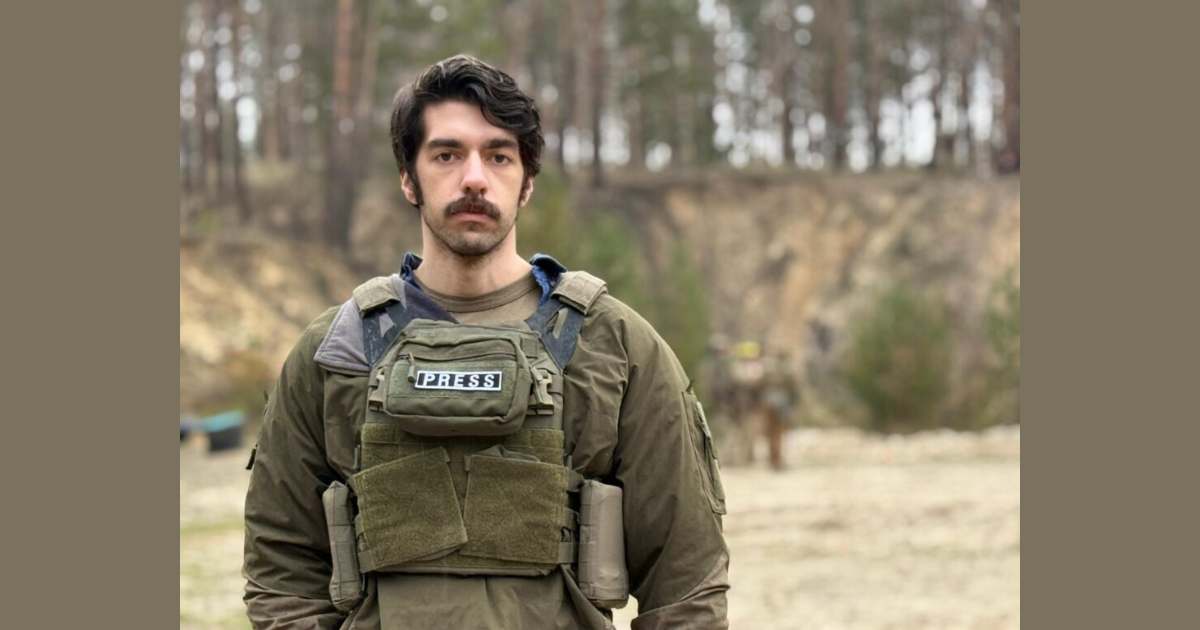
In late 2025, Justin Taylor spent two weeks on the Ukrainian front line, sleeping in houses abandoned by people who had fled the war, filming on a phone and a consumer DSLR. The video he posted a month after landing back in the U.S. has garnered more than one million views. He was not paid a dollar for any of it.
That result had little to do with production value. It had everything to do with a decade of military experience, a Ukrainian agency operating on zero budget, and a decision Justin made out of personal obligation rather than commercial strategy.
A Platform in Search of a Story
Justin spent six years as an infantry officer in the U.S. Army before leaving active duty in 2024. He is West Point-educated and spent much of his service in roles that gave him working familiarity with modern ground warfare. When he transitioned to full-time content creation, his channel focused on military technology, strategy, and geopolitics, drawing an audience that had grown accustomed to his refusal to sensationalize.
“If I were going to have any authority on the subject, talking to an American audience, I didn’t want to just be regurgitating the same information,” Justin says. “I wanted to make sure that I was able to bring that first-person perspective to it.”
The decision to go to Ukraine began not as a content strategy, but as a personal obligation. He had been covering the conflict from a distance for years and, by his own account, felt hypocritical doing so without having been there. A military YouTuber colleague, Chris Cappy (“Cappy Army”), had already made the trip and pointed Justin toward a contact. Within what felt like a week, Justin says, he had a full itinerary.
“This is the most significant political event of the 21st century,” he says. “I knew I would be kicking myself if I didn’t go over there and try to do something with it.”
The Agency Quietly Coordinating Behind the Scenes
Justin reached out to UNITED24, Ukraine’s official state fundraising platform, before departing. That introduction led him to AIR Brands, the Influencer Marketing and YouTube production division of AIR Media-Tech, the Kyiv-based Creator Economy company that operates across more than 70 countries.
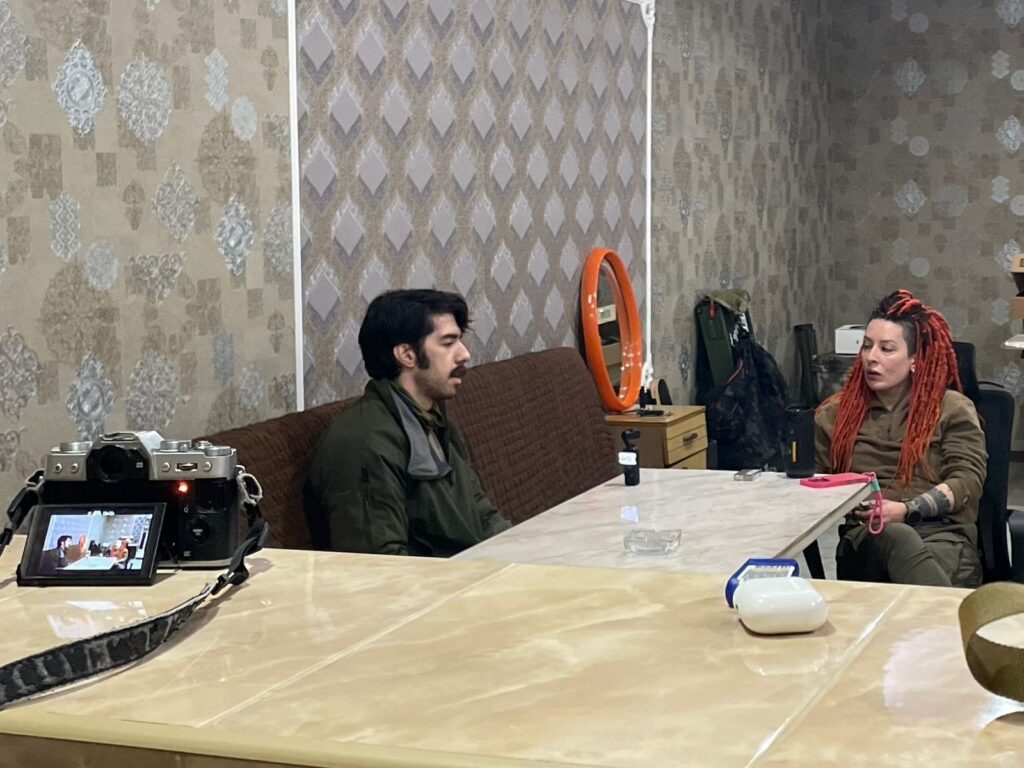
Vira Labych, Project Manager at AIR Brands, who headed the UNITED24 influencer effort, had been running a program to bring international creators to Ukraine since the early months of the full-scale invasion. The premise was straightforward: traditional foreign media coverage had become background noise for Western audiences, but creators who showed up in person could cut through.
“We have been living in an invasion for more than four years,” Vira says. “We noticed how typical media is dying, and influencers are becoming new media. Especially in Ukraine, when you need to cover the war.”
The logistics of any given creator visit were, in practice, far more complicated. AIR Brands coordinated press access with multiple military units, each of which set its own terms on timing and location, often confirming specifics only 24 hours in advance. For the Justin campaign, Vira estimates more than 10 people were involved on the organizational side, including a fixer named Roman who had spent four years operating in the Donbas region and knew which roads were safe.
No Budget, No Script, No Editorial Control
The financial structure of the campaign was unconventional by any standard. UNITED24 is a fundraising platform, not a media buyer, and AIR Brands did not pay Justin, cover his travel, or fund his production. He paid for everything himself.
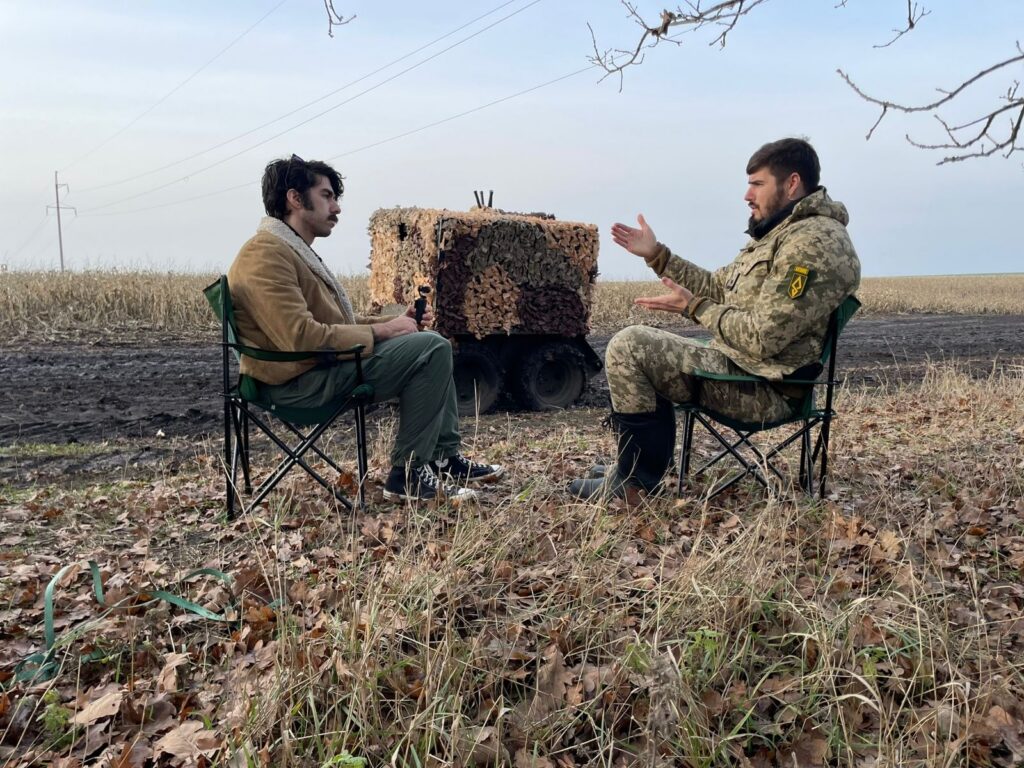
“I paid for every bite of food I ate over there, every hotel room I slept in, every train, bus, plane ticket,” Justin says. “I didn’t receive a single dime from UNITED24, and I prefer it that way. Then I can say, ‘I’m not getting paid to say this.'”
That financial arrangement also dictated the editorial one. AIR Brands and UNITED24 exercised no control over the final video. Only the Ukrainian military units that hosted Justin reviewed footage for operational security, asking him to blur certain faces and avoid showing classified battle maps. Everything else was Justin’s call.
“We organized everything, but we didn’t affect his final result,” Vira says. “Everything he did, he did alone by himself. How he saw everything, how he felt.”
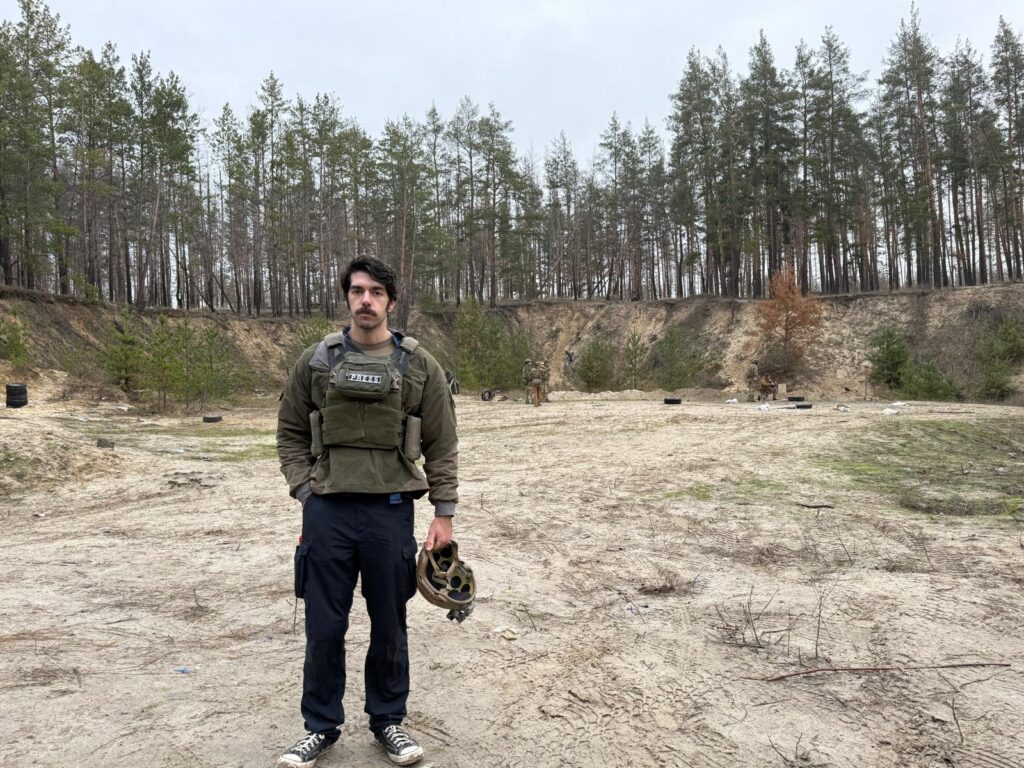
Justin traveled to the Donbas, one of the most active and dangerous sectors of the conflict. At one point during the trip, AIR Brands lost contact with him and his team for two hours. Vira describes that period as among the most difficult of her professional life. He resurfaced safely. The drone he was gifted by a Ukrainian military unit remains at Vira’s parents’ house in Lviv, waiting for borders to reopen.
Production Stripped to Essentials
Justin’s production setup reflected his philosophy about what wartime reporting actually requires. He carried three cameras in his backpack, and his phone did much of the heavy lifting. A UNITED24 crew joined for one day of filming with Ukrainian special forces, using professional-grade equipment, but the majority of the footage was shot solo.
“When you’re in a place like the Ukrainian front line, you don’t need a ton to capture some really stunning images,” Justin says.
Post-production took roughly a month, with editing squeezed between other projects that, in his words, were keeping the lights on. He interviewed approximately a dozen people and condensed dozens of hours of footage into a single long-form video. The editing logic was intentional: not what was most dramatic, but what would hold attention from beginning to end.
“People aren’t going to watch six hours’ worth of footage in one sitting,” he says. He had spoken before departing with creators who had made multi-part series on Ukraine trips; their videos had not performed well. His would be one video, and people would watch all of it.
One Million Views, Two Thousand App Downloads
Justin’s video reached one million views. It generated nearly 50,000 likes and approximately 7,000 comments. More than 2,000 new users signed up for the UNITED24 app, a subscription-based platform that gives donors direct access to content from five elite Ukrainian drone units. UNITED24 still tracks incoming subscribers who trace back to Justin’s mention.
For Vira, the metric that mattered most was not reach but persistence. “To this day, we still have people who came from Justin,” she says.
Justin reveals that the video did not break even financially. “I still lost money, if you want to call it that, on the video, which I didn’t care about,” he says. “I knew that going in.” He places the Ukraine video among the top three best-performing of his career, but frames that result in terms of mission rather than return on investment.
The comments section reflected something beyond the expected reaction. Ukrainian viewers, Vira notes, circulated the video among themselves. An American had gone to the Donbas, not to Kyiv or Lviv, and had told the story of people rather than strategy.
A Model Governments Are Starting to Recognize
Both Justin and Vira see the campaign as an early example of a structural shift in how institutions with credibility problems reach skeptical audiences. Traditional war correspondents carry institutional affiliations that, for a significant portion of any given audience, are disqualifying.
“I could pull up an article from the BBC that says two plus two equals four, and I will get at least 10 comments saying, ‘I would never trust anything the BBC says,'” Justin says. “I build my own credibility, and I’m not tied to something else.”
Justin now works with NATO countries and the U.S. military on an official basis. He describes a growing institutional recognition that creators who have built independent credibility can reach audiences that traditional media cannot.
“More and more countries, militaries, and state media are reaching out to more and more creators,” he says. “I think a few years down the road, this is going to be the standard practice.”
Vira frames the shift in terms that go beyond any single campaign. “Traditional war correspondents are quietly on the way out,” she says. “In 2026, the person telling you what’s happening on the ground is more likely to have a GoPro and a Discord community than a press pass.
“Vira frames the shift in terms that go beyond any single campaign. “Traditional war correspondents are quietly on the way out,” she says. “In 2026, the person telling you what’s happening on the ground is more likely to have a GoPro and a Discord community than a press pass.”
That framing sets aside a counterpoint: dozens of traditional journalists have been killed or severely wounded covering the war in Ukraine, and the access Justin received was itself built on relationships that institutional press corps helped establish. The argument AIR Brands is making is not about replacement. It is about format: that a creator with an established independent voice can reach audiences already disengaged from legacy outlets, and carry the same ground-level reporting to them.
What Comes Next
AIR Brands is already scaling the model. A campaign with five German creators, aimed at raising €200,000 to support Ukrainian air defense, is underway. The structure differs: the German creators have not traveled to Ukraine, but are producing content about the conflict from abroad, with fundraising tied directly to the campaign.
For creators considering similar projects, Justin’s advice centers on financial realism and editorial openness. Don’t bring a $10,000 camera rig. Don’t go in with a rigid script. Know enough about the subject to ask the right questions. And be willing to be cold and uncomfortable, because the people you are covering have been doing exactly that for years.
“Be willing to take the risk,” he says. “Don’t think it has to be this hyper-polished thing. If your message is clear, and you know what you’re talking about when you get there, that’s enough.”
Subscribe to Our Newsletter
Check Out Our Podcast