



Influencer
Spy Ninjas’ Founders Are Betting $25M That a YouTube Franchise Can Become an Entertainment Company

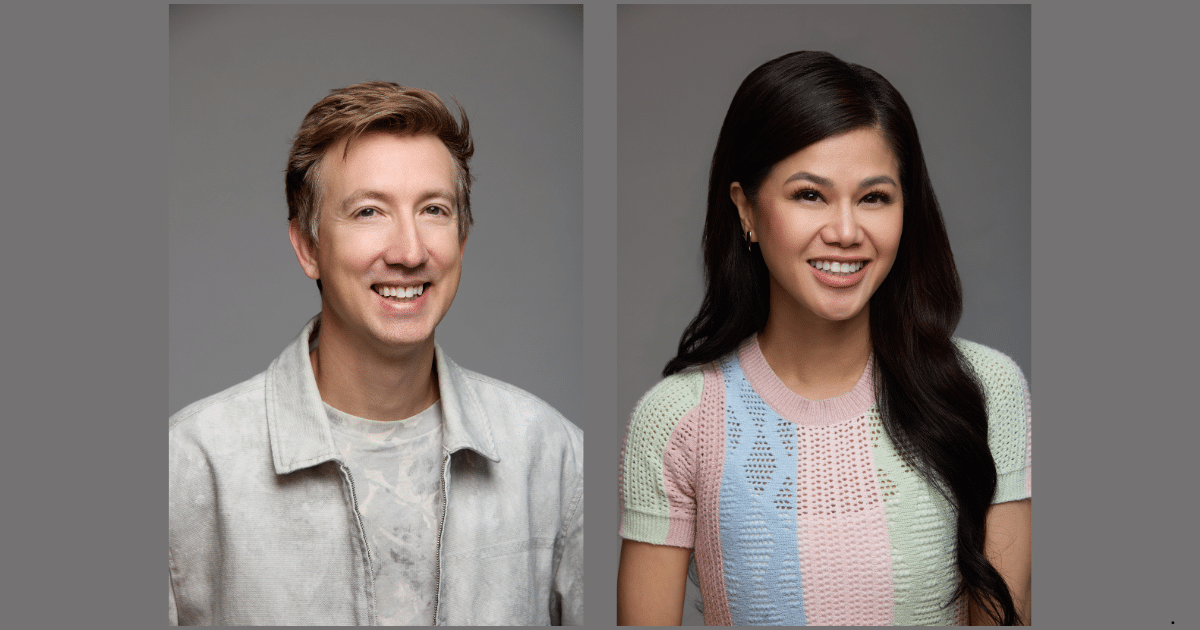
Chad Wild Clay and Vy Qwaint built “Spy Ninjas” into one of YouTube’s largest family franchises without studio backing or outside investment. This year, they committed $25 million of their own capital to expand it, and hired a digital media executive to push them toward bets they say they never would have made on their own.
The investment, announced in May, funds expanded production at Spy Ninjas Entertainment‘s 65,000-square-foot Las Vegas facility, a 50-person hiring push focused on serialized narrative storytelling, and a paid training initiative for YouTube creatives called the “Spy Ninjas Creative Class.” Shelly Soriano, formerly COO of Jubilee Media, has joined as President of Spy Ninjas Studios, overseeing expansion into scripted and unscripted series, animation, FAST channel distribution, and new lines of business.
“We would never, on our own, have come up with ‘let’s spend $25 million,'” says Chad, the company’s Chief Creative Officer. “She put together a plan and sold us on it.” Chad and Vy co-founded Spy Ninjas in Las Vegas, launching the brand in 2018. The franchise has since grown to 47 million subscribers and 18 billion lifetime views across its YouTube channels, with distribution also on Amazon Prime Video, Apple TV, Roku, and Tubi.
The company reports reaching nearly 100 million fans per month across content, live entertainment, and consumer products. That scale creates a challenge Vy, the company’s CEO, identifies directly: everything built through years of shared instinct now needs to be codified and extended beyond the two people who invented it. “I really have to go from step one to the end,” she says of communicating institutional knowledge to new hires.
The Franchise Was Built Around the Fan, Not the Revenue Stream
YouTube advertising revenue remains the company’s top income source, a point Chad clarified unprompted. The consumer products that now span toys, books, gaming, merchandise, and a theme park were not conceived as revenue diversification.
“It wasn’t at all about ‘this will add revenue,'” Chad says. “It really was like, ‘I bet our fans would love this, because I used to love this with the Teenage Mutant Ninja Turtles.’” That framing led to a partnership with Surge Licensing, the agency that helped develop the Turtles franchise in the 1980s, and eventually to toys with Playmates Toys, books and graphic novels with Scholastic, a Roblox game, and a Las Vegas theme park.
Vy frames the product strategy as experiential. When developing toys with Playmates Toys, she was thinking about the audience watching YouTube while physically holding the same props used in the videos. “You get to use the exact same item as the people on screen,” she says. “It’s interactive viewing.” The theme park followed similar logic: the founders needed a production facility for fight scenes in Las Vegas summers, then built the sets so fans could visit and experience them directly.
Fan behavior shaped the investment calculus before any formal products launched. Families were making trips to Las Vegas specifically to recreate filming locations from videos, and the Scholastic series expanded from one volume to five after its initial release, according to Vy.
Bringing In an Executive to Do What Founders Can’t Do for Themselves
Chad describes himself and Vy as “fairly risk-averse,” a characterization Vy confirms without pause. That tendency, which the founders credit with building Spy Ninjas without overreach, is also what Chad says “definitely held us back in the past.”
Soriano’s role, in the founders’ framing, is to push that boundary. “She’s really pushing us to take bigger swings,” Chad says. The founders retain creative authority. Chad is transitioning scheduling responsibilities to other staff; Vy describes budget control as the harder adjustment. “I’ve always handled our finances, and letting that go was kind of hard,” she says. Soriano convinced them the scale of the bet was warranted.
On the creative side, the founders have no plans to delegate. “The creative will be the hardest to hand off,” Chad says. “Maybe it will never get fully handed off, because it’s our personality coming through.”
A separate challenge runs alongside the financial one. Institutional knowledge that existed as verbal shorthand between two people who thought alike must now be communicated in full to a growing staff. “It’s always been in our heads,” Vy says of the company’s accumulated operational knowledge. “Now, we have to think about standards of operations for creatives and for business people and make sure everyone’s on the same page.”
The Creative Class Pays People to Learn What Took the Founders Years to Build
The “Spy Ninjas Creative Class” inverts the standard internship model. Rather than charging tuition or offering unpaid placements, Spy Ninjas recruits and pays full-time hires to learn the digital content creation process across writing, editing, thumbnail design, and directing. The goal is retention: once these full-time hires are trained, they are placed within the company as the 50-person hiring push scales out.
“A lot of people look for internships in the summer,” Vy says. “But we are actually paying you to teach you and give you our knowledge that we’ve learned since 2010.”
Chad draws a clear line around what the program can and cannot transfer. Technical skills are teachable. Passion for YouTube-native content is not. “Those people who grew up watching YouTube, who love YouTube,” he says, “I will take those all day. You’ll already have an internal knowledge base of pacing, comedy, everything. You just have to learn how to utilize it.” Vy identifies the same quality as an orientation toward the individual viewer rather than a mass audience. “I think about that person at home,” she says. “It’s on a smaller scale, so I know how to speak to them.”
Spy Ninjas Said No to Brand Deals for Five Years. That Was the Strategy.
Spy Ninjas went roughly five to six years without external brand deals, a decision Chad and Vy describe as intentional. The company was already embedding its own consumer products into its videos, and both founders were protective of trust with a young audience. Brand partnerships have resumed on a limited basis in 2026.
“We say no way more than we say yes,” Vy says. The company also blocks gambling and alcohol advertising on its YouTube channels. Chad identifies a parent’s offhand comment as the moment that sharpened the obligation: the parent said she could put on Spy Ninjas content without monitoring what her children were watching. “That made me feel even more responsible,” he says.
Vy frames the brand objective without reference to scale or revenue. “I want people from zero to 100 to be like, ‘I trust them,'” she says, “and know that their whole family can watch together.”
The economics of production reinforced the position. Vy describes a brand shoot that took 12 hours to produce eight to nine minutes of video, time she calculated could have generated four of their own videos, each reaching their audience more directly and fitting more naturally with their content. “Saying yes might collapse our brand,” she says.
The Catalog Was Built for Platforms That Don’t Operate Like YouTube
Spy Ninjas’ existing content is organized as serialized episodes with sequential story arcs, a structure closer to traditional television than to most YouTube channels. Chad notes the alignment with what streaming platforms look for in a catalog.
“Just the way we ended up making our videos,” he says, “it’s probably a better fit for Netflix than it is for YouTube, in a weird way.”
His prediction for where Creator Economy investment moves over the next several years centers on traditional streaming platforms actively recruiting from YouTube talent, a trend he expects to accelerate. Vy points to the franchise’s footprint as preparation for that transition. “Our IP is already a franchise,” she says. “It’s like our own Harry Potter world already.” She also sees a path to theatrical. “I think we can easily make a 120-minute video ready for the box office,” she says.
Both founders expect to step back from on-camera roles over time, positioning themselves as the creative and strategic architects behind a new generation of Spy Ninjas talent. “Hopefully, become like Professor X someday,” Vy says, “training a new class of Spy Ninjas.” Chad frames the same horizon more plainly. “I’m very excited for the young people coming in,” he says. “All those fight scenes, I’m not as flexible as I used to be.”
Subscribe to Our Newsletter
Check Out Our Podcast