



Platform
Spotify’s ‘Memberships’ Turns Podcast Fans Into Paying Members Without Sending Them Off the App

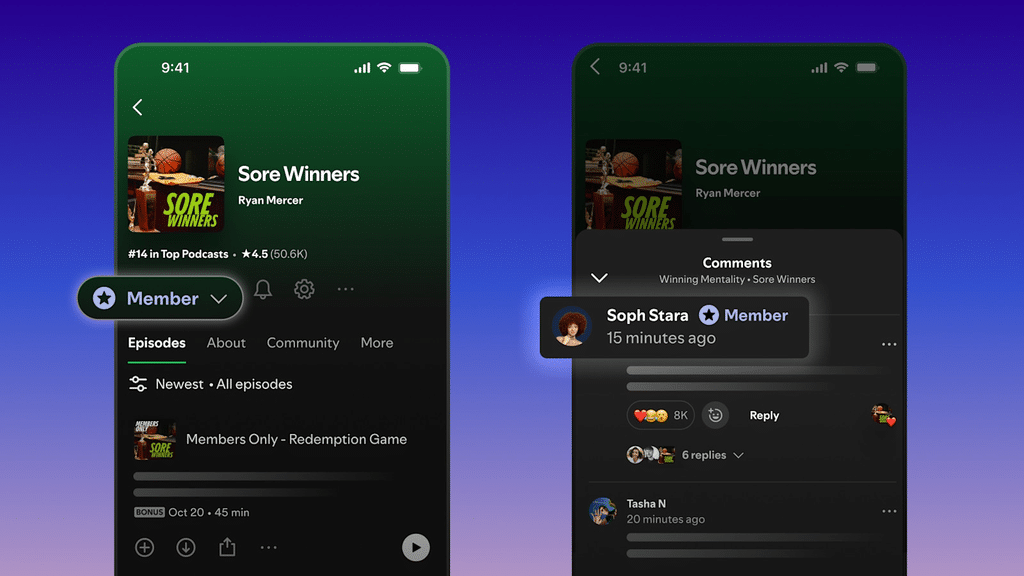
Spotify now lets podcast creators sell memberships from their show pages, so a fan can sign up and play exclusive episodes without leaving the app. The product, “Memberships,” opened to creators in October and lets them keep 90% of the earnings.
Liz Berg, a New York-based Senior Product Manager at Spotify for Creators, describes that convenience as the answer to two demands at once. Fans want to connect more deeply with creators and find ways to show support, while creators want to turn those relationships into sustainable businesses.
“Memberships brings those two things together, giving creators a way to offer exclusive content and experiences to their most dedicated fans, right where they’re already listening and watching,” she says.
Memberships launched across 34 markets with more than 20 partners, including “Two Hot Takes,” “The Sculpt Society” and shows from YMH Studios, and subscribers who migrated from Spotify’s earlier podcast subscription product renewed at a rate above 90%, according to Spotify.
The product targets podcast creators at both ends of the scale, from shows still building an audience to those already running subscription businesses elsewhere. Liz’s argument for why it fits both rests on where the sale happens.
The Sale Happens on the Show Page
That sale starts with traffic Spotify already has. More than 500 million users have streamed a video podcast on Spotify, up nearly 50% year over year, the company said at its Investor Day in May. Memberships turns traffic on a show page into a chance to promote the membership.
“We know that fandom goes beyond just listening or watching on Spotify,” Liz says. The product is built to capture that extra layer of fandom at the point of listening, with discovery and checkout built into the app.
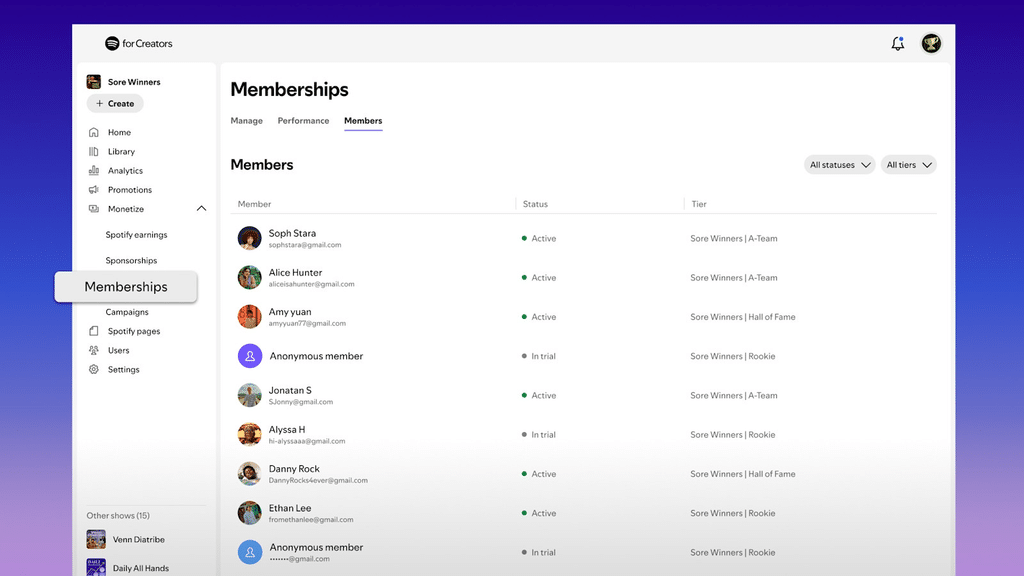
Payment also changes how a fan appears inside the show’s community. Members get badges when they comment on episodes, and creators can record welcome clips for new members.
For creators, the practical effect is that the membership offer sits in front of fans while they are engaged with the show. That reach only helps shows that qualify, and Spotify has set the bar low.
Small Shows Can Clear the Entry Bar
A show qualifies with three published episodes, 100 listeners or viewers, and 100 consumption hours in the previous 30 days, according to Liz. “Creators also don’t need a massive audience to get started,” she says.
Spotify made Memberships accessible to shows at earlier stages of growth by design, Liz explains. The company pitches the product as a home base for a fan club, whether a show is established or still building its audience.
Small shows also get the same latitude on what to sell. “Every podcast community is different, so we want creators to have the flexibility to build an offering that makes sense for their audience,” Liz argues.
The threshold decides who can open a membership. What goes into it is left to the creator, which raises the question of what an early-stage offer should contain.
Start With What the Most Engaged Fans Value
For an emerging show, “a strong Membership starts with understanding what their most engaged fans value,” according to Liz. She cites bonus episodes, early access, exclusive behind-the-scenes content, or simply feeling more connected to the creator and their community.
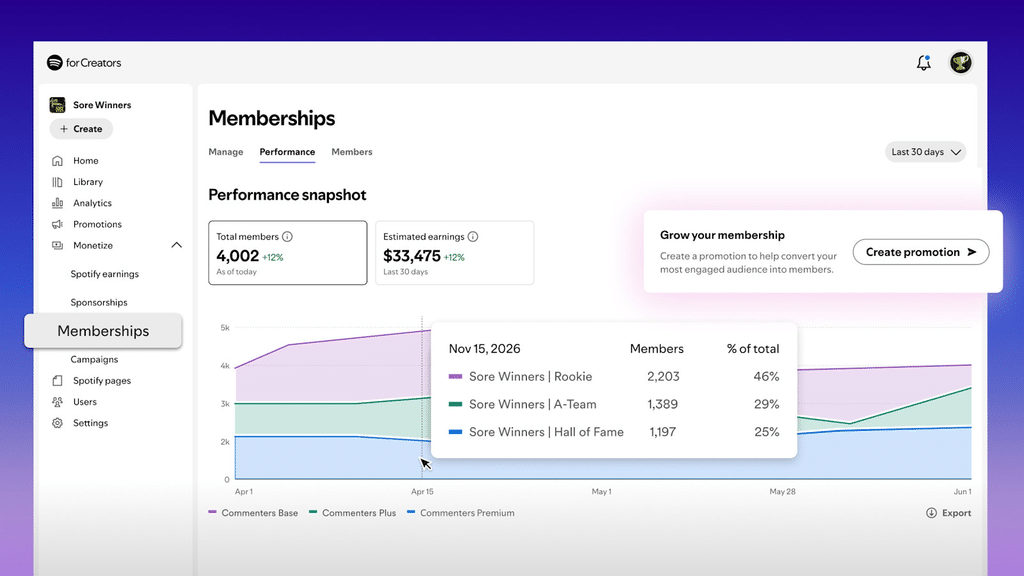
From there, her advice is to start simple and adjust. Creators can use targeted promotions, free trials, and analytics on what drives sign-ups and retention to learn what resonates and evolve the offer as the community grows, according to Liz. Promotions can run by email, and the analytics track fan-to-member conversion.
Pricing is also the creator’s call. Memberships supports multiple billing options and access tiers so a show can package perks at different levels.
Liz’s advice amounts to a sequence in which a show tests a modest offer, reads the conversion and retention numbers, and expands from there. “It’s about building meaningful relationships with your most dedicated fans and creating something they’ll want to continue being part of,” she adds.
Creators Can Export Their Member Data
“Creators maintain control over their member relationships, with access to exportable member data, including contact information from fans who choose to share it,” Liz says. Email addresses are part of that data.
The export lets a creator engage members on or off Spotify. The company set out the same terms when it first announced Memberships at Investor Day, promising creators direct access to subscribers, the ability to import and export across platforms, and audience intelligence tools.
In practice, a member base built on Spotify does not have to stay there, at least for fans who opt to share their contact details. The same logic runs in the other direction for creators whose subscription businesses already live on other platforms.
Outside Subscription Businesses Can Stay Where They Are
Creators who already sell subscriptions elsewhere can keep using Spotify Open Access to bring that gated content into the app, or offer Memberships as well, Liz says. Open Access lets Spotify users play subscriber-only podcasts from platforms such as Patreon, The New York Times, and Substack.
Liz credits Open Access with 122% year-over-year subscriber growth. Its related feature, Synced Feeds, which adapts the app and subscription prompts to a user’s subscriber status, reached a 15% conversion rate for Patreon creators and was adopted by hundreds of shows within six weeks, including Dateline NBC, “Pod Save America,” and “This American Life.”
“Creators today are building businesses in a variety of ways, and we want to give them the flexibility to choose what works best for them,” Liz notes.
Memberships adds a recurring line to the income Spotify already offers podcasters. “Memberships gives creators another way to generate recurring revenue alongside existing monetization opportunities like advertising, sponsorships, and the Spotify Partner Program,” she says.
Creator Sponsorships, a set of tools for scheduling, replacing, and analyzing brand sponsorships, went live for Spotify Partner Program creators in May.
Memberships Extends Spotify’s Bet on Its Most Engaged Users
The membership push mirrors how Spotify’s leadership describes its own business. Co-CEO Alex Norström told investors in August that usage of the company’s products, features, and content follows a power law.
Alex was describing Spotify’s own paid add-ons, such as Audiobooks+, which he said has passed $100 million in annual recurring revenue. Memberships hands podcasters a version of that model within their own audiences, with the sale won inside Spotify and the relationship free to travel. Spotify says more community perks for members are on the way.
“Ultimately, our goal is to give creators more choice and control over how they grow their businesses and connect with their audiences, both on and off Spotify,” Liz says.
Image source: Spotify
Subscribe to Our Newsletter
Check Out Our Podcast