





Platform
Spotify’s Open Secret: Fandom Is Built Through Brand Relevance, Not Audience Targeting

Spotify’s advertising business grew 60% in active advertisers year over year in Q2 2026, but the company is making a case that its next phase of growth depends on something brands cannot simply buy: a place in an audience’s fandom.
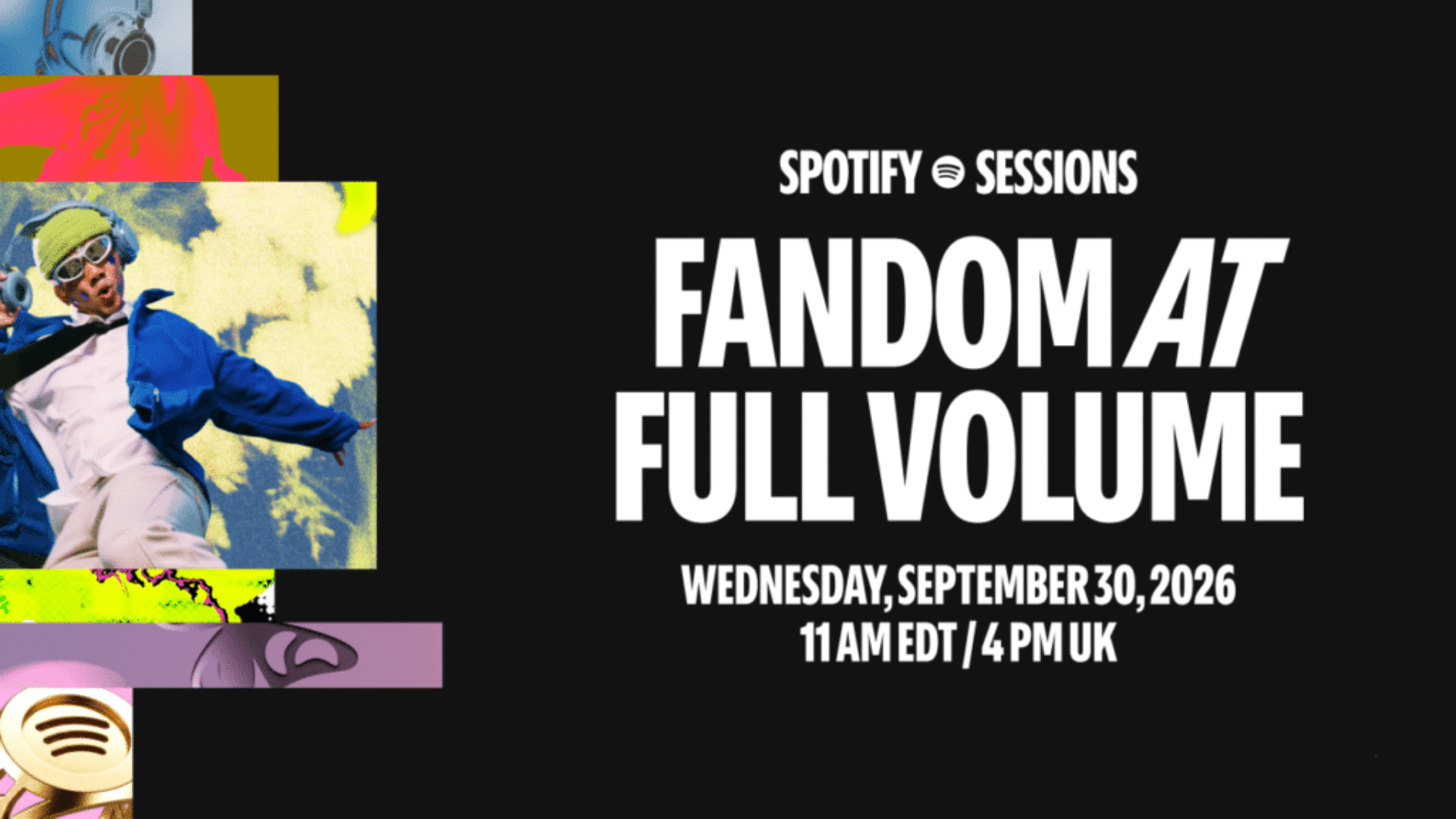
At Spotify Sessions: Fandom at Full Volume on September 30, the platform’s largest advertiser event of the year, Spotify framed fandom as a relationship between listeners and the things they care about rather than a demographic category for marketers to target. Kelsey Woo, Spotify’s Global Director of Monetization Product Marketing, shaped the event’s agenda and hosted “The Hot Seat,” where she fielded real advertiser questions about performance and ROI on record. Her argument about what makes the platform’s advertising inventory distinctive begins with the listener.
“People come to Spotify on purpose,” she says. “Every play is someone choosing the music, podcasts, and audiobooks they love, and they come back every day to do it. That’s an audience that’s paying attention and actually participating, and it’s pretty rare.”

Spotify’s Case for Audience Pride as an Advertising Advantage
The illustration Woo uses for the audience-state argument is Wrapped, Spotify’s annual personalized listening recap, which generated more than 620 million shares in 2025, according to the company. She points to the behavior around Wrapped as practical evidence for that premise.
“If a social media app told you that you’d spent thousands of minutes scrolling this year, you’d feel embarrassed,” she says. “You’d want to go touch grass. But when Spotify tells you the same thing, you feel proud. You screenshot it. You share it. You build an identity around it.”
The behavioral contrast, she argues, is the advertising opportunity. “When someone is in a moment they chose, with content they care about, they’re more receptive,” she says.
Spotify Believes Brands Must Earn Their Place in Fandom
Fandom, Woo argues, is one thing advertising cannot buy outright. “You can buy reach. You can buy impressions. You can buy outcomes. You can’t buy a place in someone’s fandom; you have to earn it.”
The “earn it” argument is familiar in premium media, where publishers have long emphasized audience quality alongside reach. But Spotify believes its advantage actually lies in its ability to precisely understand and target fan behavior. The company processes 3.4 trillion daily taste signals (every skip, save, search, and play) from the most passionate fans worldwide, according to its 2026 Investor Day presentation.
“We don’t just know that someone is a fan,” Woo explains. “We understand the texture of their fandom, and we can use that to help brands show up in a way that feels relevant rather than intrusive.”
But scale is not a prerequisite. “Highly specific communities can be incredibly powerful when the connection between the brand and the fan community is genuine,” she adds.
For Spotify, that argument matters as it tries to attract advertisers in categories that do not immediately associate themselves with large-audience audio.
Spotify Addressed Advertiser Uncertainty on Record
“The Hot Seat” was Spotify’s own design: sales leaders called in with questions the platform regularly hears from brands, and Spotify answered them on stage. Does Spotify drive performance? Where does it fit in a media plan? How do you prove ROI?
Her answer on ROI acknowledged complexity rather than resolving it. “There isn’t one universal answer about ROI,” she says. “It depends on the objective, the creative, the audience, the timeframe. But talking about those factors in a tangible way breaks down the complexity.” The segment previewed updates to Spotify Ads Manager, with more detailed product walkthroughs to follow in an upcoming webinar this month.
The framing reflects two sides of Spotify’s advertising push: expanding self-serve and measurement capabilities while asserting the unique value of its inventory to a broader group of advertisers.
Fandom Is Not a Music-Industry Concept
The event’s external speaker lineup reinforced an argument central to Spotify’s advertising growth ambitions: the fandom logic applies outside entertainment. The speakers included Naomi Walkland, CMO of UK online car marketplace Motorway, and Julie Scelzo, Chief Creative Officer at Xfinity, Comcast’s telecom brand, among others.
“Motorway and Xfinity show that fandom isn’t limited to music or entertainment,” Woo says. “These principles can apply across categories.”
The practical implication is that Spotify’s pitch does not require a brand to have a natural affinity for music culture. A car marketplace or telecom brand can use the same audience and attention logic, according to Woo.
The Test the Event Sets Up
The perceived trade-off between creative ambition and measurable outcomes is another tension Woo addresses. Her argument is that Spotify’s advertising environment makes the two less distinct.
“Culture and performance aren’t at odds,” she says. “On a platform where fans chose to be here, where every play is intentional, the cultural connection is actually what drives the performance.”
Spotify’s argument is that, as a platform built around active listening choice, brands that add to a positive experience are better positioned to earn attention from listeners. What Fandom at Full Volume did not cover was a more detailed measurement framework for testing that claim across campaigns.
Woo’s core reframing is compact. “Fandom isn’t a demographic to target,” she says. “It’s a relationship to earn.”
Spotify has the data and signals to describe what fans select and how they engage with the platform. The harder question is what advertisers do with that information. Fandom at Full Volume made the case that those signals represent a distinct advertising advantage; the company’s expanding measurement and biddable infrastructure is intended to give buyers more ways to test that claim.
“When you earn your place by showing up with relevance, creativity, and a genuine willingness to participate in what fans care about, the results follow,” Woo concludes.
Subscribe to Our Newsletter
Check Out Our Podcast