




Influencer
This British Reality TV Star Is Building a Creator Business From Scratch in Los Angeles

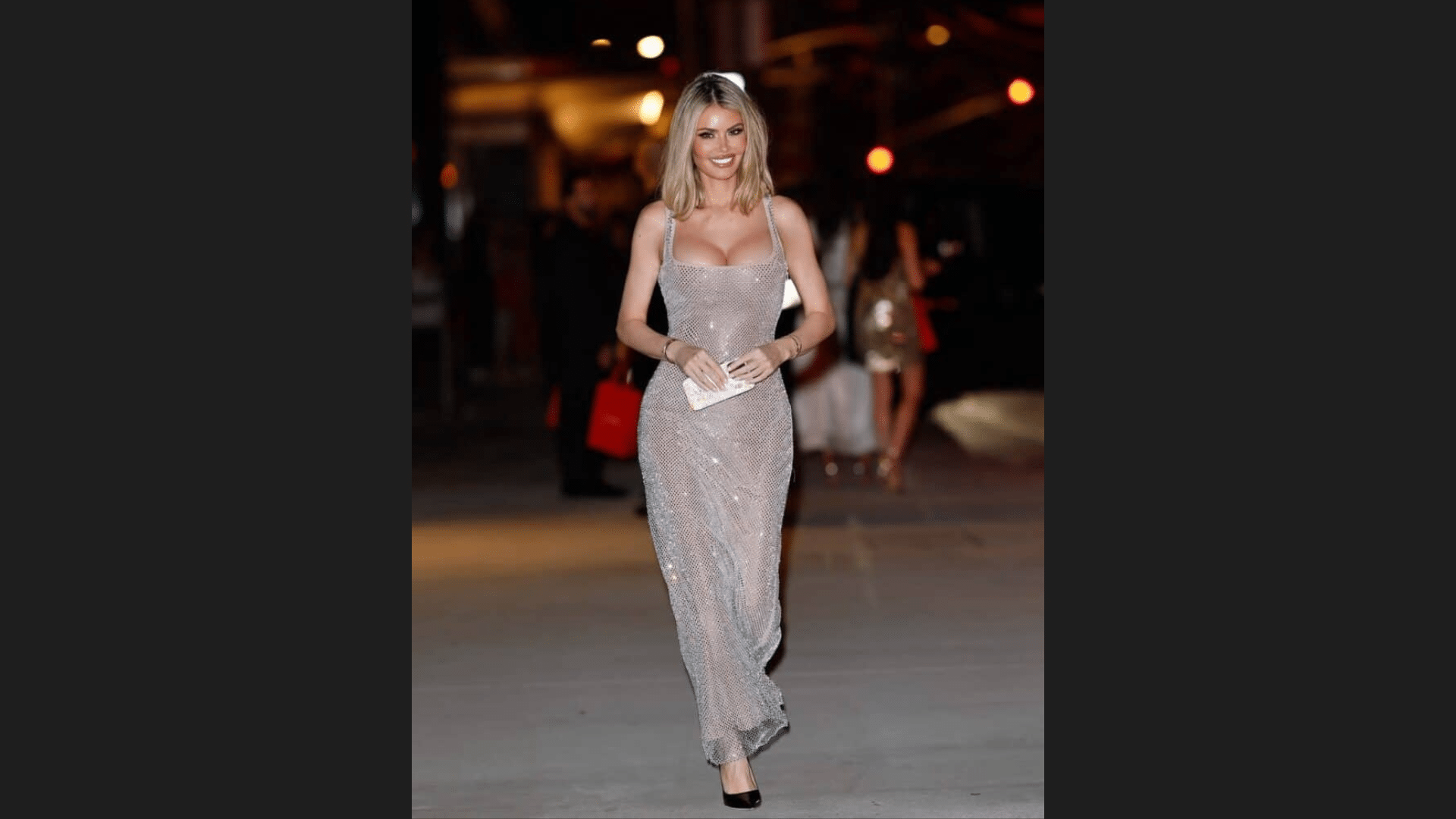
Chloe Sims spent more than ten years on the British reality series “The Only Way Is Essex,” which made her one of the UK’s more recognizable faces. That visibility spilled directly into her social media platforms without much effort on her part.
“I was a bit spoiled, I guess, because I had such a big TV presence,” she says. “It just grew on its own without me trying.” Four years ago, she relocated to Los Angeles. The fame did not follow.
In LA, where her television history is invisible, Chloe attends industry events as, by her own description, “just an unknown influencer.” Her audience skews heavily British, and the revenue potential, she has concluded, is in America. Turning 45 soon, she is represented by Viral Nation and is building a U.S. audience, posting across YouTube, Instagram, and TikTok. She is targeting a specific segment of the creator market she believes is dramatically underserved: women her own age.
How Television Built Her Audience Before She Had to
Chloe’s entry into social media predates Instagram. When her first episode aired, a castmate pushed her to download Twitter, explaining she would gain followers once audiences saw her on screen. She did not understand the platform, but she joined. For years, television generated the attention, and social media collected it.
Lockdown marked the first rupture. Without a show driving awareness, Chloe began posting makeup content more consistently and recognized how much effort social media actually required. The desire to be a YouTuber had been there for years. “I loved YouTube,” she says. “I was fascinated with the makeup content on there.” The obstacle was that she couldn’t figure out the editing, and outsourcing it never produced what she wanted.
When simpler editing apps proliferated, she finally launched her YouTube channel. She has been vlogging for about a year. “The community I have gotten there is great,” she says. “There’s less trolling, so I really love that.”
The Platform She Would Have Prioritized From the Start
Instagram is Chloe’s largest platform, but she describes it with exasperation. The algorithm changes constantly, she argues, and systematically disadvantages creators who built their audiences in earlier years. “The people that had it from really early on, they’re just discarded,” she says. Her sharpest complaint is that Instagram suppresses her content from the followers she has already accumulated. “They hide my content from my followers,” she says. “It doesn’t even go out to, what, 10%? That’s naughty.”
YouTube sits at the other end of her preferences. The vlogs she produces there are unfiltered in a way she says she cannot replicate on Instagram, and the community they have attracted skews older and proves more loyal. “Had I gone onto that platform, things would be a lot more lucrative,” she says. If she were starting from zero today, the choice would be immediate.
TikTok occupies a different position. She recognizes it as the fastest-growing of the three when she posts consistently. The constraint is the platform’s punishment for inconsistency. A single missed day, she observes, can reverse days of momentum. Sustaining that cadence across three platforms simultaneously, while managing life in a new city, is a logistical problem she has not fully solved.
The 40+ Creator She Could Not Find Online
The editorial focus Chloe is building toward emerged from a personal frustration. She opened ChatGPT and searched for top beauty and fashion creators in the U.S. and the UK, aged 40 and over. The results were sparse. “They kept showing me people who were a lot older than me or creators on other subjects that I wasn’t interested in,” she says. A handful of names came back, but nothing like a cohort.
“Who’s standing up for us 40-year-olds?” she says. “Who’s sharing fashion for us and talking about things that we’re going through right now?”
Part of what drives this is personal history. During her decade-plus on a British reality series, the majority of the cast was around ten years younger than her. In arguments, she says, her age was reliably the first thing targeted. “At 29, I wasn’t old,” she says. The experience gave her a specific awareness of how female age is handled in entertainment, one she is now applying as a creator.
“I’ve got a lot to say for myself as a 44-year-old woman,” she says. “I’m going to be 45 in a month, so I’m just gonna have to fill that gap.”
The Trial Reel That Got Half a Million Views
Chloe does not plan her content. She has a rough vision, reads a brief when a brand partnership is involved, and executes on her own terms. “I don’t class myself as an influencer, so I can’t really offer an influencer service as such,” she says. “I’m a TV personality. You’re going to get me with whatever it is, and I’ll use it how I see fit.”
The most useful platform discovery she has made recently is Instagram’s Trial Reels feature, which distributes content to non-followers without appearing on her main profile. She uses it to test formats she would not risk on her primary feed. A reel in which she filmed herself dancing, captioning herself as a millennial staying home, gathered roughly half a million views. “It was something that was so minor and silly and totally out of character,” she says, “because I like to be more poised on Instagram.”
The pattern she has identified across trial reels and TikTok, including posts about her driving anxiety that performed well, is consistent: unpolished content outperforms produced content. “Just being yourself as much as possible definitely helps,” she says. “People just want to see the real, raw truth.” She is aware this runs against the polished Instagram norms she grew up with as a public figure, and she finds it both useful and disorienting.
The American Chapter She Is Already Planning
Chloe does not frame her current period as a reinvention. The goals are continuous with what she has always wanted. The terms, however, have changed.
At 40, something shifted in a way she had not anticipated. “A lot of my anxieties have drifted away,” she says. “I care less.” Life in Los Angeles contributed to a broader recalibration. She stopped drinking gradually, without consciously deciding to. She describes herself as more content at home, despite living in a city known for the opposite. The life she is building is quieter than the one she lived on camera.
Her five-year goals involve at least one American television appearance, with “Dancing with the Stars” named and “Real Housewives of Beverly Hills” mentioned as another possibility. A permanent home in LA, mortgage-free. A creator platform with a U.S. audience large enough to make the economics work. She does not present these as aspirations. She presents them as the plan.
“Once you are in your early 40s, something changes, and you really do become who you are,” she says. “I strongly believe this.”
Subscribe to Our Newsletter
Check Out Our Podcast