





Strategy
Cohley’s LA Summit Puts Marketing Fundamentals Back in Focus as Acquisition Costs Rise

Cohley’s LA Summit Puts Marketing Fundamentals Back in Focus as Acquisition Costs Rise
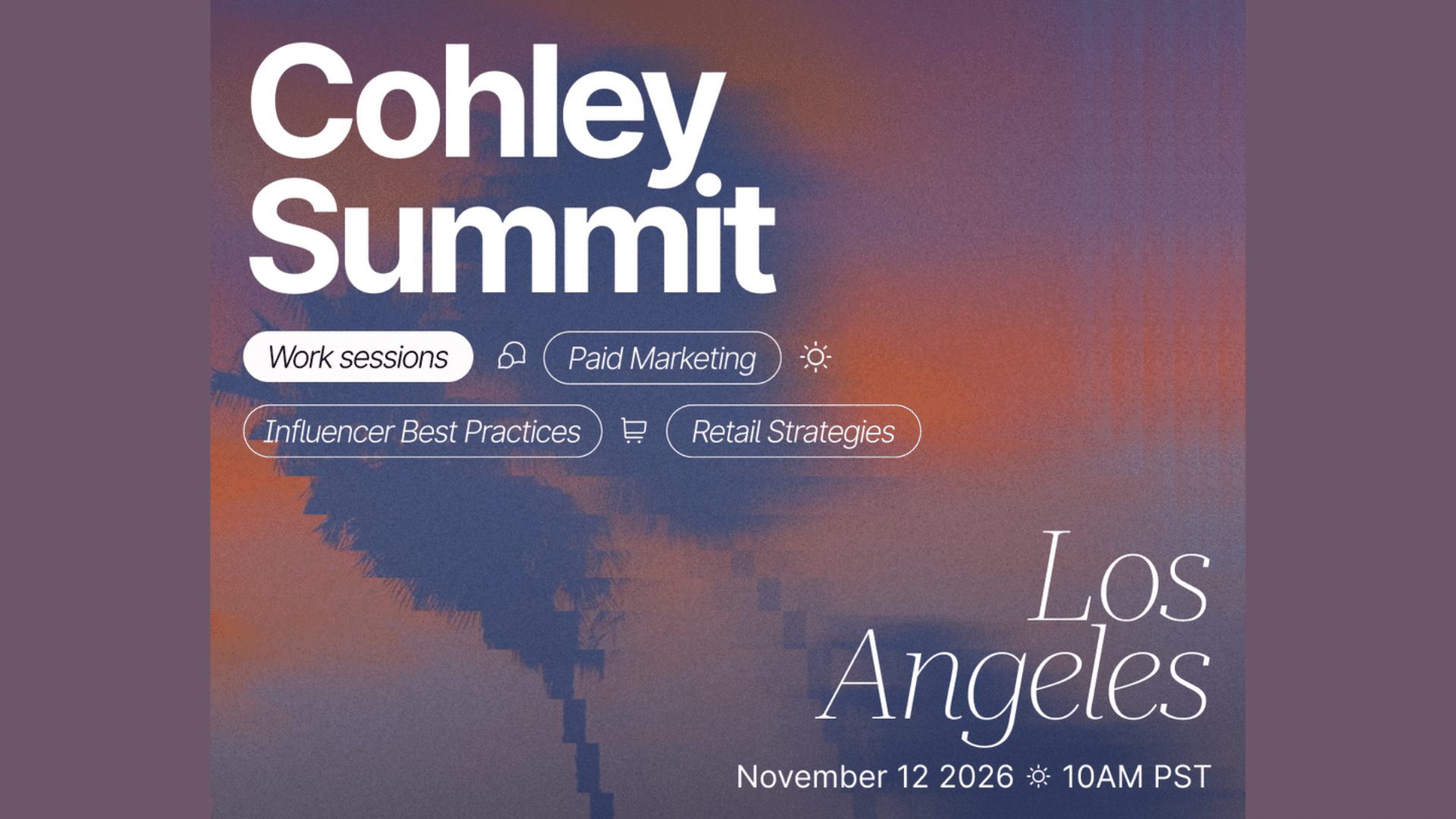
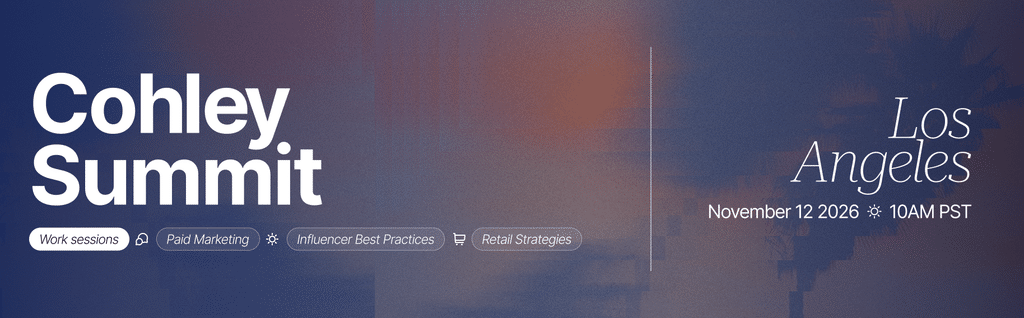
Customer acquisition costs keep climbing, and Cohley co-founder and CEO Tom Logan sees no shortcut left for brands trying to grow efficiently. The company’s first Los Angeles summit, scheduled for November 12, is built around his answer: a return to marketing fundamentals after the years of cheap Meta ads.
Tom sees those years as one of several short windows. “There are these flash-in-the-pan moments, like COVID, where every brand that could start selling online was doing amazing,” he says. Tom points to rising Meta advertising costs in the run-up to the November 2026 U.S. midterm elections, but argues acquisition keeps getting harder regardless.
Cohley’s version of fundamentals runs through content. Tom co-founded the New York-based company in 2016 with Erik Graber, whom he met at UGC-focused Piqora. Cohley helps brands and agencies produce UGC video, photography, product reviews and consumer insights at scale. It recently launched product seeding as part of a consolidated offer that Tom says “eliminates the need for brands to have a bunch of different platforms.” Its focus on enterprise brands has meant more work on brand safety and music compliance.
The summit, in Santa Monica, is aimed at brand marketers and their agencies. Tom organizes the agenda around community, influencer partnerships, retention and retail. The list starts with Influencer Marketing, where he argues one-size-fits-all programs fall short.

Influencer Programs Need Several Layers
That argument anchors the panel “Influencer Marketing, Reconsidered.” Cohley’s Chief Customer Officer Jenn Wang will run it with Katie Salcius of JustFoodForDogs, Dawn Ferguson of Sneakers+Kale and Remi Robinson of HangarFour Creative. Tom describes the first layer of a program as mass seeding for share of voice and earned media value. The second is an ongoing partnership with creators who understand the brand’s audiences.
Paid amplification sits between the two. Tom recommends putting ad dollars behind the creator content that performs best, so messaging reaches the target market “from a highly trusted third party as opposed to just from the brand.” “It’s thinking about an influencer strategy in a multifaceted way, as opposed to one-size-fits-all,” he says.
His case for the paid layer rests on trust. “The trust that Gen Z and Millennials in particular have around brand messaging just continues to erode,” Tom says. “The natural way to combat that is to leverage real, authentic people who are telling stories in an ad capacity.”
Asked what a head of Influencer Marketing could take away when facing questions from a CFO about their budget, Tom points to the role of partnership ads in the wider marketing mix and how paid dollars are allocated to boost creator posts. That depends on the paid team knowing which creator content performs, and Tom says that information often stays inside one department.
Ad Data Rarely Reaches the Brand Team
Putting paid social, influencer and retail sessions on one agenda is partly an attempt to break down those internal walls. Tom says e-commerce, paid social and influencer teams are realizing they need to work closely together. “It’s always a battle,” he says. “Some are better than others. Some are a complete disaster.”
He continues, “The data around what’s performing well in ads isn’t even making it to the brand team. So how would the brand team create content that’s going to perform well on paid?” The paid social team ends up constantly asking the brand team for content.
Tom sees two possible fixes. One is structural, such as a center of excellence. The other is LLM tooling that holds company data and shared context. Tom says a growing number of Cohley clients now use its platform within Claude alongside their teams, with ad performance data, Shopify results and brand guidelines in the same place.
Few companies get there. “It’s not that common that companies nail it and do a great job,” Tom says. The stakes run the length of the funnel. “It’s critical for a brand to be able to tell a consistent, thoughtful story from first impression all the way through the product page,” he adds.
Retail Media Fails on Empty Product Pages
Tom sees the product page as the place where spending outruns content. Retail media budgets keep rising, he says, and brands remain frustrated with their Amazon and Walmart sales even as they put more money in.
“You’re basically just spending a bunch of money to have people come to your open house, and you’re not decorating the house at all,” Tom says. Without that staging, shoppers arrive without the trust and peer validation they need to buy. “What is the point of continuing to spend all this damn money to get them there?”
Tom describes retail support as including sending influencers into stores to highlight a product’s availability or to review it for an online product page. The summit’s retail panel, “Balancing Retail Prioritization on Amazon, Walmart and Target,” features Corbin Jensen of Mammoth Brands.
Cohley client FHI Heat makes the UNbrush, which Tom calls “a TikTok darling.” CEO Jason Dodo is on the program. Tom says that for a recent product, FHI Heat designed the marketing strategy before it built the product, an approach he associates with beauty brand launches. “It’s a different way of thinking about things,” he says.
Each tactic serves what Tom calls the basic premise of marketing, “a relationship between a brand and an individual consumer.”
Retention Gains Weight as Acquisition Costs Climb
That relationship extends past checkout. “Even after they become a customer, how do we make sure that they come back?” Tom says. “How do we make sure that we nurture and preserve this relationship long term?” As acquisition costs rise, he argues, extending the lifetime value of customers a brand has already won matters more.
DTCPG CEO Jordan Narducci takes that on in a talk titled “When CAC Rises, LTV Has to Work Harder.” Tom says Jordan worked inside one of Cohley’s clients before starting his own retention agency, which works primarily with subscription-based DTC brands.
Helen Christoni, Chief Business Officer at Ideal Living, will make a bottom-line case for community. Tom describes Ideal Living as “kind of a big conglomerate.” He says he was thrilled she chose the topic, given that her job is sales. “Why does something like community, which is oftentimes thought of as this cute, nice to have, actually matter?” Tom says, framing the question he expects her to answer.
The point of the session is the pairing of a revenue executive with a channel often treated as optional. Tom chose speakers based on their expertise and professional perspectives, and the same logic runs through the rest of the lineup.
The Agenda Favors Tactics Over Pitches
The lineup mixes specialists who run their own agencies or practices with clients who offer a view “from the seat that they sit in,” Tom says. Cohley’s New York conferences over the past two years typically ran about six panels of 30 to 45 minutes. The LA event adds more quick-hitter sessions.
“My prompt to the speakers was, ‘Treat this like a 15-minute TED talk where you have to teach the audience something that you’re particularly good at,’” Tom says. “Just teach me a tactic that someone in the room can actually take and use to grow.”
The brief reflects his frustration with other industry events. “Everything’s so high level and fluffy and just about the company and what they’re doing with AI,” he says. “I just took a day of my life to come here. What can I actually take back?”
The agenda also adds a 45-minute working session where attendees meet in small groups to discuss any content challenge. Tom took the idea from a Forrester conference. He had noticed similar conversations forming on their own during breaks at Cohley’s events. He expects topics such as running a creator program, launching on TikTok Shop, and fixing retail media pages that don’t convert.
Tom Sees No Shortcuts Heading Into 2027
Tom wants marketers to treat the summit as an annual stop for strategies they can implement, whatever challenges they face. In the agenda he described, each channel depends on content that earns trust once paid media has brought the customer in.
His message for 2027 is the same one the summit opens on. “There’s no cheap win,” Tom says. “The brands that are going to win are going to be the ones that do a really good job across the board, implementing strategy and testing and learning.”
The Cohley Summit takes place Thursday, November 12, 2026, at 10 a.m. PST at the Fairmont Miramar Hotel in Santa Monica. Brand marketers and agency teams can RSVP at cohley.com/events/summit.
Subscribe to Our Newsletter
Check Out Our Podcast