
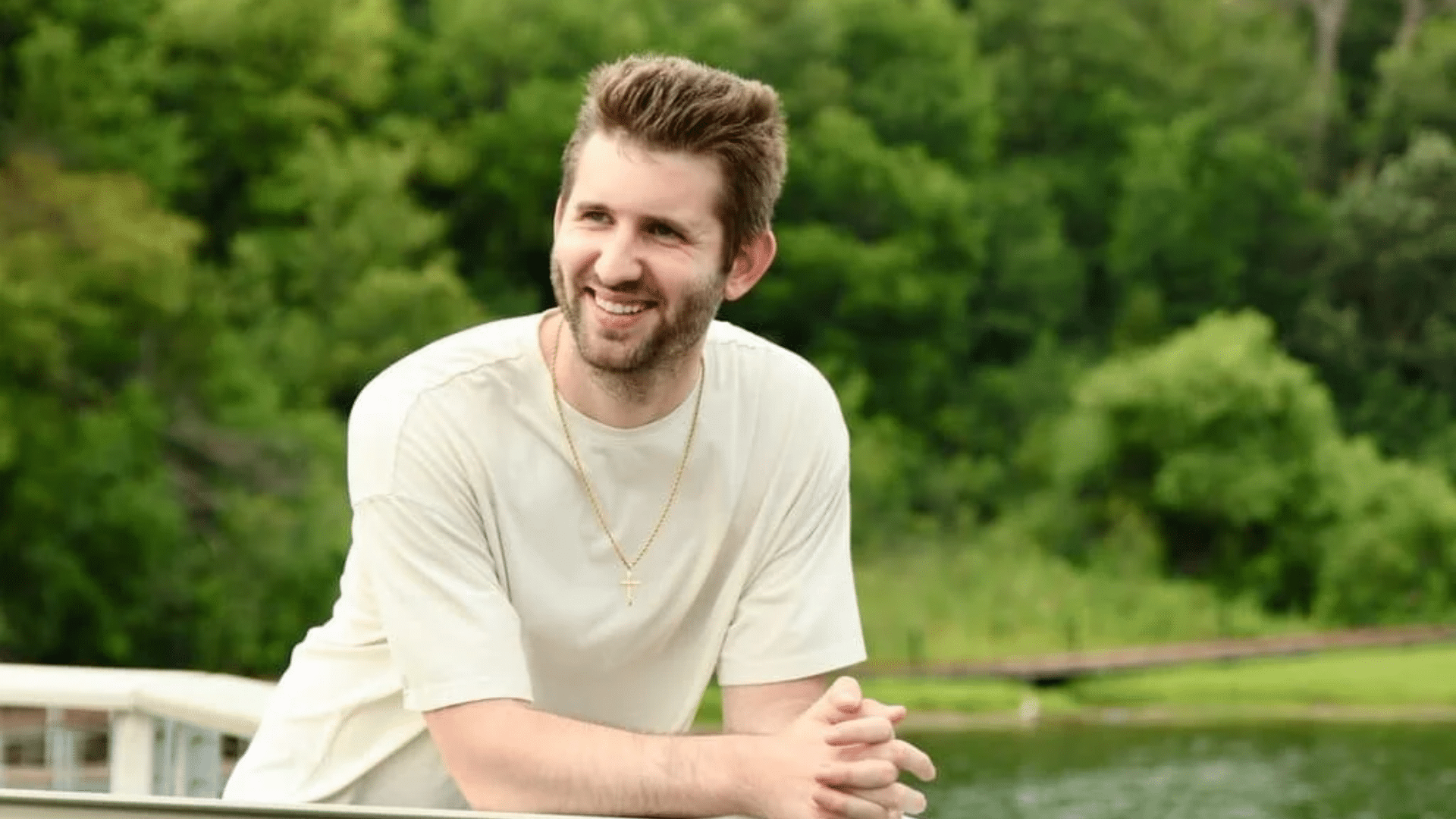








Influencer
Content Creator Josh Liljenquist Doesn’t Trade Trust for Views or Sponsorships

Minnesota creator Josh Liljenquist, whose YouTube content has drawn more than 2.7 billion lifetime views, makes short-form videos that turn online attention into practical help for people facing housing instability, addiction recovery, medical costs, and food insecurity. He regularly decides not to post a video even after the person in it has said yes, and he makes those calls, along with decisions about brand deals and fundraisers, with a small team whose judgment he prioritizes. In each case, the person on camera comes before the audience and the sponsor.
That ordering is the operating rule at Joshlilj LLC, the company behind his “Live to Love” stories, which he founded in August 2021. “It’s always a person, figuring out what they’re comfortable sharing,” Josh says. In his account, the channel is built by the people he films, who trust him with their stories.
Giving came before the business model. Josh started posting stories after deciding teaching was not for him, and when his grandfather, a small-town plumber who did free work for people, died, he asked himself what his own legacy would be. He was 23, living with his parents, and put what his videos earned back into helping the next person. “If I go broke by giving, it’s a win,” he says.
That money now has a public record. His impact archive documents more than $2 million in community support for people and families he has featured, and his brand portfolio, with partners including Uber, P.F. Chang’s, the Minnesota Vikings, Ticketmaster and Sezzle, shows more than 114 million campaign views. He is represented by LAA Sports & Entertainment. His case for the format is that it gives a voice to people nobody stops to ask about their lives. The checks he describes start once the camera is off.
A Subject’s Consent Doesn’t Guarantee a Post
The first check comes after filming, and it turns on what viewers will take away. “If I don’t feel the audience will get the message that I want them to get, then I just don’t do it,” Josh says.
The standard extends past publication. Josh has taken videos down when people no longer wanted to appear, and he expects the same of anyone making this content. “If there is a person out there that wouldn’t, then it’s just, what are you really doing it for?”
The format draws scrutiny. Earlier this year, a Finnish outlet ran a piece in which academics and homelessness experts questioned the ethics of filming people in crisis. Josh says he will always listen to expert criticism, and he draws his own line at permission. “If you’re doing it and you’re not asking for permission, it’s a completely different story,” he says.
He called the question one without a straightforward answer, and his focus has widened beyond people experiencing homelessness. “Everyone struggles,” he says. Judging what an audience will take from a video is a call he doesn’t make alone.
Team Members Who Lived It Hold the Veto
That call sits with Ben, his videographer, and James, who runs outreach. “I give them more power than I give myself,” Josh says. He describes himself as too trusting and relies on the two of them to catch what he misses.
James’s role grew out of one of the channel’s own stories. Addicted to drugs for 30 years and clean for the past 44 months, by Josh’s account, James lost his housing when someone he lived with told the landlord about his history. Josh filmed their meeting outside a Cub Foods, and the video raised $50,000. With Josh’s mother Julie, a real estate agent, vouching for James to a lender, James also qualified for a $250,000 home loan.
“Teen Challenge,” the treatment program James graduated from, then turned down his job application because of his five felonies. Josh hired him the day he closed on the house. James now calls the people viewers nominate. “James can relate in a way where I can’t,” Josh says.
Ben edits the footage, which Josh says lets him see how a story will be received. If Ben or James thinks a moment is unethical or the message won’t land, it goes. “You don’t just have one set of eyes on it, you have three sets of eyes,” Josh says.
That is his main advice to other creators in the genre, though he concedes building a team takes time. It also helps with what the work costs. “You go home, and you take on the weight of other people,” he says.
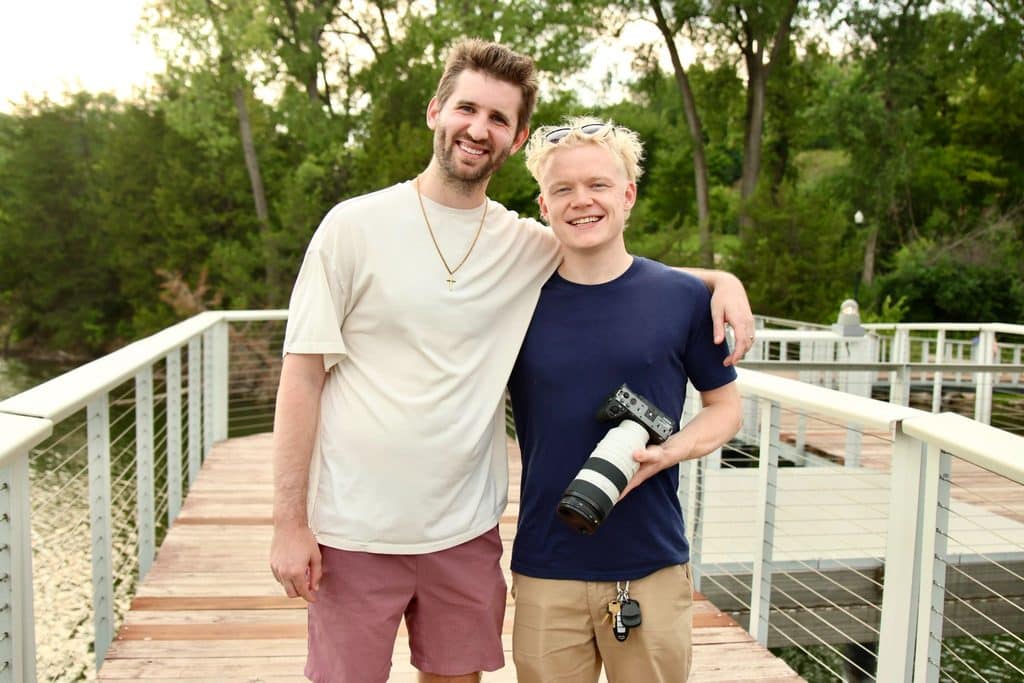
Photo: Josh Liljenquist & Ben Steine
Credit: James Cowan Jr.
Brand Deals Have to Help Someone Else
That team also screens brand partners, and Josh’s agent filters first, declining to bring him deals he doesn’t think fit. “If it’s not gonna benefit somebody else, it’s just going to benefit me. We don’t take it.”
He applied it to a deal from a larger agency he previously worked with, which wanted a mobile game promoted mid-video. The money was significant by his account, and he still declined. “You’re not gonna talk about a traumatic thing that happened to somebody in the middle of the video,” he says.
The partnerships he holds up instead make the brand part of the help. A restaurant gave a mother who had been choosing between feeding herself and feeding her baby free food for a year. Josh says his team is working with OpenAI on a project intended to restore the voice of a woman who has lost her vocal cords. “That’s the type of partnership that I love,” Josh says.
Local businesses face a similar screen. When a featured homeowner needed a new roof, at least 20 companies offered to do the work, according to Josh. He chose a woman-owned construction business from Brownton after asking why it wanted the job, and the company planned to fix the roof with or without a video. “When I’m partnering with somebody, and I attach my name to it, I feel like the mission has to align,” he says. The strictest accounting is reserved for viewers’ money.
Donor Money Is Never Presented as His Own
His impact website labels donor-funded support separately from what he gives himself, a distinction he says he owes the people sending money. “They’re trusting me to do the right thing with their money. And I can’t claim that I’m giving my money away because it’s not.”
He also leaves GoFundMe campaigns open, so a viewer moved by an older story can still give. The person featured is the beneficiary, so the money reaches them without passing through Josh.
The bar for launching a fundraiser at all is a hypothetical windfall. “If they were to get, hypothetically, $10 million, I have to have full confidence that person will spend the money that they don’t need to help out the next person,” Josh says. James, Ben and Josh each have to say they hold that confidence before a campaign goes ahead.
“We want that cycle to keep going. We don’t want it to end with the person that we help,” Josh says. He applies the same logic to his audience.
The Goal Is a Million Creators Doing the Same Work
Josh once messaged a 14-year-old whose video of cooking for people had drawn about 70 million views. If even 1% of those viewers were inspired to do something kind, he told him, that would be 700,000 people. “And 1%’s not too much to ask,” Josh says. Motive, he argues, is what will separate the creators who keep audience trust. “If you don’t do it for the right reason, people will know,” he says, pointing to fellow Minnesota creator Jimmy Darts.
His own plans run toward replication. Josh says he is doing case studies with several universities so people can learn the work, sketching a website built around a globe that pinpoints creators doing it in each country, starting with Canada and Mexico. He would endorse them, connect people who reach out, and possibly fund someone starting in their own country.
He frames the idea as succession as much as growth. “When I’m dead, who’s going to carry on this baton?” he asks. “We can’t go across the world and be at a million different places at once, but we can have a million different people be at one different place.”
Cover photo credit: Ben Steine
Subscribe to Our Newsletter
Check Out Our Podcast