

Influencer
Miranda McKeon on Building a Brand on What the Wellness Industry Refuses to Say

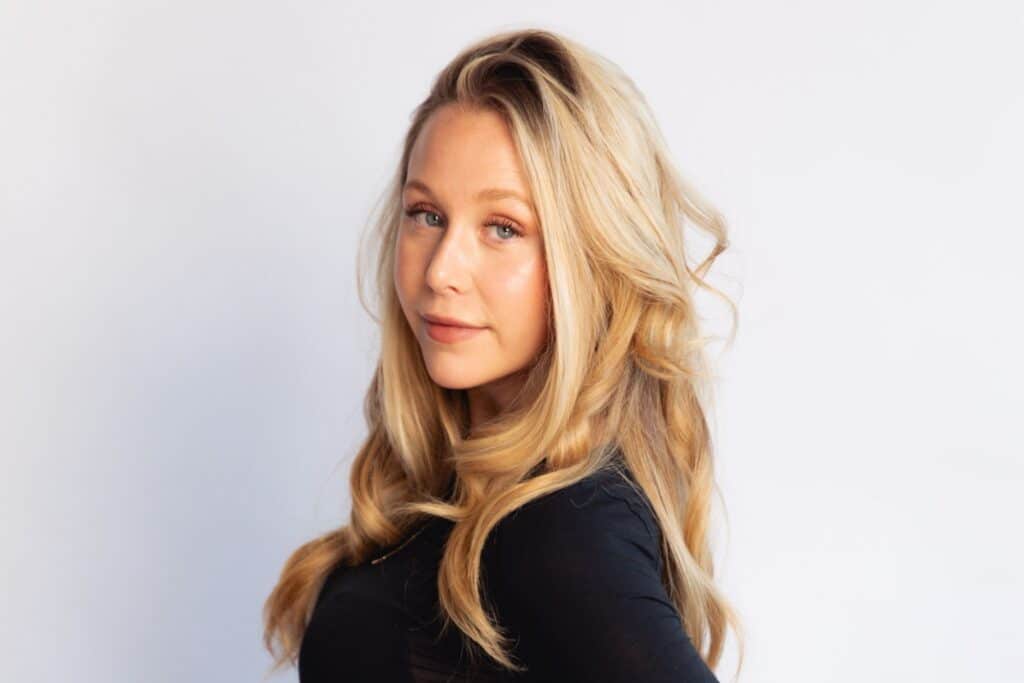
At 19, Miranda McKeon was mid-sentence on a path that looked nothing like the one she had been handed. She had a Netflix credit. She had a USC enrollment. She had, by most measures, figured out the first act.
Then she found a lump.
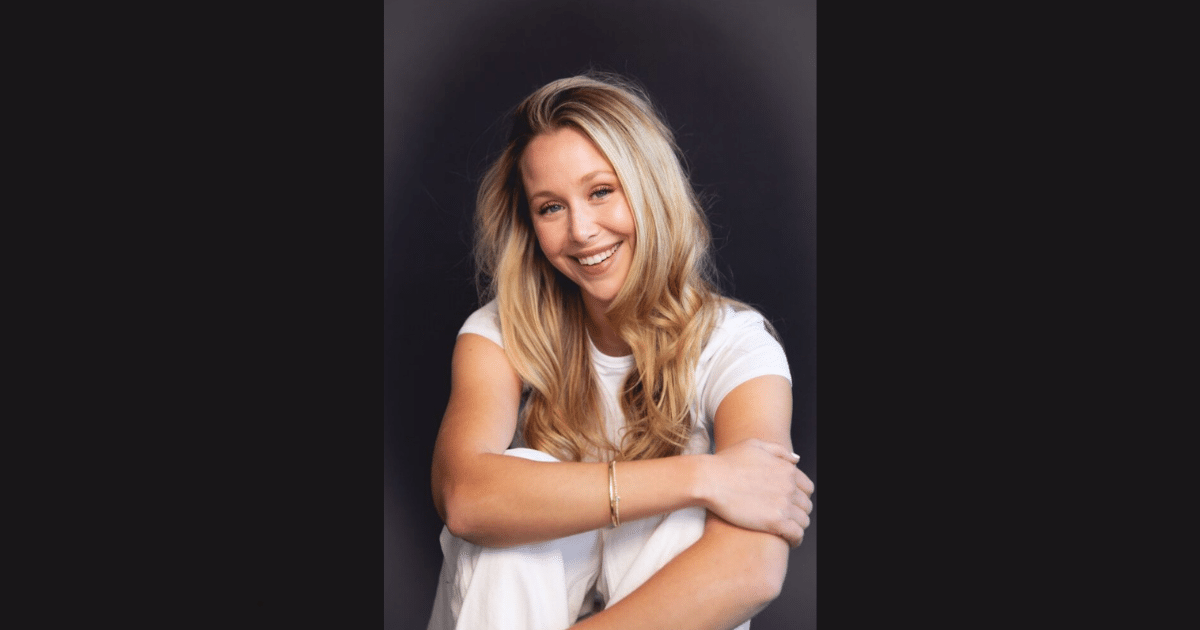
Miranda is perhaps best known as Josie Pye, the sharp-tongued foil on Netflix’s “Anne with an E.” But the version of Miranda that more than a million followers know today on Instagram and TikTok was not built on a soundstage. It was built in a hospital room, in a stream of unplanned posts that poured out of her during chemotherapy. Since that time, she has constructed a media ecosystem that treats cancer survivorship not as a niche identity, but as a lens through which to examine what modern wellness culture gets wrong.
Today, at 24, she runs a content business spanning fashion, beauty, and lifestyle; a card game company, Fill Your Tank, designed to drive human connection; a podcast, “Pink 365,” focused on women’s health; and an advocacy platform that has brought her to “Good Morning America,” the pages of People, and speaking appearances at Harvard.
“All of these little pockets that I involve myself in really dovetail into each other to create an overall universe of the Miranda McKeon brand,” she says.
The Post That Was Never a Strategy
When Miranda was diagnosed with breast cancer in 2021, she went online almost immediately. There was no publicist involved, no editorial plan, no careful rollout.
“It really just poured out of me,” she says. “I’m a very spontaneous, lead-with-my-heart kind of person.”
The decision, if it can be called that, came from a simpler need. She was isolated, newly diagnosed at an age when most of her peers were navigating sophomore year, and she knew that the community she had started to build online could become a lifeline. It did. The audience that gathered around her during that period was not looking for a wellness influencer. It was looking for someone honest enough to be scared on the internet, and Miranda was.
That origin shapes everything that has come since. Her content does not follow the aesthetic grammar of most lifestyle creators. It is, by her own account, not particularly calculated day to day.
What holds it together is less a content pillar system than a consistent willingness to say the uncomfortable thing out loud.
What the Wellness Industry Is Actually Selling
That willingness has produced at least one view that runs sharply against the industry Miranda now earns from. She has been direct about a core tension in the wellness content space: it sells people night serums when it should be selling mammograms.
She does not present herself as exempt from the contradiction. “I have my eye patches on right now,” she says. “I’m no better than the next girl who loves a nice night serum.”
But the critique is still real. Her platform is grounded in advocacy for early detection, body literacy, and self-advocacy at the doctor’s office. The Sientra campaign she ran, which included a philanthropy component and a national donation drive rather than a straightforward product push, reflects her model for what a health partnership can look like when the audience is at the center of the objective rather than the conversion rate.
“Over the years, I’ve been able to create meaningful partnerships that actually have the audience at the heart of the objective,” she says. “There’s so much more to women’s health partnerships than profit.”
She has turned down deals that did not clear that bar, including some with major budgets. “It stings every time,” she says. “But if it’s not aligned, my audience is going to know that right off the bat.”
Creative Freedom as the Non-Negotiable
Beyond alignment, Miranda’s most consistent friction with the brand partnership model is the brief. Commission-based deals were never on the table for her, and she has watched the industry gradually catch up to her position. She prefers creative latitude and, when she doesn’t have it, has learned to work within constraints. But the campaigns that perform best are the ones where the brand trusts her to find the integration herself.
“I think brands are getting better about giving creators creative freedom,” she says. “That’s where I find my partnerships are most successful.”
Her approach to building trust with brands mirrors her approach to building it with audiences: transparency about imperfection. She posts about her own ongoing shift toward cleaner products, not as a destination but as a process, and is explicit with followers that she has not thrown out everything in her medicine cabinet. “I’m still in my testing phase of this whole new world of trying to be a more wellness-driven person and creator,” she says. “I think that builds trust.”
For a creator whose audience spans high school students to women in their 60s, the refusal to perform certainty is both ethical and strategic. What holds the whole audience together is not a shared consumer profile but a shared expectation of honesty.
Fill Your Tank and the Business Underneath the Brand
In 2022, Miranda launched Fill Your Tank, a card game company built around prompts designed to drive real conversation between strangers and friends. The product is already available on TikTok Shop, with Miranda and her team currently working to bring it to Amazon.
The idea came before the business model did. She made up the game, played it with friends, and immediately thought it could scale. The manufacturing process, the Shopify build, the inventory logistics: all of it she figured out without a template. “The best experience comes from doing and practicing,” she says. “You can’t teach all those processes because every product’s different.”
The structural challenge Fill Your Tank faces is real. Card games are not replenishment products. There is no subscription, no consumables. Miranda is building toward a catalog of different decks and, this summer, assembling a network of creators who can generate content for the brand independently of her own account.
“When a video goes viral on the Fill Your Tank account, it’s because of what’s been created intentionally for that account,” she says, adding that the longer-term ambition is for the brand to sustain its own organic audience, distinct from her personal platform.
‘Pink 365’ and the Appetite for Depth
The most recent extension of the Miranda ecosystem is “Pink 365,” a podcast she launched after noticing her audience was asking questions she was not equipped to answer alone. The show brings in doctors, patients, and experts to address women’s health with clinical grounding.
Currently funded by two stage-four metastatic breast cancer nonprofit organizations, it is eight episodes in and approaching the close of its first sponsorship cycle.
Miranda launched it with a specific diagnosis in mind: her audience, like the broader Creator Economy, had grown exhausted. “Everyone’s brands are so exhausted from the TikTok of it all,” she says.
Clips cut from long-form episodes have gone viral on Instagram, with strong conversion from her personal account to the podcast feed. The show’s scope will broaden in its second season to include female athletes and entrepreneurs alongside women’s health content, extending the platform’s reach without abandoning its foundation.
What She Wants There for the Next Time
Miranda is still on hormone suppressants. October, Breast Cancer Awareness Month, is her heaviest work month and one of the most difficult. Hard days arrive without warning: a film watched the night before, an inbox full of stories from women mid-treatment. When they come, she is either completely offline for a few days or posting in real time.
She has built something considerable in the years since the diagnosis. A content business. A product company. A podcast. An advocacy platform. A following that trusts her not because she is polished but because she is not. The through line, she says, is that none of it was engineered. It emerged from staying true to herself, publicly and consistently, through the kind of years most people would not choose to document.
The question of what she wishes had existed when she was 19, going in blind, produces her most personal answer.
“My own advice of getting screened, not panicking, tips and tricks about self-advocacy,” she says. “If you don’t feel like you can do it for yourself in the doctor’s room, call up someone on the phone to be there with you. Hopefully, I’m changing the space for younger women to come after me.”
Subscribe to Our Newsletter
Check Out Our Podcast