




Influencer
Why Para Surf World Champion Liv Stone Is Pushing Brands Beyond the Adaptive Creator Label

When Got Milk came calling, Liv Stone had roughly 10,000 followers and a Para Surf World Championship title. The pairing made sense on paper: a sports brand, a Team USA athlete, and a creator with a clear story. Liv turned it down. She was vegan at the time, and the check was not worth the contradiction.
“My audience would’ve been like, ‘Oh, you just did that for the paycheck,’” she says. That refusal established the terms of the creator career she has built since: brand work only works when the story fits.
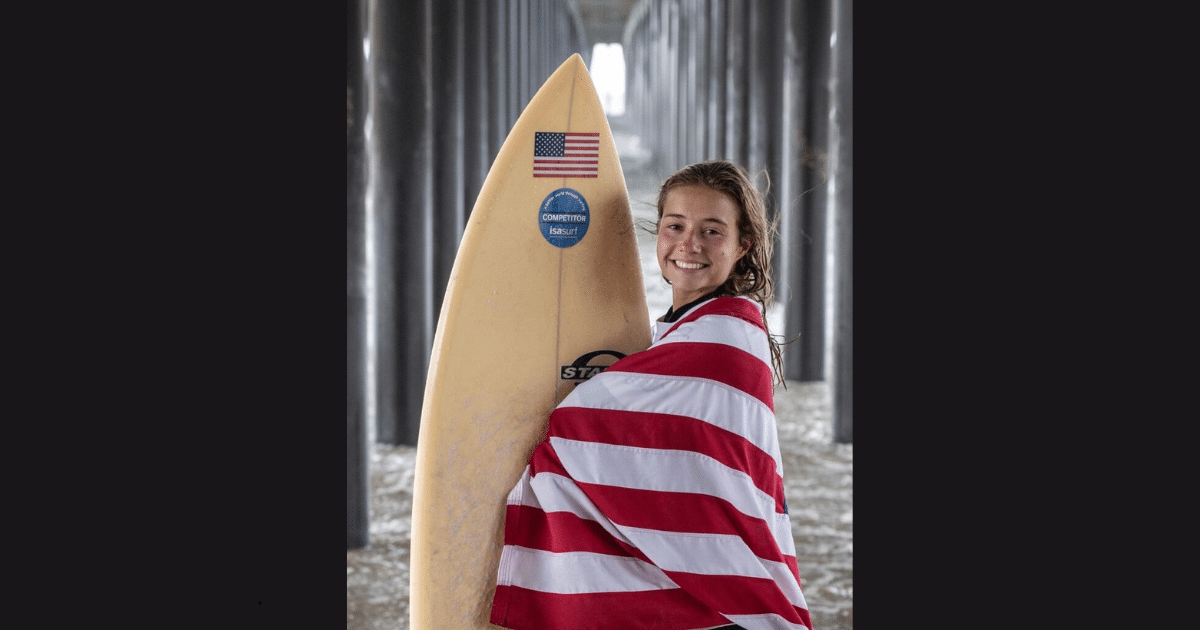
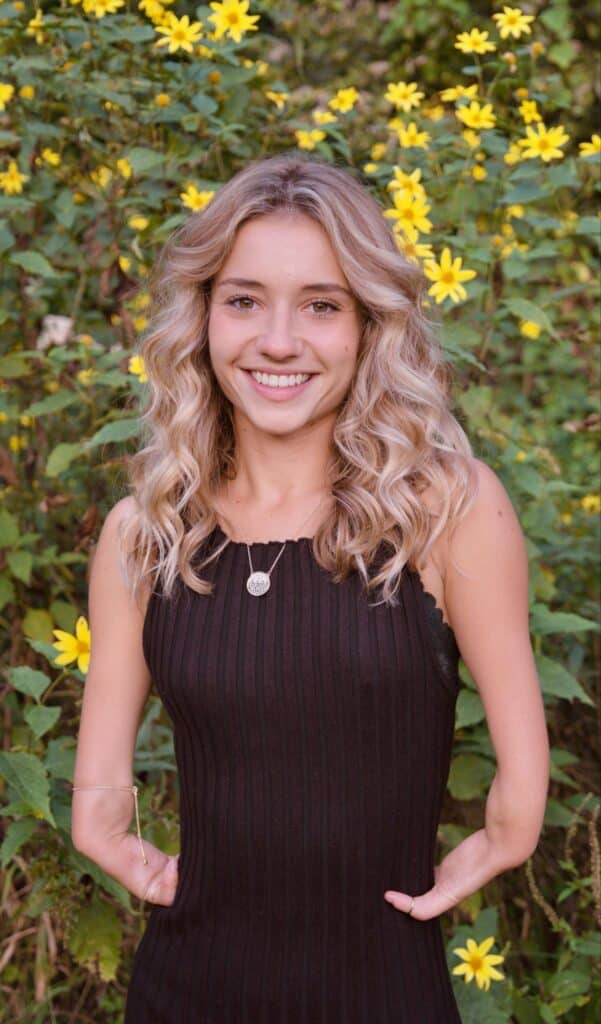
Olivia Stone, known professionally as Liv Stone, is a 23-year-old creator based in Lancaster, Pennsylvania, with an audience of more than one million followers across TikTok, Instagram, and YouTube. Born a congenital above-the-elbow amputee with two fingers on each hand, she is a three-time Para Surf World Champion and former Team USA competitor. Her partnerships include Under Armour, Apple, Dove, The North Face, and The Nature Conservancy, but she has spent much of her creator career resisting the simplest version of her own pitch.
“I want to be broader than that,” she says of the disability creator category she technically inhabits. “I love cooking and fitness, environment, and beauty.”
The Championships That Opened Doors and Then Closed Around Her
The surfing career was both a foundation and a trap. Recruited by the Challenge Athletes Foundation at 15, Liv relocated from Pennsylvania to California, trained on San Diego beaches, and spent five years competing for Team USA. The gold medals came. So did the internal pressure that eventually made competing unsustainable.
“I had a really love-hate relationship with competing,” she says. “I expected myself to be the best all the time, and there’s nowhere to go but down when you’re at the top like that.” The critics were not the problem. “It’s a lot of inner thoughts and inner self-doubt that I really struggled with.”
She stepped back, moved home to Pennsylvania about a year and a half ago, and kept the medals in her bio because they open doors. Brands notice them. Other adaptive athletes recognize them. “They’re always going to be a part of me,” she says. Competing again is not on the table right now.
Building a Brand Beyond the Single Story
The shift from hobbyist to professional creator happened over several years. Liv had a manager for a few years before the income became livable, and the turning point came not from a viral moment but from a sequence of brand recognitions.
“When LEGO and Olay and UGG started to notice my content, I thought, ‘Okay, if I really pour a lot of time and effort into creation, what are my limits?’”
The early content was heavily disability-centered. It drove initial audience growth but also attracted a narrow demographic. Liv pushed outward. “I didn’t want to be just the creator that would just post about how I tie my shoes or how I do my hair,” she says. The four pillars she settled on – cooking, fitness, environment, and beauty – became consistent content lanes with disability advocacy running through all of them rather than defining any one.
The algorithmic consequence of that expansion was real. When she began posting outside the identity the platform had catalogued, viewership dropped. “The algorithm really only knows you for one thing,” she says. “If I were to post tomorrow about painting, the video might not do so well.” Consistency rebuilt the audience in each new category, but the timeline was unforgiving.
The Audience Hiding in the Metrics
There is a figure buried in Liv’s Instagram analytics that complicates most of the briefs she receives: more than 80% of her followers on that platform are men. The skew is largely a product of content type, sport associations, and audio choices. She tends toward classic rock, leans into outdoor physical challenges, and posts into a sports-heavy environment that pulls a predictably male audience. It once ran as high as 95%.
That audience is not without commercial value. Sports and outdoors partnerships map naturally onto it, and Liv has built real brand equity in that lane. But she is actively working to diversify. “I’ve been really trying to reach the female audience more,” she says.
Liv prioritizes direct engagement with female followers, responding to comments and building individual connections, and has been leaning into cooking and beauty content with different audio choices to shift the balance. Hiking, rock climbing, and DIY content, she notes, are just as much for women as they are for men. YouTube is already reflecting that argument: recent interactions on that platform run roughly 67% female.
The gap has a commercial consequence Liv addresses directly. Affiliate programs, which she has been testing for about a month, are not generating significant results. The paid partnership model works differently. “I really do genuinely like those paid partnerships where a brand really likes me, and not necessarily how many products I can sell in a month,” she says.

When the Brief Leads with the Wrong Story
Disability-forward briefs arrive regularly. The adaptive athlete who overcomes is a recognizable creative frame, and Liv does not take offense at it. But she notices what is absent.
“I find a little bit more passion in the partnerships that have nothing to do with my hands,” she says. “It makes me feel like they’re not with me just because of my hands.”
The briefs she recalls most warmly, a running shoe campaign with Brooks, a skincare company partnership, and a LEGO collaboration, treated her as a lifestyle creator who happened to be adaptive, rather than an adaptive creator fitted into a lifestyle category. The North Face campaign, built around an adaptive tent, worked for a different reason: the company had designed something genuinely new rather than positioning an existing product against a disability narrative.
She declined Got Milk because it did not align in terms of her own situation. She turns down other brands because their values similarly do not align with hers. “You can’t just think about the dollar sign,” she says. “You have to think about your established trust with your audience.”
Neon Rose manages all of Liv’s brand negotiations.
The Shift She Has Watched Happen
On the question of how brands are actually performing on inclusive marketing, Liv is more generous than the prevailing industry critique tends to be. She has watched the category change materially in three years, and she finds the direction genuine, if not yet complete.
The argument she makes for universal design is one most brand strategists undervalue: accessibility features do not serve a narrow user base. “If we make a product that is easier to use, it’s not only easier to use for able-bodied people, it’s also easier to use for people with disabilities,” she says. “That just broadens the scope for your product.”
She adds that the population benefiting from accessible design, including older consumers and people with mobility constraints, is not as small as brands tend to assume.
Three years of commercial work in this space has given her a baseline for comparison. Adaptive representation in brand imagery was rarer when she started. Products designed for accessibility were almost nonexistent. Both have changed, and she finds that trajectory meaningful.
What She Actually Wants to Be Known For
Back in Pennsylvania, in her first apartment with her dog Charlotte and a tripod she learned to set up alone, Liv is making deliberately less polished content than she used to. Her thumbnails now feature faces she would have hesitated to post two years ago, the kind of goofy expressions that reflect the personality shaped by two older brothers more accurately than any curated influencer identity ever did.
“I used to want to be this picture-perfect creator,” she says. “The past year or two, I’ve really leaned into just being myself, being silly, being authentic.”
The confidence to post a thumbnail where she looks a little ridiculous came gradually, then became easy once the audience responded. “People these days, they want real,” she says. “With AI and with just a lot of perfect influencers, they want real people to connect with.”
Ten years from now, she wants the record to be clear. “She was as authentic as possible through brands that aligned with her values,” she says of how she hopes to be remembered. “She didn’t compromise. And she just stayed true.”
Subscribe to Our Newsletter
Check Out Our Podcast