





Influencer
Eleanor Neale on Building a True Crime Channel by Resisting the Click

Most true crime creators are rewarded for the click. Eleanor Neale built one of YouTube’s most trusted true crime channels by learning when to resist it.
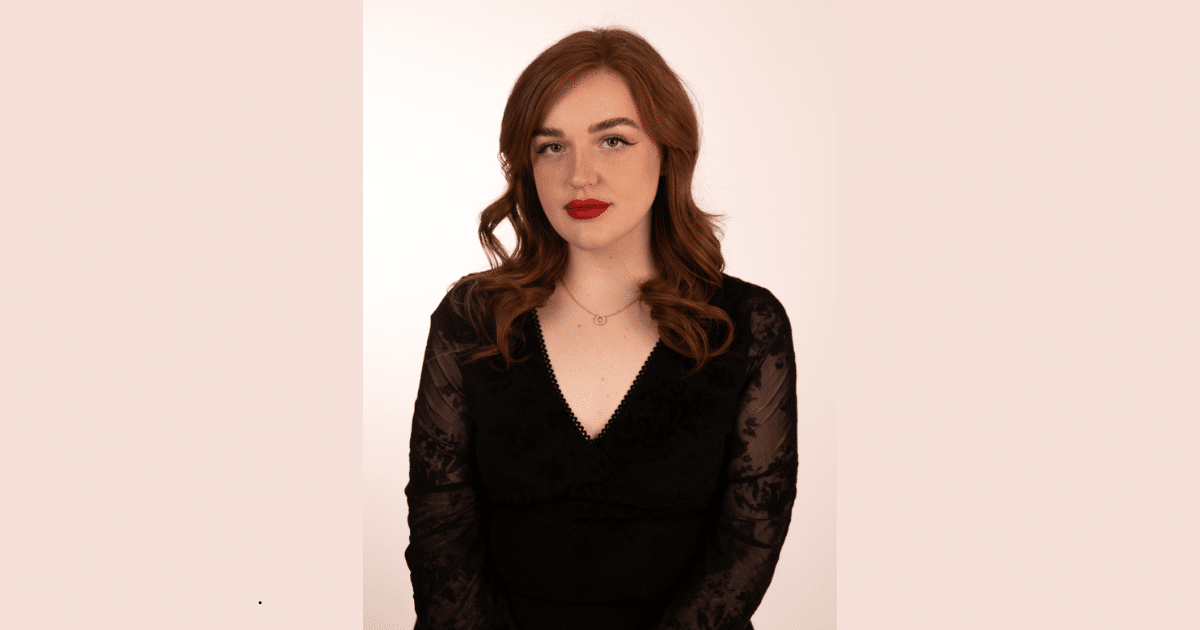
Eight years after posting from her bedroom as an 18-year-old in the UK, Eleanor now runs “OUTLORE with Eleanor Neale,” a weekly true crime YouTube channel with nearly three million subscribers, alongside a podcast, a personal channel, and Moth Management, her London-based talent company. The business is built around a research-heavy production operation, distinct channel identities, and a monetization model that depends on audience trust rather than traffic alone.
For Eleanor, that structure traces back to a single editorial conviction: true crime content should avoid unnecessary sensationalism and keep victims at the center of the story.
“The goal isn’t just to get a lot of views,” she says. “It’s to make a super intentional piece of content that provides context and memorializes a victim.”
Starting From Makeup and Moving Toward Murder
Eleanor did not arrive on YouTube with a clear plan. Her early content mirrored what she was watching: makeup tutorials, vlogs, Q&As. True crime entered gradually. She researched one UK case, posted it, and watched it perform roughly on par with her beauty content. “A few of them really enjoyed it,” she says of her early viewers. “They were like, ‘Wow, this is different.'”
The growth was incremental rather than explosive, accumulating a few hundred extra views per upload, then a thousand, then two thousand. What convinced Eleanor to commit was a shift in how her audience wrote to her. “The language kind of changed from ‘I liked this video’ to ‘I like your videos,'” she says. “It was kind of like realizing that it had become a bit of a community of regulars.”
That community formed around something specific to the UK niche: cases that American channels lacked the context to cover. The gap was narrow enough to build deep loyalty before the genre became crowded.
The Production Machine Behind Every Episode
Producing true crime at “OUTLORE’s” standard is not a one-person operation. Eleanor works with two researcher-scriptwriters, an operations manager, and a freelance editor. A single episode takes roughly five to six weeks from case selection to publication.
The process begins with editorial intent: not just which case to cover, but why, and what the channel can add beyond existing coverage. “We really try to figure out where we can provide value and context,” Eleanor says. “And if we can’t add, then we don’t.”
Pre-research evaluates sources and credibility. Once greenlit, three weeks of deep research follow: case files, court documents, archived interviews, and extensive fact-checking. A script is then co-written with Eleanor over roughly a week to preserve her tone and framing, before filming, editing, and packaging complete the cycle.
That cadence, one weekly episode, is both a structural necessity and a signal about what the channel values. Volume is not the priority. Rigor is.
When Ethics Outranks the Algorithm
Eleanor uses a specific phrase to describe her editorial philosophy: “less clickable decisions.” The tension between ethical responsibility and platform performance shapes every episode “OUTLORE” produces.
It surfaces in the smallest choices. Thumbnails are victim-centered. Details that could sensationalize or divert attention from the case are cut. When a family requests that a particular element be excluded, the team obliges. Eleanor describes a recent case where a family asked that a specific aspect not be discussed because it would divert the conversation in unhelpful ways. “Those are the kind of things that we hold back on,” she says.
The harder version of that calculation is whether to cover a case at all. “For ‘OUTLORE,’ when we’ve got that goal at the forefront, we end up making less clickable decisions, I guess, and less engaging decisions because they’re the more responsible ones,” Eleanor explains.
She is clear-eyed about the trade-off. “Audiences are becoming even more ethically aware than they’ve ever been, and they’re very discerning with the content that they watch.” The channel bets on that discernment.
A Brand Built to Outlast Its Founder
In 2025, Eleanor rebranded her channel from her own name to “OUTLORE.” The move reflected a rethinking of the business. Running a weekly production with a full research team under the name “Eleanor Neale” no longer made sense. “I wanted it to be obvious that there’s more than just me working on these.”
The rebrand also created space for the business to expand beyond what a personal brand can accommodate. “One day there might be other hosts, and it might be bigger, and it might be cross-platform,” Eleanor notes. “It just gives scope for us to grow with it rather than it just always being attached to just me.”
Her personal YouTube channel runs in parallel: unscripted, off-the-cuff, and free from the structural demands of OUTLORE. “On my personal channel, I can turn on the camera and sing you a song or something,” she says, adding that keeping the two distinct protects both.
Brand Deals and Moth
Brand partnerships in true crime require a specific kind of advertiser. Tone and placement must be handled carefully. “In the beginning, they could just do quite like a loud sales pitch, chuck it in a video,” Eleanor explains. “But you can’t do that with true crime. The tone has to be different.” The brands that work are the ones willing to follow her lead. “What you’re buying into here is our community. And they have to honor that.”
She co-founded Moth with Nic Butler, who had previously managed her in-house and brought production experience to the role. The company aims to fill a gap Eleanor had spent years watching from both sides: management that understood creative production and offered genuine support. “A lot of these content creators do kind of need a producer these days,” she says. “They’re doing bigger and bigger things, but they’re still being treated as if they just make content in their bedroom.”
Most management company staff, she argues, have never been creators themselves. “I can spot those places in which a creator will need support,” Eleanor says. “But it’s not obvious if you’re not already a creator.”
The Next Chapter Eleanor Is Building
Eleanor is now focused on maturing both identities simultaneously. She wants “OUTLORE” to grow into something larger and more established on its own terms, while her personal channel develops separately.
“I want to make ‘OUTLORE’ even clearer and stronger and more powerful than it’s ever been,” she says, “and while allowing me, as just Eleanor the girl, some more freedom to explore, kind of what comes next creatively.”
The true crime genre, she believes, is undergoing a shift. Creators who entered the space opportunistically are becoming visible to an audience that has grown discerning. “A lot of people are spotting that they could get into it,” Eleanor says. “But they’re not doing it because they truly care. And I think that’s really obvious to an audience.”
What has held Eleanor’s audience for eight years is something that resists algorithmic explanation. Each Sunday, a new episode goes out, and people who have built routines around these stories gather again.
“It feels like hanging out with your friends,” she says. “We get to have a conversation. We get to talk about something that we’re all really passionate about together, and that’s my favorite thing about it.”
Subscribe to Our Newsletter
Check Out Our Podcast