



Influencer
Dara Denney Is Going to Cannes With a Message Most Brands in That Room Don’t Want to Hear

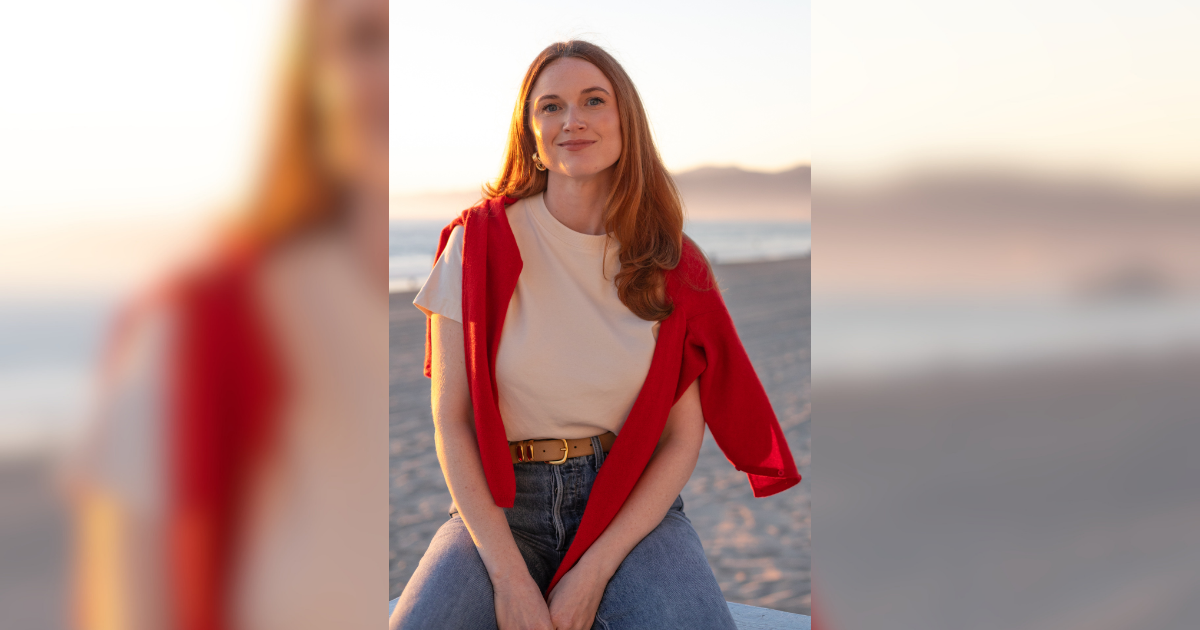
Last year, Dara Denney paid $15,000 out of pocket to attend Cannes Lions. The one brand deal she landed during the week barely made a dent. This year, she’s going back.
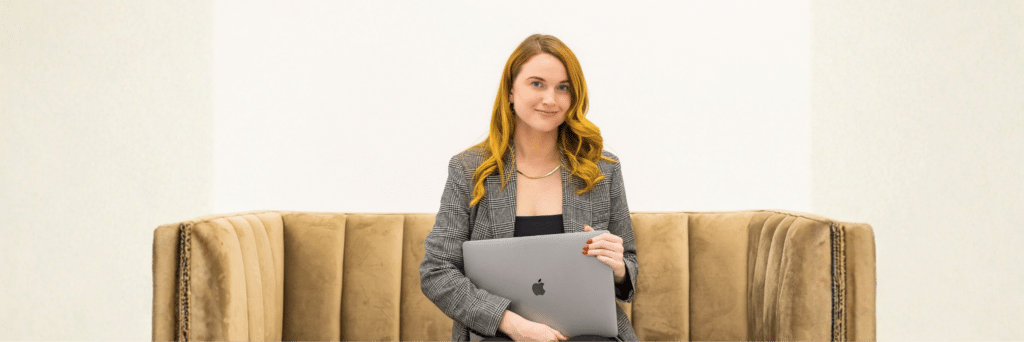
Dara is not the typical Cannes Lions attendee. A performance creative consultant and Chief Evangelist at Motion, a creative analytics platform, she has spent six years building a YouTube channel with 130,000 subscribers by doing what advertising agencies prefer to avoid: explaining, in technical detail, exactly how the ad-buying machinery works and where it consistently breaks down.
At a festival that has historically rewarded emotional narrative and brand storytelling, she is arriving with a more abrasive argument: most brands running paid media right now are doing it wrong, and the creative strategies they have invested in are not going to save them. That argument runs through everything she does. “I’ve worked in the advertising industry for the last 10 years,” she says. “I own a few different businesses, one being an advertising agency and the other being my content business.”
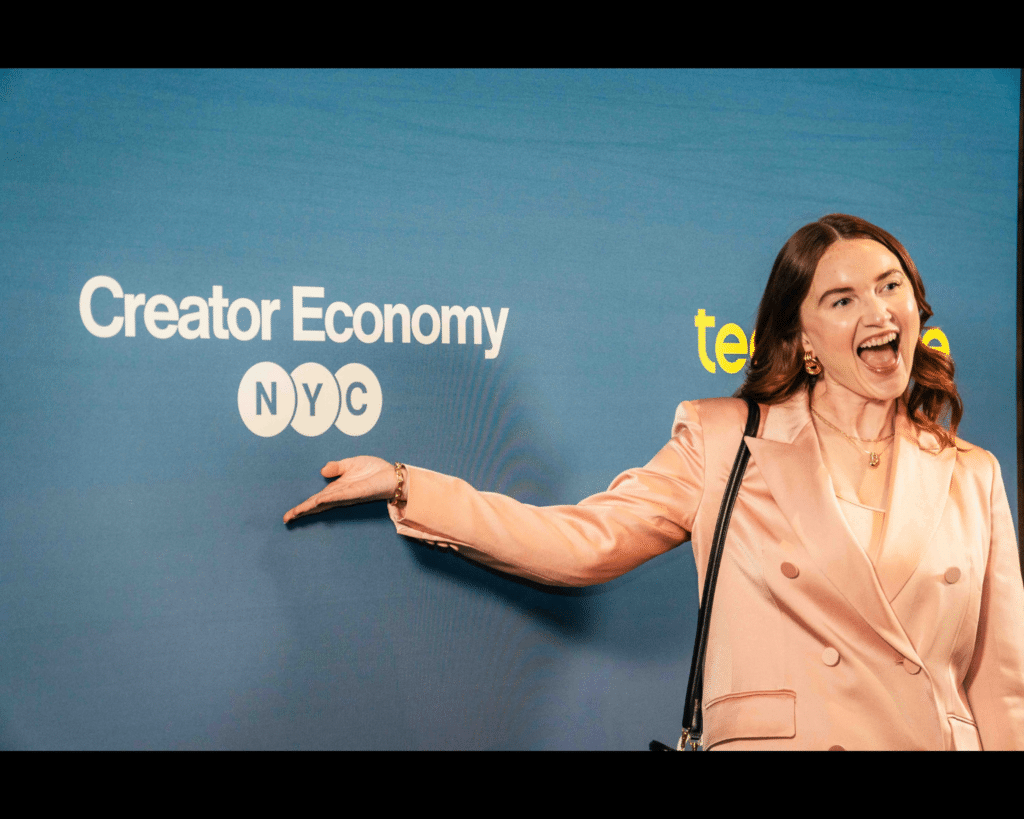
She is returning to Cannes Lions in partnership with Spotify and Darkroom to create content during the festival. Her audience on YouTube, Instagram, and TikTok is not a general consumer. It is the media buyer on the other side of the campaign brief, the creative strategist trying to defend a methodology that may already be obsolete, and increasingly, the brand executives whose budgets depend on which one of them turns out to be right.
Posting From a Basement With Nothing to Lose
Dara launched her YouTube channel from her parents’ basement during the first months of the COVID-19 pandemic, filming tutorials about Facebook ads, a subject she knew from her day job but wasn’t particularly attached to. The decision was characteristically pragmatic.
“I noticed that no one was actually really talking about Facebook ads,” she says. “That was my day job. I felt like I could talk about it for a long time.” She committed to posting every day for 30 days and set a clear benchmark. “The most important metric was just that I was hitting publishing.”
She never went viral. What confirmed she was building something real, however, was behavioral rather than algorithmic: business owners reached out to book calls, then paid to book them. “When business owners reached out to pay me to get on a phone call with them, and then when they paid for audits, those things showed me more that I was on the right path,” she says. After six years and over 550 videos, she is clear about what the trajectory proves. “You don’t have to go viral to make it as a creator, especially now.”
The audience she chose is finite by design. Ten thousand views from performance marketers represents a different kind of reach than ten thousand views from a general consumer audience. Scale, for this particular niche, is not measured in millions.
A Factory in Brooklyn and the Lesson About Market Reality
Before her current businesses took shape, Dara co-founded a product company, operating from a factory in Brooklyn with staff recruited from her personal network. The supply chain was deliberately ethical. The unit economics were not viable. “We didn’t figure out our COGS (Cost of Goods Sold) as quickly as we should have,” she says.
The business failed.
The lesson shaped how she now handles client relationships. “You can do all the right things and have a really great altruistic mission, but at the end of the day, if the market isn’t going to support that, then you don’t really have a business.”
That clarity carries into every client engagement. She has worked with founders spending anywhere from $30,000 to a million per month in ad spend, and treats the figure the same way. “I treat their dollar like my own because I know what it actually feels like,” she says. Empathy at that level, she argues, is built through having personally lost money on something you believed in.
The Research Mistake That Signals Shallow Strategy
Many brands begin creative strategy work by analyzing what their competitors are doing in ads. Dara views that instinct as a red flag serious enough to affect hiring decisions. “If the only thing they mention is looking at competitors, it’s kind of the bottom of the barrel in terms of being able to do creative strategy,” she says.
The case against leading with competitor research is structural. Copying a competitor’s creative direction means targeting the same audience they have already claimed. “You’ll never become better than this brand,” she says.
Her own research framework runs five stages: reputation analysis, customer review mining and interviews, persona segmentation, angle farming, and past performance review. Competitor analysis comes last, used only to identify gaps, never to source creative direction. Brands that start with competitors, she argues, are doing imitation rather than research.
What AI Cannot Script, Fabricate, or Replace
Dara’s team has been producing unscripted, personality-driven video content for years. The term “yapper ad” has recently popularized what the format does: a real person speaks directly about something they know and care about without a prepared script. She is candid about the current attention it’s receiving.
“My team has been running yapper ads for years,” she says. The format’s moment, she believes, reflects a broader reckoning with what AI cannot replicate.
Tools can produce hooks, scripts, and creative briefs efficiently. What they cannot do is the thing the format depends on. “An AI fundamentally cannot train you to sit down and yap on a subject that you’re passionate about,” she says. “It can’t train you to be better at dinner parties.” The scarce resource is not execution. It is originality.
She is pointed about creators who rely on large language models for ideation. “Do you have an original thought? Do you have an interesting perspective on an idea or on a brand or on an ad that you didn’t get from uploading it to Claude, Poppy, or ChatGPT first?” When AI handles the scripting, it often handles away the thing that made the content worth making.
Butter Knives, Gunfights, and the Creator-First Shift
The directness of Dara’s position becomes most visible when she talks about Meta advertising. “If you’re activating on Meta ads and you’re not leaning in heavily to partnership ads and creator content, you’re essentially bringing a butter knife to a gunfight,” she says.
Statics and ad mashups are not closing the performance gap they once did. The operational case for building creator access now is concrete.
A decade ago, producing a day’s worth of brand content required an art director, a videographer, a photographer, and a rented space. A single creator now handles pre-production and post-production on the same day. “Creators have the skill set of pre-production and post-production all in one,” she says. “The creative velocity of getting amazing content that actually speaks to people, there’s just no comparison for it.”
For brands not already building creator partnerships as a core of their paid media strategy, she frames the timeline as a problem to solve now. The future Dara describes, where selling is done primarily through creators, is not something she frames as speculative.
The Long Game at the Croisette
The $15,000 Dara put into Cannes last year was an intentional investment. She watched other creators describe attendance as a matter of luck or brand invitation and pushed back on the framing.
“Most of the people I know pay for it themselves up front, and then they get brand deals on the back end,” she says. The formal programming has limits she is blunt about. “A lot of the talks are bullshit,” she says. “If you have any true experience in marketing or performance, you’re going to hear things from executives that are, yeah, we talked about that nine months ago.”
The real value she names is relational and compound. This year, she returns with Spotify access, a panel at the Darkroom villa, and a clearer read on what the festival can and cannot offer. The creator-first argument she has spent six years making in YouTube videos and client briefs is the argument she carries into Cannes each time.
“The ROI on a Cannes trip isn’t always immediately apparent,” she says. “It’s because of who you end up networking with.” That investment, she adds, does not come from luck or brand invitation. “I worked hard so that I could go, and then I made the most of it when I was there.”
The Cannes Lions International Festival of Creativity runs June 22-26, 2026, at the Palais des Festivals in Cannes, France. This year’s edition includes LIONS Creators, a dedicated program for creators and influencer marketers, in partnership with Adobe; details and passes are available here.
Subscribe to Our Newsletter
Check Out Our Podcast