




Platform
TikTok Launches Public AI Content Checker, Begins Global Rollout of Likeness Detection

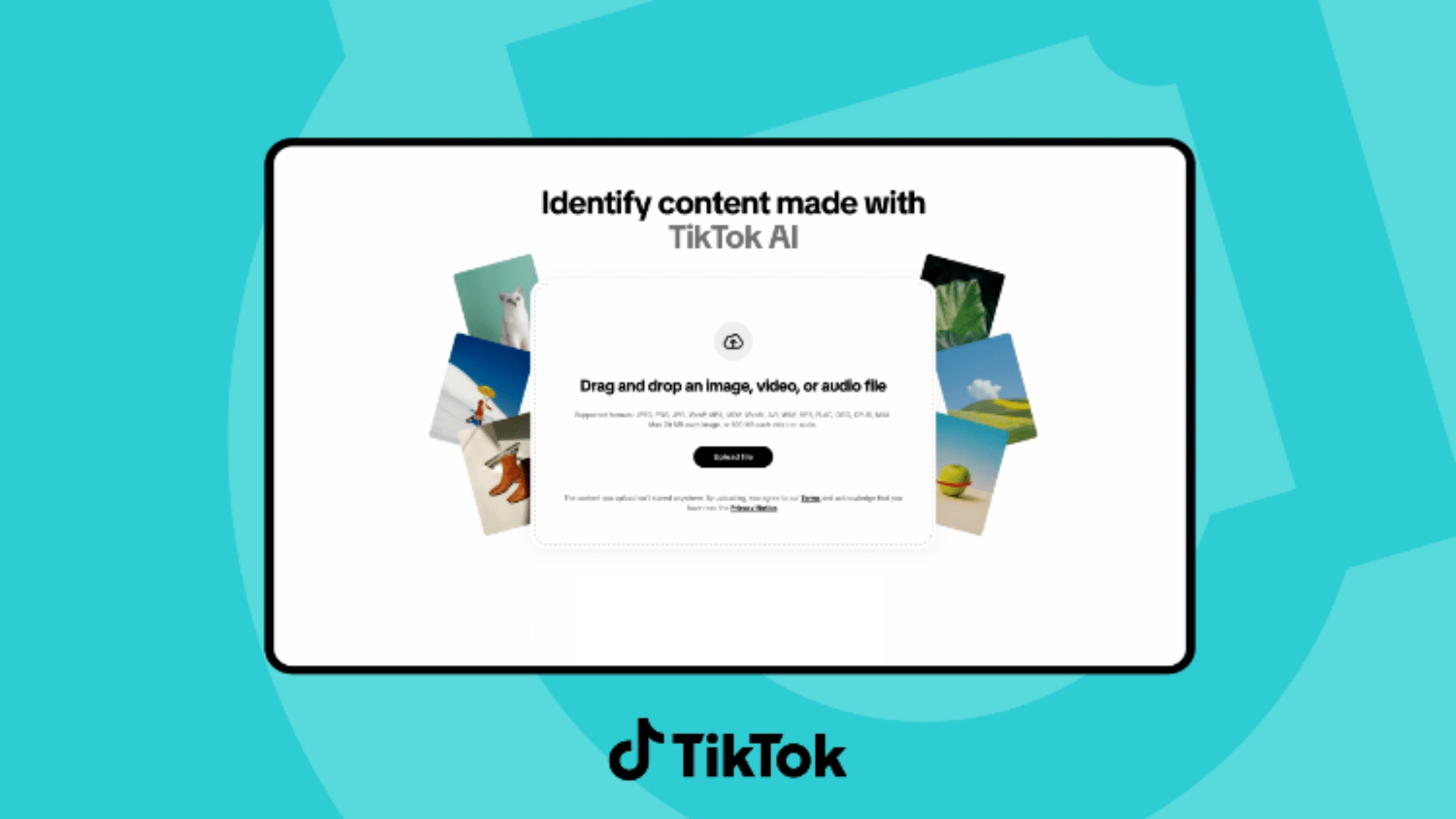
TikTok has launched a public tool that lets anyone check whether an image or video was generated or edited with TikTok’s AI creation features. The company also began a global rollout of Likeness Detection, an opt-in tool intended to help eligible creators find AI-generated content on TikTok that may use their likeness without their consent.
The checker sits in TikTok’s Transparency Centre and does not require a TikTok account. Users upload an image or video, and the tool checks for C2PA Content Credentials and for VeraDura, TikTok’s proprietary invisible watermark, which the company describes as more durable and harder to remove. The announcement describes the tool as identifying content made with TikTok’s own AI features. It does not describe the tool as detecting content from other AI systems.
TikTok said it became the first video platform to adopt C2PA Content Credentials in 2024. It automatically adds them to AI-generated content made with its tools so that other platforms that read the credentials can detect and label that content. The company acknowledged that this approach works only when the receiving platform reads those signals, and that the information can be lost as content is downloaded, reshared, and edited. TikTok said its labelling tools and technologies have labelled more than 5 billion AI-generated videos on the platform to date.
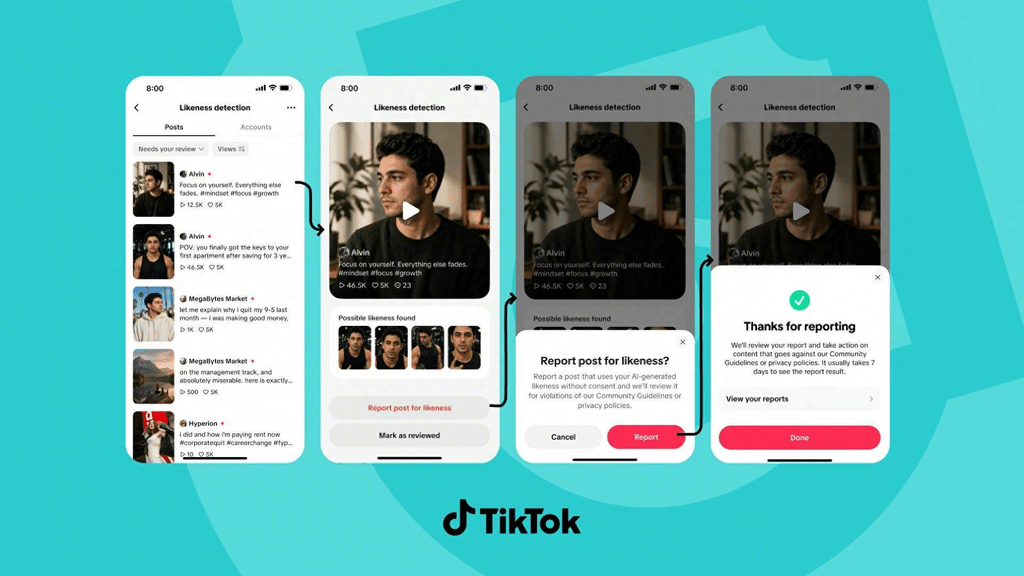
How Likeness Detection Works
Eligible creators sign up by verifying their ID with what TikTok calls a trusted third-party partner. TikTok then notifies them when content and accounts on the platform may be using their likeness. Creators can review those matches within the tool and report content directly to TikTok’s safety teams. TikTok said it will remove content that violates its community guidelines against harmful, misleading, or nonconsensual depiction of private individuals.
The tool is available to eligible creators and public figures, including Government, Politician, or Political Party Accounts. The announcement does not set out specific eligibility criteria. TikTok said the tool is designed to minimize data collection and that the company does not keep ID documents.
Likeness Detection adds to TikTok’s existing enforcement. The company said it removes more than 99% of content that breaks its rules before anyone reports it. Anyone, including people who do not use TikTok, can also report nonconsensual AI-generated content through its privacy reporting form.
TikTok tied the launches to its other AI measures:
- AI literacy hub. The in-app hub, launched in July, has helped more than 4 million people build skills for spotting AI-generated content.
- Manage Topics. The revamped feature lets people adjust how much AI-generated content appears in their For You feed. It sits alongside “Not interested” and keyword filters, which TikTok said more than 79 million people in the EU used in the first half of 2026.
- C2PA. The company continues to sit on the C2PA Steering Committee.
From U.S. Test to Global Rollout
The rollout follows a limited test. The Verge reported in July that TikTok was testing an opt-in likeness detection tool with some U.S. creators. Those creators verified their identity through Jumio using a real-time selfie scan and an ID check. The latest announcement does not name the verification partner for the global rollout.
YouTube already runs a comparable program. It launched likeness detection for YouTube Partner Program creators in 2025. In March 2026, it expanded the tool to a pilot group of government officials, journalists, and political candidates, and it stated that detection does not guarantee removal.
By April, YouTube had extended access to entertainment-industry public figures, including celebrities without YouTube accounts, according to The Verge.
Subscribe to Our Newsletter
Check Out Our Podcast