




Influencer
How a Podcast Became a Consulting Engine for a Host Who Keeps AI Away From the Ideas

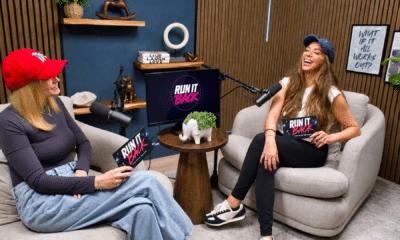
The podcast that Greg Kihlström launched as a test became a steady source of his consulting work. “The Agile Brand with Greg Kihlström®” has since passed 850 episodes of conversations with enterprise marketing leaders.
Those conversations anchor the independent practice Greg built after selling his marketing agency, Carousel30, in 2017. He now advises companies in the Fortune 1000 and larger. The show has given him an audience, though he hesitates over the label that usually comes with one. “I don’t typically use the term ‘creator,’ but I guess I create a lot of stuff,” Greg says.
His approach still offers B2B brands a working model for creator partnerships. He built a narrow audience over years, tracks what it delivers closely enough to report results to sponsors, and keeps the thinking for himself as AI takes on more of the production.
From Agency Exit to a Podcast Built to Extend a Book
Greg co-founded Carousel30 in 2003 to do creative work and found himself running everything else. “I wanted to be a web designer,” he says. “I ended up doing sales and having to market a professional services business and understand how to read a contract and do accounting.”
The market moved under the agency as it grew. YouTube appeared within a couple of years of Carousel30’s founding, and social media, personalization and early marketing AI all took hold during its growth. “The average cost to do what we did was falling dramatically because a lot of what [we] were doing was becoming a commodity,” Greg says.
After the sale, he used the time to write his first book. The podcast started as a way to promote it, with a first season of solo episodes in which he riffed on one chapter at a time. “I was just like, hey, I have this book. Let me extend it,” he recalls.
A sponsor signed on almost immediately, and its sponsored episodes became the show’s first interviews. Those drew more listens than the solo format, and Greg was running short of material anyway. “It was technically profitable from the beginning because I found a sponsor right at the beginning,” he says.
The larger shift came three or four years in, when the audience grew and repeat listeners appeared. “The companies and the people that I wanted to have on the show started coming to me versus me chasing after them,” he says.
A Quarter of the Consulting Work Comes Through the Show
Greg estimates the podcast now accounts for about 25% of his consulting business. The share matters more than it would at an agency, because he works with four or five clients at a time, against 20 or more at Carousel30. “It doesn’t take much to move the needle,” he says.
A few months ago, the show led to a request for proposal large enough that he brought in a team from a large consultancy to help deliver it.
Some of the return never appears as a sale. Greg describes the value of “being on the same screen as someone else who I want to be seen next to.” He adds, “Sometimes, it’s intangible, but it’s pretty powerful.”
Three and a Half People and a Firm Line on AI
The show runs on “three and a half” people, Greg included, with a part-time editor and a couple of producers. “Airtable and Zapier and other things basically run my life when it comes to the podcast,” he says.
He still handles much of the contact with the PR teams behind his executive guests, work he says others hand off as grunt work. Those contacts get promoted, and he treats the time as an investment. “I look at these people as invaluable to me, building relationships,” he says.
He applies the same reasoning to AI, treating it as a challenge to automate what he can without giving up those relationships. He has no plans to grow the team. The aim is to move his staff from filling in scheduling fields toward listening to episodes and giving him critical feedback.
He knows the technology closely. Within an hour of the call, Greg was due to defend a doctoral dissertation comparing the answers of large language models and other AI methods with human results, research he ran on software he vibe-coded himself.
The ideas themselves still stay off limits. “I never want the ideas and the strategy to come from AI,” Greg says. “If that goes away, then there’s no need for Greg in ‘The Agile Brand.’”
A Sponsor of Nearly Nine Years Makes the Case for Consistency
His longest-running sponsor, now approaching nine years, shapes his advice to B2B brands weighing creator spend. A podcast used purely for direct response has not worked well for him as the only option, he says. Consistency has. Several other sponsors are in their third to fifth years, some appearing only quarterly.
One-off placements can work as part of a broader push, as when a brand used him alongside roughly 10 other people at once. “Putting all your money in one thing for one specific moment, I don’t think you’re going to be satisfied with the results,” he says.
On niche voices versus broad reach, he would use both if cost were no object. A niche voice reaches people in a way a broad one cannot, though covering a market can take several people in different niches. His own inbox points in that direction. “I would not consider myself a mega influencer by any stretch of the imagination,” Greg says, noting rising requests in his niche where martech and marketing operations overlap.
He has also widened what sponsors can buy. Software companies’ visual products got lost in an audio talk show, so he launched a second show built around demos. A brand can now feature an executive as a thought leader on one show and its product on the other.
Tracking Results a CFO Can Check
Greg treats proof of results as part of the job. He built his own URL tracking platform to centralize performance across podcasts and websites, and he reports those numbers to sponsors.
Given a brand’s creator budget for a quarter, he would deliver tangible results and work with the brand to map them to leads. He has sat through enough budget discussions with CFOs to know what they will ask for. “Fortunately, I’m a marketer by training, so I know and I can speak their language,” he says.
He calls that a non-traditional way for a creator to approach the work. Marketers, he says, are under more and more pressure to prove results.
Checking the Work Before It Reaches a Creator
The same discipline applies to the tools producing content. Inside large enterprises, Greg sees employees who dislike repetitive tasks adopting generative AI as soon as it made those tasks easier. He compares efforts to restrict it to the limits on Facebook use at work in 2008.
For teams working with creators, his advice is to verify output before it travels. “Don’t just trust these tools verbatim and be careful how much you automate before it gets to anyone, even a creator,” he says.
Teams that have already leaned too hard on automation should step back. Asking a tool to go from nothing to a finished blog post in minutes will not produce great results, he argues. The fix is to document the steps a writer would take, from brainstorming topics to building an outline, and stay involved at each one. “You need to be part of the process, and you need to understand the process,” Greg says.
Brands Will Rely on Content Other People Make
Looking five years out, Greg expects earned media to matter more than it ever has. ChatGPT, Claude, and other AI tools cite different sources, which he likens to the era of competing search engines before Google won. Brands need an AI visibility platform, he says, and a way to see which creators align with topics where they need citations or where competitors are gaining traction.
That puts the burden on the brand. Greg argues companies must be able to state concisely what makes them special and valuable so others can carry that message, and he sees “The Agile Brand” as part of that exchange, giving executives and platforms a voice while trying to stay objective.
“Other people are going to be creating the content that your brand is relying on to drive people to your site and your products and your services,” he says.
Subscribe to Our Newsletter
Check Out Our Podcast