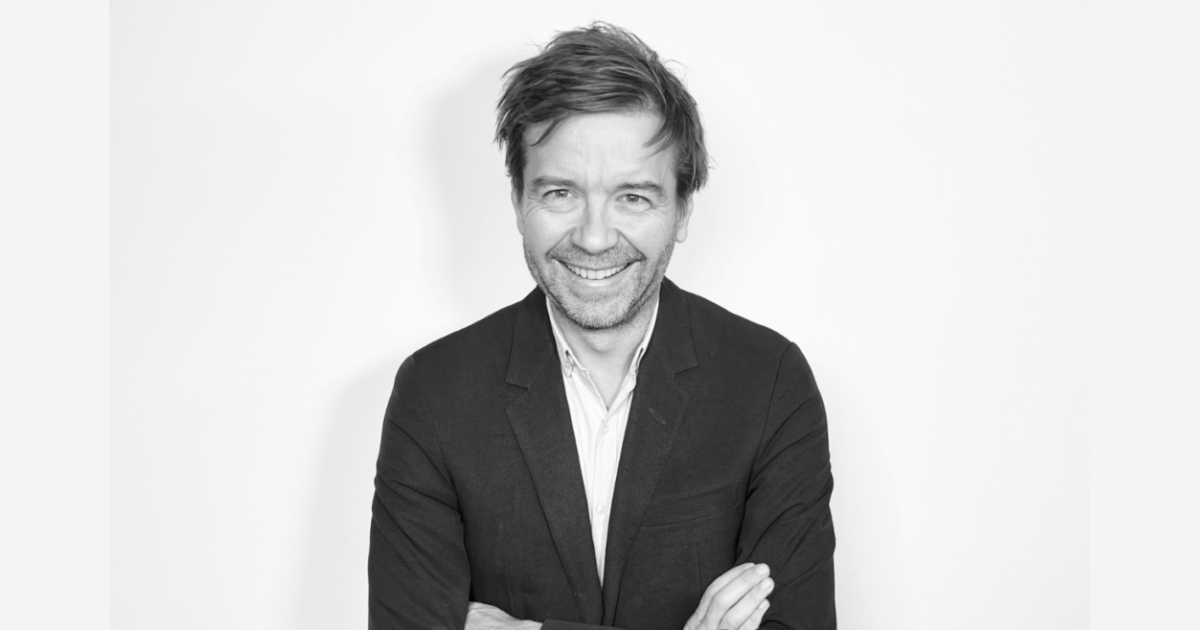
After more than two decades in media, data, and digital advertising, Adrien Vincent decided to tackle one of marketing’s newest frontiers: the creator economy. As the founder of SocialRama, a Paris-based B2B media platform launched in late 2024, Adrien’s mission is to give marketing, communications, and media professionals the tools to understand how creators, platforms, and brands interact within a single ecosystem.
“Every time I spoke to CMOs or brand directors,” Adrien explains, “I noticed the same misunderstanding about what the creator economy really was. They were following the wrong KPIs, working with the wrong agencies, and had no real grasp of how creators operated.”
For Adrien, that disconnect exposed a major gap in the French market: there was no professional media outlet dedicated to analyzing influencer marketing from a business and strategic perspective.
Bridging Legacy Media and the Creator Economy
Adrien’s background spans 25 years across media agencies and data-driven marketing. Before founding SocialRama, he served as managing director at Redpill Media and previously at Ermes, a SaaS platform for large-scale marketing precision, and held leadership roles at Fullsix Group and KR Media. His experience spans major clients such as Danone and IKEA, as well as Air France and LVMH, honing his understanding of how brands and media buyers think.
That perspective, Adrien says, made it easier to see the blind spots. “When I ran a media agency, influencer marketing was just one small part of a campaign alongside TV, radio, and Google. Now it’s becoming a major pillar, but many legacy players still treat creators like ad agencies.”
SocialRama was built to level the playing field. The company offers in-depth analyses of influencer campaigns, data insights into new tools and trends, and intelligence reports for marketing professionals.
“Our ambition is to help decision-makers anticipate and not just follow the shifts happening in the creator economy,” Adrien says.
The French Creator Economy
When it comes to defining the creator economy, Adrien admits it’s not simple. “It’s easy if we only look at platforms like YouTube, TikTok, or Instagram,” he says. “But when you include how it affects politics, culture, and society, it becomes much broader.”
In his view, Europe’s creator economy remains fragmented and deeply local in contrast to the U.S. “In France, we often say the U.S. is five years ahead,” Adrien notes. “But the difference is not only time; it’s structure. The UK is closer to the U.S. model because of the language. In France, Germany, Italy, and Spain, creators operate in their own linguistic ecosystems. MrBeast is known here, but he’s not a phenomenon. Our stars are local and often unknown abroad.”
This linguistic and cultural localization has both advantages and challenges, according to Adrien. While it limits global reach, it also fosters strong domestic communities and niche markets. He believes this local-first model gives European creators unique leverage with national brands and audiences.
What’s Trending: The Hype Curve and Market Signals
One of SocialRama’s signature formats, “La Courbe de la Hype” (The Hype Curve), has become a viral success on LinkedIn and Instagram.
Inspired by Gartner’s technology hype cycle, the monthly chart tracks trends, tools, and topics across the French creator economy. “It’s our star product,” Adrien says. “We combine editorial judgment with data, such as Google Trends, market analytics, and our own monitoring tools to place each topic on the curve. It’s part subjective, part analytical.”
As for what’s rising now, Adrien points to Paris Creator Week, taking place in December. The event, where SocialRama will serve as an official media partner, is set to feature major names from both France and abroad, including members of MrBeast’s team.
“Everyone’s talking about it,” he says. “It’s where the French creator economy will meet the global one.”
Creators as Entrepreneurs
Having observed shifts in content and brand strategy for years, Adrien sees a growing professionalization among creators. “Look at what’s happening with MrBeast hiring a 55-year-old CEO,” he says. “We’re seeing young creators bring in experienced executives to manage the business side.”
In France, that same movement is unfolding. Adrien cites the example of Gaspard G, a creator with over 1.5 million YouTube subscribers, who recently posted a job opening for a CEO. “It’s the same logic,” he says. “Creators are realizing they need structure. They want to focus on content while professionals handle operations.”
He believes this generational blend of creativity and experience is crucial. “Older CEOs bring networks and experience that can’t be learned,” Adrien adds. “The creator economy isn’t that different from other industries. It needs bridges to traditional business sectors.”
New Monetization Models: From Partnerships to Products
As 2026 approaches, Adrien is confident that the next phase in creator monetization is “launching their own brands.”
He points to a growing number of French examples, such as Squeezie’s Ciao Kombucha and Mister V’s Pizza Delamama, both successful creator-led FMCG (Fast-Moving Consumer Goods) ventures. “We’ll see more of this,” he says. “Creators have realized they can make more money promoting their own products than external sponsors. Next year will bring a wave of creator-made consumer brands.”
Despite the hype around brand collaborations, he believes many marketers still misunderstand the space. “They send them briefs as if they were external vendors instead of creative partners. That’s not how influence works,” he says.
France’s Platforms
While TikTok and Instagram dominate brand budgets, Adrien highlights Snapchat and Twitch as underappreciated in France.
“France is one of Snapchat’s strongest markets outside the U.S.,” he notes. “We have around 20 million monthly users. And Twitch has built a strong streaming culture here.” Yet, he says, many advertisers overlook these platforms simply because “the people deciding the budgets live on Instagram and YouTube.”
On the sector side, he finds innovation coming from unexpected places. “Fashion is actually less innovative,” Adrien says. “But beauty, banking, and insurance are pushing harder into influencer marketing. Brands like Revolut are forcing legacy institutions to adapt.”
Media Convergence and Future Goals
As SocialRama continues to grow, Adrien envisions it becoming a central reference point for professionals navigating the French creator economy. “We’re building the leading source of market intelligence for influencer marketing in France,” he says. “Even for foreign investors or partners, SocialRama can help decode how the local market really works.”
In the long run, he predicts a merging between traditional and digital media worlds. “You can already see TV networks offering creators big contracts to appear on air or develop shows,” he observes. “The next step is full convergence; creators and legacy media working side by side.”
Despite being a self-described veteran, Adrien’s enthusiasm remains intact. “It moves so fast,” he says. “Every week I discover a new creator, a new trend, something surprising. It reminds me of the early Internet days and that same sense of excitement and discovery.”
Cecilia Carloni, Interview Manager at Influence Weekly and writer for NetInfluencer. Coming from beautiful Argentina, Ceci has spent years chatting with big names in the influencer world, making friends and learning insider info along the way. When she’s not deep in interviews or writing, she's enjoying life with her two daughters. Ceci’s stories give a peek behind the curtain of influencer life, sharing the real and interesting tales from her many conversations with movers and shakers in the space.















After more than two decades in media, data, and digital advertising, Adrien Vincent decided to tackle one of marketing’s newest frontiers: the creator economy. As the founder of SocialRama, a Paris-based B2B media platform launched in late 2024, Adrien’s mission is to give marketing, communications, and media professionals the tools to understand how creators, platforms, and brands interact within a single ecosystem.
“Every time I spoke to CMOs or brand directors,” Adrien explains, “I noticed the same misunderstanding about what the creator economy really was. They were following the wrong KPIs, working with the wrong agencies, and had no real grasp of how creators operated.”
For Adrien, that disconnect exposed a major gap in the French market: there was no professional media outlet dedicated to analyzing influencer marketing from a business and strategic perspective.
Bridging Legacy Media and the Creator Economy
Adrien’s background spans 25 years across media agencies and data-driven marketing. Before founding SocialRama, he served as managing director at Redpill Media and previously at Ermes, a SaaS platform for large-scale marketing precision, and held leadership roles at Fullsix Group and KR Media. His experience spans major clients such as Danone and IKEA, as well as Air France and LVMH, honing his understanding of how brands and media buyers think.
That perspective, Adrien says, made it easier to see the blind spots. “When I ran a media agency, influencer marketing was just one small part of a campaign alongside TV, radio, and Google. Now it’s becoming a major pillar, but many legacy players still treat creators like ad agencies.”
SocialRama was built to level the playing field. The company offers in-depth analyses of influencer campaigns, data insights into new tools and trends, and intelligence reports for marketing professionals.
“Our ambition is to help decision-makers anticipate and not just follow the shifts happening in the creator economy,” Adrien says.
The French Creator Economy
When it comes to defining the creator economy, Adrien admits it’s not simple. “It’s easy if we only look at platforms like YouTube, TikTok, or Instagram,” he says. “But when you include how it affects politics, culture, and society, it becomes much broader.”
In his view, Europe’s creator economy remains fragmented and deeply local in contrast to the U.S. “In France, we often say the U.S. is five years ahead,” Adrien notes. “But the difference is not only time; it’s structure. The UK is closer to the U.S. model because of the language. In France, Germany, Italy, and Spain, creators operate in their own linguistic ecosystems. MrBeast is known here, but he’s not a phenomenon. Our stars are local and often unknown abroad.”
This linguistic and cultural localization has both advantages and challenges, according to Adrien. While it limits global reach, it also fosters strong domestic communities and niche markets. He believes this local-first model gives European creators unique leverage with national brands and audiences.
What’s Trending: The Hype Curve and Market Signals
One of SocialRama’s signature formats, “La Courbe de la Hype” (The Hype Curve), has become a viral success on LinkedIn and Instagram.
Inspired by Gartner’s technology hype cycle, the monthly chart tracks trends, tools, and topics across the French creator economy. “It’s our star product,” Adrien says. “We combine editorial judgment with data, such as Google Trends, market analytics, and our own monitoring tools to place each topic on the curve. It’s part subjective, part analytical.”
As for what’s rising now, Adrien points to Paris Creator Week, taking place in December. The event, where SocialRama will serve as an official media partner, is set to feature major names from both France and abroad, including members of MrBeast’s team.
“Everyone’s talking about it,” he says. “It’s where the French creator economy will meet the global one.”
Creators as Entrepreneurs
Having observed shifts in content and brand strategy for years, Adrien sees a growing professionalization among creators. “Look at what’s happening with MrBeast hiring a 55-year-old CEO,” he says. “We’re seeing young creators bring in experienced executives to manage the business side.”
In France, that same movement is unfolding. Adrien cites the example of Gaspard G, a creator with over 1.5 million YouTube subscribers, who recently posted a job opening for a CEO. “It’s the same logic,” he says. “Creators are realizing they need structure. They want to focus on content while professionals handle operations.”
He believes this generational blend of creativity and experience is crucial. “Older CEOs bring networks and experience that can’t be learned,” Adrien adds. “The creator economy isn’t that different from other industries. It needs bridges to traditional business sectors.”
New Monetization Models: From Partnerships to Products
As 2026 approaches, Adrien is confident that the next phase in creator monetization is “launching their own brands.”
He points to a growing number of French examples, such as Squeezie’s Ciao Kombucha and Mister V’s Pizza Delamama, both successful creator-led FMCG (Fast-Moving Consumer Goods) ventures. “We’ll see more of this,” he says. “Creators have realized they can make more money promoting their own products than external sponsors. Next year will bring a wave of creator-made consumer brands.”
Despite the hype around brand collaborations, he believes many marketers still misunderstand the space. “They send them briefs as if they were external vendors instead of creative partners. That’s not how influence works,” he says.
France’s Platforms
While TikTok and Instagram dominate brand budgets, Adrien highlights Snapchat and Twitch as underappreciated in France.
“France is one of Snapchat’s strongest markets outside the U.S.,” he notes. “We have around 20 million monthly users. And Twitch has built a strong streaming culture here.” Yet, he says, many advertisers overlook these platforms simply because “the people deciding the budgets live on Instagram and YouTube.”
On the sector side, he finds innovation coming from unexpected places. “Fashion is actually less innovative,” Adrien says. “But beauty, banking, and insurance are pushing harder into influencer marketing. Brands like Revolut are forcing legacy institutions to adapt.”
Media Convergence and Future Goals
As SocialRama continues to grow, Adrien envisions it becoming a central reference point for professionals navigating the French creator economy. “We’re building the leading source of market intelligence for influencer marketing in France,” he says. “Even for foreign investors or partners, SocialRama can help decode how the local market really works.”
In the long run, he predicts a merging between traditional and digital media worlds. “You can already see TV networks offering creators big contracts to appear on air or develop shows,” he observes. “The next step is full convergence; creators and legacy media working side by side.”
Despite being a self-described veteran, Adrien’s enthusiasm remains intact. “It moves so fast,” he says. “Every week I discover a new creator, a new trend, something surprising. It reminds me of the early Internet days and that same sense of excitement and discovery.”
Subscribe to Our Newsletter
Check Out Our Podcast