




Agency
Uncovered Launches Influence Division to Solve the Creator Campaign Problem It Says Most Agencies Miss

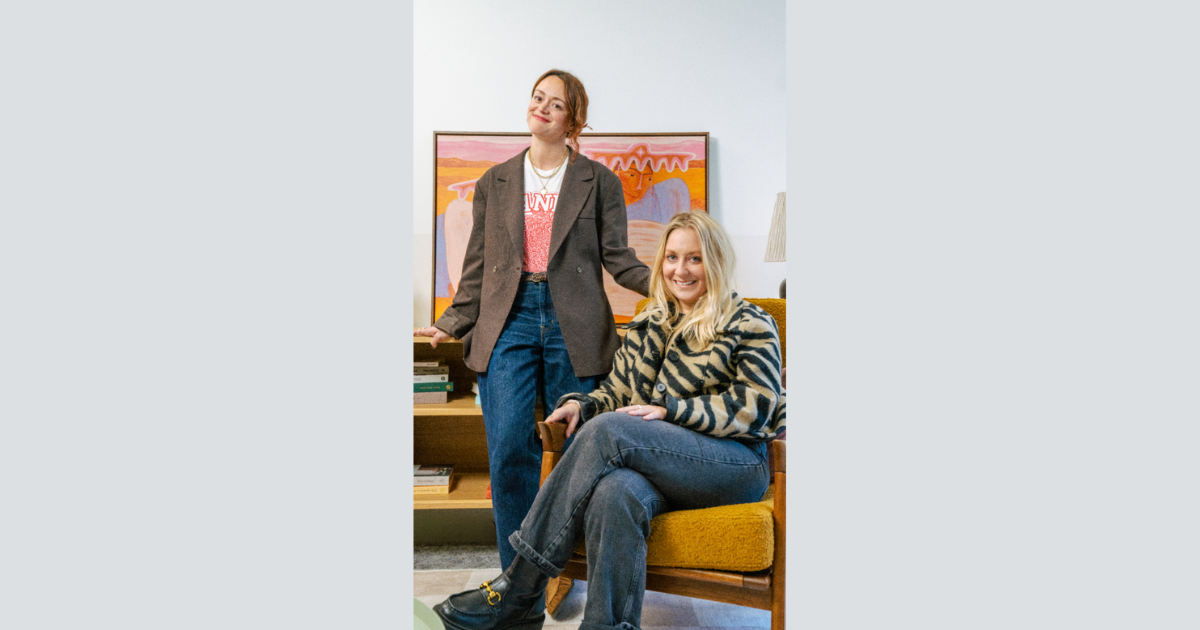
Brands now know Influencer Marketing works. The problem, according to Nina Landale, is that almost no one knows how to do it well.
The argument Nina has been making for years just got institutional backing. In October 2025, the UK’s Institute of Practitioners in Advertising (IPA) published research showing creator marketing can deliver higher long-term ROI than television. The finding was widely cited. Nina, Head of Strategy at London-based social-first creative agency Uncovered, read it differently.
“The IPA paper identified that creators can drive higher long-term ROI than TV,” Nina says, “but the finding is only in a few cases. And our view of that is that’s because not many people know how to do creator work well.”
That gap, she argues, is the opportunity. In March 2026, Uncovered formally launched its Influence Division, appointing Katie Fieldman, previously a Client Partner at Coolr, as Director of Influence. The move follows a year in which the agency grew headcount by more than 50% and added major clients including KFC, Tesco, Nationwide, and McVitie’s owner pladis. Uncovered is also an Agency Marketing Partner to TikTok.
The Shift Brands Are Only Now Catching Up To
Nina has spent nearly seven years at Uncovered, long enough to remember when the agency’s job was fundamentally persuasion. “When I first started, the biggest part of the job was the fact that brands didn’t think social was very important,” she says. “You were trying to push water uphill, persuade them that social actually can do a brand job.”
That conversation is over. The challenge now is execution. “You’ve got so much ambition,” she notes. “How do we find the right bits of what you want to do and make it genuinely impactful on social?”
Part of what has accelerated brand interest is a demographic reality that Nina says many brands are still misreading. TikTok, widely treated as a Gen Z channel, now has a user base that is over 60% Gen Z and Millennial combined, with roughly 25% of users aged 40 and above. Brands that deploy creators only on TikTok for youth audiences and Instagram for older ones are, in her view, already operating with an outdated media map.
“Those types of changes are happening everywhere in social because it’s such a fast-moving channel,” she says. “That shift also changes the content types and the formats and the consumption.”
What ‘Fragmented’ Actually Means for Brand Campaigns
A word Nina returns to repeatedly is fragmentation. “When our parents were growing up, there was TV and out-of-home. You could guarantee where the eyeballs were going to be around key moments,” she explains. “Today, even in social, there are 7, 8, 9, 10 different platforms that people might be on, and on those platforms, there are now different placements where they expect content and brands to interact with them differently.”
She adds that the same logic applies to creators. A creator who performs on TikTok may not translate to YouTube, and branded content that works in one placement can feel intrusive in another. Nina cites Reddit as an example: showing up with branded creator content in a subreddit is off-limits, but facilitating an organic creator conversation is a different matter.
Her diagnosis of where most influencer agencies fall short follows directly from this. “A lot of the more traditional influencer agencies, and some of the AI tools and platforms emerging right now, still think about it in terms of individual creators who can come in and switch on for you,” she says. “What you lose there is the creative consistency. What is your creative red thread that links that campaign, ensures you do your attribution job, ensures one creator on TikTok feels like part of the same campaign as a completely different creator on YouTube?”
Micro Over Macro, and the Meritocracy Argument
One of the earliest convictions shaping Uncovered Influence is a bet on smaller creators. Nina argues that TikTok fundamentally changed the dynamics of reach by decoupling audience size from impact.
“It became a meritocracy rather than an autocracy,” she says. “It wasn’t about the size of your following anymore. The quality of your content meant that micro creators could be just as impactful for your brand as a big fame piece, and potentially even more.”
That position is now validated by the same IPA research that helped seal the decision to formalize the division. But Nina’s critique of how the industry has historically deployed creator budgets goes further. “You have one big fame, iconic talent, and all your budget’s gone on that,” she says. “Or it’s spray and pray.”
The argument for a diverse roster is partly creative and partly strategic. Nina sees it as consistent with Byron Sharp’s brand growth principles, specifically the imperative of broad reach. Her background as a media buyer and planner, she says, gives Uncovered an unusual capacity to scale creator content by identifying top-performing assets and amplifying them through paid placement.
Why Katie Fieldman, and What She Was Hired to Build
The internal conversation about formalizing a creator division had been running for some time before the hire. What Nina wanted to avoid was building something that looked like an add-on. “I wanted to get in there on how we link it up as a strategic offering as opposed to purely an executional offering,” she says.
Katie, who previously grew the social and influencer team at DDA Global from scratch to 45 people before moving to Coolr, where she managed accounts including Samsung, Deliveroo, Starbucks, and Compare the Market, was the specific profile Nina was looking for. “I wanted that person to head the team up who was going to be strategically minded but have all of that understanding of the creative, the creators, knows people in the market, knows the agents,” she explains.
Two months in, Katie has been focused on mapping existing workflows, identifying what to automate, and protecting the parts of the process Nina is most insistent on keeping manual. “We both really believe in that bespoke manual approach for sourcing and then using tools and tech to help you vet and analyze,” Nina says. “That team of social natives who are on the platform probably spend a scary amount of hours a day, who know all the creators and want to work with them, we don’t want to automate that.”
Measuring Impact Across Three Layers
When it comes to defining success, Nina describes a three-layer measurement framework. The first is in-platform: whether the content is performing against standard channel benchmarks. The second is brand lift: running studies to confirm the creative is shifting brand metrics. The third, which she describes as the most critical, is bottom-line ROI and core brand growth indicators.
Uncovered’s existing case studies anchor the argument. The agency has publicly cited its KFC work as a benchmark, building what Nina describes as an organic “brain rot” strategy that delivered measurable results across both content and brand metrics. That campaign won “Greatest Creative” at the TikTok Ad Awards and forms part of the proof base she intends to replicate across the new division.
The longer-term ambition is more concrete. “Three years from now, it would be lovely to have an IPA from the work that we’ve done,” she says, referring to an IPA Effectiveness submission, the UK industry’s most rigorous standard for proving commercial impact.
What an Integrated Agency Can Do That a Specialist Cannot
The broader bet Uncovered is making is that the Creator Economy is entering a phase where integration matters more than specialization. As standalone influencer agencies multiply, and as AI-powered discovery platforms commoditize creator sourcing, Nina believes the edge lies in connecting creator strategy to social strategy, media planning, and brand measurement inside a single operation.
The internal response, she says, has been the clearest signal that the timing is right. The creator team, previously functioning as an executional unit within a larger agency, has responded to the formalized division with what she describes as genuine energy. “It’s suddenly given them a real focus and ambition within the business,” she notes. “They’re already kind of energized by it.”
For Nina, the opportunity is not just commercial. “Creators have been so underutilized for so long, they are seen as a bit of a second thought,” she says. “I’m really excited to work with a truly diverse roster of creators who really deserve it because they’ve become experts at how to show up and influence on their platforms.”
Subscribe to Our Newsletter
Check Out Our Podcast