

Influencer
Creatorpreneur Adrian Per on Building a Business Around Ownership Instead of Virality

In the months after his father died, Adrian Per applied for 66 jobs and received no offers. He had already worked on Super Bowl commercials, co-founded a production company, and worked on campaigns including the viral Lil Nas X “MONTERO” birth promotional film. Instead, he turned to building a creator business designed to generate income from assets he already owned.
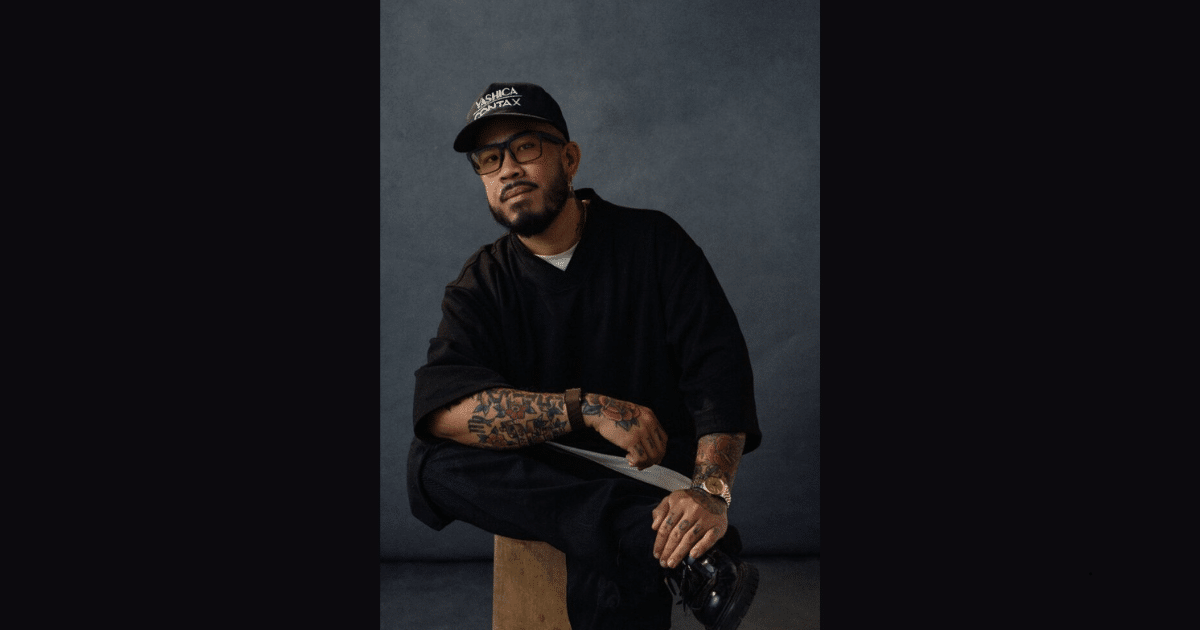
Adrian is a Filipino-American filmmaker and content creator known online as omgAdrian, with 1.3 million Instagram followers, nearly 500,000 on TikTok, and brand partnerships with Adobe, Nike, Kaiser Permanente, and Mercedes-Benz. He runs Content College, a creator education platform trusted by Adobe, Meta, HBO Max, and Microsoft, while LUT packs and color presets provide recurring revenue beyond sponsored content. He also co-founded Lumpia Watermelon Productions, the Los Angeles production company he still co-owns.
The business Adrian built reflects lessons from years working in commercial filmmaking. Instead of relying on platform payouts or chasing viral moments, he has focused on professional credibility, audience trust, and products he owns or controls. It also grew out of a frustration he had carried for years. Adrian watched filmmaking education flourish online, but much of it came from creators who had never worked professionally on the kinds of productions they were teaching.
“I was just so disgusted by it,” he says of the online course ecosystem he watched grow before entering it. “Almost none of what they say applies to being on a real film set or the adaptability of what it’s like to be a full-time creative freelancer.”
Cameras in the Blood, Careers in the Way
Adrian grew up knowing cameras. His grandfather ran a photo studio in the Philippines before emigrating to the U.S. His father always had a camcorder at home, Adrian’s first real introduction to the medium. But as the child of Filipino immigrants, treating filmmaking as a career was not something his family recognized as possible.
“Doing this as a career was never on my radar,” he says. “It wasn’t a real job or a possibility.”
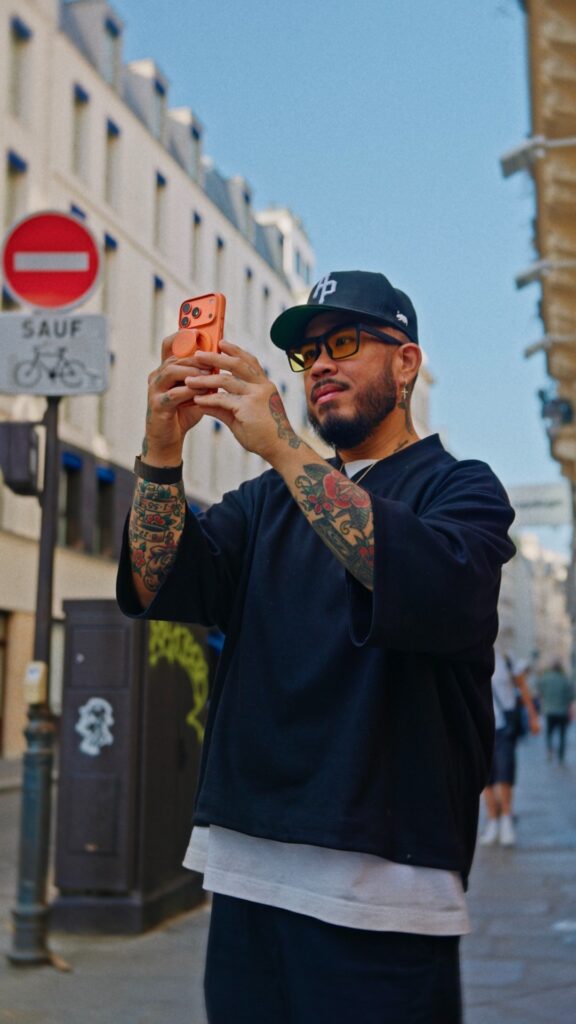
He spent years redirecting that energy before committing to filmmaking in 2009, eventually co-founding Lumpia Watermelon Productions and working as a full-time director. The credits accumulated. The income did not. While directing some of the biggest campaigns of his career, Adrian was simultaneously driving for Uber, running deliveries for DoorDash and Postmates, and taking other service work. He estimates four total years across those side gigs.
“Just because you run a company or you’re doing this full time doesn’t mean you’re financially stable,” he says.
The Gap No One Wanted to Fill
Adrian watched the Creator Economy expand for years before he joined it. What he saw inside the filmmaking niche frustrated him: an ecosystem of online courses selling professional filmmaking education that bore little resemblance to real-set experience. Aspiring directors and cinematographers existed on one side. Credible professionals who could speak to what that path actually required existed on the other. Nobody was crossing the middle.
He knew about the gap for over a year and did nothing, comfortable in professional work. Then, in quick succession, he lost his grandfather, both grandmothers, and his father. Funeral and memorial costs consumed his savings. By the time he decided to start posting in early 2023, he had $13 in his bank account.
“Out of sheer desperation and a Hail Mary, I decided to finally bridge that gap that I thought social media was missing,” he says.
His early content was slow, cinematic, and deliberately paced at a time when platforms rewarded faster formats. Friends and colleagues told him to get to the point. He ignored them. He had set a target of 10,000 followers by year-end. By February, he had 200,000.
The Business Behind the Feed
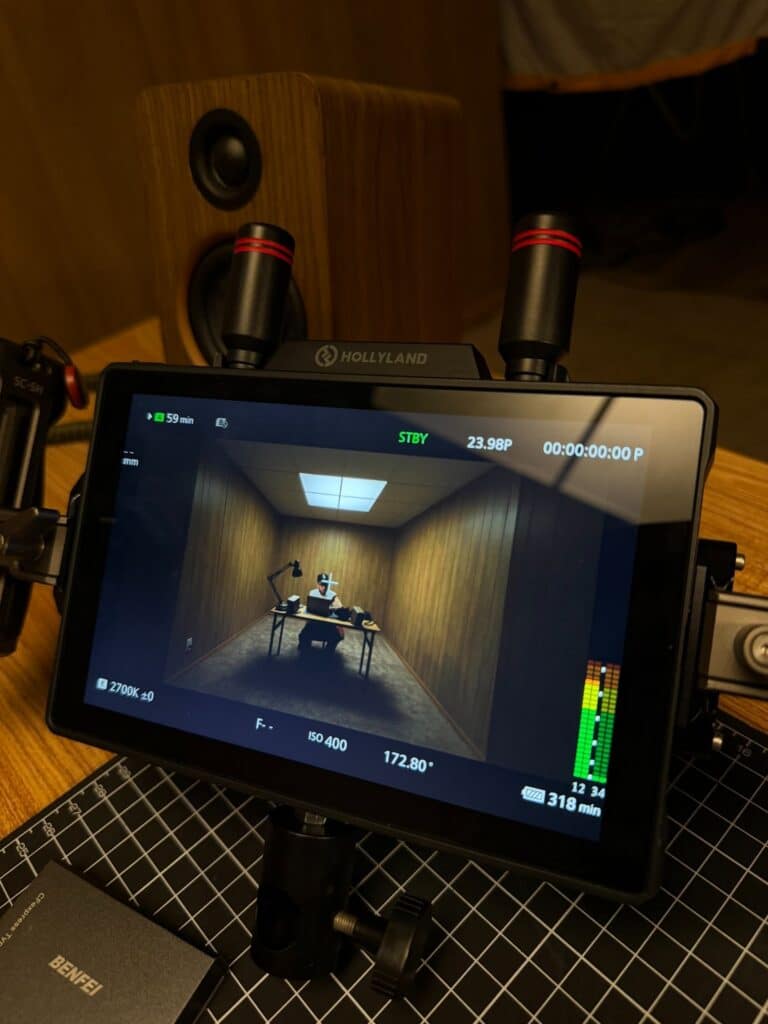
From January to June 2023, Per had no brand income. Monthly balances ended negative. His first paid deal came in mid-June: $5,000 for two videos with a lighting company he genuinely used. After Adrian mishandled the contract, the manager he had known from his professional directing years stepped in. He turned down overtures from major agencies. He chose familiarity over scale.
Today, Adrian describes his time allocation in percentages. About 70% of his effort goes into original content, which he says generates “no money” on its own. Brand partnerships consume roughly 15 to 20% of his time but carry the heaviest revenue load. The remainder goes to digital products, including Content College and LUT packs.
Conversion runs through Manychat, a comment automation tool. When a viewer comments a specific word under an Instagram post, they receive a direct link in their DMs without ever leaving the app.
“It makes the entire process work without me working for it,” Adrian says. “There aren’t that many actual passive incomes in this world. This is something that actually feels 98% passive.”
Build It and Then Protect It.
Adrian has never cold-outreached to Adobe, Mercedes-Benz, or Instagram. He made videos about the tools and brands that were already part of his life, consistently, over time, and the brands found him.
“I had been making videos about Adobe, I’d made videos about Instagram, I had been making videos about my Mercedes-Benz car,” he says. “These are things that actually, authentically, and organically work within my life.”
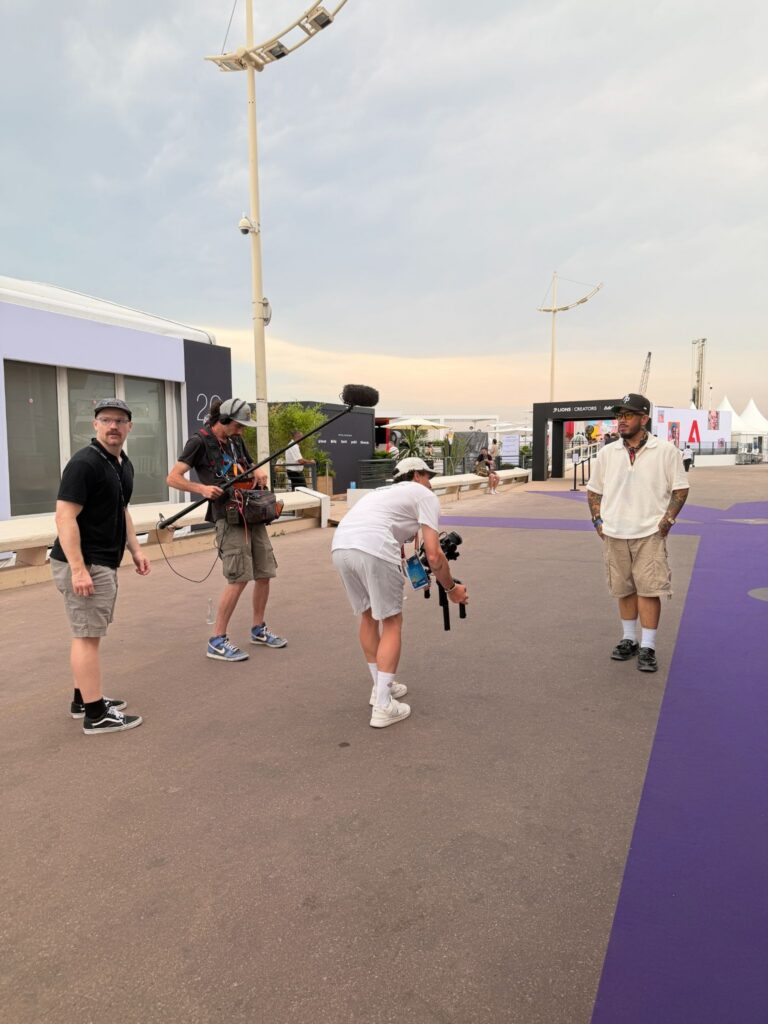
That approach has extended to Cannes Lions, where Adrian has attended for two consecutive years as an Adobe partner. He describes those rooms as infrastructure for relationship building rather than transactional deal-making, places where existing partnerships are reinforced, and new ones are started correctly.
On the deal side, he is selective, accepting below-market rates for brands he genuinely believes in and has turned down proposals he describes only as “really well numbered” when the fit wasn’t there. When brands have tried to confine his creative direction, results have reflected it. “The other 2% are brands I would never work with again,” he says. “It turned out exactly as you would think.”
The free educational content Adrian posts is not a concession to audience expectations. It is the trust infrastructure that makes paid products viable. “If I’m giving out such high-value, high-quality content for free already,” he says, “imagine what the paid version is like.”
Art Is Not a Job
Adrian’s most pointed advice to emerging creators is not about strategy or platform mechanics. It is a direct challenge to how the creative class talks about itself.
“It is a human necessity,” he says of artistic expression. “Now, we need to express ourselves as much as we need to breathe. To think that you should be making a living, a good living, off of that, call it breathing, is incredibly arrogant.”
He watched that expectation damage creators around him. When income depends entirely on creative output, Adrian argues, the process changes in ways that cannot be undone. “You are not creating art anymore,” he says of that state. “It gets tainted. This is how people burn out.”
Adrian does not tell aspiring creatives to make dramatic career changes. He says the opposite. “I don’t encourage anybody to quit their job and pursue being a full-time creative,” he says. “It’s going to hurt your art, it’s going to hurt your output.” His own framework for the relationship between money and craft is precise: “Making art is my cake. To have my cherries on the cake is getting paid for it. You’re not always going to have cherries on your cake.”
On His Own Terms
Beyond his digital business, Adrian has self-funded seven or eight cultural heritage gallery exhibitions, including two Filipino Heritage shows that drew major public audiences. All were free to the public. Adrian sought sponsors, found none, and funded them anyway.
“I put out good energy, good karma,” he says. “I receive good energy and good karma.”
The logic maps onto every other part of his business. Invest where the alignment is real. Trust that the return comes in a different form. In 10 years, Adrian says he wants to be someone the industry has moved past, not someone still building toward a moment.
“I hope to be that person where people think about whatever happened to that guy,” he says. “You’ll see me here and there. I’ll just be making it on my own terms, not based on what an algorithm wants me to do.”
Cover photo credit: David Suh
Subscribe to Our Newsletter
Check Out Our Podcast