Cannes Lions 2026 saw Creator Marketing move closer to the center of the festival than ever before, with more than 250 creators appearing across the Croisette. LIONS Creators, the dedicated track produced in partnership with Adobe, was integrated into the main festival footprint at the Palais Beach, bringing brand marketers, platform leaders, and talent managers into the same programming environment rather than treating creators as a parallel track.
The week brought a mix of momentum and unresolved tension. AI remained a dominant theme across conversations and activations, even as the industry continued to process recent scrutiny around fabricated results in award-winning campaigns and the resulting tightening of rules. Rather than a settled narrative, Cannes reflected an industry working through how creators, AI, measurement, and new models of brand engagement will look in practice.
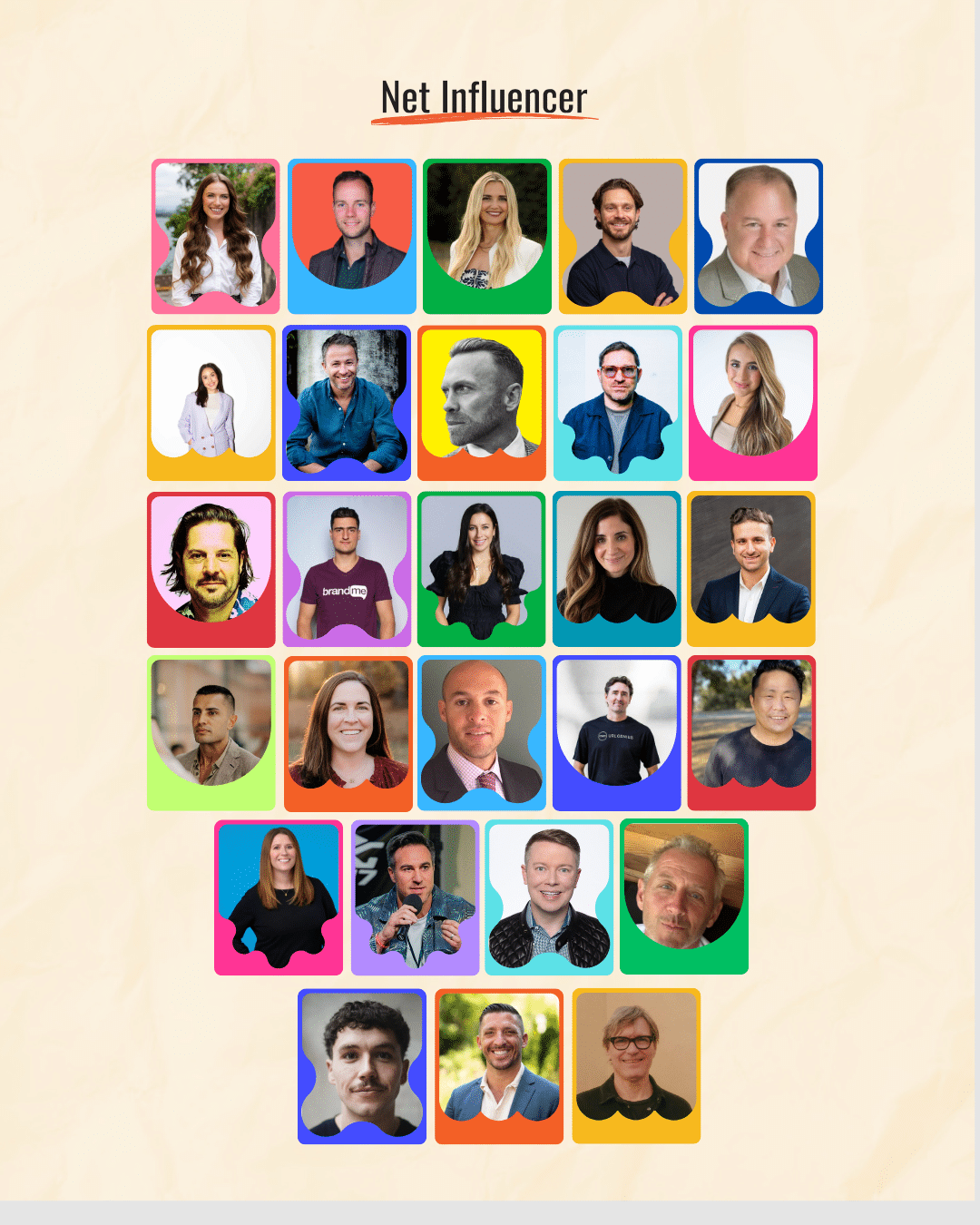
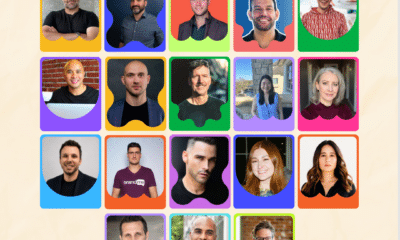
We asked 27 professionals across the Creator Economy for their most surprising, insightful, or controversial takeaway from Cannes Lions 2026 so far.
The narrative out of Cannes Lions 2026 is triumphant: creators have arrived. More than 250 of them are working at the Croisette, no longer pitched as media channels, but as strategic partners. And brands are restructuring around them. The future, we’re told, is here.
But the festival’s own numbers complicate the celebration. Award entries fell roughly 25% this year, a drop leadership gently frames as a “reset.” The real cause was last year’s reckoning, when winning campaigns were stripped of their Lions after agencies were caught using AI to fake results. That history matters, because it exposes the contradiction underneath all the rosé: the festival that just tightened its rules to crack down on AI deception is now hosting its largest-ever celebration of AI creative tools.
The creator rush rests on similarly shaky ground. Brands aren’t embracing creators because they’ve finally cracked the formula for influence; they’re embracing them because they can’t produce enough compelling content themselves, and creators can. Necessity is being sold as vision.
Cannes has always been where the industry decides what it believes in next. In 2026, it placed two enormous bets, on creators and on AI, while quietly admitting it can’t yet trust either one.
Hollywood showed up to buy, and most of the Creator Economy still doesn’t realize it’s being priced.
Backrooms and Obsession at the box office. Compound’s $250M. Accenture buying Whalar. Not three separate stories. One structural moment. Traditional media is acquiring its way into a category it failed to build, while the panels keep talking about authenticity.
The real Cannes for creators isn’t on stage. It’s in the side rooms. Panels recap what happened. Deals decide what happens next. And for the first time, creators showed up as buyers, not sellers. Operator-creators sat across from CMOs and studio heads, picking partners on their own terms.
What separates the priced from the acquired is first-party data. Platform reach is rented and resets every algorithm change. Email, SMS, direct-to-fan, purchase history. Those survive platform shifts and underwrite at real multiples.
Cannes 2026 will be remembered as the year Hollywood stopped competing with creators and started acquiring them. The ones with first-party data set the price. Everyone else accepts it.
The most insightful takeaway came from a conversation I was having with John Box, Meltwater’s CEO around the future of creators, and this new world where there will be an even bigger push for a dual creator strategy. The traditional one, where you want an authentic message to reach their specific follower group, and the second version where those creators and a potential new group of creators can have less followers and still put out content that is hitting the LLMs and influencing brand presence.
The AI conversation at Cannes completely changed shape between this year and last. Last year everyone was obsessed with AI-generated content and synthetic creators; the shiny, slightly scary stuff. As a bit of a relief, the real conversations this year are about the infrastructure: AI in idea generation, in production, in post. The unglamorous “plumbing” underneath the work. Which says the industry’s stopped treating AI as the new shiny toy and started treating it as a tool to get the work done.
The more encouraging shift is in how brands are thinking about Creator Marketing. For a long time it was treated as the budget version of TV, somewhere to park residual spend and “test.” That’s (thankfully) changing by the minute. As PepsiCo’s CMO noted: more brands are realizing it’s a genuinely different discipline that deserves proper investment, not leftover budget, and they’re resourcing it that way. That’s a real sign of maturity in the space.
Plus: it pays off, because done properly Creator Marketing is more effective than TV. Creators are at the center of where people actually spend their attention now. And the brands backing it properly are the ones seeing the best results.
Cannes Lions was HOT, vibrant, and dominated by creators, whose presence has expanded far beyond niche panels to anchor major activations at Google/YouTube Beach and nearly every brand cabana along the Croisette. That evolution underscores a broader industry shift already well underway: creators are no longer viewed as just social media add-ons but as central figures in today’s marketing strategies.
At the same time, conversations increasingly focused on the rise of AEO (Answer Engine Optimization), as brands look beyond traditional search and toward influencing how their identities are synthesized and surfaced by AI-driven search and discovery. In response, many brands are doubling down on a robust YouTube channel strategy as they seek to maintain control of their narrative in a more automated landscape. They’re also trying to understand how discussions on Reddit shape AI-generated answers and how to influence their presence there too.
Cannes 2026 has a push and pull that I have not felt in any year before: the entire industry, brands, creators, agencies, and platforms, are trying to figure out how to move between AI and IRL. Everyone in the room agrees creativity is the asset. Almost no one agrees on what AI is allowed to do with it. The most surprising takeaway is not that AI dominated every stage, but that the smartest people here finally admitted out loud that they do not know where this lands. Two days in and I feel as though the brands treating AI as a creativity multiplier will pull ahead of the ones treating it as a cost cut, and that gap will define the next decade. The real takeaway currently out of Cannes is not the technology, it is that we are finally having the honest conversation instead of the hype one.
Last year Cannes sold AI as the creative. This year it admitted AI is the tool. The pendulum swung back hard, and what’s left standing in the middle is the human. Vulnerability, curiosity, empathy. You can’t prompt those. People want to see authenticity win.
My biggest takeaway is that the most valuable content is happening in conversations on the street.
For years, Cannes has operated on a simple truth: the best ideas travel through hallways, beach clubs, dinners, and chance encounters on the Croisette. What feels different this year is that podcasting has become the mechanism for capturing and scaling those conversations.
Everywhere you look, there are microphones. Brand leaders, creators, agency executives, founders, and CMOs are turning candid discussions into content in real time. What used to be a private lunch between industry peers is now a podcast episode, a LinkedIn clip, or a social post that reaches thousands of people before the day is over.
Overall, this is a shift in how influence moves through the industry. The value is no longer concentrated solely in keynote speeches or polished presentations. It’s increasingly found in authentic, unscripted exchanges between people who are actively building the future of marketing.
In many ways, podcasting has become the unofficial main stage of Cannes. It captures the honesty, nuance, and spontaneity that the festival has always been known for, while making those moments accessible to everyone, not just the people lucky enough to be in the room.
The takeaway from Cannes is that the Creator Economy stopped being a side conversation. It’s the conversation. Everywhere you look, brands and platforms are trying to figure out how to earn attention in a world where audiences organize around creators, fandoms and communities instead of legacy programming grids. As someone who has spent their life in this space, none of this is new to me. I’ve been calling musicians creators, and treating fandoms like audiences since before UPROXX, starting at Rawkus Records. The market just caught up. Nobody is better at building visually compelling content than musicians. Nobody is better at building super engaged fandoms than musicians. That is why after a career of calling them creators, I have now started calling them super creators to differentiate them from the mass of content. My takeaway is that music super creators are the cheat code in a sea of creators.
“Creative freedom” is finally being treated as a strategy, not a risk. Marketers are realizing that a creator’s on-the-ground perspective, their instincts, their community knowledge, is the actual asset. The brands leaning into that are usually the ones walking away with numbers that actually mean something. Branded entertainment creates an opportunity to tap into that creativity through an episodic format rooted in authentic connections with audiences.
Rights holders, creators, and publishers of quality content are finding they have stronger negotiating leverage than expected in the age of AI. The value and appreciation of premium, human-made creativity is continuing to grow, and the Creator Economy is a clear reflection of this. Collective earnings have crossed $1 billion for the first time, and substantial institutional money has entered the space through the CAA/TPG $250 million creator fund.
Agencies and brands are helping to chart a path forward, showing resistance to AI managing every part of the content creation process, but leaning into the efficiency of the technology to augment human creativity, not replace it.
My biggest takeaway from Cannes is that the conversation has finally shifted from creators as a media channel to creators as business infrastructure. The most forward-thinking brands are no longer asking how to buy influencer campaigns; they’re asking how to build creator ecosystems that impact awareness, commerce, customer acquisition, and even product development. The Creator Economy is no longer a marketing trend – it’s becoming a core business function.
My most surprising takeaway from Cannes 2026 is that even as AI becomes more embedded in how we work, create, and process information, physical experiences seem to matter more, not less.
For all the conversation around the future of agentic AI, much of the week’s energy still centered on shared, in-person experiences. Brands and ad-tech companies leaned into live events, entertainment, creator-led programming and exclusive hospitality, from Spotify concerts and Axios’ World Cup watch parties to the Ciroc and LVMH villas. Those moments made Cannes feel less like a week defined only by what AI can automate, and more like a reminder that brands are still investing in the things it can’t replicate: a room people want to be in, a moment they want to talk about and access to authentic shared experiences.
The Creator Economy showed up in a big way at Cannes with notable creators roaming La Croisette and CMOs stopping for selfies with them. What stood out was the huge crossover between tech and media. Major AI companies set up activations and experiences and partnered with SMB content creators to drive product marketing and awareness. Almost everyone I met said it was their first time at Cannes Lions, which further highlights the shift in power, dollars, and convergence of where culture is headed. Trust and relationships are at the center of it all.
In Cannes, “networking” doesn’t happen in conference rooms. It happens on yachts, at beach clubs, and during after-parties where an A-lister is playing a private set at your favorite brand’s event. Some of the most meaningful business conversations happen in those unexpected moments.
And in those moments, we discussed the biggest shift this year: creators are no longer confined to Creator Economy conversations. They are now at the center of nearly every marketing discussion. A few years ago, Cannes was a playground for CMOs, with creators as an add-on. This year, more than 1,000 creators attended, sharing the spotlight with executives, athletes, and celebrities, mirroring their influence on culture and consumer behavior.
The other conversation? Nobody is asking if AI would change marketing, they’re already deploying it across operations, campaign execution, and increasingly, creative work. One comment that stuck with me came from a creator agency leader who said they’re no longer just competing with other agencies, they’re competing with AI. That changes the equation entirely. Speed, efficiency, and scale are becoming competitive advantages, and the teams that successfully integrate AI into their workflows will have a significant edge.
The biggest shift I’m seeing is that influencer content is no longer being treated as a support channel – it’s becoming the main campaign. Brands that used to spend millions on traditional ads are now realizing that a creator with the right audience converts better than a billboard. Cannes is starting to reflect that, but the industry is still catching up to what’s actually working on the ground.
My biggest takeaway from Cannes this year is one I didn’t expect: in a space dominated by AI conversations, the most energized rooms are filled with creators talking about human connection, authentic storytelling, and getting offline. We’ve seen social platforms actively encouraging people to disconnect and retailers showcasing their unique, creative offerings. We spend so much time thinking and talking and writing about the next big thing in technology that it’s really easy to miss how powerfully the Creator Economy is pulling culture in the opposite direction. I like where they’re headed.
What’s been most interesting at Cannes is, even with all the excitement around AI and emerging technologies, many of the conversations are coming back to the fundamentals. Marketers want better data, better measurement, and a clearer understanding of what’s really driving results. The tools may be evolving, but the challenge remains the same: reaching real audiences efficiently and proving that media investments work.
At Cannes this year, the biggest “stake in the ground” is not a new platform or format. It is the industry finally saying out loud what the market has been proving for years: creators are not a media line item. They are strategic partners shaping product narratives, driving demand, and influencing how brands and retailers go to market.
What surprised me is how surprised everyone still seems. Creators have been operating like businesses for years. In our latest URLgenius survey of U.S. creators, 70% identify as full-time professionals, and affiliate commissions are the top primary monetization model (39%), signaling just how performance-driven and operational this work has become.
Add to that, paid amplification is now standard, with 86% of creators running paid promotion to hit sales targets and support launches. AI is also workflow infrastructure: 47% use it daily (79% at least weekly), even as 40% say AI-generated influencers are a growing competitive concern.
The takeaway: Cannes is catching up to the reality creators have been building, and the next phase is treating creator partnerships with the same rigor as any other growth channel.
My biggest surprise coming out of Cannes was that nearly every conversation with brands and agencies came back to the same core issue: measurement. Despite all the advancements around AI and the future of media, it remains the industry’s biggest challenge. One conversation that stuck with me in particular was with a board member of a major fashion brand that invests heavily in creator and UGC programs. Even with significant investment, they’re still determining which creators, campaigns, and content are moving the needle, and where they should focus their spend next. Creator Marketing will continue to mature, and the industry has a significant opportunity to better measure the ROI of those efforts. The company that solves that challenge will unlock tremendous value for brands, creators, and agencies alike.
The most unexpected element of Cannes Lions has been how eagerly people are craving joy right now. We heard it on many panels and saw it in action through the delight of fandoms being brought to life. I was heartened by the reaction to the Teletubbies being on-site. The level of joy they spark is immediate and universal. Nostalgia is cutting across generations and geographies in a way that feels rare right now.
We have seen 70-year-old couples light up, kids jump in to dance and play, and senior executives line up for a moment with them. People keep saying some version of, “I cannot believe how starstruck I am!” One person hugged Laa-Laa and said, “I didn’t realize how much I needed that. I need to take a picture to show my kids.”
It is a reminder that truly loved characters do more than drive recognition. They create shared, emotional moments that bring people together instantly, even in busy, deal-making environments like Cannes Lions.
You can’t build a relationship with someone on a panel, but just by being in the room means you could walk up to them after to shoot your shot, and if you took advantage of those two minutes 10x a day, you will have left Cannes with a pipeline towards success.
So far, I have yet to hear much about how GEO and AEO are reshaping communications and marketing. Given the tectonic shift already underway in Silicon Valley, I would have expected it to be far more central to the conversation here.
Cannes has grown so much. It’s nice to see how creators have a bigger role. I see so many creators, but we still are not seeing the platforms and technologies that make creators actually work for brands as a marketing channel showing up. This is what will help this category grow exponentially.
The Creator Economy is more visible in Cannes than in any year I can remember and the industry’s biggest voices are in agreement that Influencer Marketing will only continue to rise. But the real takeaway for me is what comes next: it’s on us to shape the reputation of our space. If we get it right, social platforms could become one of the most inclusive, brand-safe and effective environments in advertising, building a Creator Economy that’s genuinely fair to brands, influencers and the people on the other side of the screen.
That Gen Alpha is the talk of the town. Suddenly, this young and very very large generation is making culture, and everyone wants to know – from youth sports to music to fashion – who the next creator celebrities will be.
It’s finally an unstoppable reality now: Creators have evolved far beyond a marketing channel. They are ready to take over the media, creative, and entertainment space by storm.
Dragomir is a Serbian freelance blog writer and translator. He is passionate about covering insightful stories and exploring topics such as influencer marketing, the creator economy, technology, business, and cyber fraud.








Cannes Lions 2026 saw Creator Marketing move closer to the center of the festival than ever before, with more than 250 creators appearing across the Croisette. LIONS Creators, the dedicated track produced in partnership with Adobe, was integrated into the main festival footprint at the Palais Beach, bringing brand marketers, platform leaders, and talent managers into the same programming environment rather than treating creators as a parallel track.
The week brought a mix of momentum and unresolved tension. AI remained a dominant theme across conversations and activations, even as the industry continued to process recent scrutiny around fabricated results in award-winning campaigns and the resulting tightening of rules. Rather than a settled narrative, Cannes reflected an industry working through how creators, AI, measurement, and new models of brand engagement will look in practice.
We asked 27 professionals across the Creator Economy for their most surprising, insightful, or controversial takeaway from Cannes Lions 2026 so far.
Kate Fleming, Director of Influencer Strategy, PartnerCentric
The narrative out of Cannes Lions 2026 is triumphant: creators have arrived. More than 250 of them are working at the Croisette, no longer pitched as media channels, but as strategic partners. And brands are restructuring around them. The future, we’re told, is here.
But the festival’s own numbers complicate the celebration. Award entries fell roughly 25% this year, a drop leadership gently frames as a “reset.” The real cause was last year’s reckoning, when winning campaigns were stripped of their Lions after agencies were caught using AI to fake results. That history matters, because it exposes the contradiction underneath all the rosé: the festival that just tightened its rules to crack down on AI deception is now hosting its largest-ever celebration of AI creative tools.
The creator rush rests on similarly shaky ground. Brands aren’t embracing creators because they’ve finally cracked the formula for influence; they’re embracing them because they can’t produce enough compelling content themselves, and creators can. Necessity is being sold as vision.
Cannes has always been where the industry decides what it believes in next. In 2026, it placed two enormous bets, on creators and on AI, while quietly admitting it can’t yet trust either one.
Tobias Hoss, Senior Advisor, TopFan
Hollywood showed up to buy, and most of the Creator Economy still doesn’t realize it’s being priced.
Backrooms and Obsession at the box office. Compound’s $250M. Accenture buying Whalar. Not three separate stories. One structural moment. Traditional media is acquiring its way into a category it failed to build, while the panels keep talking about authenticity.
The real Cannes for creators isn’t on stage. It’s in the side rooms. Panels recap what happened. Deals decide what happens next. And for the first time, creators showed up as buyers, not sellers. Operator-creators sat across from CMOs and studio heads, picking partners on their own terms.
What separates the priced from the acquired is first-party data. Platform reach is rented and resets every algorithm change. Email, SMS, direct-to-fan, purchase history. Those survive platform shifts and underwrite at real multiples.
Cannes 2026 will be remembered as the year Hollywood stopped competing with creators and started acquiring them. The ones with first-party data set the price. Everyone else accepts it.
Jenny Kelly, Head of Content, Creator, and AI, Deloitte Digital
The most insightful takeaway came from a conversation I was having with John Box, Meltwater’s CEO around the future of creators, and this new world where there will be an even bigger push for a dual creator strategy. The traditional one, where you want an authentic message to reach their specific follower group, and the second version where those creators and a potential new group of creators can have less followers and still put out content that is hitting the LLMs and influencing brand presence.
Chris Davis, Managing Director, Hypetap
The AI conversation at Cannes completely changed shape between this year and last. Last year everyone was obsessed with AI-generated content and synthetic creators; the shiny, slightly scary stuff. As a bit of a relief, the real conversations this year are about the infrastructure: AI in idea generation, in production, in post. The unglamorous “plumbing” underneath the work. Which says the industry’s stopped treating AI as the new shiny toy and started treating it as a tool to get the work done.
The more encouraging shift is in how brands are thinking about Creator Marketing. For a long time it was treated as the budget version of TV, somewhere to park residual spend and “test.” That’s (thankfully) changing by the minute. As PepsiCo’s CMO noted: more brands are realizing it’s a genuinely different discipline that deserves proper investment, not leftover budget, and they’re resourcing it that way. That’s a real sign of maturity in the space.
Plus: it pays off, because done properly Creator Marketing is more effective than TV. Creators are at the center of where people actually spend their attention now. And the brands backing it properly are the ones seeing the best results.
David George, CEO, Pixability
Cannes Lions was HOT, vibrant, and dominated by creators, whose presence has expanded far beyond niche panels to anchor major activations at Google/YouTube Beach and nearly every brand cabana along the Croisette. That evolution underscores a broader industry shift already well underway: creators are no longer viewed as just social media add-ons but as central figures in today’s marketing strategies.
At the same time, conversations increasingly focused on the rise of AEO (Answer Engine Optimization), as brands look beyond traditional search and toward influencing how their identities are synthesized and surfaced by AI-driven search and discovery. In response, many brands are doubling down on a robust YouTube channel strategy as they seek to maintain control of their narrative in a more automated landscape. They’re also trying to understand how discussions on Reddit shape AI-generated answers and how to influence their presence there too.
Oh, and AI was mentioned once or twice.
Victoria Bachan, Co-Founder & CEO, Hyphen HQ
Cannes 2026 has a push and pull that I have not felt in any year before: the entire industry, brands, creators, agencies, and platforms, are trying to figure out how to move between AI and IRL. Everyone in the room agrees creativity is the asset. Almost no one agrees on what AI is allowed to do with it. The most surprising takeaway is not that AI dominated every stage, but that the smartest people here finally admitted out loud that they do not know where this lands. Two days in and I feel as though the brands treating AI as a creativity multiplier will pull ahead of the ones treating it as a cost cut, and that gap will define the next decade. The real takeaway currently out of Cannes is not the technology, it is that we are finally having the honest conversation instead of the hype one.
Ben Moore, Managing Director, BeReal
Last year Cannes sold AI as the creative. This year it admitted AI is the tool. The pendulum swung back hard, and what’s left standing in the middle is the human. Vulnerability, curiosity, empathy. You can’t prompt those. People want to see authenticity win.
Petur Workman, VP, Business Development, Movers+Shakers
My biggest takeaway is that the most valuable content is happening in conversations on the street.
For years, Cannes has operated on a simple truth: the best ideas travel through hallways, beach clubs, dinners, and chance encounters on the Croisette. What feels different this year is that podcasting has become the mechanism for capturing and scaling those conversations.
Everywhere you look, there are microphones. Brand leaders, creators, agency executives, founders, and CMOs are turning candid discussions into content in real time. What used to be a private lunch between industry peers is now a podcast episode, a LinkedIn clip, or a social post that reaches thousands of people before the day is over.
Overall, this is a shift in how influence moves through the industry. The value is no longer concentrated solely in keynote speeches or polished presentations. It’s increasingly found in authentic, unscripted exchanges between people who are actively building the future of marketing.
In many ways, podcasting has become the unofficial main stage of Cannes. It captures the honesty, nuance, and spontaneity that the festival has always been known for, while making those moments accessible to everyone, not just the people lucky enough to be in the room.
Jarret Myer, CEO, UPROXX
The takeaway from Cannes is that the Creator Economy stopped being a side conversation. It’s the conversation. Everywhere you look, brands and platforms are trying to figure out how to earn attention in a world where audiences organize around creators, fandoms and communities instead of legacy programming grids. As someone who has spent their life in this space, none of this is new to me. I’ve been calling musicians creators, and treating fandoms like audiences since before UPROXX, starting at Rawkus Records. The market just caught up. Nobody is better at building visually compelling content than musicians. Nobody is better at building super engaged fandoms than musicians. That is why after a career of calling them creators, I have now started calling them super creators to differentiate them from the mass of content. My takeaway is that music super creators are the cheat code in a sea of creators.
Paige Kosinski, Co-Founder, Odyssey Entertainment Group
“Creative freedom” is finally being treated as a strategy, not a risk. Marketers are realizing that a creator’s on-the-ground perspective, their instincts, their community knowledge, is the actual asset. The brands leaning into that are usually the ones walking away with numbers that actually mean something. Branded entertainment creates an opportunity to tap into that creativity through an episodic format rooted in authentic connections with audiences.
Pete Beeney, Director of Agency Sales, Epidemic Sound
Rights holders, creators, and publishers of quality content are finding they have stronger negotiating leverage than expected in the age of AI. The value and appreciation of premium, human-made creativity is continuing to grow, and the Creator Economy is a clear reflection of this. Collective earnings have crossed $1 billion for the first time, and substantial institutional money has entered the space through the CAA/TPG $250 million creator fund.
Agencies and brands are helping to chart a path forward, showing resistance to AI managing every part of the content creation process, but leaning into the efficiency of the technology to augment human creativity, not replace it.
Gerardo Sordo, CEO & Founder, BrandMe
My biggest takeaway from Cannes is that the conversation has finally shifted from creators as a media channel to creators as business infrastructure. The most forward-thinking brands are no longer asking how to buy influencer campaigns; they’re asking how to build creator ecosystems that impact awareness, commerce, customer acquisition, and even product development. The Creator Economy is no longer a marketing trend – it’s becoming a core business function.
Lucy Markowitz, SVP & General Manager, Americas Marketplace, Vistar Media
My most surprising takeaway from Cannes 2026 is that even as AI becomes more embedded in how we work, create, and process information, physical experiences seem to matter more, not less.
For all the conversation around the future of agentic AI, much of the week’s energy still centered on shared, in-person experiences. Brands and ad-tech companies leaned into live events, entertainment, creator-led programming and exclusive hospitality, from Spotify concerts and Axios’ World Cup watch parties to the Ciroc and LVMH villas. Those moments made Cannes feel less like a week defined only by what AI can automate, and more like a reminder that brands are still investing in the things it can’t replicate: a room people want to be in, a moment they want to talk about and access to authentic shared experiences.
Allison Yazdian, CEO, Uscreen
The Creator Economy showed up in a big way at Cannes with notable creators roaming La Croisette and CMOs stopping for selfies with them. What stood out was the huge crossover between tech and media. Major AI companies set up activations and experiences and partnered with SMB content creators to drive product marketing and awareness. Almost everyone I met said it was their first time at Cannes Lions, which further highlights the shift in power, dollars, and convergence of where culture is headed. Trust and relationships are at the center of it all.
Cameron Ajdari, Co-Founder & CEO, Currents Management
In Cannes, “networking” doesn’t happen in conference rooms. It happens on yachts, at beach clubs, and during after-parties where an A-lister is playing a private set at your favorite brand’s event. Some of the most meaningful business conversations happen in those unexpected moments.
And in those moments, we discussed the biggest shift this year: creators are no longer confined to Creator Economy conversations. They are now at the center of nearly every marketing discussion. A few years ago, Cannes was a playground for CMOs, with creators as an add-on. This year, more than 1,000 creators attended, sharing the spotlight with executives, athletes, and celebrities, mirroring their influence on culture and consumer behavior.
The other conversation? Nobody is asking if AI would change marketing, they’re already deploying it across operations, campaign execution, and increasingly, creative work. One comment that stuck with me came from a creator agency leader who said they’re no longer just competing with other agencies, they’re competing with AI. That changes the equation entirely. Speed, efficiency, and scale are becoming competitive advantages, and the teams that successfully integrate AI into their workflows will have a significant edge.
Shawn Munir, Founder & CEO, Yamammi Influencer Marketing
The biggest shift I’m seeing is that influencer content is no longer being treated as a support channel – it’s becoming the main campaign. Brands that used to spend millions on traditional ads are now realizing that a creator with the right audience converts better than a billboard. Cannes is starting to reflect that, but the industry is still catching up to what’s actually working on the ground.
Abby Borden, Vice President of Marketing, Vantage
My biggest takeaway from Cannes this year is one I didn’t expect: in a space dominated by AI conversations, the most energized rooms are filled with creators talking about human connection, authentic storytelling, and getting offline. We’ve seen social platforms actively encouraging people to disconnect and retailers showcasing their unique, creative offerings. We spend so much time thinking and talking and writing about the next big thing in technology that it’s really easy to miss how powerfully the Creator Economy is pulling culture in the opposite direction. I like where they’re headed.
Todd Braverman, Chief Revenue Officer, Ampersand
What’s been most interesting at Cannes is, even with all the excitement around AI and emerging technologies, many of the conversations are coming back to the fundamentals. Marketers want better data, better measurement, and a clearer understanding of what’s really driving results. The tools may be evolving, but the challenge remains the same: reaching real audiences efficiently and proving that media investments work.
Brian Klais, Founder & CEO, URLgenius
At Cannes this year, the biggest “stake in the ground” is not a new platform or format. It is the industry finally saying out loud what the market has been proving for years: creators are not a media line item. They are strategic partners shaping product narratives, driving demand, and influencing how brands and retailers go to market.
What surprised me is how surprised everyone still seems. Creators have been operating like businesses for years. In our latest URLgenius survey of U.S. creators, 70% identify as full-time professionals, and affiliate commissions are the top primary monetization model (39%), signaling just how performance-driven and operational this work has become.
Add to that, paid amplification is now standard, with 86% of creators running paid promotion to hit sales targets and support launches. AI is also workflow infrastructure: 47% use it daily (79% at least weekly), even as 40% say AI-generated influencers are a growing competitive concern.
The takeaway: Cannes is catching up to the reality creators have been building, and the next phase is treating creator partnerships with the same rigor as any other growth channel.
Ray Lee, Co-Founder & CEO, Daisy
My biggest surprise coming out of Cannes was that nearly every conversation with brands and agencies came back to the same core issue: measurement. Despite all the advancements around AI and the future of media, it remains the industry’s biggest challenge. One conversation that stuck with me in particular was with a board member of a major fashion brand that invests heavily in creator and UGC programs. Even with significant investment, they’re still determining which creators, campaigns, and content are moving the needle, and where they should focus their spend next. Creator Marketing will continue to mature, and the industry has a significant opportunity to better measure the ROI of those efforts. The company that solves that challenge will unlock tremendous value for brands, creators, and agencies alike.
Emma Witkowski, Vice President of Media Solutions, WildBrain
The most unexpected element of Cannes Lions has been how eagerly people are craving joy right now. We heard it on many panels and saw it in action through the delight of fandoms being brought to life. I was heartened by the reaction to the Teletubbies being on-site. The level of joy they spark is immediate and universal. Nostalgia is cutting across generations and geographies in a way that feels rare right now.
We have seen 70-year-old couples light up, kids jump in to dance and play, and senior executives line up for a moment with them. People keep saying some version of, “I cannot believe how starstruck I am!” One person hugged Laa-Laa and said, “I didn’t realize how much I needed that. I need to take a picture to show my kids.”
It is a reminder that truly loved characters do more than drive recognition. They create shared, emotional moments that bring people together instantly, even in busy, deal-making environments like Cannes Lions.
Jeff Frommer, CEO, OWM
You can’t build a relationship with someone on a panel, but just by being in the room means you could walk up to them after to shoot your shot, and if you took advantage of those two minutes 10x a day, you will have left Cannes with a pipeline towards success.
Curtis Sparrer, Principal, Bospar PR + Marketing
So far, I have yet to hear much about how GEO and AEO are reshaping communications and marketing. Given the tectonic shift already underway in Silicon Valley, I would have expected it to be far more central to the conversation here.
Eric Hadley, Chief Business Officer, VwD
Cannes has grown so much. It’s nice to see how creators have a bigger role. I see so many creators, but we still are not seeing the platforms and technologies that make creators actually work for brands as a marketing channel showing up. This is what will help this category grow exponentially.
Joe Adsett, Managing Director, Refluenced AG
The Creator Economy is more visible in Cannes than in any year I can remember and the industry’s biggest voices are in agreement that Influencer Marketing will only continue to rise. But the real takeaway for me is what comes next: it’s on us to shape the reputation of our space. If we get it right, social platforms could become one of the most inclusive, brand-safe and effective environments in advertising, building a Creator Economy that’s genuinely fair to brands, influencers and the people on the other side of the screen.
Zak Ringelstein, Founder & CEO, Zigazoo
That Gen Alpha is the talk of the town. Suddenly, this young and very very large generation is making culture, and everyone wants to know – from youth sports to music to fashion – who the next creator celebrities will be.
Christoph Becker, Chief Creative Officer, Whalar Group
It’s finally an unstoppable reality now: Creators have evolved far beyond a marketing channel. They are ready to take over the media, creative, and entertainment space by storm.
Subscribe to Our Newsletter
Check Out Our Podcast