






Strategy
TBEX CEO on Why Travel Creators Need Businesses Beyond Search and Social

Major platforms know that sending audiences to a creator’s website is against their own interests. For travel bloggers who built their businesses on search and social traffic, that shift is compounding fast. Rick Calvert has been tracking it since 2007, and next week he is bringing 200 of them to Fargo, North Dakota, to talk about what they still own.
Rick is CEO of TBEX, a conference series connecting travel content creators with destination marketing organizations, tourism boards, and travel brands. Typically running three events per year across North America, Europe, and Asia, TBEX works both sides of the creator-brand relationship: creators building sustainable businesses and destinations looking to structure and fund creator partnerships.
“The only thing you own is your own website and your own email list,” he says. “You don’t own TikTok, you don’t own Instagram, you don’t own YouTube. They can change the rules anytime they want.”
Rick came to creator events from the trade show industry. He had managed large events including AWFS, a woodworking trade show with 20,000 attendees, and Comic Con at 100,000 before founding Blog World in Las Vegas in 2007, the first dedicated conference for bloggers and new media creators. “I Googled, ‘Where’s the blogging trade show?’ And there wasn’t one,” he recalls. Kim Mance, a travel blogger, founded TBEX separately in 2009, and Rick acquired it in 2012.
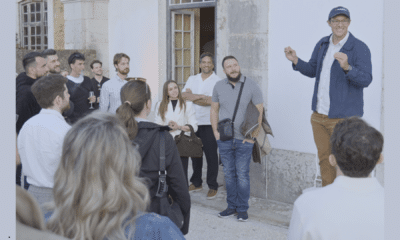
The TBEX Summit America 2026, running September 29 through October 2 in Fargo, is the series’ smaller and more intensive format with 200 attendees, 90-minute sessions, and programming for creators already operating as businesses. The sessions in Fargo are structured around the challenge Rick considers most urgent for travel creators: building durable, owned assets while platform-dependent distribution channels narrow around them.
Travel Bloggers Face the Sharpest Version of the Platform Problem
The pressure on creator-owned web properties has been building for years, though Rick says its character has recently changed. “From the very beginning, I said that the large media companies that controlled media before social media came along have been trying to take it back,” he says. “And right now they’re getting pretty close.”
For travel bloggers, Rick points to Google’s “AI Overview” feature as the immediate pressure point. The tool surfaces answers drawn from web content directly in search results without routing the reader to the original source. “When you do a search, it has scraped your website, got the answer, and served it up as Google did it,” Rick says. “They never send that visitor to your website to read the content.” He notes that AI assistants have captured some portion of search traffic, but that the volume remains small relative to Google’s direct referrals. The snippet itself is the more urgent problem.
A second layer compounds the challenge. The generation of creators who grew their audiences on TikTok, Instagram, or YouTube before considering a website represents a large share of current travel creator activity. “They don’t even think about a website until they’re maybe years into it,” Rick says. “And a lot of times, those creators will come to TBEX and go, ‘Oh my God, I have to get a website. I have to start my email list.'”
One session in Fargo addresses this directly. It is titled “Don’t Build on Rented Land.” Another, presented by Andrew Wilder of NerdPress, covers how to prepare a travel blog for AI-driven search.
The Summit Combines Learning, Content, and Direct Business Meetings
The TBEX format is built around three distinct outcomes that Rick says most creator events provide separately.
The first is education: keynotes and breakout sessions covering SEO, AI content strategy, video production, and monetization through affiliate marketing, display advertising, and brand partnerships.
The second is destination content: the host city organizes day trips before the conference starts, and post-conference familiarization trips, which attendees apply for separately, run three to five days across the surrounding region.
The third element is direct business development. In the afternoons, TBEX runs structured speed networking sessions between creators and industry professionals, including destination marketing organizations, hotel groups, and tour operators. “You’re having direct business meetings with people in the industry that, again, can hire you as an ambassador, buy advertising, or pay you to do a campaign,” Rick says. The Fargo edition includes five post-conference trips: three within North Dakota, one to Minnesota, and one to Canada.
Attendees typically stay seven to ten days at a TBEX destination. At a recent event in Kazakhstan, the average extended to 17 days. Fargo fits Rick’s preference for destinations that offer travel creators material their audiences are unlikely to have encountered. “Fargo, North Dakota is typically the last state people visit if they go to all 50 states,” he notes.
Host Cities Have Put a Number on What Creator Visits Return
TBEX documents the economic value of its events to host destinations as part of how it structures relationships with tourism boards. Rick says the results follow a consistent pattern. “Very typically, TBEX has a value to a destination in the tens of millions of dollars for the content that our attendees create,” he says.
According to Rick, the Czech Republic produced a 220-page report valuing a TBEX event at $22 million. Alabama’s figure was $19 million. Toronto’s was $23 million. Destinations calculate two variables: the direct spending of creators during extended stays and the advertising value equivalent of the content produced. “We tell our creators: this is evidence of what your value is when talking to potential business partners,” Rick says.
Effective Destination Marketers Are Replacing One-Off Campaigns With Ongoing Relationships
The creator-destination relationship has changed since TBEX held its first events, though Rick says the change is still uneven. “Everyone understands there’s a value and that it’s something they should do,” he says, “but exactly what they should do and how much and how they should work with creators, that still is not universal.”
The clearest marker he identifies for best-practice destination marketing is a longer time horizon. “The ones who are the best at their job, the innovators and the leaders on the Influencer Marketing side, they’re talking to creators about collaboration, about partnership, about long-term relationships,” Rick says. “Not just, ‘You came in, you did a campaign, and we’ll never see you again.’ No, we want you to come back next year. We want you to come in the spring, now in the fall, now when we’ve opened a new hotel.”
Rick adds, “Destinations feel like they need to invite a creator from Germany to get visitors from Germany. You don’t. You could work with a creator who lives in your town. They will get people to come from anywhere in the world to visit you.”
For TBEX, Success Is a Changed Business Decision, Not an Attendance Number
Rick’s definition of a successful event is specific. “It’s when an attendee comes and gets something that changes their business,” he says. “They have a moment where they say, ‘Oh, this is how I’m going to make money. I made a partnership with this company.’ Those are the things that are successful for us.”
Tammilee Tillison attended her first TBEX in Toronto in 2013 as a newcomer. She now operates three sites: “Tammilee Tips,” a Gulf Shores travel property called “Gulf Coast Journeys,” and a site her husband runs under the name “Park Ranger John,” after leaving a park service career. Tammilee has since spoken at TBEX several times, including a keynote appearance. Mickela Mallozzi attended her first event in Keystone, Colorado in 2012. She has since earned four Emmy awards and hosts a travel program on PBS; she documents her work at travelbarefeet.com and gave a keynote at TBEX Europe in Donegal, Ireland last year.
Upcoming events include İzmir, Türkiye (September 7 to 10, 2027) and Florence, Alabama, known as the “Shoals” (November 3 to 6, 2027). TBEX LATAM, the series’ first Latin American event, is in development, with several host countries under consideration.
“People come to me all the time at TBEX and say, ‘This event changed my life,'” Rick says. “I just think it’s them being in that place with other creators where they can have that light-bulb moment.”
Subscribe to Our Newsletter
Check Out Our Podcast