







Talent Collectives
Digital Fox Talent Backs Long-Form Creators as the Middle Tier of Creator Management Thins

Digital Fox Talent has no outside investors and operates with a team of five. For founder Tom James, those facts are the value proposition.
“If the creator doesn’t eat, we don’t eat,” Tom says. “Everything we try to do is focus on how we grow these creators, and we put all of our time into that.”
Founded in 2019 and based in Denver, with plans to relocate to New York, the agency represents a curated roster of entertainment and pop culture creators, connecting them with brand deals in video games, film, and adjacent categories. It handles brand partnerships, platform monetization, and content distribution across multiple channels, functioning, in Tom’s words, as “a strategic layer above everything the creators are doing.”
That positioning was shaped by what Tom observed long before creator management became a recognized profession. His background in advertising in London, where young professionals cycled through unpaid internships without advancing to paid roles, left him skeptical of industries that paid in exposure. After relocating to Australia, he saw the same pattern playing out in the creator space, as entertainment creators were offered early game releases and film screening invitations in exchange for positive coverage rather than fees. “We’ll give you an early release of the game if you’ll publish about it,” he recalls.
The proof of concept arrived at a Melbourne gym. Invited to film promotional content for the Digital Fox website, Tom encountered 22 superhero cosplayers, shot a two-minute workout video featuring the Flash, Spider-Man, and Deadpool, and published it to Facebook, where it generated roughly 30 million views within a week. The moment clarified the business model: entertainment fan creators could reach audiences studios cared about, and there was money in connecting the two. The agency won the New Business Award at the 2020 Melbourne Business Network B3000+ Awards. Tom subsequently moved to the U.S., brought his brother Alex Mackenzie on board to manage operations, and has built the network from there.
Short-Form Alone Does Not Build a Sustainable Creator Business
For the format that currently dominates creator industry attention, Tom describes short-form content as a difficult fit for the brand deal model Digital Fox operates.
The problem is brief compliance. “If you’re a short-form creator and you’re running an ad for a client, you’ve got this branded content piece; it gets next to no views because it’s not within your normal content strategy,” Tom says. Creators face competing pressures, such as satisfying the brand’s brief and producing something their audience will engage with. When both do not align, performance falls short, brands push for make-goods, and creators often resist, ending the client relationship.
Tom notes that long-form content avoids the tension. A creator publishing regular long-form episodes inserts a brand integration directly into existing content, without altering the underlying content strategy. “The creator’s just publishing their usual content strategy and inserting an ad into it, like TV ads,” he says. “And that’s so much easier to book long term.”
A layered revenue structure reinforces the logic. A creator with high long-form AdSense income can absorb a slow month without financial strain, making them a more reliable partner for repeat campaigns. “You’ve got your AdSense revenue coming in, and then the brand deals and partnerships that we bring in add onto that and make it all additional,” Tom says.
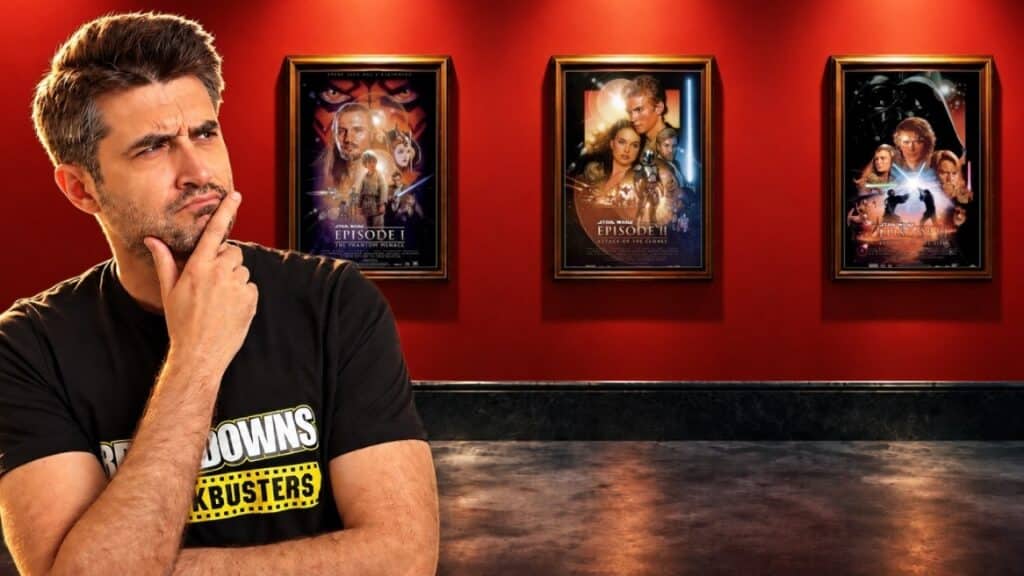
The agency’s current threshold for signing creators is 50,000 average YouTube views (30,000+ for MSN distribution). Tom also looks for consistent posting, an on-camera presence, and what he calls a “media mindset” over an influencer mindset. “Here are my content pillars, here’s my mission statement. I want to do breakdowns for movies, or whatever it might be,” he says.
Entertainment Specialization Changes the Kind of Brief the Agency Receives
Ten years of operating in entertainment has shaped the type of client work Digital Fox Talent attracts. Studios often arrive with open-ended creative requests rather than CPM floors. “They’re actually coming and saying, ‘Hey, we want a creative idea. Can you execute?'” Tom says. “Specializing in a niche opens up broader revenue streams for the agency, its creators and brands.”
Creator autonomy in deal selection is a standing policy that filters briefs from the other direction. Creators retain approval rights over which brands they work with, and Digital Fox Talent declines accordingly. Tom cites a recent brief that asked for a Joe Rogan clip embedded in creator content. “We just don’t want to touch any kind of difficulties around legalities or content usage,” he says. Emerging contract terms around AI likeness rights have added another layer to the review. He estimates the agency declines roughly one in every 20 briefs on these grounds.
The entertainment niche also provides predictability. Video game publishers and film studios operate on release calendars, which create repeating campaign cycles. A five-person team can service those cycles without sourcing entirely new clients for each project, reducing the cold-outreach burden that would otherwise come with a commission-only model at this scale.
Platform Distribution Beyond YouTube Is Additive Revenue
A portion of what Digital Fox Talent delivers that creators often underinvest in is content distribution across platforms beyond YouTube, including MSN and Spotify Video. Tom describes these as routes to distinct audiences rather than duplication of YouTube’s existing base.
MSN’s audience tends to include viewers encountering content in professional settings. Spotify Video reaches listeners who follow audio content and then transition to watching. “I’ve very rarely seen it cannibalize a YouTube performance, and instead I just think it’s additive,” Tom says. “It’s also in line with having a “media” and not “YouTuber” mindset.”
For creators with years of accumulated long-form content, Tom also points to back-catalog monetization as an opportunity he expects to grow: YouTube has reportedly been working toward enabling ads across older content at scale, which would allow brands to book against a creator’s archive rather than only new uploads.
The Middle Tier of Creator Management Is Compressing
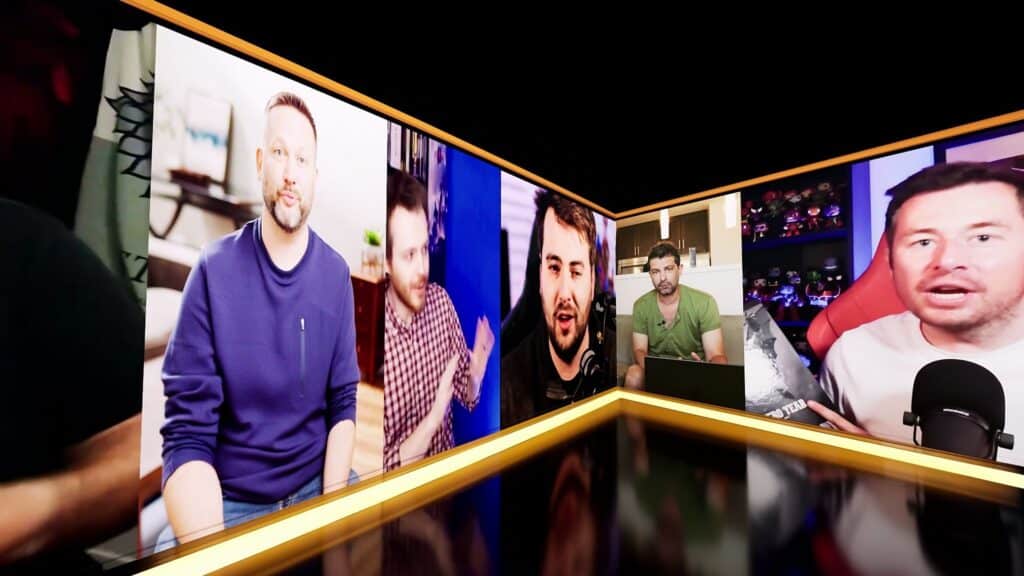
Tom identifies a shift in creator management that directly implicates the kind of agency Digital Fox Talent is. Mid-sized operators that made up much of the field five years ago, he notes, have largely disappeared, either scaling into larger firms, being acquired, or exiting.
“I remember five years ago, it felt like there were so many of us sort of around, and there just aren’t as many anymore,” Tom says. “It feels like it’s full of startups and established agencies now. Most of the middle agencies have just grown, or they’ve dipped out, so there aren’t as many agencies to service the mid-tier creators.”
The compression is structural in his reading. Large agencies attract proportionally larger budgets; startups operate with minimal overhead. Mid-tier agencies carry operational costs without the deal flow to match, and the margin on campaign commissions narrows as they scale.
Digital Fox responded to that pressure with consolidation. The agency had reached roughly 200 creators at its peak and signed broadly. “After 18 months, it became apparent that the top 10% of those creators feel wonderful because they’re making a lot,” Tom says. “But then it was really tough because the bottom 50 were just underserved.” Trimming to a smaller roster where every client receives sustained attention was, in his words, “quite painful” but better for both sides. “Anybody that signs, we know we can help,” Tom says.
Building Beyond the Commission
Tom’s stated priority for Digital Fox Talent over the next two years is adding service lines that do not depend solely on a percentage of brand deal revenue. Studio relationships involving creative concept pitches represent one direction. A second, in active development, uses an AI layer to convert creator-written video scripts into structured articles for distribution across publishing platforms.
“Taking the transcriptions from their video content, which they’ll have scripted out, and converting that into articles seems to be a very fair way of using AI,” Tom says. The creative labor already exists in the script, and the tool handles reformatting and distribution, with a human editorial review step built in. The outcome, as he frames it, is a new revenue-generating format built on content the creator has already produced, with no displacement of the underlying creative work.
The broader case is that agencies relying on brand deal commissions alone face narrowing options as the market consolidates around its two poles. “It’s really hard to grow a talent agency if your only service offering is the commission that you make from delivering the projects,” Tom says. “Agencies will have to start getting used to doing more.”
Subscribe to Our Newsletter
Check Out Our Podcast