




Strategy
Clipency is Building a Performance-Based Creator Marketing Model Around Dedicated Brand Pages

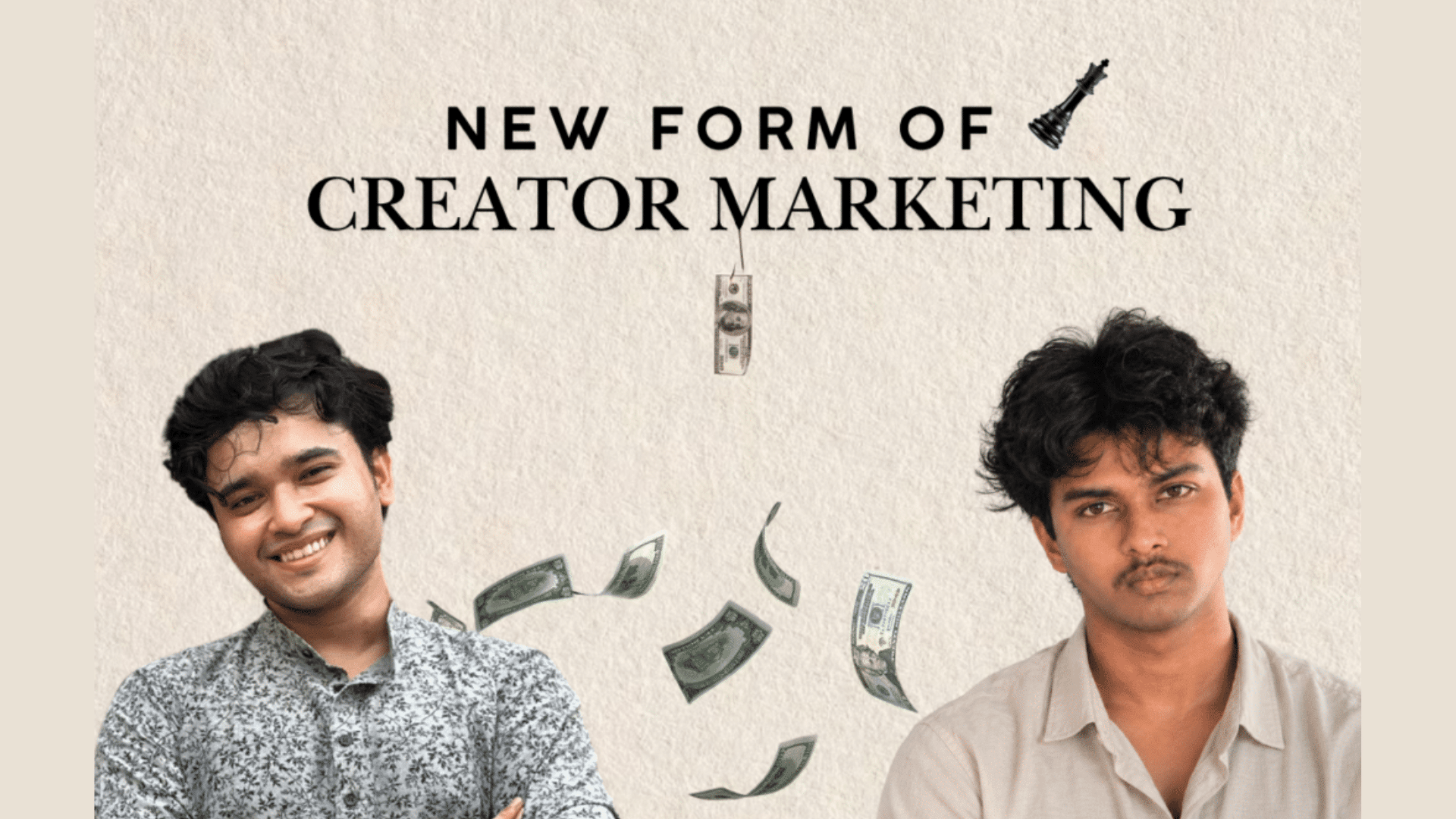
Clipency, a creator infrastructure platform launched in January 2026, is built on the premise that most Influencer Marketing fails at conversion because the algorithm on a creator’s main page already knows who follows them. Those followers did not sign up to receive brand promotions. The Bengaluru-based company, co-founded by Ayush Bera and Tanish, routes campaigns through dedicated pages instead, paying a vetted network of short-form video specialists per view rather than per post.
Both founders came to the problem through the Creator Economy’s informal labor market. Ayush, 21, managed community operations for NFT projects before running the clipping and community side for Rollbit, an online gaming platform. Tanish, 18, spent several years as a high-ticket sales closer for marketing agencies. That work put him close to what he describes as a mismatch in standard influencer deals: creators accept flat fees, brands receive impressions with limited conversion data, and neither party knows which content drove actual results.
“A creator does a video for a brand, and it gets almost one or two million views,” Tanish says. “These people only got paid $50 or $100 for that. The brand has made over $1 million with that particular video. They are not even getting 5% out of it.” Clipency’s model addresses that through performance pay. Clippers earn $1 per 1,000 views until a campaign budget is exhausted, while the company charges 10% to 15% of the campaign budget as a management fee on top. In nine months, Clipency reports processing more than $50,000 in campaign revenue across more than 50 brands.
Traditional Influencer Posts Reach Fans, Not Buyers
Standard influencer campaigns rely on a creator posting brand content to an established audience. Clipency’s core argument is that this model fails for conversion-focused campaigns because social algorithms categorize accounts by historical content type. An account that has spent two years posting lifestyle content has built a lifestyle audience; when that same account posts a brand integration, the platform serves it to followers who are there for lifestyle content, not product recommendations.
“Instagram already has an algorithm,” Tanish explains. “If you’re posting only lifestyle videos from the last one to two years, they’ll be only pushing to that kind of consumer. They just want to see you. They don’t want to hear what you’re promoting or go and buy whatever services from that brand.”
Clipency’s alternative is the dedicated page, i.e., a new account created specifically for a brand’s campaign, posting 30 to 40 clips per month. Because the page carries no existing audience profile, distribution is driven by engagement with the content itself rather than by the platform’s read of who already follows the creator. Multiple creators run parallel dedicated pages for the same brand simultaneously, generating several hundred pieces of content per month per campaign.
Clipping Turns Long-Form Content Into a Discovery Funnel
The clipping side of Clipency’s business targets podcasters, video producers, and brands with long-form archives. The premise mirrors how short-form video has changed content discovery: most new podcast listeners find a show through a clip before committing to a full episode.
“Your podcast is like a movie, and clips are like a trailer,” Ayush says. “Before watching a movie, you can see a trailer. People can see the value in it.”
For a podcast client, Clipency extracts around 15 clips per episode and distributes them across 20 to 30 dedicated pages with varied editing styles. The campaign runs until the brand’s budget is exhausted at the rate of $1 per 1,000 views. Tanish says a typical campaign covering two to three monthly episodes costs around $2,500, plus the management fee. Larger clients, including Y Combinator-backed startups he says are scheduled to run campaigns in coming weeks, have allocated $20,000 to $30,000. He cites one early-stage Indian podcast client that entered the campaign with no subscribers and reached 20,000 within the campaign window.
Clipper Selection Determines Whether Campaigns Convert
Clipency’s 1,500-person clipper community is the operational core of the model, and Tanish says access is selective. Every clipper is interviewed before joining and must present a portfolio before being assigned to any campaign. The company matches clippers to campaigns by content niche. A clipper with a track record in podcast content works on podcast campaigns; a clipper whose pages attract finance-focused audiences works on fintech brands.
“We don’t take a clipper who does not have a perfect niche or a perfect portfolio into our community,” Tanish says. He contrasts this with what he describes as competitor platforms that allow any clipper to join any campaign regardless of subject matter expertise, with the result that a music-focused page might distribute podcast content it cannot competently select.
Clipency is building an AI tool to address a related bottleneck: clippers working across multiple active campaigns cannot always watch a full two-hour episode to identify the strongest segments. The tool is designed to scan long-form content, surface key timestamps, and route them to the assigned clipper, who applies their own editing before posting.

Verification Sits Between the Clipper and the Payout
Pay-per-view models carry fraud exposure, and Clipency encountered it early. Ayush describes a case in which a clipper running a new page reported 50,000 to 60,000 views within 24 hours of posting. When the team reviewed the clip analytics, average watch time on the content was under two seconds.
“If you fake the views, you will get below one or two-second watch time,” Ayush says. “The retention graph will just drop after one second.”
Before any payout is approved, clippers must submit reel analytics and demographic data via a screen recording captured through Clipency’s platform. The company’s systems flag irregular patterns, including abnormally low watch time and engagement rates below the threshold. Verified payouts are processed in 24 to 48 hours, which Tanish contrasts with seven to ten-day wire transfer windows he says competing platforms require. Fast payment, he argues, functions as an incentive structure, as clippers who receive payouts quickly post more content, which generates more views for the brand.
Payment Access Remains the Largest Bottleneck for Global Creators
Roughly 70% of Clipency’s clipper community is based in Tier 2 and Tier 3 countries, Ayush says. Stripe and PayPal require banking infrastructure that young creators in many of those markets cannot easily access, creating a payment barrier that can prevent clippers from collecting earnings regardless of performance.
Tanish describes his own situation at 16, when a $10,000 payment from his sales work arrived in cryptocurrency because no other transfer method was available. Without a bank account and with parents skeptical of online income, accessing it required a trusted third party. Clipency is developing localized payment infrastructure for its creator community to remove that dependency.
The company’s fee is charged separately on top of campaign budgets rather than extracted from the per-view rate. “Brands pay us in full, and we pay them in full without any platform fees,” Tanish says.
Clipathon and the Buildout Ahead
Clipency’s next public initiative is the “Clipathon,” a 72-hour competition designed to bring sub-10,000-follower creators into brand campaigns they would not otherwise access. Five brands, each contributing $500 to $600, run short campaigns with roughly 1,000 small creators who use the event to build portfolio credentials. The top 50 performers are invited to an offline event. Tanish says the format serves both parties: brands receive distributed content, and early-stage creators accumulate verifiable brand work.
Alongside the “Clipathon,” the company is developing a second AI tool that scrapes viral short-form content within a target industry and generates script frameworks for UGC campaigns. Both tools are in development as Clipency pursues its first external funding. For now, the two co-founders manage 1,500 clippers across time zones, with Ayush covering nights and Tanish covering mornings to maintain continuous availability for brand clients.
“Marketing has completely changed,” Tanish says. “If you don’t have distribution for your company, you’re dead.”
Subscribe to Our Newsletter
Check Out Our Podcast