




Influencer
Unsighted Poet Turns Joy, Strangers, and Dance Into a Global Creator Business

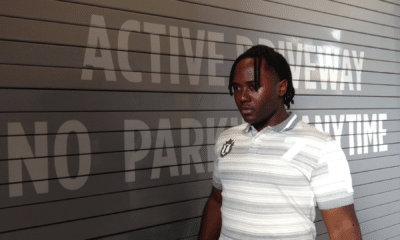
Unsighted Poet scouts wide sidewalks in densely populated neighborhoods, phone raised in selfie mode, and waits. When a stranger runs toward him, he hits record. Then the dance begins.
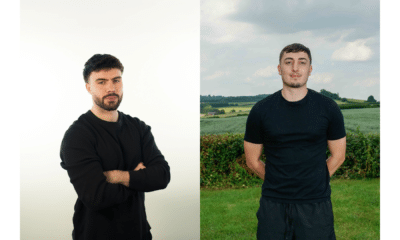
Unsighted Poet, whose real name is Akil, is a Toronto-based rapper and content creator best known for his “White Girl Dance” series, filmed on public streets with strangers who approach him unprompted. The format has accumulated a global following across Facebook, Instagram, YouTube, and TikTok, along with brand partnerships, a Patreon, and a community-funded travel model in which fans in a target city pool resources to bring him there.
Before the dance videos, Unsighted built his name in rage rap. The move toward joy-forward content was not a strategic rebrand. By fully expressing anger through music, he found that what remained afterward was something different. “After having those come out of me, then the only thing that was left was just, like, the teehee, whimsical, joyous self,” he says. Letting difficult emotions fully surface through his art, he explains, allowed him to feel happiness more clearly when it returned.
That process explains what the “White Girl Dance” actually is. “I basically took my personality, and I found out how to record my personality,” he says.
The Formula With a Variable Built In
Unsighted has a precise theory for why his format doesn’t wear out. Most repeatable content grows predictable over time; his depends on unpredictability being structural.
“It’s very much finding something simplistic enough that it’s easily repeatable for yourself,” he explains. “But then there needs to be a formula that has an X variable in it.” In his case: the same opening moves, a dance segment that changes with whoever has shown up, and the same close. The variable is the stranger.
That design gives each video a different emotional texture regardless of how many times a viewer has watched the series. “Even if, let’s say, someone’s going to get tired of the dance itself, it still can stay fresh to a viewer because they’re seeing a genuine interaction pop up,” he says. “That’s where I would say the majority of the actual views and/or attention to the video is coming from.”
The first time Unsighted posted a “White Girl Dance,” he assessed it plainly. “Personally, I think I killed this,” he recalls. The audience agreed, asked for more, and the format extended further than he had anticipated.
One in Four, and Never Approaching
The logic of the format extends to how Unsighted operates on the street. “I don’t approach them,” he says. “I wait for them to approach me.”
What makes a video post-worthy is not the dance itself but the capture of a full interaction from its natural beginning. If a stranger spots him from across the street and runs over, that initial reaction is the energy the clip requires. Miss the beginning and the video still exists, but with less impact. Of all the interactions Unsighted captures, he posts roughly one in four. The remaining usable clips go into compilations or to platforms such as Patreon.
Location selection is important. He walks areas he expects to find his audience, chooses wide sidewalks where dancing is possible without obstructing foot traffic, and avoids spaces that are too open. “I like people getting involved,” he says. Crowd formation is part of the content.
The production is almost entirely solo. He walks with his phone in selfie mode and brings a second camera operator only for specific scenarios, like active collaborations. The operation looks simple because it largely is, and because that simplicity is itself a production decision.
The Revenue Mechanics of a Traveling Creator
Funding regular travel to new cities required Unsighted to build a model that doesn’t depend on any single source.
Community crowdfunding covers a substantial share of his travel. His audience in a target city either pools donations directly or connects him with a local brand willing to host his visit, covering his costs in exchange for being included in the content. The arrangement lets the community shape where he goes while lowering the operational barrier to traveling.
Platform monetization runs primarily through Facebook, where, as a Canadian creator, he currently accesses view-based revenue. Patreon and live streaming generate consistent income from his most engaged followers. Brand deals produce the largest individual payments but are the least predictable.
Unsighted declines partnerships on two grounds: pricing that doesn’t reflect his expertise, or a mismatch between the brand and his values. His approach to selling anything, including his own merch and music, is low-pressure. “I’m not very salesy,” he says. His collaboration with Red Bull for the Montreal leg of a recent tour illustrated the upside of alignment. “The unison of Red Bull helping out with that actually allowed for a much smoother operation,” he says.
The Folder He Opens When He Doubts Himself
Some of what Unsighted receives from his audience carries real weight. His videos reach people in genuine distress, and those viewers tell him. Rather than create distance from those messages, he archives them.
“I’ll screenshot it, save it in a folder,” he says. On days when he questions the work, he reads them. “I’ll sit down, and I’ll look at those in that folder, and I’ll remember that this does have an impact, and this does do something positive.”
The underlying mission extends beyond content. His stated goal is helping audiences access their emotional lives and understand their mental health. “Messages like that will be reminders of what my overall goal is as a creator, as a brand,” he says.
His own difficult past, he explains, now equips him for this part of the work. What once felt like a curse, he says, he now considers lucky. Having worked through hardship of his own gives him the capacity to receive what fans share without being destabilized by it.
Still Playing, Just on a Bigger Playground
Running two series simultaneously, “White Girl Dance” and “Transit Karaoke,” alongside standalone content, has pushed Unsighted against a practical ceiling. “I’ve hit like a physical limit of how much I personally can do alone,” he says. Incorporating more music production requires time the current solo operation doesn’t have. The balance between his rage rap output and his joy-forward content sits at roughly 80/20. He wants to move it closer to 60/40.
Unsighted keeps the unfiltered edge of his brand visible in the meantime. His Instagram highlights still feature a prominent expletive, a signal that the “White Girl Dance” represents only part of what he is. “They’re aware, ‘Oh, there is a level of adult raw emotion,’” he says.
His vision for where the content goes in two years is expansive rather than fixed to a single format. He expects the “White Girl Dance” to turn into a broader category of stranger interactions, which might include asking people about their dreams or creating shared spaces for emotional release. The core logic stays the same.
“As a kid, when you were on the playground, there was such a great feeling of running to other kids to play,” he says. “I feel like that is the feeling I love giving cities. We’re just older kids running around on a playground playing with each other.”
Subscribe to Our Newsletter
Check Out Our Podcast