






Agency
How Pubity Group Turned Eight Years of Social Publishing Into a Global Creative Business

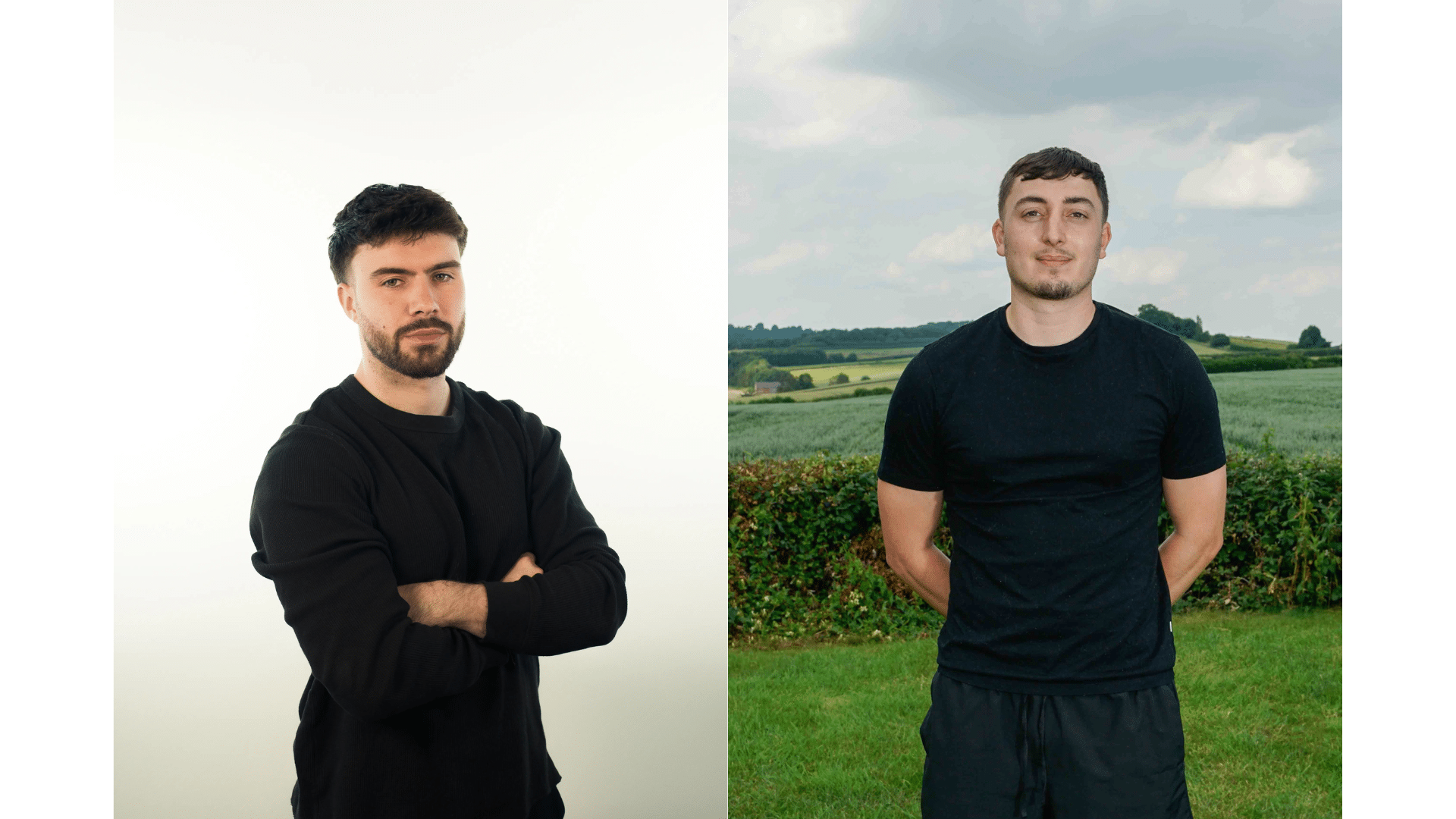
Kit Chilvers and Iyrah Williams, co-founders of Pubity Group, spent years posting to Instagram before formalizing a business around what they had built. The volume was relentless, but the real asset they accumulated was an instinct for what makes people stop, feel something, and share.
Pubity Group now operates more than 20 media brands that reach around 170 million followers and generate 15 billion monthly views across Instagram, TikTok, YouTube, and Facebook, according to the company. The London-based company has transitioned from a social publisher into a creative and distribution partner for brands including Meta, Fortnite, Netflix, Paramount, Disney, Gymshark, and Dunkin’, with work spanning campaign amplification, creative production, and original content for Gen Z audiences.
“If you could build a strong enough audience and community, you’ll always be able to monetize it,” says Kit, who serves as the company’s CEO while Iyrah serves as Chief Growth Officer.
The commercial model grew from a belief Iyrah and Kit developed before they had a business plan. Build an audience first, and monetization will follow. Both began posting soccer content to Instagram at 14, eventually building separate pages to millions of followers. At 16, they were recruited by LADbible, where they helped grow its Instagram account from 2 million to 7 million followers. They left to build independently and co-founded Pubity Group in 2020.
The company’s flagship brand, Pubity, publishes stories aimed at driving connection across social feeds. The portfolio extends to more than 20 properties spanning memes, pets, retirement community content, and Gen Z culture. Those brands serve as both the publishing operation and the distribution backbone for the company’s commercial work, which focuses primarily on the U.S. market.
Eight Years of Publishing Built the Instincts That Money Can’t Buy
Pubity Group’s content capability rests on repetition. Kit and Iyrah were posting 20 to 30 times a day during the years they built their soccer pages, a pace maintained through their teenage years and into their early twenties.
“We didn’t miss a day,” Kit says. “It teaches you so many fundamental skills that actually come when you build a business. You’re basically teaching your intuition: if this works, do more of it. If this doesn’t work, don’t do it.”
That feedback loop, running continuously for roughly eight years, is what Kit argues separates Pubity’s editorial judgment from publishers that have not put in comparable time, and the value of sustained enthusiasm over raw talent became visible early. When classmates saw Kit and Iyrah earning small rewards from their accounts, roughly 30 to 40 peers attempted the same approach. Almost all quit. “You have to be really obsessed with what you’re doing,” Kit says. “That’s the very same in the creator industry. The reason the biggest creators are the best in the world is that they have that level of obsession.”
The two also coordinated through informal networks of creators building pages in other niches, sharing notes on what worked across group chats that connected people in beauty, sport, and other categories.
Positive Content Outperforms Because of Packaging
Pubity’s editorial strategy challenges the assumption that negativity drives engagement, finding that positive content can perform just as well when packaged effectively.
“If you frame the good stories in the right way and optimize for social media, positive stories do as well, if not better than the negative,” Kit says. “It’s all about the way that you package it.”
Years of high-volume publishing led Pubity to focus less on whether a story is positive or negative and more on whether it creates an emotional response. “The perfect story is one that invokes emotion of some sort,” Kit says. “It could be happiness. It could be laughter. It makes you want to share it with someone.”
When floods struck Nepal, Kit says Pubity covered a teacher who received a warning call from upstream and led more than 1,600 students to safety before the water arrived. According to Kit, the post generated 20 million views within two days.
Story Selection Is the Job, Not the Output
The most underestimated part of Pubity’s operation, Iyrah argues, is the editorial judgment applied before anything goes live.
“People will definitely underestimate how much time goes into choosing the content,” he says. “So much of our time is really just critiquing whether this is going to be the best piece of content to go live next on that specific brand.”
The process adjusts by context. Breaking news, like Lionel Messi’s retirement from international football, demands speed over polish. A crafted story with a slower news cycle gets more production time. Both pass the same filter: is this the best post for this moment, on this brand?
The same logic governs whether a content format earns its own property. Old Friend Club, now a Pubity brand producing original video inside retirement homes in England and the United States, began as a single Pubity post that outperformed expectations. Pet content on Pubity feeds grew consistently enough that the creation of Fluffy, the company’s pet brand, felt organic rather than planned.
The approach extends to the people managing the brands. “It’s very easy for people to just post and then share and post and share,” Kit says. “The mentality you want everyone to have is: Is this the best possible post? Are you really proud of it?”
Brand Campaigns Now Start at Pubity, Not End There
Pubity’s brand partnerships business began as distribution. The company took campaigns brands had already produced and amplified them across its audiences. That model has shifted.
“We’re doing considerably more than just amplifying their campaigns,” Kit says. “We’re now doing 360 campaigns from ideation to execution with 7-figure budgets.”
The Paramount campaign for “Scary Movie” illustrates the change. Paramount brought a brief; Pubity developed the concept, agreed on the execution, and produced a live stunt: placing the film’s cast in a glass hotbox in Times Square. The stunt generated attention before Pubity published a single post, because the visual was disruptive enough in one of the world’s highest-traffic locations to spread on its own. Pubity then amplified it further across its brands. Kit and Iyrah describe the film’s opening as the biggest opening weekend in the “Scary Movie” series’ history. A Little Caesars campaign tied to Spider-Man followed a similar model.
Kit acknowledges that building client trust for end-to-end work took time. “Social isn’t something which a lot of brands are used to spending money on,” he says. “It’s actually taken us a long time to prove our credibility in the space because brands are used to spending money on TV and on paid ads.”
“It’s about storytelling,” Iyrah adds. “What is it that the brand is doing that you can tell a really interesting story about that is going to work with the audience?”
A Global Team Built to Keep the Clock Running
Publishing at Pubity’s scale requires continuous coverage. The company built its global team, with staff in the United States, Brazil, India, the Philippines, and Nigeria alongside the London headquarters, specifically to enable a handover model where publishing continues across time zones.
“You want to have a team that works 24/7 around the clock in different time zones,” Kit says. “Rather than things being nine to five, stop, and nine to five, stop, you want there to be a handover period, especially in the digital world that doesn’t sleep.”
The structure mirrors the founders’ own early behavior, when no one else managed the accounts and the pair posted through nights and weekends. Scaling that approach into an organization required applying the same logic to hiring and team design.
The commercial priority now centers on the United States, which Kit says accounts for roughly 75% to 80% of client work. After building out the U.S. sales team, the current phase focuses on original content production for the American market, with staff now based across New York and other states.
From Publishing Operation to Full Creative Studio
Moving forward, Pubity Group is expanding in two directions. The Originals division, launched at the start of 2025, is developing long-form and short-form video storytelling across the company’s brands. A creator management arm is also operating within the group, managing creators and helping them monetize their content, though the company had not publicly announced it at the time of this interview.
Kit’s advice to his 14-year-old self connects both. “Just keep going,” he says. “If you just keep going, there will always be changes, especially on social media. The ones that end up winning never stop.”
Pubity Group’s argument is that what distinguishes its position from publishers that entered the space later is not scale alone but the institutional content knowledge formed from years of daily publishing.
“I’m a big believer in intuition,” Kit says. “You only build it by doing things and watching what comes back. Nobody can teach it to you, and nobody can copy it off you. In the world we live in now, that’s what makes you stand out.”
Subscribe to Our Newsletter
Check Out Our Podcast