







Influencer
How a Former CNBC Journalist Is Building a Creator Brand Around the Global Migration of Americans

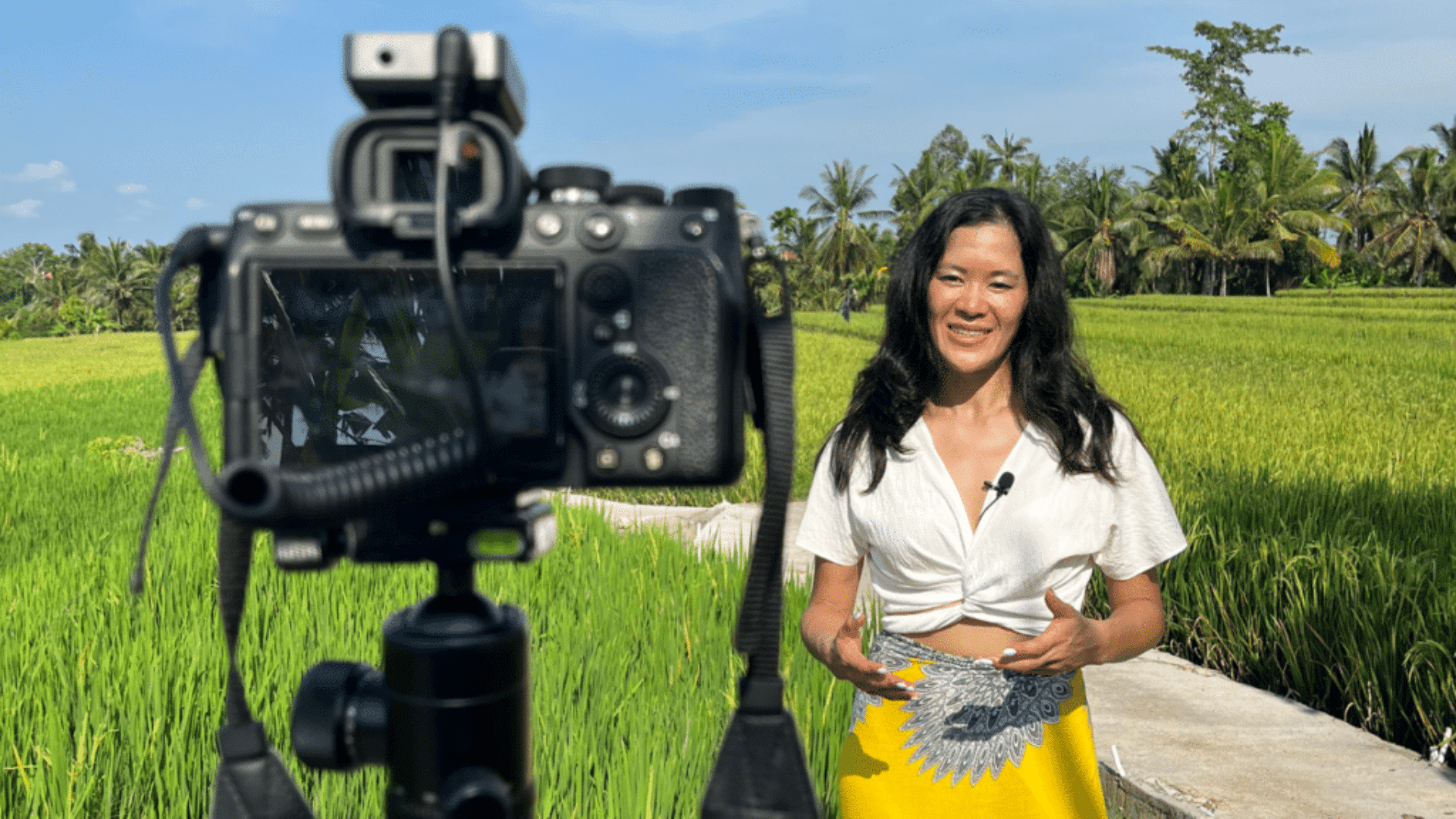
Helen Zhao left CNBC after five years, believing she would return. The year and a half she spent traveling the world was enough time for thousands of journalists to be laid off and for an old mentor to offer her a single piece of advice: the future of the profession was in creator journalists.
Today, Helen is the creator and video journalist behind Immigrant, Not Expat, a media brand across YouTube, Instagram, Facebook, and TikTok that applies data, reporting, and character-driven storytelling to questions of migration and expat movement. Where institutional outlets like The Wall Street Journal and The New York Times cover these trends episodically, she argues no individual creator has claimed the beat journalistically. “I don’t see any creators really focusing on this space from a journalistic perspective,” she says.
The brand operates alongside a full-time day job. Helen has been a video journalist at the California Post since March 2026, producing explainer videos about California issues. Her personal brand is unmonetized and focused, at this stage, on building an audience before building a business.
Journalistic Video in a Sea of Expat Tips
The expat and digital nomad content space grew considerably after the pandemic, largely through first-person accounts: what a city is actually like to live in, what to avoid, how to navigate a visa application. Helen arrived at this space as a trained journalist and found something missing.
“A typical expat vlogger would tell a more first-person type story,” she says. “The way I would cover this story is more so from the perspective of: there are a lot of expats making videos about this place. Now let’s look at the data. How many more expats are moving here, and how is that impacting the local population?”
Mainstream outlets like The Wall Street Journal and The New York Times have established that there is an appetite for journalistic coverage of expat and digital nomad trends. Helen’s observation is simpler: no creator is doing the same. The institutional journalist and the first-person expat vlogger both exist; what is absent is someone applying a journalistic framework on the platforms where the latter operates. “I think most creators are probably not thinking on a journalistic level,” she says.
The Niche Emerged Six Months After the Obvious Mistake
The format did not arrive fully formed. A reel about Da Nang, Vietnam, became Helen’s first viral video on Instagram. She treated it as a proof of concept and made a longer journalistic piece on YouTube, pulling in data and interviewing locals who had grown up in the city.
She joined local Facebook groups and found residents describing the city’s transformation in terms far more complicated than the destination content being made about it. Locals talked about how a place once seen as offering little had become a recognizable name in expat circles; rising costs and gentrification concerns sat alongside the hype. She incorporated both.
“I think I had like 400 subscribers on YouTube,” she says, “but that piece hit around 50,000 views.”
The success sent her in the wrong direction. She made more Da Nang content. Most of them didn’t perform well. “I think I had the wrong instinct after that,” she says. It took roughly six months to identify the actual pattern. “It’s actually journalistic trend stories about expats and digital nomads, especially where Americans are moving for a better life. Those are the stories I should focus on.”
Five Hours on a Few Paragraphs
Every script Helen writes is organized around a single question: what is the tension?
“What is the really juicy tension that will make people really care?” she says. The answer is not always obvious, and she does not move forward until it is. “Sometimes, that doesn’t really click together in a way that I feel is captivating. It could take a few script rewrites.” The consequence is a production pace well below the daily-posting cadence of high-volume creators. “Sometimes, I will spend like maybe five hours working on a few paragraphs,” she says.
The trade-off, she argues, shows in her conversion rates. Her “Americans Immigrating Abroad” series, which examines the structural reasons Americans are relocating abroad, produces what she describes as a high ratio of views to new followers. “A video with 150,000 views will get 5,000 followers,” she says.
The series also does not require her to be on-site. Her Switzerland content performed well for the channel; she has only ever passed through the country by train. She reasons that the core story (a country ranked among the world’s happiest is producing an increasingly discontented middle class looking to leave) came from data and interviews, not from a dateline. “I don’t think that tension requires you to be in Switzerland to tell that story,” she says.
A Brand Before a Business
Immigrant, Not Expat is not yet generating revenue. Helen signed with a talent agency roughly a month ago. Brand partnerships are in development. The brands she is considering are those she encountered in her reporting.
Her Tulum mini-documentary covered not just the coastal town’s decline but the infrastructure changes driving its recovery. InDrive, a rideshare app that emerged there as an alternative to what locals describe as the taxi mafia, appeared in the reporting because it was materially changing how tourists and residents navigated the city. Helen used it every day she was there and now wants to approach the company about a collaboration. “I’m still at the very beginning of that journey,” she says.
The more immediate constraint is time. Her commute to the California Post runs an hour each way. “There’s so little time left in the day to even create content,” she says. “I feel like my mental health is almost suffering a little bit this year from just how much mental load I’m going through trying to balance everything.”
She frames the current arrangement not as a contingency plan but as a preference. “Even if the journalism industry was thriving and had a lot of jobs,” she says, “I think that this path would be my number-one choice.”

Toward the Other Side of the Gentrification Story
The next editorial turn for Helen’s “Americans Immigrating Abroad” series challenges what she sees as a default framing in migration coverage.
Stories about expats moving to Da Nang, Tulum, or similar destinations typically center on rising rents, resentful locals, a neighborhood reshaped by outside money. Helen has covered those dynamics. Upcoming episodes will document places that are actively courting expats and digital nomads, building incentives to attract foreign income, and reaching out to her directly while the series is in progress. “I sometimes think people enjoy hating on digital nomads and expats and Americans traveling and moving abroad,” she says. “But there are also a lot of places who want that.”
The argument behind the series is personal as much as editorial. Growing up, Helen was taught that following the right steps, such as education and hard work, would produce the outcomes associated with the American dream. The cost pressures that now drive Americans abroad have complicated that premise in ways she covers directly. “The American dream still exists,” she says. “It’s just harder.”
Subscribe to Our Newsletter
Check Out Our Podcast