



Agency
From a Facebook Page to a Billion-Strong Audience: How LADbible Outgrew Its Origins

In 2012, LADbible began as a Facebook page aimed at young men. Today, it operates multiple brands, claims a cross-platform audience approaching one billion, and its marketing director spends a surprising amount of time explaining what the company actually is.
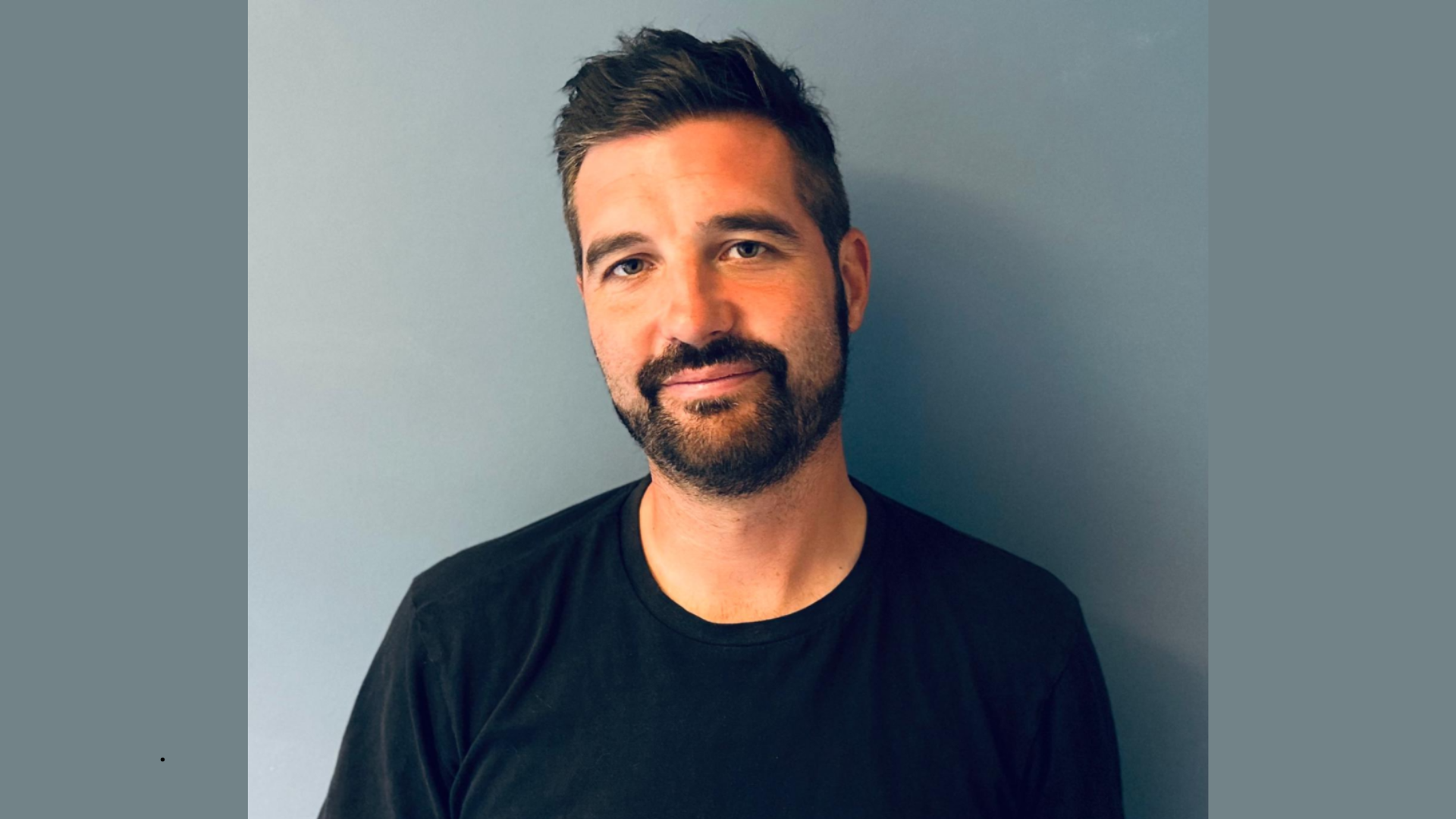
“People still think we’re a very male-skewed brand because of the name ‘LADbible,’” says Mike Walsh, who joined as Marketing Director in September 2024. “And people still see social publishing as just uploading posts, when actually so much of what we do is creating original content.”
That gap between perception and reality is the clearest measure of how far the business has moved. Incorporated in April 2012, LADbible launched into a media market where a single viral video could build an audience of millions overnight. Over a decade later, its London HQ houses two production studios. It runs a 50,000-person audience research panel in the UK alone. It has dedicated editorial teams across sport, gaming, food, women’s media, and comedy.
And it is now building what Mike calls creator infrastructure: a system for platforming, co-producing with, and supporting talent across its portfolio. “Our ambition is to be the biggest social entertainment company in the world,” he says.
LADbible’s story is what happens when a media business is built natively inside social platforms rather than adapted to them afterward.
A Page That Learned to Listen
The early version of LADbible operated on a simple logic: find content that young people want to share and publish it consistently. There was no editorial mission beyond that, and there did not need to be. The platform did much of the work.
What separated the company from thousands of pages running the same playbook, according to Mike, was the decision to treat audience behavior as a continuous signal rather than a publishing metric.
“We are an audience-first business,” he says. “We see and hear in real time what our audience likes about our content, sometimes what they don’t like. We really have that day-to-day, minute-by-minute connection with our audience.”
That orientation became the company’s primary structural advantage. While legacy publishers were building social strategies, LADbible was building feedback loops. Platform changes that destabilized broadcast-era media companies were, for LADbible, simply the normal operating environment.
“If you take the broader media market, the user experience of some platforms hasn’t changed that much in years, in decades sometimes,” Mike notes. “Whereas social changes so regularly that we’ve become very used, as a business, to moving … to pivoting.”
The company formalized that instinct over time through LadNation, a research panel now exceeding 50,000 young people in the UK alone. Real-time data tells the company what its audience is watching. LadNation tells it why.
How the Portfolio Was Built
The multi-brand strategy that defines LADbible Group today was not the product of a boardroom expansion plan. It grew from the same audience-first logic that built the original page.
“LADbible would have been talking about sports a lot on the channel,” Mike explains. “And when you started to see the level of engagement, the level of audience numbers, the interactions, SPORTbible grew very naturally from that audience. Although you were starting new brands, you weren’t starting from scratch. You were starting with communities that you knew loved that topic.”
The same pattern produced GAMINGbible and, later, Tyla, the group’s female-focused brand. In October 2018, LADbible acquired UNILAD, then a major rival in social publishing, adding notable scale. The acquisition of Betches, a humor-led brand targeting millennial and Gen Z women, followed in 2023, bringing a voice and audience that had no equivalent elsewhere in the portfolio.
Mike is clear about the discipline required to make the multi-brand model hold. Each brand operates with its own dedicated team, its own editorial voice, and its own relationship with its specific audience. Anything less, he argues, produces content that audiences identify and reject. “You can’t fake it,” he says. “In a world where AI content creation is very simple, quality will cut through even more. Passion, depth, individuals who are committed and authentic to those particular brands, that’s all it is.”
When a new brand enters the portfolio, the commercial opportunity always comes second. “You have to think first about the audience. Who am I making this for? What are we offering them that’s new and valuable?”
From ‘Laugh’ to ‘Laugh, Think, Act’
As the portfolio grew, the company’s editorial ambition grew with it. The early LADbible was built on entertainment. The current one is trying to do something more.
“Laugh, think, and act” is how Mike now describes the company’s mission. The formulation captures an expansion of scope, from a platform optimized for shareable content to one that also takes on subjects its audience tells it are worth taking seriously.
The shift was made possible, he argues, by scale. Once LADbible had built an audience large enough to sustain editorial weight, it could use that attention for purposes beyond entertainment. A recent campaign, “For F**k’s Sake Productions,” addressed the impact of pornography on young people, pairing the confrontational tone the brand had always used with a subject that generated conversations at the government level.
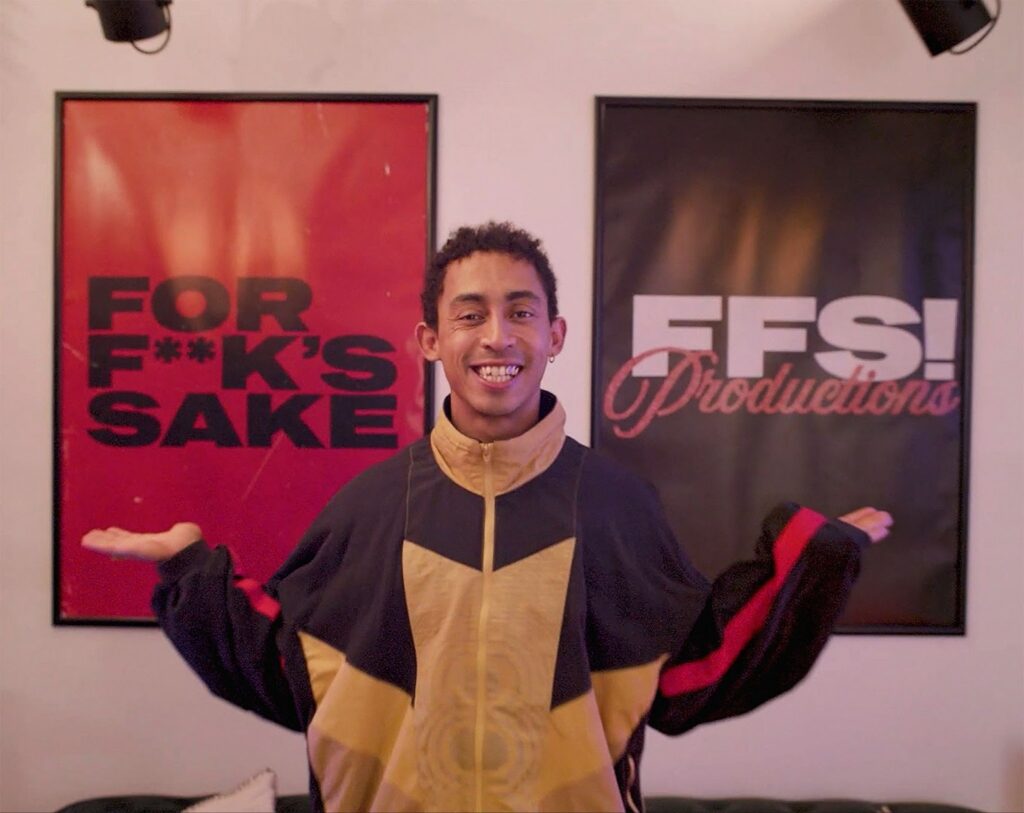
Photo: For F**k’s Sake Productions
“Increasingly, the brand evolved, and when you had that scale of audience, and that opportunity to talk to young people, you learn very quickly what they were interested in,” Mike says. “That enabled us to evolve the content into these quite purposeful spaces.”
The audience itself accelerated this shift. “They’ve grown up with a comment section on almost everything they view,” Mike says. “They expect to be able to interact with content. Content that starts debate, starts conversation, that is the best way to connect with young audiences.” The comment section, he adds, is also the mechanism that enforces accountability. “It keeps you honest.”
The Original Content Turn
The most consequential change in LADbible’s recent history is one that its name does nothing to signal. The company has become a production business.
“The big focus for us in the last five years is the shift to original content,” Mike says. “We are really a social entertainment production business that I think people don’t quite realize the scale of what we produce.”
The group now operates separate YouTube channels for “LADbible Entertainment,” “LADbible Stories,” and “SPORTbible,” producing content ranging from documentaries to celebrity interviews to short-form vertical videos.
That original IP also reshapes the commercial relationship with brands. Rather than selling access to an existing audience, LADbible can offer brands a stake in formats it owns and develops.
“Snack Wars,” a recurring YouTube format, is the model Mike cites most readily. “I want our clients to help us grow ‘Snack Wars’ by enhancing it, by supporting it, by sponsoring it,” he says. “If clients can help us with talent, if they can help us by funding, that’s a real win for our audience.”

Photo: Actress Zoë Kravitz and actor Austin Butler on an episode of “Snack Wars”
The brand pitch has shifted accordingly. Reach, Mike says, is table stakes. What clients are buying is the combination of creative origination, platform expertise, and the audience trust LADbible has spent over a decade building. “Brands still need this layer of creativity to cut through,” he says. “What LADbible does is start with an idea and then execute it across any platform.”
The Creator Turn: A Different Moment
Mike is careful to distinguish between what LADbible has always done with creators and what it is building now. “I think we’ve always worked with creators,” he says, “but we’re in a different moment now where creators are going to play a more prominent role on our platforms and how we entertain our audience.”
The distinction is structural. Historically, LADbible distributed creator content. The model Mike is describing is one where LADbible actively supports creators across their entire development arc, from early-stage exposure to its platforms, to co-production on original IP formats, to commercial partnership at scale.
The longer-term aspiration is for relationships that outlast individual campaigns. The Creator Economy, Mike observes, is still running on a largely transactional model. He expects that to change. “Who will be the first creator that has a five-year relationship with a brand?” he says. “I think that’s going to be an exciting development. We may have creators who become presenters of IP for us.”
Mike cites a Pedro Pascal meme to illustrate what LADbible believes it can offer that individual creator channels cannot replicate. The meme originated from a LADbible shoot. The audience then recut it, played with it, and distributed it independently across platforms. “Luckily for us, we didn’t know that was going to happen, to be honest,” Mike says. “But letting the audience do their thing, that’s the power.”
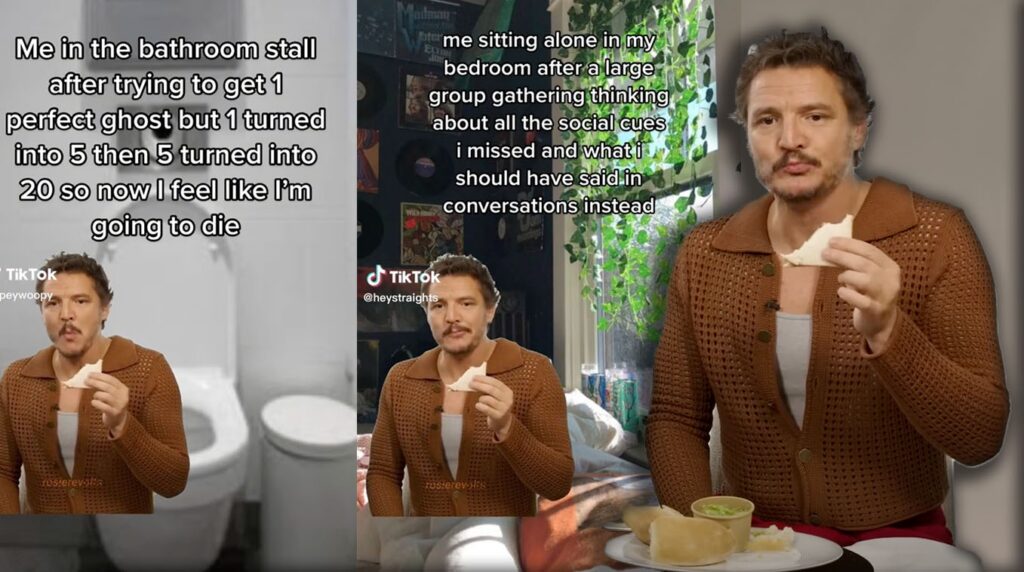
Image: A compilation of Pedro Pascal memes on TikTok
What Comes Next: U.S., AI, and a Constant
The two growth priorities Mike names are geographic and technological. On geography, the United States is the main target. LADbible has a New York office but remains less established there than in the UK, Ireland, and Australia. “Developing into a bigger-scale business in the U.S. is an important growth area for us,” Mike says. “It’s quite exciting to be in a British business that’s leading the way, going into other markets.”
On AI, the measure of success is creative elevation, not cost reduction. “How we continue to use it to elevate our creativity, that’s the really important thing,” he says. “Used properly, it will elevate our creativity, not take away from it.”
What Mike is most explicit about protecting, across all of it, is the character that made the original page worth following. LADbible describes its positioning as the “best mate of the internet,” informal, peer-to-peer, built on shared interest rather than editorial authority. Every expansion of scope, every new brand, every move into original production, has been an attempt to carry that character forward into new contexts.
“The consistency for us is the tone, the style, the way we communicate with them,” Mike says. “We don’t want a one-way broadcast with our audience. We want an interaction.”
The company that started as a single Facebook page is now something considerably harder to describe in a single sentence. That difficulty, Mike suggests, is evidence of how much has changed.
“I’d love people to see us as a global social entertainment company because social entertainment is a really exciting thing to consider, and that’s the way that people are engaging with content now.”
Subscribe to Our Newsletter
Check Out Our Podcast