





Strategy
The Creator Who Paid for the Product: Dan Lovatt on What Builds a Real Brand Partnership

In February, COAT named Dan Lovatt its long-term brand ambassador. He was not gifted product to generate content. For a full year between commercial arrangements, Dan bought COAT paints with his own money, recommended the brand to clients, and answered follower questions about paint with the same answer he would have given unpaid. The series that launched the partnership has since surpassed 600,000 views.
Dan is a UK-based interior designer, color consultant, and founder of Lovatt Studio, a design practice in the northeast of England that covers residential and commercial projects. He has been documenting renovations on Instagram for nine years, building an audience not by positioning himself as an expert but by showing the process, including what goes wrong.
“I kind of wanted to show real life, real advice, real guidance,” he says. Content creation funds the studio; the studio generates the credibility.
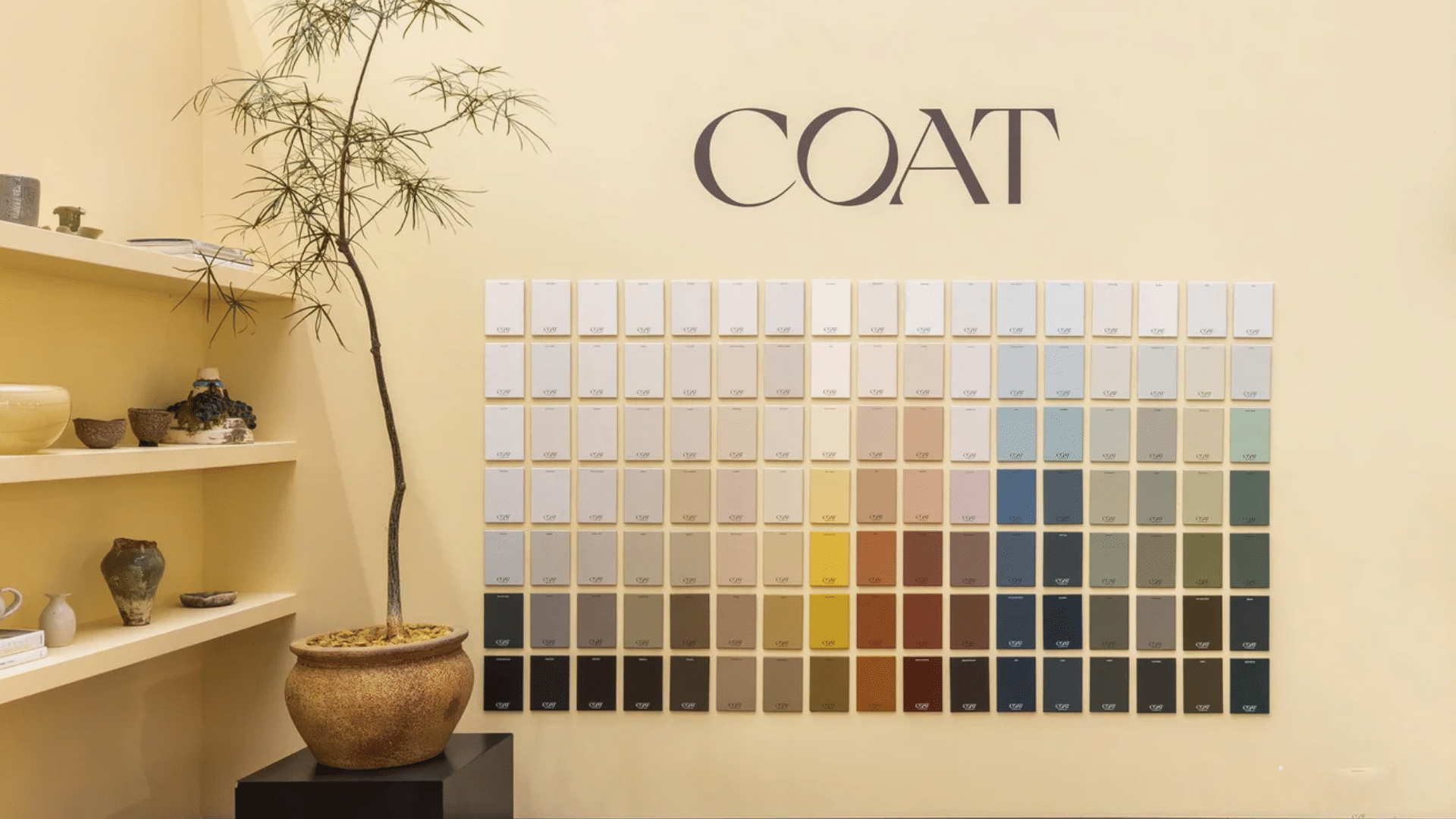
COAT is a B Corp-certified, Climate Positive paint company founded in 2020. Its model is built around made-to-order production, zero off-the-shelf stock, and a deliberately curated palette of 90 shades. The brand has established a following among design-conscious consumers who treat paint as a considered purchase rather than a commodity.
The partnership with Dan, formalized this year, is an extension of a relationship that began in 2021 and never fully stopped.
The Year Without a Contract Is the Most Important Part
Dan’s first commercial arrangement with COAT began in 2021, when the brand approached him to co-create a limited edition paint color as part of a renovation project. The color became a bestseller and is now a permanent part of COAT’s library. A 12-month partnership followed, covering decorating projects and social content for the brand’s own channels.
When that arrangement ended, Dan did not stop. “I bought the paints myself out of my own money,” he says. “It was never a partnership or asking for gifted paint. I was happy to hand over my money to that company.” He continued recommending COAT to clients and responding to follower Q&As with the same answer he had given during the paid period.
COAT maintained an informal dialogue throughout. The brand would send new color swatches, ask for his view on what was missing from their palette, and keep the relationship warm without a formal brief. That period, Dan argues, is not a footnote to the ambassadorship. It is the reason the ambassadorship carries weight. “I’ve only ever spoken about COAT positively and highly, just from a personal point of view, even between partnerships,” he says.
For brands, the value of a long-term partnership is built in the gaps, not just during active campaigns. A creator who maintains the relationship unpaid is providing evidence that the affinity is real. Brands that treat the end of a contract as the end of the relationship forfeit that evidence.
Why Product and Values Have to Come Before the Brief
Dan identifies three conditions that he believes converted his fan status into a long-term commercial relationship, and none of them involve follower count or content metrics.
The first is direct product use. “You have got to love it personally before you recommend it,” he says. “As a content creator, you have a responsibility because you are educating followers and encouraging them to try something.” For Dan, COAT’s made-to-order production model and low-VOC formulation were substantive reasons to recommend the brand to clients professionally, independent of any commercial relationship.
The second is values alignment. Dan’s design practice is built around interiors that last rather than follow decorating cycles. COAT’s deliberately restrained palette of 90 shades is positioned around the same principle: timeless rather than trend-driven. “I’m trying to create timeless interiors,” he says. “It’s great in that way.” The alignment is not incidental. It determines how naturally the brand integrates into his content without feeling like an insertion.
The third is consistency between paid periods. Brands looking for a shortcut to this kind of partnership, Dan suggests, are looking in the wrong direction. The signal value of his unsponsored advocacy is precisely that it was unsponsored. Creators who mention brands only when paid for it have not built the same foundation.
What COAT Did That Most Brands Don’t
When COAT approached Dan about formalizing the relationship in 2026, the conversations were, by his account, deliberately informal. There was no lengthy contract specifying tone, no checklist of mandatory talking points, and no approval process before filming began. The brief for the guest bedroom series that launched the partnership was minimal: cold rooms, made cozy, in Dan’s style.
“Every brief we’ve had with COAT has never been an incredibly highly structured thing,” Dan says. “They might have said, we’re noticing a big resurgence in pinks. And I said, well, actually, I’ve got clients having a resurgence in wanting more warmth. Let’s create content around a cozy bedroom instead. And they said, yeah, try it.” The brief became a dialogue. The direction was negotiated, not imposed.
Dan did not inform COAT that he was structuring the bedroom content as a multi-part series. He filmed seven hours of footage, made the editorial decision himself, and released it. “I just did it,” he says. COAT received the finished content, along with specific footage Dan created for their own channels, including a 30-second voiceover cut for their use. Performance sat on Dan’s account. The brand amplified on theirs.
The results? Episode one reached 170,000 views. Episode two reached 400,000. Episode three reached 350,000. The series crossed 600,000 total views. Dan notes that, without sponsorship, a comparable earlier project had reached nearly a million views over its full run. Flexibility produced the numbers.
The Script Reader Problem
Dan’s critique of how most brand partnerships are structured is specific. Early in his career, briefs arrived with detailed contractual requirements: what could be said, what could not, how the product had to be presented, how many messages had to be included. The instinct is understandable. Brands have guidelines for reasons. But the effect, he says, is predictable and measurable.
“For creators, it can get quite muddled up when there is an incredibly strict brief, and you then become a script reader as opposed to a script writer,” Dan says. “And it doesn’t work. Followers really notice that.”
His approach to overprescribed briefs has evolved into a practiced pushback. Rather than trying to fit every required message into a single piece of content, he advises on what can realistically be conveyed without confusing the audience. “I know my audience,” he says, “and I think this will resonate better, or this is probably a better way to display it.”
The broader message to brands is direct. “I wish brands would step back just a touch and trust creators, because that is their livelihood and that is what they have built.” Creator input, he argues, should be present at the brief stage, through the deliverables, and across the tone of voice. Removing it does not protect brand consistency. It removes what made the audience trust the creator in the first place.
The Model in Practice
The next series under the COAT partnership is already in production. Dan is documenting a kitchen makeover built around paint and restyling alone, accessible to most homeowners and positioned around affordability rather than aspiration.
“Just through a good introduction of color, it completely transformed the space,” he says. The structural approach mirrors the bedroom series: his editorial decisions, COAT’s brief as a starting point.
The broader market context reinforces the timing. According to Dan, burgundy is currently the most-searched paint color on Google, up 120% over the past 12 months. He reads the trend as evidence of a shift in how consumers are approaching their homes. “People are getting braver and wanting more personality,” he says. “People are getting more confident about what they want and their tastes and their styles.”
The COAT-Dan Lovatt partnership is not a template that scales to every category. It depends on a creator with genuine product conviction, a brand willing to relinquish brief control, and both parties maintaining the relationship through periods when no money changes hands. What it demonstrates is that, when present, those conditions produce content performance that many structured campaigns consistently fail to match.
“This is the most confident I’ve ever felt,” Dan says. “I’m sharing what I want to share, not what I think social media expects.”
Subscribe to Our Newsletter
Check Out Our Podcast