




Influencer
Vita Kari on Treating Virality as a ‘Medium for Fine Art’

In graduate school, Vita Kari printed an unflattering photo of themselves staring at a screen and painted a single eyelash over it. They posted it online, told their followers it was not a painting, and watched them disagree.
That experiment, run during their MFA thesis on virality at Otis College of Art and Design, was actually a proof of concept. Vita has built a creator career since on the argument that viral video is not a promotional vehicle for fine art, but a medium of fine art in its own right.
Vita is a Los Angeles-based interdisciplinary artist whose practice crosses short-form video, woven tapestries, and live performance. Named a Forbes Upfront Creator in 2024 and recognized by Artsy as one of 30 Artists Defining Queer Art Now in 2025, they have exhibited alongside Tracey Emin, Lauren Halsey, and Rafa Esparza at the Huntington Beach Art Center, completed a fully funded residency at the Banff Centre for Arts and Creativity, and delivered talks at institutions from NYU to Condé Nast College London.
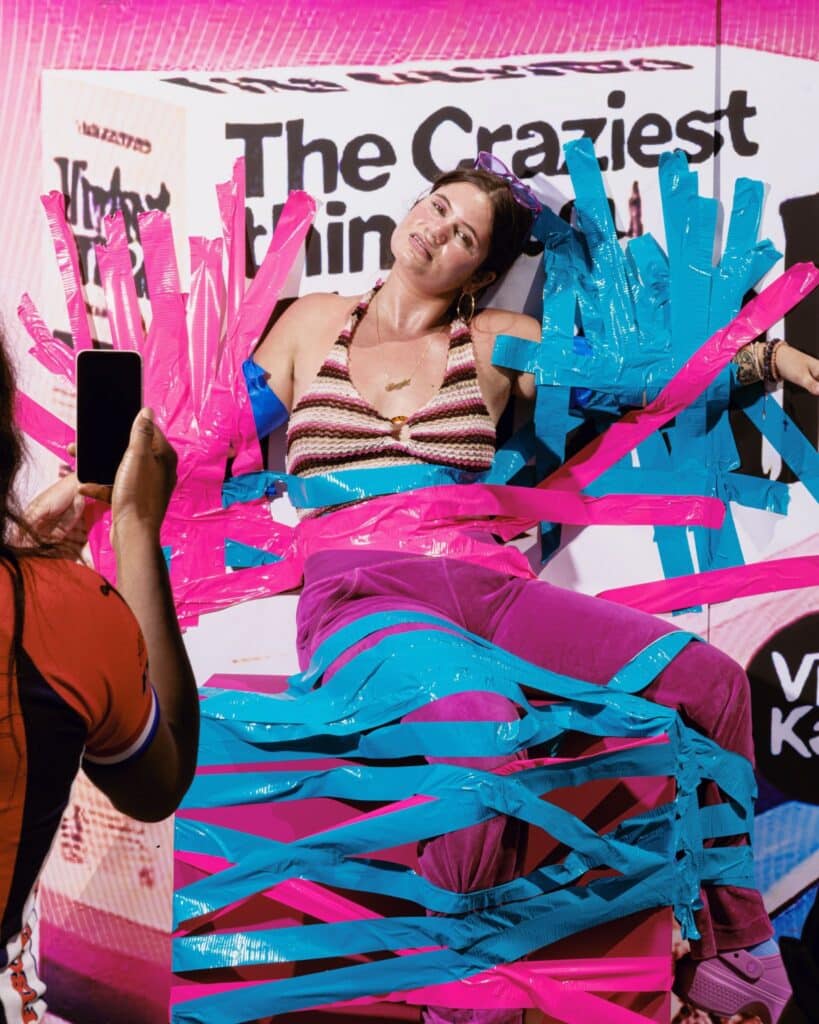
Their ongoing online performance series, “Virality as Form: The Craziest Thing,” treats the internet itself as an artistic site. To sustain that practice, they move across brand partnerships, gallery sales, and platform-funded commissions.
“I’m interested in the word meme and the origins of that, memetics in general,” Vita says. “It’s like one unit of culture, the study of how information spreads. So it’s all really rooted in my work.”
How a Grad School Experiment Became a Working Theory
The hyper-realistic painting format gave Vita their entry point. Close-up videos of artists rendering a single eyelash were logging millions of views, and Vita noticed the mechanism driving them.
“I was watching so much content of artists who were doing hyper-realistic paintings, which are honestly almost like 9/10 awful,” Vita says. “So I was like, ‘What if it’s just a print? How do we know that’s a painting?’”
They began printing images of themselves and adding a single painted detail. The caption disclosed that it was not a painting. “I was like, ‘Is this the moment where people will believe that’s actually a painting even if I put it in the caption?’” Vita recalls. “And they did.”
The experiment confirmed to them that on social media, belief is not updated by disclosure. You can tell the audience the truth, and they will still build the story they expect. “A video piece is so
important in a gallery,” Vita says. “Short form, it’s just kind of like goodbye.”
Every Illusion Is Built Before It’s Filmed
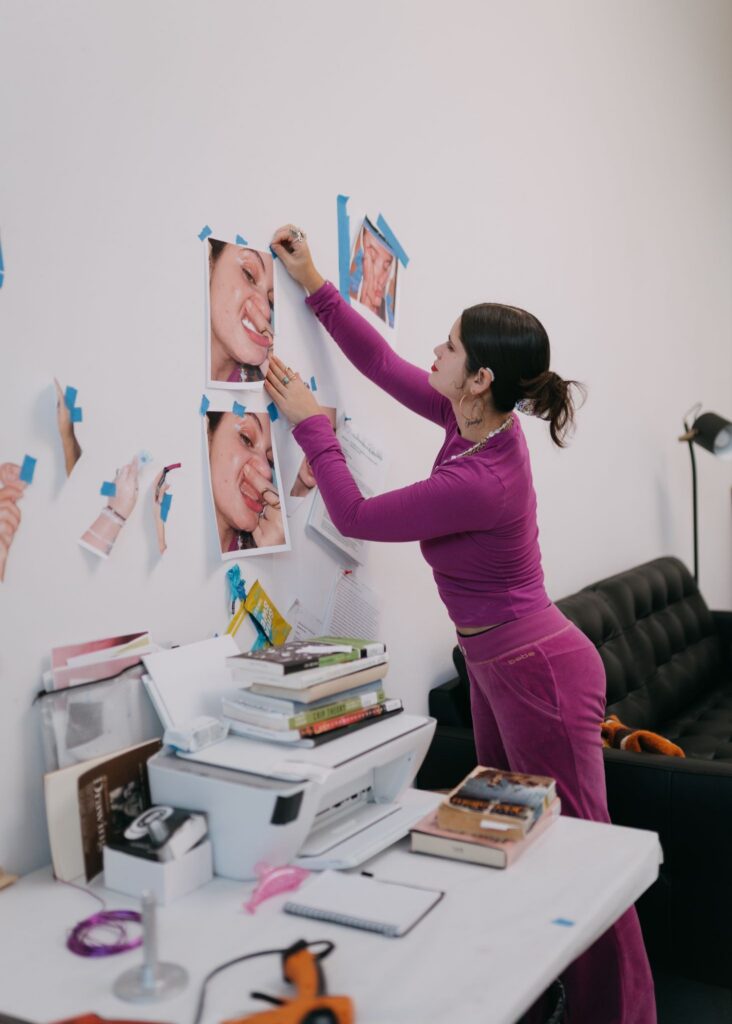
The videos that have made Vita’s account recognizable look spontaneous. They are not. Every piece of printed material, every spatial relationship between object and frame, every visual element is prepared before filming begins.
“Everything is planned,” Vita says.
The distinction Vita draws is between a prop, which can give a video staging, and an illusion, which destabilizes the viewer’s sense of what they are actually seeing. One requires presence; the other requires architecture. “Props have existed since the beginning of time,” Vita says. “Using a prop for a video is kind of less exciting than an illusion.”
The planning is partly logistical (printing materials require preparation) and partly conceptual. If the aim of the work is to make the viewer uncertain about what is real, improvisation breaks the logic of the piece.
Short Videos Don’t Pay, and That’s Not a Coincidence
Vita’s videos run short enough to fall outside TikTok‘s payment structure. The platform rewards videos over a minute; Vita does not make them that way. “The integrity of my videos is to be short and to spread quickly,” they say.
Platform revenue, as a result, contributes marginally to the business. Vita notes that Facebook‘s monetization performs better for their content than TikTok’s, but still characterizes direct platform income as peripheral. The actual business runs on three sources: brand partnerships, which Vita identifies as primary; gallery sales of tapestries and limited-edition works; and platform-funded commissions.
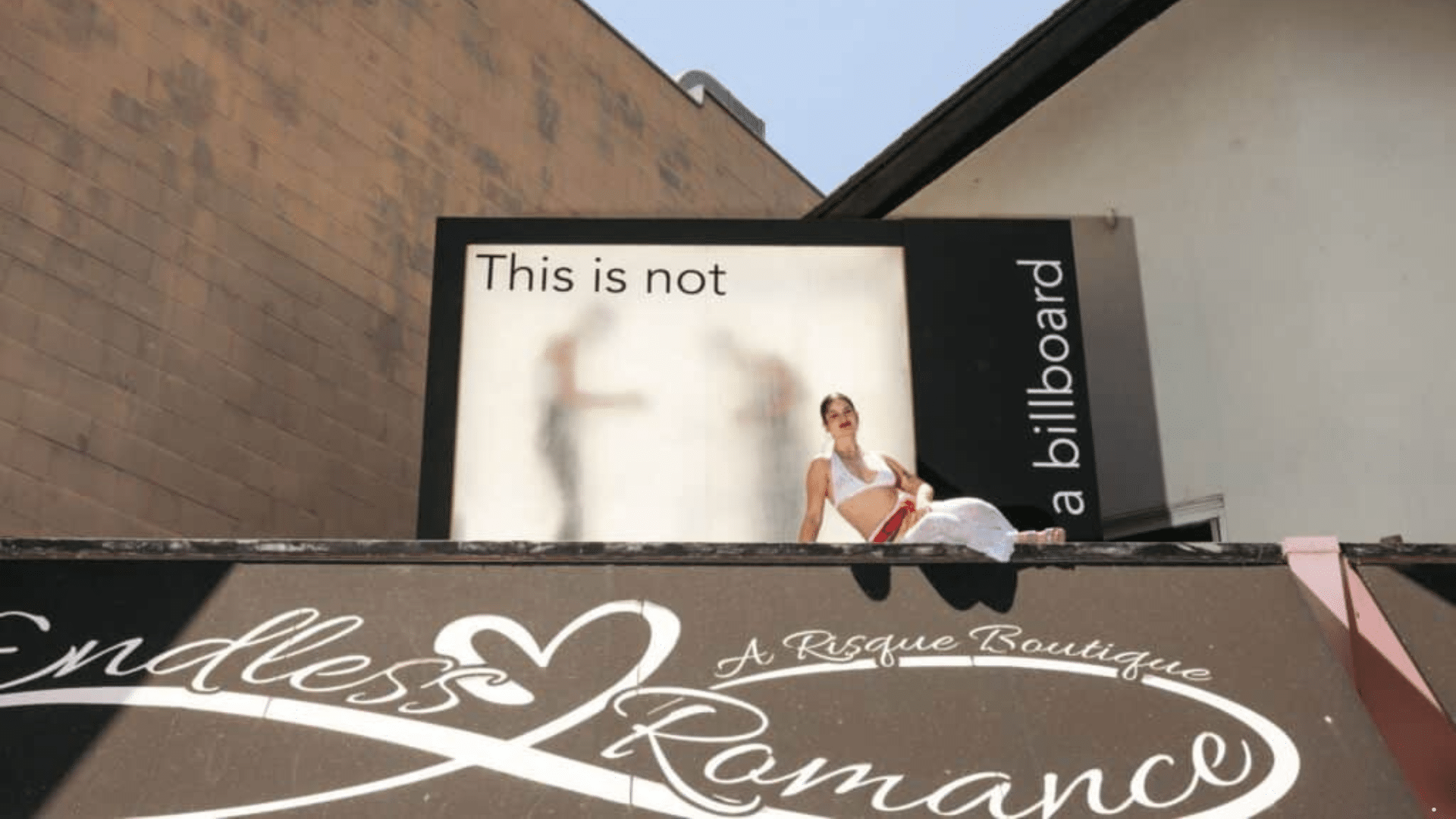
The most prominent example of the third category is a grant from Instagram’s “Drafts Program” that funded “This Is Not a Billboard,” a large-scale performance piece staged during Pride. Instagram provided funding, press access, and connections without attaching branding. “They just wanted to support an artist,” Vita says. They also took part in an advisory role connected to Instagram’s Edits app, giving direct feedback to the platform’s product team on caption features, an accessibility issue that matters to them personally as a hard-of-hearing person. “They really work with creators,” Vita says of Instagram. “It feels a little bit more collaborative.”
The Only Non-Negotiable in a Brand Deal
When brands bring Vita into campaigns, the practical negotiation centers on one thing. “The biggest thing is just trust,” they say. “Just trust the person.”
The failure mode Vita sees most often is the overcrowded brief. Too many calls to action dilute a creator’s ability to reach their own audience, and the audience notices the difference. “If it has too many ad points, they’ll kind of start losing us,” they say. “Limiting the calls to action is really important.”
Their own audience has established an informal standard for what Vita will accept. Vita identifies their queer identity and their experience of marginalization as factors their followers hold them accountable to, and cites generative AI imagery as a category they actively decline given what it represents for artists. When a partnership does align with those conditions, the audience’s response reflects the consistency. “When I do an ad, they’re so supportive,” Vita says. “They’re like, ‘I’d love to see you win.'”
Getting Disability on the Front Page of the Internet
“VitaSona,” Vita’s current ongoing project, is structured as speculative fiction. In it, Vita performs as the CEO of a fictional hearing aid company, producing corporate materials, product launches, and, in one widely circulated video, a staged street protest on the company’s behalf. The protest went viral.
“How do we get disability on the front page of the internet?” Vita says. “Because sometimes when it’s disability forward, people will scroll. So you have to get creative with that.”
For Vita, the goal is broader than any single piece. They observe that Deaf representation has expanded meaningfully in art and media, while hard-of-hearing experiences occupy what they call a liminal space: present enough to face daily access barriers, often not visible enough to be addressed. “It’s hard for us to always have access to apps,” Vita says. “It’s hard to just go to the grocery store.”
“VitaSona” runs the same formal approach as the painting experiment through a disability framework: build the believable fiction, earn the audience’s attention, then redirect that attention toward the underlying argument. The long-term goal is a large-scale gallery and museum installation where visitors can move through the project’s speculative history as a physical environment.
Queering the Trends Before the Algorithm Does
For artists watching Vita’s trajectory and asking whether fine art credibility and platform income are compatible, their answer is that the question is already wrong. The platform is not a distribution layer for the work. For Vita, it is the work.
“Don’t promote your artwork online,” Vita says. “It’s an extension of your practice to be online. Utilize it as the art itself.”
Vita treats a video that does not travel as a piece that did not find its moment. A brand deal that conflicts with the audience’s values as a rupture in the logic of the practice. For creators starting out now, Vita’s advice follows the same structure: “Consume and then see the trends and then queer the trends.”
The practice, the platform presence, the brand partnerships, and “VitaSona” all run on a single underlying claim that Vita has been testing since grad school and has not found a reason to revise.
“The hill I will die on in my life is that virality is a medium for fine art. It’s an ephemeral, time-based practice similar to performance art.”
Subscribe to Our Newsletter
Check Out Our Podcast