





Agency
How CreatorCaster Is Bringing a Hollywood Casting-Call Model to Family Brand Influencer Campaigns

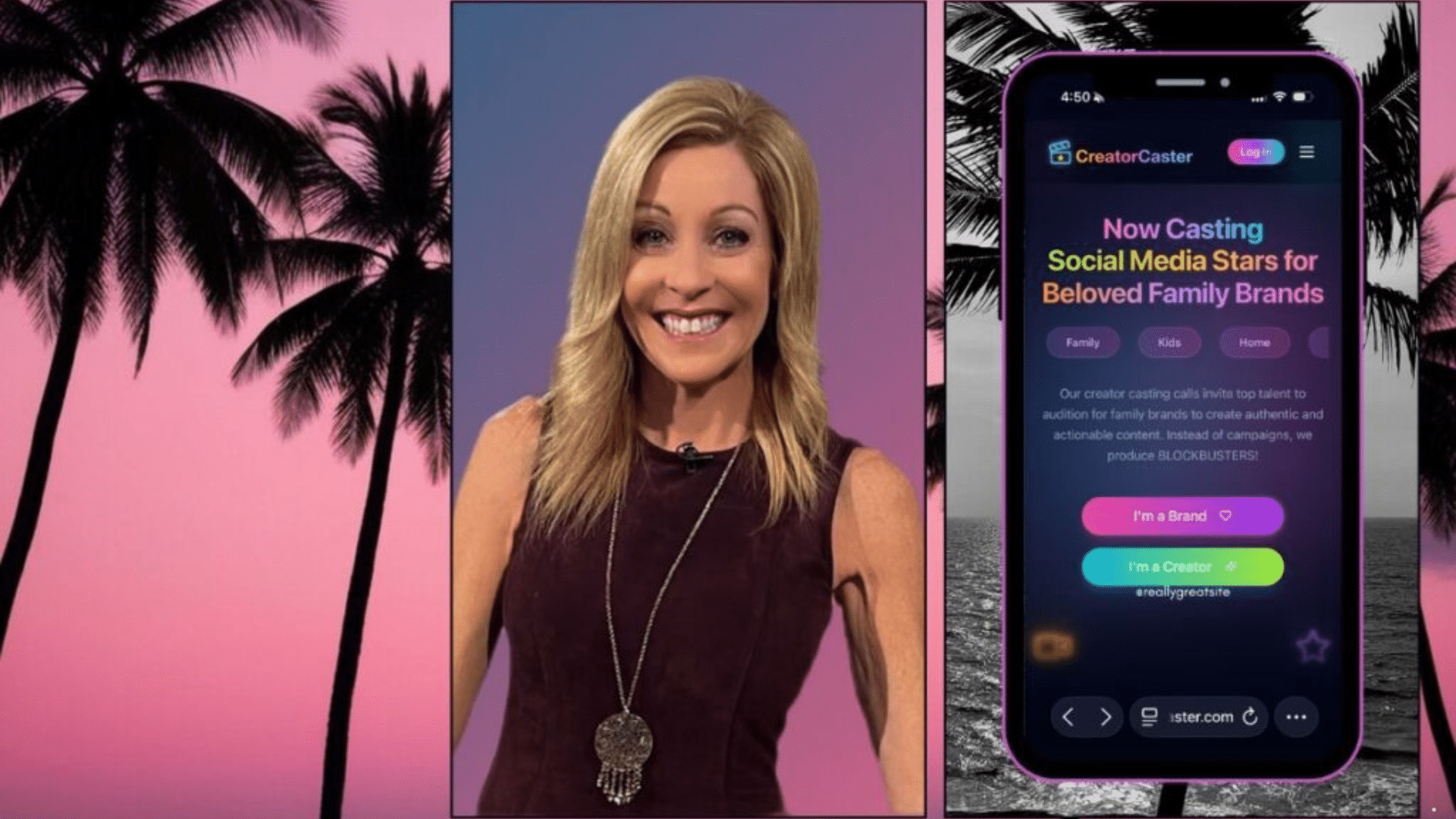
Brands in the family market that come to CreatorCaster are not handed a software dashboard. Deborah Stallings Stumm, the company’s founder and CEO, runs campaigns through a casting model borrowed from entertainment: creators submit audition forms, brands review a curated shortlist, and no placement happens without human verification of the fit.
That process reflects a calculation Deborah formed over more than two decades across the toy, lifestyle, and media industries. As SVP at Bonkers Toys, she helped secure retail placement for “Ryan’s World” at Target, Walmart, and Amazon. Earlier, she ran a parenting and lifestyle media company that drew brand partnerships with Mattel and LG and generated more than 200 television appearances, including multiple segments on the “TODAY Show” and “Access Hollywood.” Before founding CreatorCaster in San Diego in March 2026, she built campaign management software tailored to the toy and family industries. What she found in that process became the business case for her current company.
“I realized very quickly that there are plenty of software models out there,” Deborah says. “Having that hands-on personalized service really does matter.”
CreatorCaster connects lifestyle, toy, pet, and home brands with a curated roster of nano, micro, and mid-tier creators. The company positions itself as an agency alternative suited to brands that cannot afford retainer-based agency relationships or that lack the internal staff to manage creator campaigns on their own. Deborah cites estimates that women account for roughly 85% of family purchases across various categories in the U.S., a figure she uses to frame the family category as commercially significant and, in her view, a segment where many brands still have limited experience running creator campaigns at any structured level.
Why Smaller Family Brands Need Execution
When Deborah built campaign management software for the toy and family industries, the target audience was small and mid-tier companies she had watched throughout her toy industry career. Larger toy brands had dedicated staff for creator programs. Most smaller ones did not have the personnel, the experience, or the institutional knowledge to manage campaigns independently.
“What we didn’t realize is that the majority of them still wanted someone to do it for them,” Deborah says. “Or maybe better stated, needed.”
The response was to add what she called a “concierge layer.” Her team ran campaigns directly on behalf of clients rather than handing over a platform login. CreatorCaster formalizes that model. Proprietary software now operates on the back end, managing tracking, reporting, and operational workflows. Client-facing work is handled by people.
Deborah uses AI extensively for internal efficiency, including spreadsheets, workflow tooling, and data management, but draws a firm line at using it to evaluate creator fit. “I know all of the creators on my platform,” she says. “I have worked with them. I have vetted them.” She notes that well-resourced competitors are investing heavily in AI-driven creator discovery. Her view is that human judgment is what the family market requires on the front end.
Casting Calls, Not Campaign Assignments
Before any creator outreach begins, Deborah consults with the client to establish what the brand is actually trying to accomplish. The questions are specific: Is the brand looking for user-generated content or earned social reach? What age group does the product serve? Does the brief call for toy-focused creators, lifestyle experts, or pet content specialists?
From there, CreatorCaster sends targeted casting calls to creators it believes could be a fit. Interested creators submit an audition form that includes samples of relevant past work. Deborah curates the submissions into a shortlist and presents it to the brand. Final selection belongs to the client. For licensed properties, an active example being a Bluey campaign for a current brand partner, the rights holder retains approval authority over which creators can participate.
The model is opt-in throughout. Creators are not assigned campaigns; they apply. Deborah issues detailed creative briefs and compensation expectations before any commitment is made. “We always set the expectation up front very clearly,” she says. “On our side, I’m not a believer in just sending a bunch of product out and crossing your fingers and hoping somebody does what you want.”

Vetting Goes Beyond the Follower Count
CreatorCaster’s “sweet spot” spans the nano-to-mid-tier range. “I’ve actually turned down people who have hundreds of thousands of followers because their content wasn’t what we were looking for,” Deborah says.
The threshold in the family space, she argues, is whether content reads as relatable to another parent rather than as a produced advertisement. A campaign for a potty training product works when a watching parent can imagine using the tool in their own household. It does not work when the creator is simply unboxing the product for the camera. “When you see something that really emotionally touches you, or you say, ‘Oh my gosh, I need that,’ that’s what we’re looking for,” she says.
Reliability weighs as heavily as content quality. Deborah sends personal thank-you notes to creators who consistently deliver on deadline and removes creators from the roster who require repeated follow-up as deadlines approach. “If you post on time and you do this like clockwork, you’re going to get jobs on a regular basis,” she says. “It’s a privilege to be on the roster.”
The family category also enables what Deborah calls cross-pollination. A creator who built an audience around toys but also owns a dog can access pet brand campaigns, reaching a different pool of followers than either category would find independently. She sees this dynamic play out regularly as she expands the platform’s brand mix.
Follower Counts Still Distort How Brands Approach Creator Campaigns
Among small and mid-tier brands, Deborah says, the most persistent pattern is that they know they should use creators but have not clearly defined what they want from those partnerships. “Some people say, ‘I need to work with creators,'” she says. “Okay, what does that mean? What do you want?”
The challenge she most commonly encounters involves follower count. Brands arrive expecting to work with the highest-reach creators available while offering compensation that experienced creators will not accept. Her approach is to walk them through the distinction between reach and engagement, and to make the case for creators in the 10,000-to-200,000 range, who she says often produce stronger results for family and lifestyle products than those with much larger audiences.
“The more experience you get [as a creator], you can realistically charge more,” she says. Creators who have been producing family content for years have improved both their craft and their audience relationships, and the pricing reflects that development, in her view.
She also regularly fields questions that indicate more basic unfamiliarity with how creator campaigns work. Do brands need usage rights for the content? Are they planning to run ads from it? Which platforms reach which demographic within the parent market? “There’s a very big education that needs to occur,” she says, describing the process as routine for clients who are relatively new to creator marketing.
The Family Category Keeps Widening
With Q3 and Q4 representing the heaviest demand period in the toy and family product industries, CreatorCaster is expanding into adjacent categories. Deborah is developing campaigns in pet products, home goods, wellness, and beauty, all framed as natural extensions of what households purchase rather than departures from the platform’s founding focus.
She attended the SUPERZOO trade show this August to develop pet industry relationships. Active campaigns include the ongoing Bluey partnership and an upcoming potty training product launch, with scooter brand work in the pipeline.
The motivation Deborah returns to most readily is personal. She describes watching a creator she first encountered early in her toy industry career, when the creator had roughly 1,000 followers, build a combined platform following she now puts at over 7 million. That trajectory, she says, is what the family creator market makes possible for people who commit to it seriously.
“The creators have to be taken care of, the brands have to be taken care of for this partnership to work,” she says. “When it gets lopsided, that’s when things don’t go as well.”
Subscribe to Our Newsletter
Check Out Our Podcast