


Agency
The Digital Dept. Built a Fashion Week Creator Experience Without the Fashion Week Budget

New York Fashion Week (NYFW) prices many brands out of the cultural moment. Influencer Marketing company The Digital Dept. has spent three years building an event model for the ones left outside.
BRANDEdit, The Digital Dept.’s in-house experiential program, ran its third NYC Fashion Week Experience edition on September 15 and 16, 2026, drawing 167 creators through a private Flatiron District venue over two days. The company’s event, themed around a stylish neighborhood café, featured 25 participating brands spanning fashion, beauty, and wellness, alongside a title sponsorship from lifestyle label Comfrt.
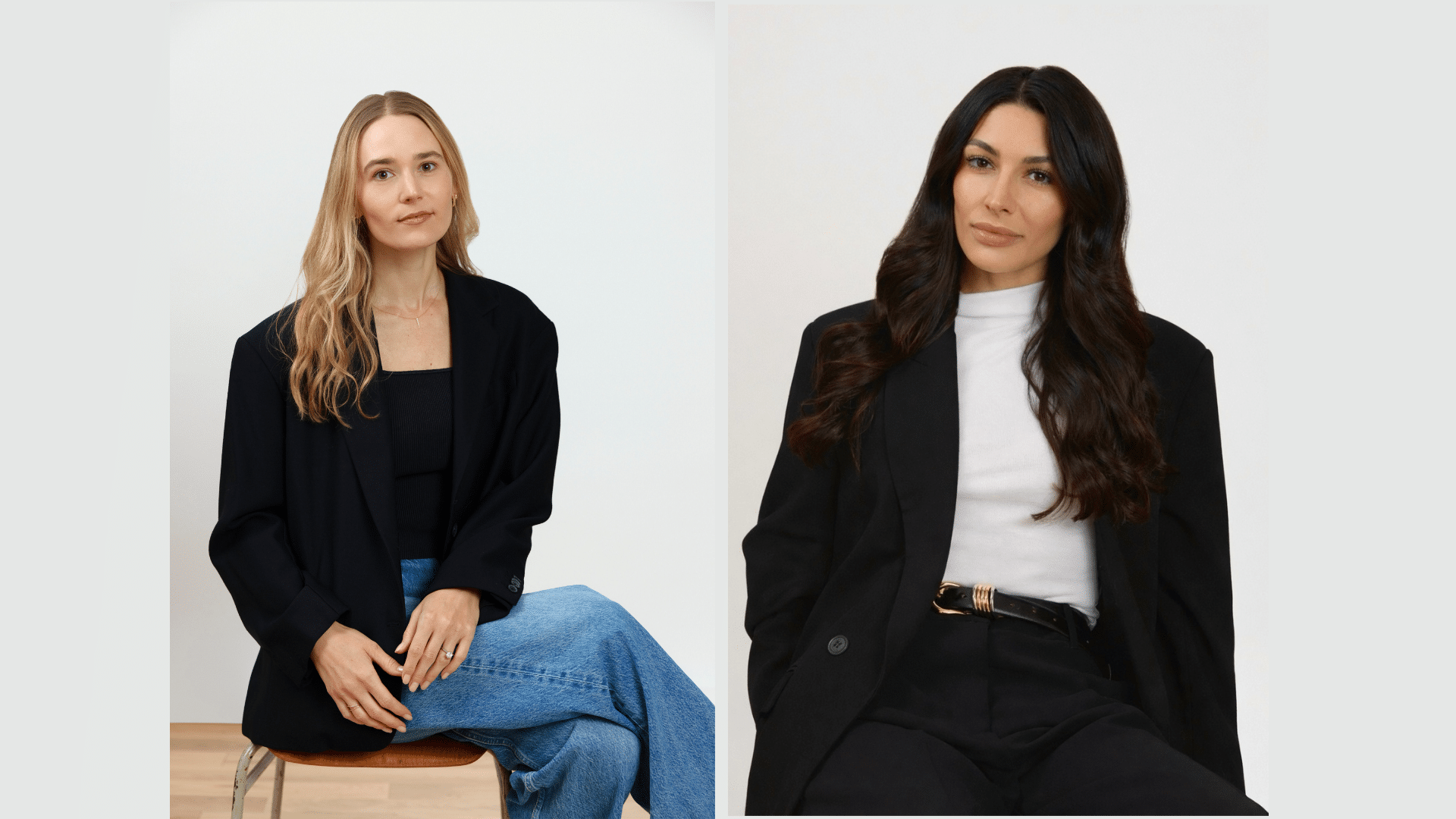
“How do we get creators to share their experience?” says Belinda Sztrom, TDD’s VP of Experiential and Partnerships, who leads the division. “The only way to do that is to make the experience truly memorable and thoughtfully designed with interactive moments that creators will genuinely want to capture and share. That design imperative, Belinda says, is also how the event is ultimately measured: by the organic content it generates for participating brands.
The mechanics behind that model are built on cost-sharing and controlled logistics. Brands pool production costs to access a curated creator audience, without running independent activations or buying official Fashion Week partnerships. Creator flow runs on an appointment system capping attendance at roughly 20 at any given time. Content is monitored for 30 days after the event closes, and each brand receives a platform-specific recap report. The premise behind that structure dates to 2020 and a very different format.
A Pandemic Mailer That Became an Experiential Program
BRANDEdit didn’t start as an event, but as a box.
At the end of 2020, with marketing budgets reduced and in-person events shut down, The Digital Dept. assembled a shared-cost package of products from multiple brands and mailed it to creators at home during lockdown. “It was a box where we got different brands to send products, and we packaged it really beautifully,” Belinda says.
Influencers, with few other events to attend, posted about what was inside. “Brands loved it,” Belinda says. When restrictions lifted, TDD applied the same cost-sharing premise to live events in Los Angeles, then expanded further.
This year’s Fashion Week edition was the third. The BRANDEdit calendar now includes Nashville and Miami alongside New York, with Los Angeles and New York holiday events set for later in 2026.
The program also went through a naming shift. What started as the “BRANDEdit Showroom” no longer uses that word. “A showroom is a more traditional term to go and view products and get gifted,” Belinda says. “We have turned this into a full experience where at each event you can expect different activations, different things to happen.”
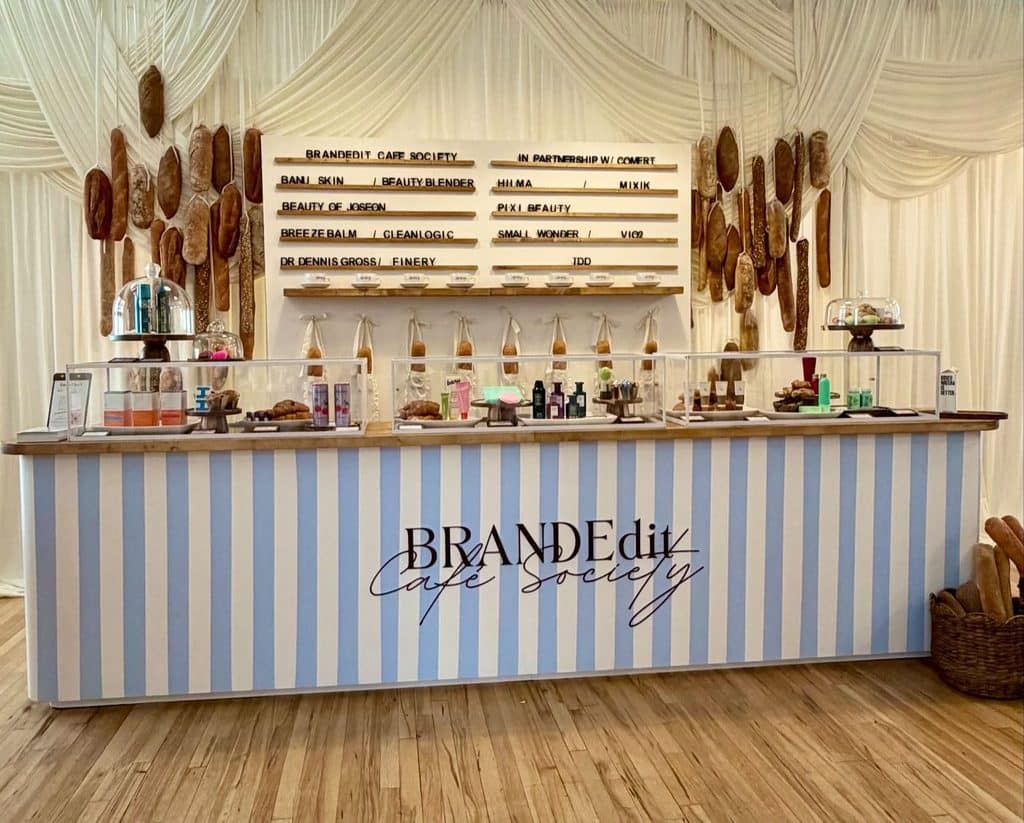
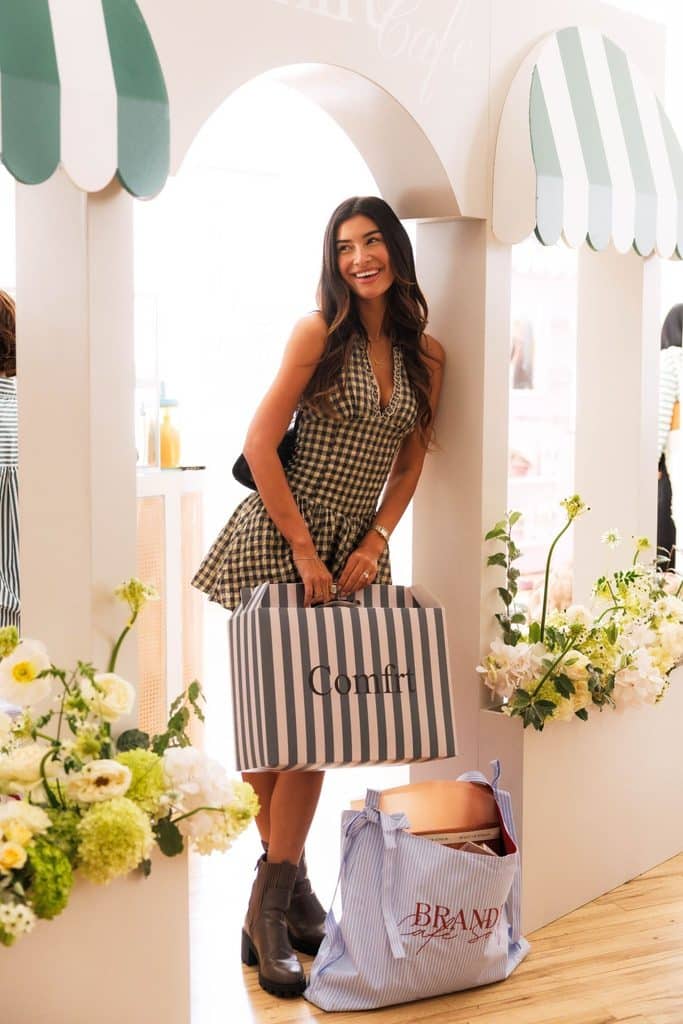
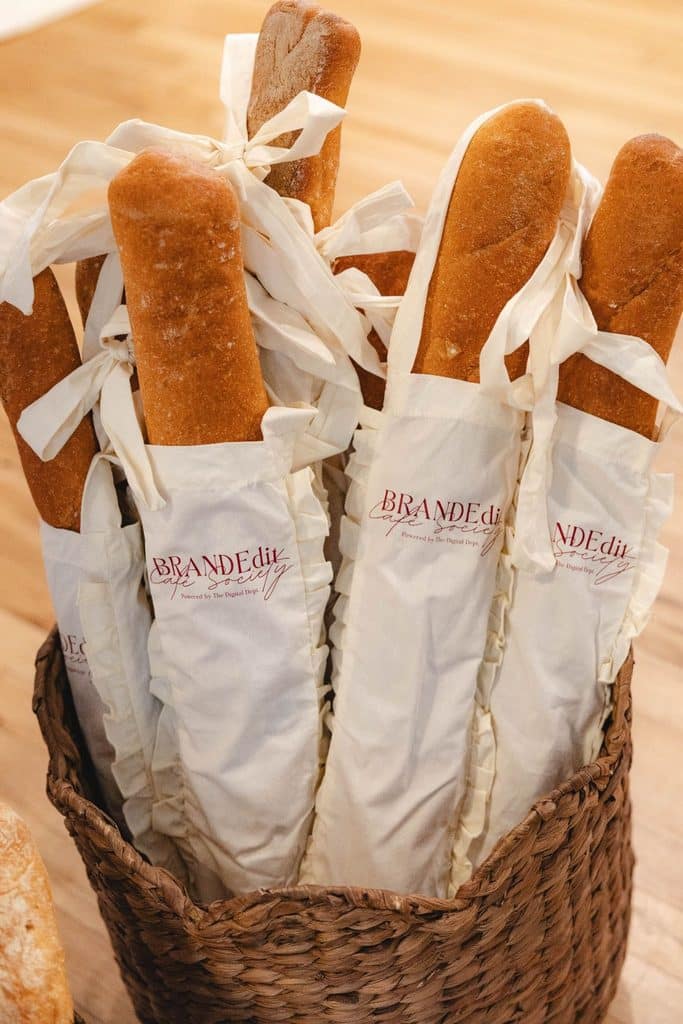
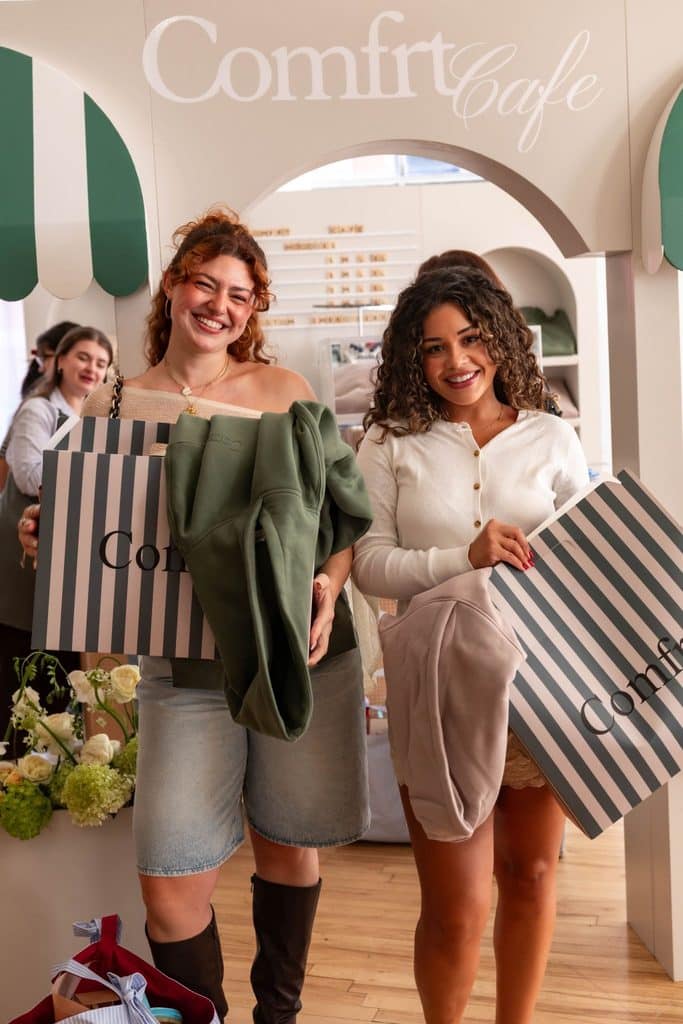
At Café Society, creators received on-site custom embroidery, tested headphones at a newsstand built specifically for the event, and collected products presented in branded bakery bags. Each element was designed to produce shareable content rather than simply transfer inventory.
The Shared-Cost Model and Who It Serves
“There’s also a lot of brands that want to be involved around New York Fashion Week and the cultural moment that don’t necessarily have the budget to put the dollars behind it,” Belinda says.
BRANDEdit is built around that reality. By gathering 25 brands under a single production, each contributing to the cost, the event provides creator access that individual activations would make expensive and official Fashion Week partnerships would make prohibitive. “We’re not charging the price tags that it takes to be officially associated with these events,” Belinda says, “tapping into the influencers that are attending, but not necessarily requiring brands to make the spend required for these big cultural moments.”
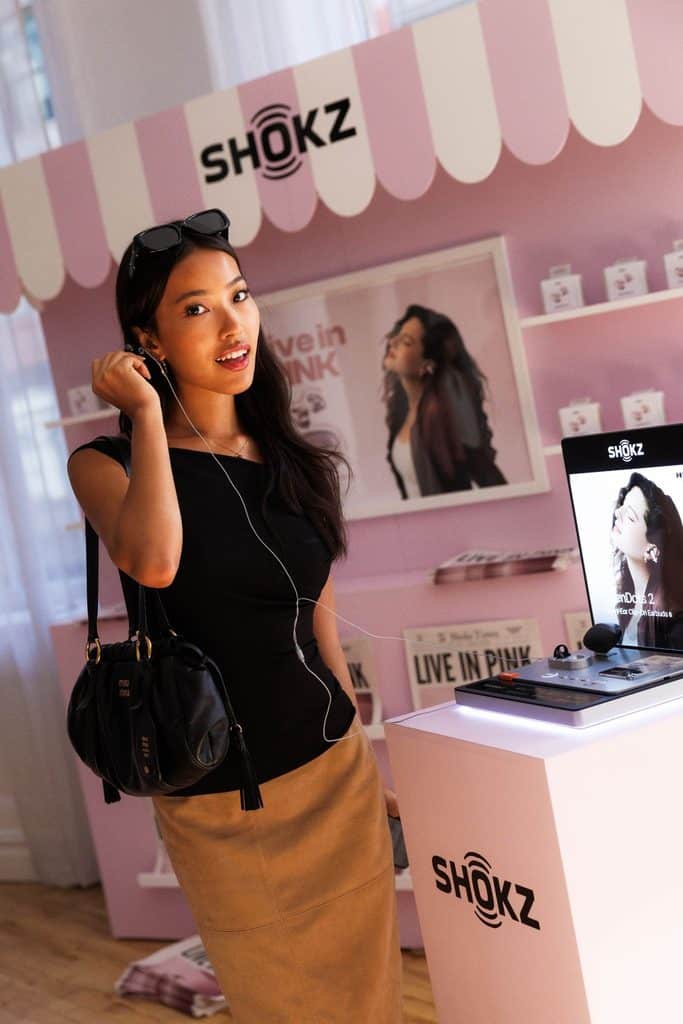
Participation is tiered. Title sponsors receive custom activation concepts developed by TDD’s creative team, with input from participating brands. Lower tiers place product in the gifting suite, integrated into the event’s theme. “Brittany created the concept of the Shokz newsstand. That wasn’t something that Shokz came to us with but an idea we proposed based on the theme, and we worked together to create a custom newspaper that ended up being a content highlight,” Belinda says, referring to Brittany Giello, the Senior Experiential Manager who oversaw Café Society’s creative from concept through execution.
The brand mix at Café Society illustrates the cross-category model. Headphone company Shokz, eyewear brand Zenni Optical, stain remover Miss Mouth’s, and non-alcoholic wine label FRE Wines appeared alongside fashion and beauty brands. “We are not fashion only,” Belinda says. The rationale is that lifestyle, beauty, and wellness creators carry purchasing influence across product categories, and brands outside fashion benefit from the same audience a Fashion Week-adjacent event attracts.
When Design Is the Strategy
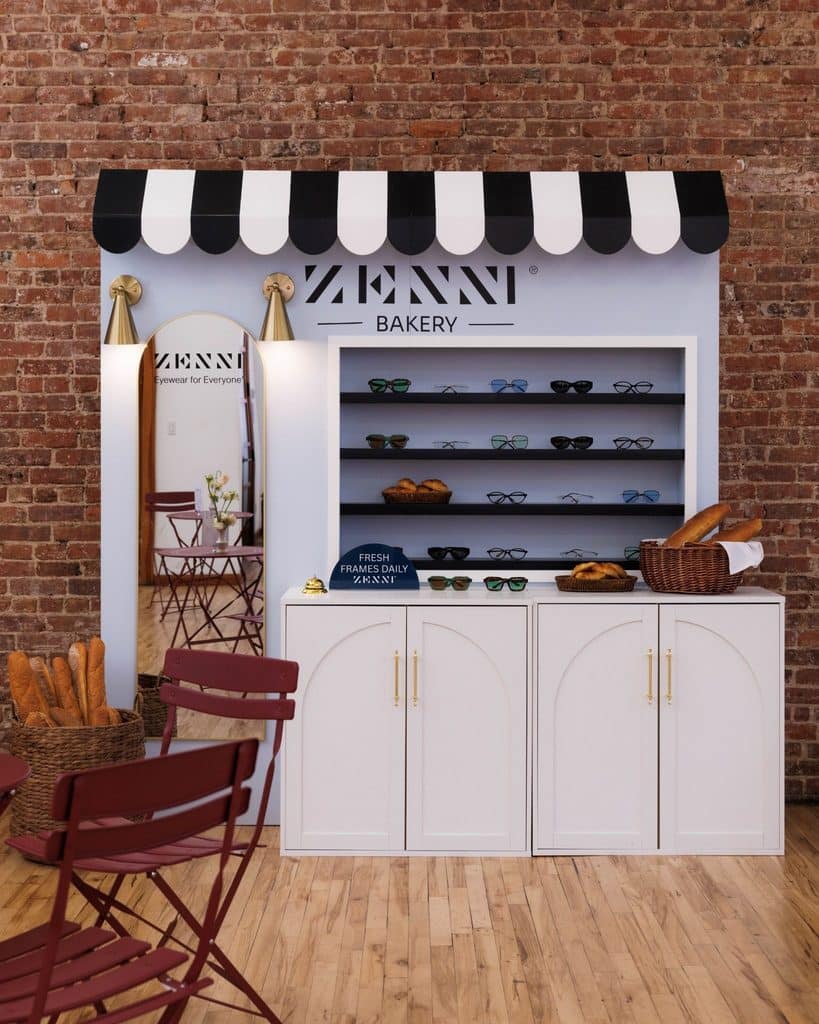
Brittany drew on the visual language of New York and Parisian street cafés when designing Café Society, integrating every brand display into that environment.
Zenni Optical’s eyewear frames were set among croissants and muffins in a bakery case. Comfrt’s embroidery station let creators personalize sweatshirts on-site, selecting from New York-themed icons and phrases. “We had a bakery display with all the products showcased on pedestals, styled among croissants, muffins, and other baked goods,” Brittany says. TDD also partnered with local businesses, including a Bronx bakery that provided fresh baguettes daily and a Queens-based coffee vendor that brought the café setting to life. “No detail was missed,” Brittany adds.
The investment in creative serves a direct commercial purpose. “That, at the end of the day, is how the event is judged for the brands,” Belinda says. “How many pieces of content did it generate? Did it raise awareness? Did they see an uptick on their social channels? Did they see an uptick in tags?” A shelving unit of products generates less shareable content than a personalized embroidery activation. That calculation drives every design decision TDD makes for the event.
Managing Nearly 170 Creators in a Small Space
The headline number for Café Society is 167 creators over two days. The number that determines how the experience actually works is 20.
TDD runs BRANDEdit on a strict appointment model, scheduling visits to keep around 20 creators in the space at any given time. “We don’t want it to feel like this big party where everyone is in the room receiving gifting,” Belinda says. “We want each brand to have time to meet each creator that’s been there, explain their product to the creators, and really establish those relationships versus it just being a transactional gifting experience.”
Creator selection follows a tiered outreach process weighted by the confirmed brand mix. More wellness brands on the lineup means heavier outreach to wellness creators. Attendance history also filters the list. Creators who attend without posting content don’t receive a future invitation. “We really are trying to produce organic content for brands with creators that have a proven track record of posting that for us,” Belinda says.
Event days require upwards of 10 staff members positioned at stations throughout the space, managing introductions between creators and brand representatives and tracking attendee flow against the appointment schedule. Setup day runs a comparable headcount, managing vendor coordination and inventory logistics.
What Happens After the Doors Close
Immediately after an event, each brand receives the full creator guest list with handles, giving social teams the ability to track content as it goes live. TDD monitors posts independently for 30 days before delivering a recap report with platform-specific results, including Instagram post counts, TikTok posts, and total impressions attributed to each participating brand.
“That’s really what we build our case studies off of,” Belinda says. The post-event report is also the primary retention mechanism. Brands that see strong results from the recap typically commit to subsequent events. Several brands from Café Society have already signed on for the upcoming holiday editions.
Expanding the Calendar and the Map
BRANDEdit Holiday Bazaar in Los Angeles this November and BRANDEdit Holiday House in New York in December mark the first time TDD will run two holiday-themed editions in a single year. The New York holiday event is itself a first for the program. “We’ve actually received an incredible response to it,” Belinda says, “and it’s looking to be a very big event for us.”
For 2027, TDD is assessing new markets. Chicago, Austin, and Cannes are among the cities under consideration, with an international edition a stated ambition rather than a confirmed plan. The model, as Belinda describes it, works wherever a cultural moment draws the right creators, and brands want access to both without owning the full production.
“Expanding into new markets that brands are looking to get in front of,” Belinda says, “with good influencer communities and good cultural moments happening.”
Subscribe to Our Newsletter
Check Out Our Podcast