Strategy
2026 NAB Show Is Betting That Creators and Broadcasters Have More in Common Than They Think


For most of its history, the NAB Show was a broadcasting event with a creator track tucked in a corner. This year, Karen Chupka wants to change that perception entirely.
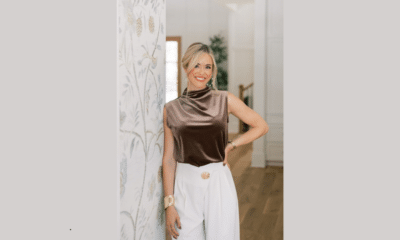
Karen, Executive Vice President of Global Connections and Events at the National Association of Broadcasters (NAB), is overseeing the 2026 NAB Show, which runs from April 19-22 at the Las Vegas Convention Center. Her message heading into the event is direct: the lines separating broadcasters, streamers, and creators have collapsed, and an industry conference that fails to reflect that is no longer useful.
“Creators today are a major driving force in the industry, whereas in the past they were considered a niche,” Karen says. “What we’re seeing now is creators building real businesses with teams, infrastructure, and revenue models that look a lot like traditional media companies.”
Karen joined NAB in January 2024 after more than three decades at the Consumer Technology Association, where she oversaw CES, one of the world’s largest technology trade shows. Her background in large-scale event strategy and industry convening informs how she is approaching the repositioning of NAB Show toward a broader media ecosystem, one that explicitly includes the Creator Economy.
The Creator Economy Has Outgrown Its Own Track
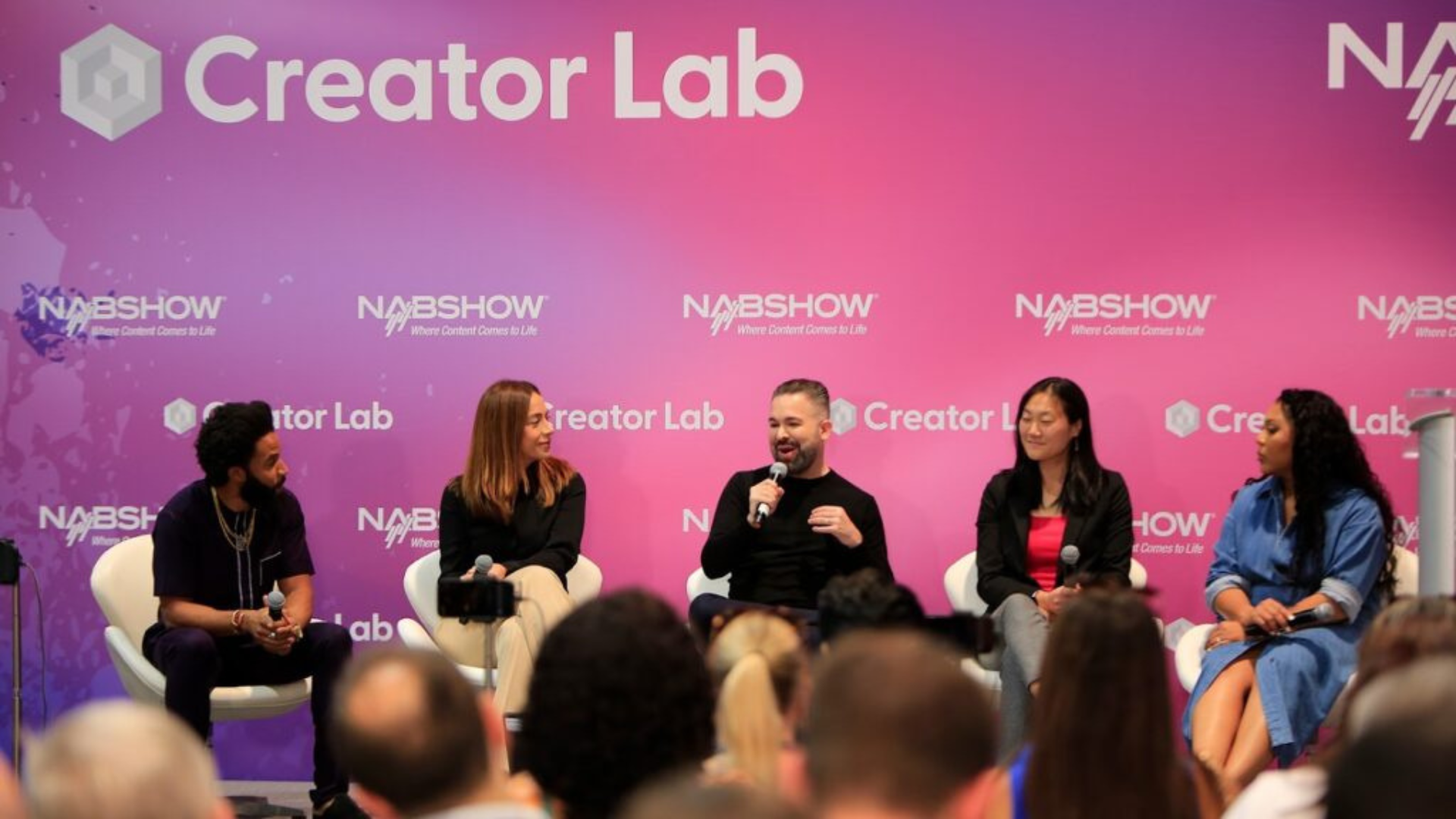
The 2026 NAB Show features an expanded Creator Lab, a dedicated zone in the Central Hall that includes a classroom, theater, recording space, and exhibitor showcases. The programming covers brand partnerships, monetization strategy, legal structure, AI tools, post-production workflows, and YouTube algorithm mechanics. Sponsors include Adobe, Blackmagic Design, Epidemic Sound, and OpusClip.

The programming aims to treat creator businesses as structurally similar to broadcast operations, not as an adjacent or aspirational category. “There are creators who have audiences in the millions,” Karen notes. “They need more sophisticated tools and tech to scale their businesses.”
By bringing creator programming into a venue that also houses enterprise broadcast technology, sports media, and streaming distribution, NAB is arguing that those conversations belong in the same room.
AI Exhibitor Surge, but the Debate Has Shifted to Application
The number of AI-focused companies exhibiting at the 2026 NAB Show is up approximately 82% from the prior year, according to Karen. The figure reflects what she describes as a shift from experimentation to deployment across the industry.
“AI is already reshaping workflows in very practical ways, from editing and localization to asset management and personalization,” she says. “Those efficiencies are significant, but the bigger impact is scale, where hours and hours of work can now be done faster and more flexibly.”
For creators specifically, AI tools have compressed the distance between production and distribution. What previously required a team can increasingly be managed by an individual or a small operation. That development carries implications for how creator businesses are staffed, financed, and valued, questions that NAB Show’s creator programming is beginning to address directly.
Karen is careful to note that AI’s impact is not purely operational. “It raises important questions around ownership, rights, and trust, which are just as important as the technology itself,” she says, adding that those questions are particularly acute for creators, whose intellectual property and audience relationships sit at the center of their business models.

Convergence Is No Longer a Prediction, It’s the Operating Condition
One of Karen’s recurring arguments is that the industry’s traditional categories have become functionally irrelevant. “A creator might be using the same tools as a studio, a sports league might operate like a media company, and a brand might have its own production team,” she says. “If you separate those groups, you miss the bigger picture.”
That convergence shows up in the NAB Show floor design, which places creator tooling alongside broadcast infrastructure, cloud workflow providers, and sports media technology. The intent is to surface shared problems across audience types who would not typically attend the same sessions.
The sessions most directly relevant to Creator Economy professionals include “How Fortune 500 Brands Are Betting on Creators,” “Inside YouTube’s Algorithm: 2026 Edition,” “Beyond Views: Measuring Creator Impact,” and “The Age of Clipping Is Here,” which examines how clipping models are reshaping media distribution and advertising. A “Creator Legal Office Hours” session and a “Creator Survival Guide” on contracts and burnout address the operational infrastructure that growing creator businesses now require.
The Real Gap Is on the Business Side, Not Tech
Karen is direct about where she thinks media leaders are falling short. “There’s a lot of focus on technology, but the real question is how those tools translate into sustainable models,” she says. “How content is financed, distributed, and monetized is changing quickly, and that’s where many of the critical decisions are being made.”
For creators, she notes that the business-side gap is particularly visible. Revenue diversification, audience ownership, and legal infrastructure have become core competencies as platforms fragment and algorithmic dynamics shift. NAB Show’s creator programming addresses those gaps with sessions on monetization, personal brand building, multiplatform strategy, and AI integration.
Karen also points to the relationship between legacy media and Creator Economy operators as an area that deserves more attention. “Media leaders need to understand how to work with the Creator Economy to tap into audiences and their creative ways of storytelling,” she says.

What the Show Floor Is Actually For
Karen is skeptical of conferences that position themselves primarily as content delivery vehicles. Her definition of NAB Show’s value is relational. “You can read about trends, but it’s different when you see technology, hear directly from the people using it, and have conversations that lead somewhere,” she says.
The Creator Lab Happy Hour on April 20, open to all NAB Show attendees without RSVP, reflects that orientation. So does the Creator Lounge, a space accessible throughout the four-day show for informal collaboration, content production, and peer exchange.
Whether creators, who have traditionally found their professional community at events built specifically for them, will embrace an event rooted in broadcast and enterprise media remains an open question. Karen’s bet is that the industry’s trajectory has made that distinction increasingly academic.
A Conference Designed for a Converged Industry
Karen’s agenda for the 2026 NAB Show shows a judgment that the industry’s current moment requires integration rather than segmentation. “This is one of those moments where multiple shifts are happening at once, across technology, distribution, and business models,” she says. “When that happens, it’s exciting, because there are new opportunities.”
For the Creator Economy specifically, NAB Show’s expanded footprint offers access to tooling, distribution conversations, and enterprise partnerships that have historically operated in separate orbits.
“It’s not just about hosting an event,” she says. “It’s to create a place where real decisions get made and real connections happen.”
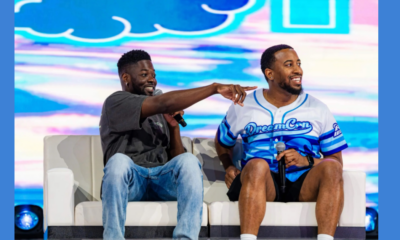
Photos: 2025 NAB Show
Source: NAB Show
Subscribe to Our Newsletter
Check Out Our Podcast