





Influencer
The Creator With a Spy for a Father Makes the Case for Political Creators

At 18, stuck at home during the first COVID lockdown of her Berkeley freshman year, Maria Comstock made a video with her father asking people to get vaccinated. The comments that followed surprised her. Viewers who had not planned to get a shot got appointments. Her first reaction was not satisfaction, but alarm.
“You have no reason to trust me,” she says of that moment. “You have no reason to trust my father. There is no real earned authority we have other than just having a lot of followers.” That reckoning sent her from applied mathematics to political science and, eventually, from content creator to one of the more pointed voices on how American campaigns allocate their digital budgets.
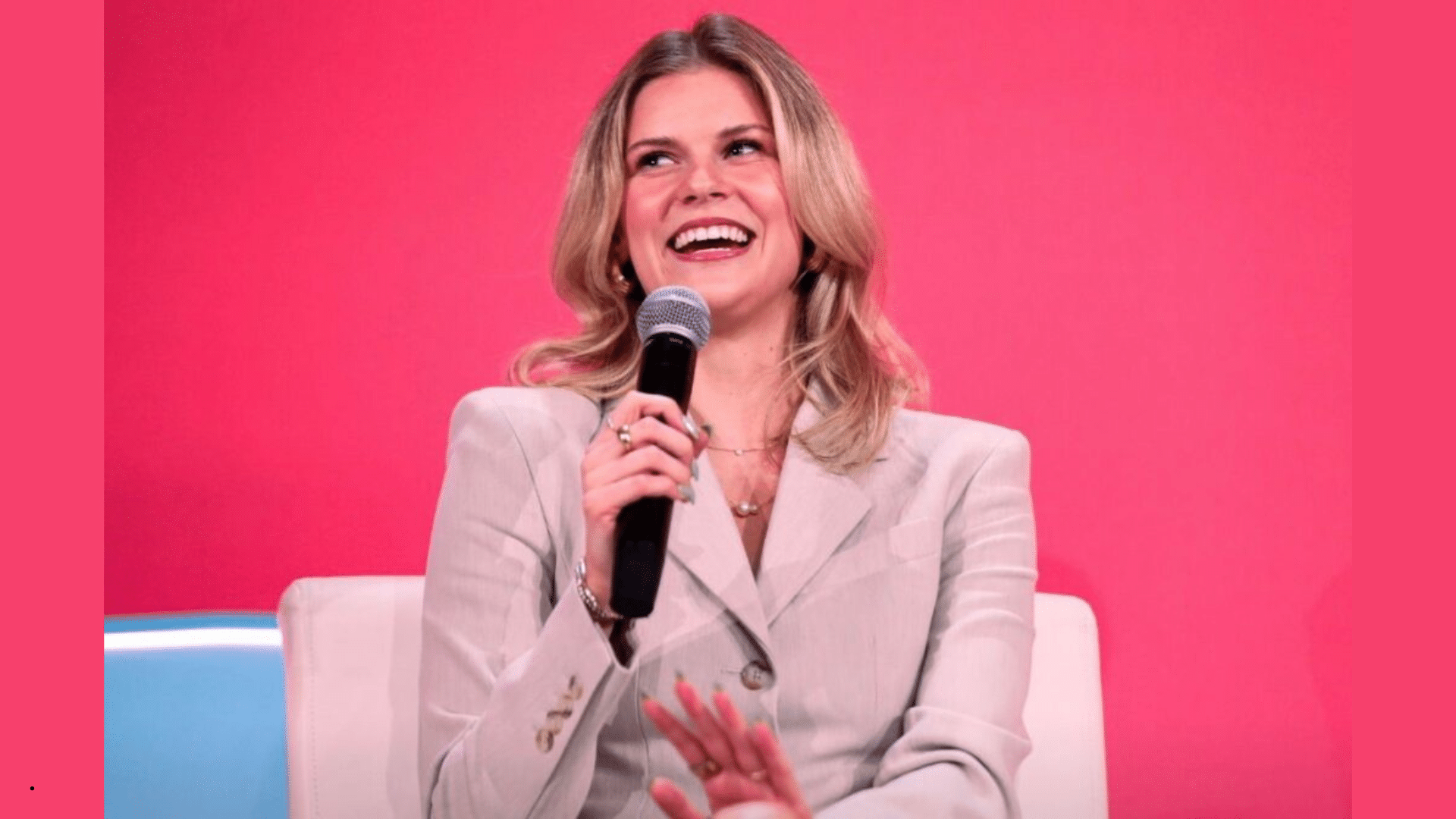
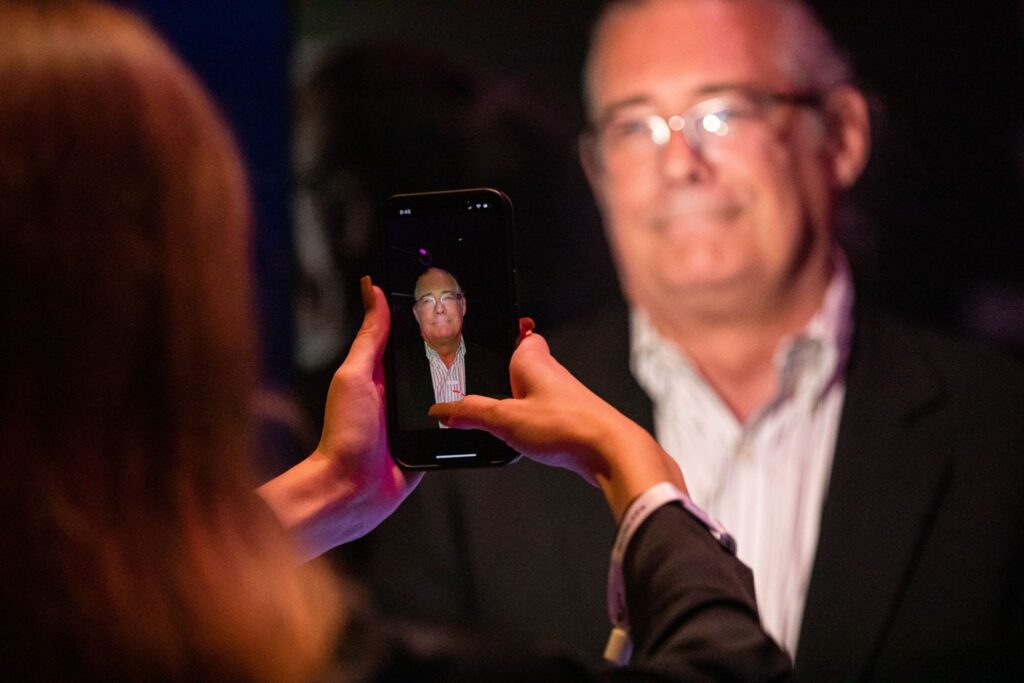
Today, the 25-year-old operates two distinct presences out of Cambridge, Massachusetts: @mariaisabellecomstock, built around interviews with her father, a former cryptological linguist and spy, and @possiblymaria, a political comedy and lifestyle account. Together they reach approximately 2.4 million combined followers. This year, she left a position at a political firm to launch Maria Comstock Media and take on the role of Chief Creative Officer for the Seth Walsh campaign for Ohio State Treasurer.
Her central argument, laid out across interviews and public posts, is that political creators represent a communications channel campaigns have systematically underused while spending far more on infrastructure that, by her account, delivers less.
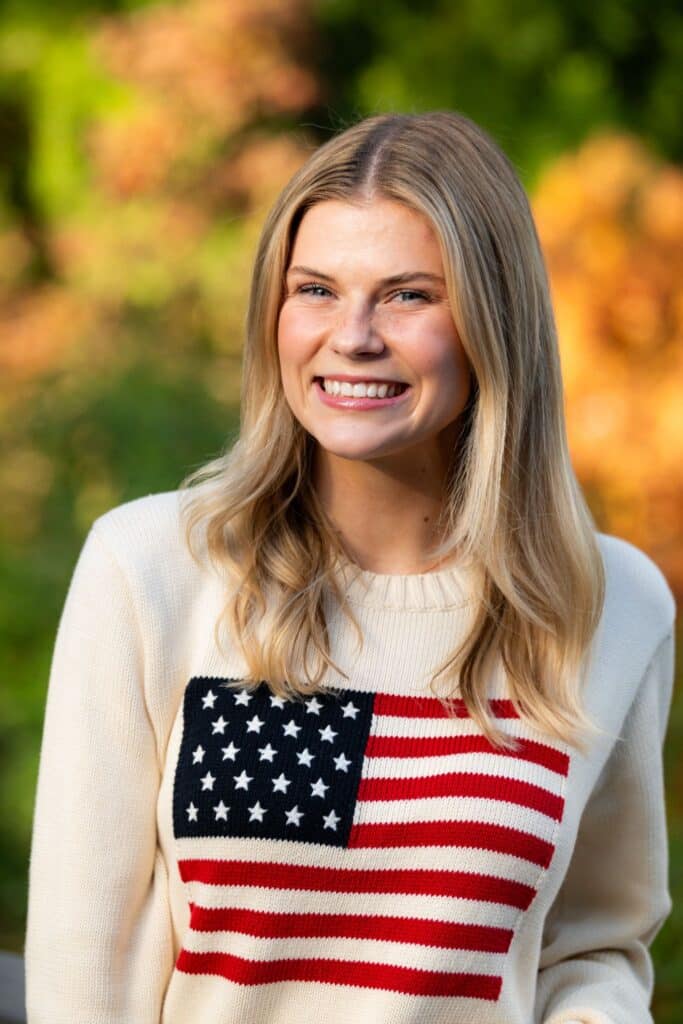
Photo credit: Lauren Liz
The Format That Has Not Changed in Six Years
The spy channel began with absurdist questions directed at a father she had recently discovered was a retired intelligence professional. The material changed over her years at UC Berkeley into conversations about geopolitics, national security, and domestic politics. The format did not.
“I haven’t changed [the format] since 2020,” she says. “It’s the exact same intro, it’s the exact same format, it’s the exact same length.” The only adjustment is a few seconds: TikTok’s upload limits have expanded since she started, and her videos now run just past a minute. “The format works,” she says.
Production varies by guest. Her father is one of her closest friends; content often emerges from daily texts about whatever is moving the news cycle. For intelligence professionals she knows less well, she keeps a structured notes system: evergreen questions about tradecraft and leadership, questions calibrated to the week’s headlines, and lighter pop-culture prompts to drive comments. Russia’s latest drone operations sit in the same list as “What’s your favorite Pokemon?”
Long-form content is an ambition she has not yet fully cracked. “If I were to experiment, I would go further into long form,” she says, “but that’s something I’m just still learning.”
Two Accounts, Two Types of Trust
The comedy account began inside a UC Berkeley sorority, where Maria was writing down things she found objectionable and turning them into sketches. After relocating to Washington, D.C., the material shifted from Greek life to political commentary and the experience of being young in a strained economy. The two accounts have grown alongside each other without much crossover.
The spy channel draws an older, more international audience; the comedy account skews younger and more overtly left-leaning. Brand dynamics follow accordingly. “If I tried to sell my spy audience a sweater, they’d be like, ‘Who are you?’” she says. Certain brand categories are simply incompatible with the spy channel’s territory. “I have defected KGB agents on my channel, and I understand that Coca-Cola may not want [to] touch that,” she says. “I can’t travel to Russia ever because of the content I post on my channel.”
The comedy account drives more brand revenue, and she understands why. What she declines on both accounts is a shift toward transactional commerce. Affiliate links and TikTok Shop are not part of her approach. “It feels like I’m a shopkeeper at that point,” she says. “I’d rather be like a collaborator and co-worker.”
Where the News Went and Why Campaigns Should Care
Pew Research data shows roughly 40% of adults aged 18 to 29 get their news from influencers. Maria’s explanation is that ownership changes altered editorial positions and drove journalists to independent platforms. “People are trusting this more independent, person-to-person media because I’m not being bought by anyone,” she says. “No billionaire is paying me.”
That trust, she argues, makes creators effective as political surrogates in ways television advertising cannot replicate. A campaign running on reproductive rights can work with a creator who has a direct personal story tied to the policy, someone whose years of disclosure have built credibility a 30-second spot cannot manufacture. “Influencers are just phenomenal surrogates because they have such trust with their audience,” she says.
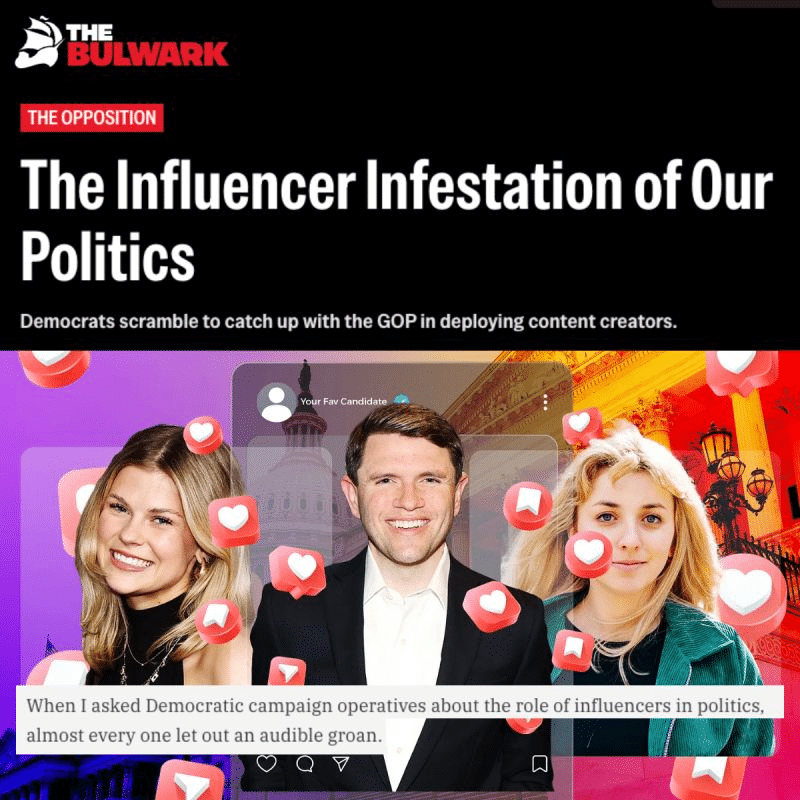
Her argument has already drawn public friction. A Bulwark article published earlier this year featured her face and described political creators as an “infestation.” She reviewed her own quotes in the piece and said she stood behind every one of them. What she objected to was the framing. “That headline and the actual article itself just didn’t really mesh,” she says. The broader dynamic she identifies is journalists treating influencers as competitors rather than collaborators, a pattern that, in her view, distorts coverage and serves neither side.
What Campaigns Keep Getting Wrong
Maria says she was the only woman in the North Atlantic Council at a NATO summit, filming on an iPhone while 39 other reporters in the room carried $40,000 cameras. Her footage, she notes, generated more views than the ABC segments filed from the same event. That comparison anchors her practical case for extending political access to creators rather than reserving it for traditional press.
At the campaign level, the most common error is scripting. “If a campaign sends me a script, I’d be like, ‘This is terrible. I’m not doing this,’” she says. “It will get four views because my audience will know that’s not coming from me.” Her preferred arrangement is a phone call about campaign priorities, then a creator-authored draft submitted for approval. “I’m happy to get your approval,” she says, “but letting influencers use their own voices on their own channels” is where effective collaboration starts.
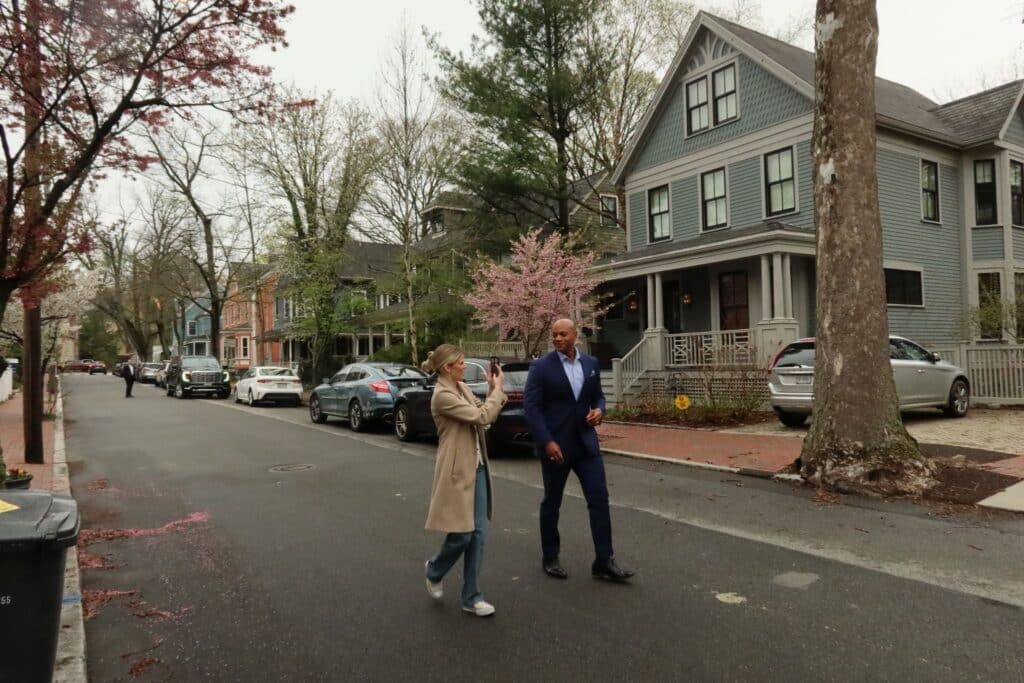
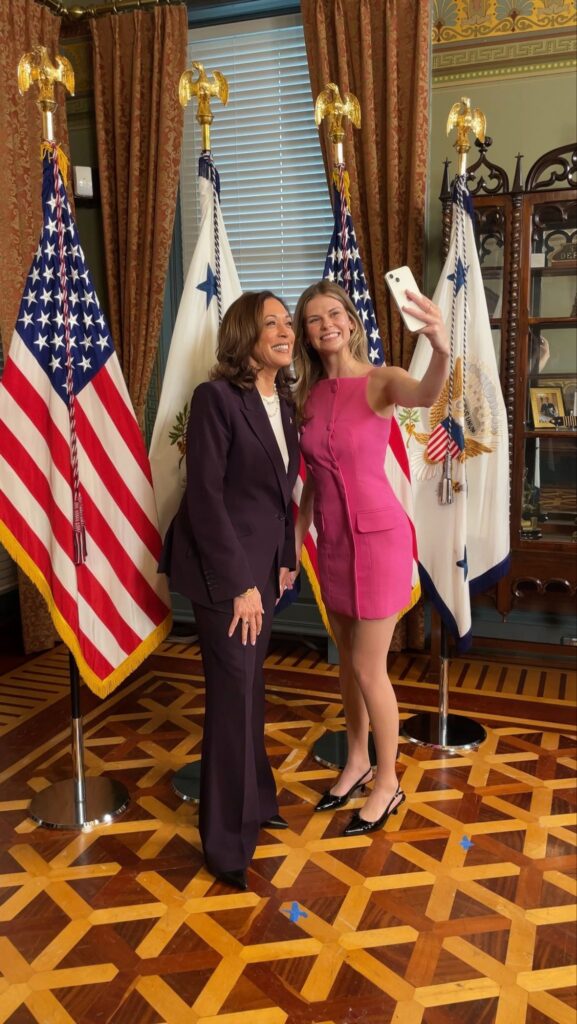
The second error is transactional brevity. She films occasional videos with Maryland Governor Wes Moore and watches them pull audiences his account typically does not reach. “It’s from a younger audience talking about MAGA billionaires and health care in a comedic way that’s reaching the broader Gen Z audience,” she says.
The Structural Barrier
The deepest problem, in Maria’s account, is financial rather than philosophical. “The biggest block is just the consulting class,” she says. “All these consulting firms in D.C. just haven’t figured out how to make that same commission on influencers.”
Firms billing campaigns on mail and advertising have a direct incentive to keep recommending mail and advertising, regardless of what persuasion data shows. “They’re still going to preach that to their candidates over and over again and block the influencers out because they can’t make the money off of them.”
She has experienced this from inside the system. After the 2024 election, she went six months without a brand deal. She had been working campaigns for free because she believes in the cause. “I work with these candidates and get them a free million views,” she says. “That’s something that would cost them tens of thousands of dollars for a targeted ad buy.” On the left specifically, she identifies what she calls “purity culture,” i.e., a reluctance to pay creators out of concern that payment signals a purchased opinion. “Nobody I know would pose for a candidate they wouldn’t vote for,” she says.
Her prescription is legislative. FEC guidelines and campaign finance law, she argues, are not equipped for a world in which young creators are being recruited into political campaigns without the institutional protections a mid-level reporter at a legacy outlet would have. “You’re expecting a 17-year-old to understand campaign finance laws,” she says. “It’s not going to happen.”
More Young Voices, Before 2028
Maria’s near-term goal is specific: a 2028 electorate with measurably higher Gen Z turnout. “I would never date a man who doesn’t vote,” she says. “I think it’s a turnoff.” The delivery is comedic, the platform is lifestyle content, and the message is civic urgency. That compression is the whole argument in practice.
“I hope people think of me as someone who is trying to get people more civically engaged,” she says. “We just need more young voices in politics because all these policies are written for 85-year-olds.”
Subscribe to Our Newsletter
Check Out Our Podcast