







Brand
At Bonkers Toys, Creator Toy Deals Start With Fan Demand, Not Follower Count

Bonkers Toys has built its creator licensing business around a question that follower counts cannot answer: do fans actually want a product? The San Diego-based toy company is now putting that test behind a master toy agreement for The Rizzler, the 10-year-old TikTok personality whose likeness will become collectible plush, figures, and accessories at major U.S. retailers in fall 2027.
The approach is rooted in a lesson Bonkers has learned from both successful and unsuccessful creator partnerships. Large audiences do not necessarily translate into toy sales, while smaller communities can generate enough demand to support a retail product line.
“Our consumer need is fan engagement,” says Dan Meyer, Bonkers Toys’ Head of Brands. “Do the fans want product from the creator they’re following? Just because someone has a big audience on YouTube doesn’t necessarily mean the audience wants the product.”
Dan joined Bonkers six years ago after roles at Basic Fun!, Procter & Gamble’s global baby care division, and Jakks Pacific, bringing a consumer packaged goods discipline to a company founded by CEO Brian Bonnett. Brian started Bonkers after watching his son consume “Ryan’s World” content and noticing that established toy companies were declining to develop products around YouTube creators. Bonkers brought “Ryan’s World” to retail as the brand’s first licensee, and the resulting toy line became the top-selling preschool toy brand for roughly five years, according to Dan.
The Rizzler Is Ten, and That Changes Some of the Structure
The Rizzler, whose real name is Christian Savasta, is a 10-year-old from Staten Island who became the youngest-ever Webby Award winner and has already expanded into brand partnerships with AriZona Beverages and a signature meal deal at Hardee’s. Dan pushes back directly on any premise that licensing a child creator’s likeness is inherently problematic.
“Kids have been doing things like this for generations,” he says. “The important thing is that their parents, guardians, or whoever is managing them are setting clear and meaningful boundaries.”
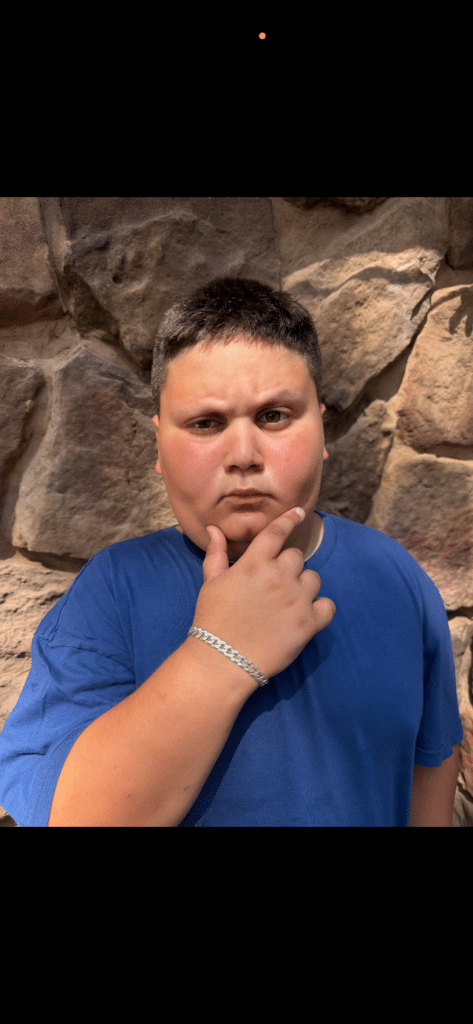
Photo: The Rizzler
Dan cites “Ryan’s World” as a precedent for Bonkers itself, and points to decades of child actors in film and television licensing their likenesses to merchandise. The issue, in his view, is not the practice but whether the people responsible for the child are setting appropriate limits on it.
The Savasta deal involves Bonkers’ own legal team, the family’s legal representation, and guardianship-specific adjustments to payment and responsibility structures. Dan’s colleague Lisa Berlin Wright manages the company’s contracts. The commercial structure, with royalties on each unit sold to retail, is consistent with how Bonkers structures adult creator deals.
The Rizzler toy line will include mystery plush in multiple designs, with one hard-to-find collectible variant, which Dan calls a “chaser,” intended to drive secondary collecting behavior within the fan base.
A Year of Risk Between Signing and the Shelf
A creator deal signed today does not produce a toy on a shelf for roughly 12 months. The production sequence runs from product alignment and design through creator feedback, sampling, manufacturing, and logistics across a distribution chain spanning more than 70 countries.
“Is the creator going to be relevant? Are we shipping millions of dollars in goods not knowing if it’s going to sell?” Dan says.
The toy industry’s pace amplifies that exposure. Dan compares it to fashion: trends cycle quickly, and a year is long enough for a cultural moment to erode. If a line underperforms, the effect compounds at retail, where buyers at Target or Walmart calibrate future orders against past results. Every deal carries opportunity cost alongside direct investment.
Creators receive a royalty on each unit sold to retail partners. Bonkers manages its exposure through what Dan describes as a formula for mitigating the interconnected risks, though he did not detail its components.
Finding Fandoms Before the Industry Does
The “Ryan’s World” origin story is how Bonkers describes its founding logic. An audience clearly existed, the engagement was visible, and the established toy industry still passed. Dan says that instinct now extends well beyond YouTube personalities.
Two examples from the current and upcoming slate show the range.
“Warrior Cats” is a literary franchise built on a book series more than 20 years old. No licensed toys had been made for it before Bonkers brought the property to retail this year, says Dan. The franchise has a presence in Roblox and user-created content on YouTube, but its primary community is formed around books. “No one was thinking about making ‘Warrior Cats’ toys,” Dan says. “We saw this fandom. We said, this is it.”
A “jmancurly” toy line, announced for fall 2027, extends that logic further. Dan describes him as the largest creator working in virtual reality, with a music catalog and his own gaming studio. The toy line Bonkers is developing is built around a mascot a fan mailed to the creator. The creator named the object “Gonzalez,” after the fan’s surname, and the community adopted it. It is a baby doll with a boxing glove on one hand, a backpack, and a strip of yellow tape across its midsection.
“We are going to launch a baby doll for boys that’s going to go in the action figure aisle,” Dan says. The product would not have made it past a retail buyer’s desk without the specific community context behind it. With that context, the argument becomes straightforward.
The Next Category Won’t Look Like the Last One
Dan sees the creator toy market expanding in two directions over the next several years. The kidult segment, the industry’s term for adult collectors who continue buying toys past childhood, is growing and will keep growing. Creator-driven new media brands are also extending into physical products in forms that would not have been commercially viable recently.
“Some of the stuff we’re coming out with would have been unthinkable two years ago,” he says.
The “jmancurly” deal is the clearest current illustration. A baby doll in the boys’ action figure aisle, built on a fan-created mascot from a VR creator’s community, is a product Bonkers can bring to retail only because the fandom behind it is demonstrable. That is the same logic that governed the “Ryan’s World” bet, the “Warrior Cats” entry, and The Rizzler agreement: locating the demand before the rest of the industry has noticed it exists.
“We keep pushing the envelope into what’s next,” Dan says. “And I think that genuinely comes from a spirit of curiosity and love for this industry.”
Subscribe to Our Newsletter
Check Out Our Podcast