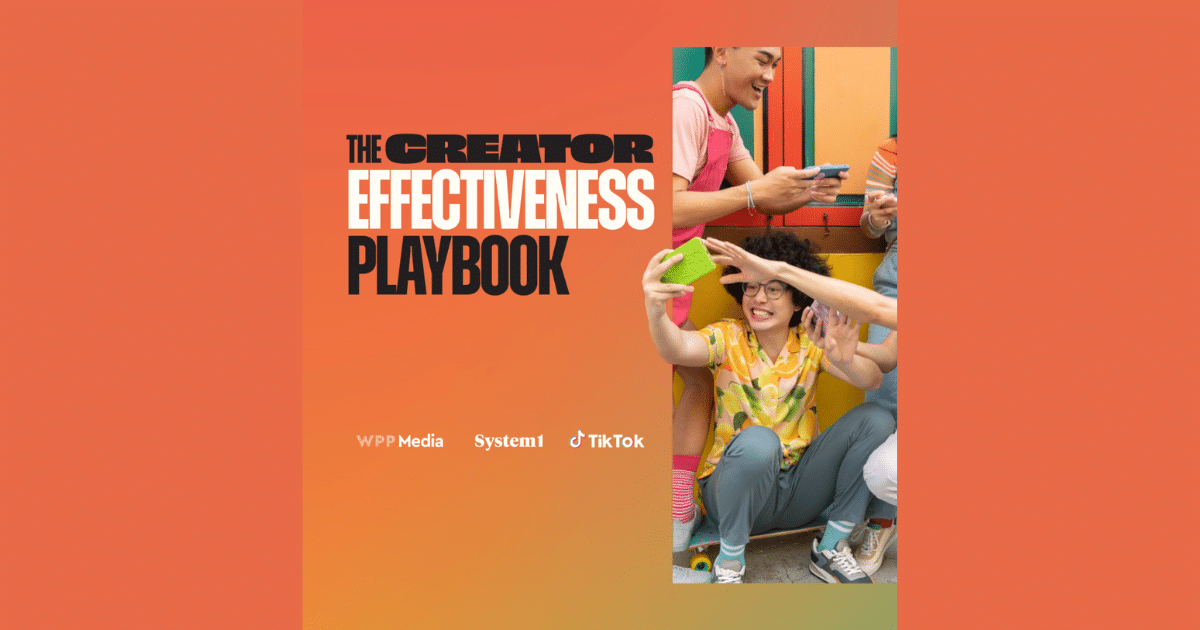
A joint study by WPP Media, System1, and TikTok covering 1,217 paid TikTok ads across eight markets found that emotional response combined with early brand recognition predicts creator ad Brand Memory Lift far better than engagement metrics, which showed a near-zero statistical relationship to whether audiences remembered a brand after seeing its creator-led content.
The report, titled “The Creator Effectiveness Playbook,” drew on creative response data from 182,550 TikTok users matched against more than 350 TikTok in-market brand and conversion lift studies across the U.S., UK, Germany, France, Italy, Spain, Brazil, and Mexico. The dataset covers an estimated $70.5 million in media spend and 23.6 billion impressions.
Engagement Metrics Fall Short
Across 129.6 million engagements analyzed, engagement rate showed no significant relationship with Brand Memory Lift, a composite measure of Brand Awareness Lift and Ad Recall Lift weighted 2:1. The comment-to-like ratio, tested as a more precise engagement signal, explained just 11.3% of Brand Memory Lift outcomes. Creative Quality, defined as emotional response combined with Early Branding, explained 54.6%, roughly 4.8 times the explanatory power of the best engagement metric.
A 2025 WARC study cited in the report found that 44% of marketers run creator campaigns without setting any KPIs, while 38% measure creator performance on ROI or ROAS alone.
“Creators are no longer a ‘new’ advertising opportunity, and should not be an uncertain investment,” said Joshua Gornell, VP of Commercial Paid Social at WPP Media. “Yet, too often, they are. That is because beneath the headline statistics around creator impact lies significant performance variability. An exceptional minority is elevating an underperforming majority.”
The top 20% of creator ads in the dataset generated 45% of all creator Brand Memory Lift. The top 10% delivered approximately four times the lift per ad of the remaining 90%, and only 29% of creator ads outperformed the average brand-made ad.
What Drives Brand Memory
High-emotion creator ads delivered more than double the Brand Memory Lift of low-emotion ads. Strong Early Branding, defined as correct audience brand recognition within the first two seconds, nearly tripled Brand Memory Lift for creator campaigns, producing a 196% lift for high-early-branding creator ads compared to 47% for brand-made ads.
Despite this, only 61% of creator ads in the dataset included at least one brand cue in the opening two seconds. Creator ads that combined audio and visual brand cues in that window achieved 53.1% early brand recognition, versus 25.7% for visual-only approaches. Brand Memory Lift peaked when ads included between two and four distinctive brand assets in the first two seconds, declining beyond that threshold as audience attention dropped.
“The industry has finally moved on from engagement to attention, and we understand that creators demand more attention,” said Andrew Tindall, Chief Growth Officer at System1. “But this research moves the conversation forward again, from attention to Brand Memory.”
Creator Selection
The study identified two additional levers beyond creative execution: Creator Fame, defined as audience recognition of the creator or their content world, and Brand Fit, defined as the audience’s perception that the brand has a natural role within the creator’s content.
Brand Fit proved the stronger predictor. Creator ads with above-average Brand Fit generated 58% more emotional response and 17% more attention than those with below-average Brand Fit. Above-average Creator Fame produced 23% more emotion and 10% more attention by comparison.
When both Brand Fit and Creator Fame were high, Brand Memory Lift reached 1.89 times the indexed baseline versus campaigns with low scores on both measures.
Follower count had a limited relationship to Creator Fame as the study measured it. Micro creators with 10,000 to 100,000 followers averaged 8.0% audience recognition, while celebrity-tier creators above one million followers averaged 23.5%, with wide variation within each tier.
Strategy Precedes Brief
The researchers framed creator planning as a two-stage process. Selecting the right human need, creator world, and brand role drives Creator Fame and Brand Fit before production begins. The creative brief then builds Creative Quality through entertainment and early brand integration.
Data showed that a strong strategy paired with a weak brief scored 170 on the indexed Brand Memory Lift scale, outperforming a strong brief built on a weak strategy, which scored 138. Both combined reached 198.
The study also found that visible brand control reduced performance. Text-heavy overlays lowered Star Rating by 12%, on-screen self-consciousness by 8.8%, and hard calls to action by 7.3%.
Image source: “The Creator Effectiveness Playbook” The full report is available here
Dragomir is a Serbian freelance blog writer and translator. He is passionate about covering insightful stories and exploring topics such as influencer marketing, the creator economy, technology, business, and cyber fraud.














A joint study by WPP Media, System1, and TikTok covering 1,217 paid TikTok ads across eight markets found that emotional response combined with early brand recognition predicts creator ad Brand Memory Lift far better than engagement metrics, which showed a near-zero statistical relationship to whether audiences remembered a brand after seeing its creator-led content.
The report, titled “The Creator Effectiveness Playbook,” drew on creative response data from 182,550 TikTok users matched against more than 350 TikTok in-market brand and conversion lift studies across the U.S., UK, Germany, France, Italy, Spain, Brazil, and Mexico. The dataset covers an estimated $70.5 million in media spend and 23.6 billion impressions.
Engagement Metrics Fall Short
Across 129.6 million engagements analyzed, engagement rate showed no significant relationship with Brand Memory Lift, a composite measure of Brand Awareness Lift and Ad Recall Lift weighted 2:1. The comment-to-like ratio, tested as a more precise engagement signal, explained just 11.3% of Brand Memory Lift outcomes. Creative Quality, defined as emotional response combined with Early Branding, explained 54.6%, roughly 4.8 times the explanatory power of the best engagement metric.
A 2025 WARC study cited in the report found that 44% of marketers run creator campaigns without setting any KPIs, while 38% measure creator performance on ROI or ROAS alone.
“Creators are no longer a ‘new’ advertising opportunity, and should not be an uncertain investment,” said Joshua Gornell, VP of Commercial Paid Social at WPP Media. “Yet, too often, they are. That is because beneath the headline statistics around creator impact lies significant performance variability. An exceptional minority is elevating an underperforming majority.”
The top 20% of creator ads in the dataset generated 45% of all creator Brand Memory Lift. The top 10% delivered approximately four times the lift per ad of the remaining 90%, and only 29% of creator ads outperformed the average brand-made ad.
What Drives Brand Memory
High-emotion creator ads delivered more than double the Brand Memory Lift of low-emotion ads. Strong Early Branding, defined as correct audience brand recognition within the first two seconds, nearly tripled Brand Memory Lift for creator campaigns, producing a 196% lift for high-early-branding creator ads compared to 47% for brand-made ads.
Despite this, only 61% of creator ads in the dataset included at least one brand cue in the opening two seconds. Creator ads that combined audio and visual brand cues in that window achieved 53.1% early brand recognition, versus 25.7% for visual-only approaches. Brand Memory Lift peaked when ads included between two and four distinctive brand assets in the first two seconds, declining beyond that threshold as audience attention dropped.
“The industry has finally moved on from engagement to attention, and we understand that creators demand more attention,” said Andrew Tindall, Chief Growth Officer at System1. “But this research moves the conversation forward again, from attention to Brand Memory.”
Creator Selection
The study identified two additional levers beyond creative execution: Creator Fame, defined as audience recognition of the creator or their content world, and Brand Fit, defined as the audience’s perception that the brand has a natural role within the creator’s content.
Brand Fit proved the stronger predictor. Creator ads with above-average Brand Fit generated 58% more emotional response and 17% more attention than those with below-average Brand Fit. Above-average Creator Fame produced 23% more emotion and 10% more attention by comparison.
When both Brand Fit and Creator Fame were high, Brand Memory Lift reached 1.89 times the indexed baseline versus campaigns with low scores on both measures.
Follower count had a limited relationship to Creator Fame as the study measured it. Micro creators with 10,000 to 100,000 followers averaged 8.0% audience recognition, while celebrity-tier creators above one million followers averaged 23.5%, with wide variation within each tier.
Strategy Precedes Brief
The researchers framed creator planning as a two-stage process. Selecting the right human need, creator world, and brand role drives Creator Fame and Brand Fit before production begins. The creative brief then builds Creative Quality through entertainment and early brand integration.
Data showed that a strong strategy paired with a weak brief scored 170 on the indexed Brand Memory Lift scale, outperforming a strong brief built on a weak strategy, which scored 138. Both combined reached 198.
The study also found that visible brand control reduced performance. Text-heavy overlays lowered Star Rating by 12%, on-screen self-consciousness by 8.8%, and hard calls to action by 7.3%.
Image source: “The Creator Effectiveness Playbook”
The full report is available here
Subscribe to Our Newsletter
Check Out Our Podcast