



Influencer
How Rynia Kando Turned a Stubbing-Toe Trend Into a Repeatable, Cross-Platform Business

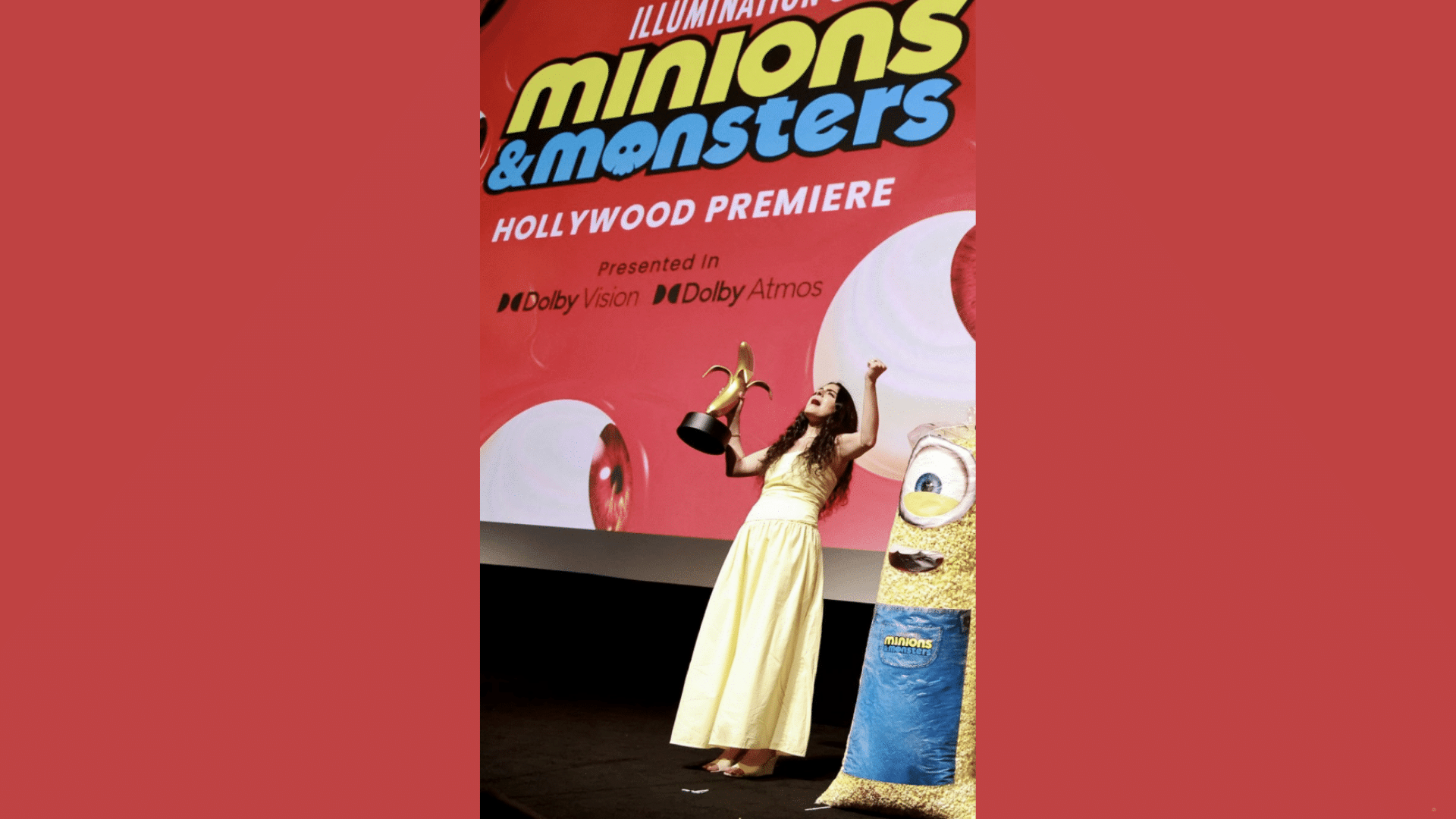
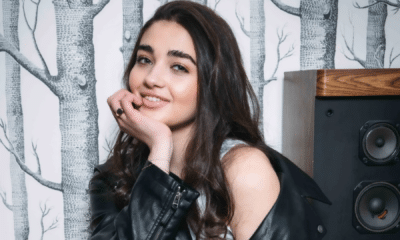
Forty-eight hours before singer and impressionist Rynia Kando took the stage at the Hollywood premiere of “Minions & Monsters,” she did not know she would be there at all. Universal had reached out, offered to cover her trip, and asked her to sing in Minionese, the made-up language she had been performing for years.
Rynia, 26, grew up in Chicago and has spent six years turning celebrity and cartoon impressions into a full career, a path that started on TikTok in 2019 and now spans TikTok, Instagram, and YouTube to more than 3.5 million followers.
What began as a way to make a friend laugh became her defining skill, then her livelihood. A stubbing-toe trend she invented in 2020 caught the attention of Jimmy Fallon and turned into her first real breakout. The same routine has since carried her onto “Wild ‘N Out,” “America’s Got Talent,” and now a movie studio’s guest list.
Rynia’s core belief has not changed since she started. “I always say if I make people laugh and smile, I did my job,” she says. “That’s all I want to do.” It is a modest mission statement for a career that has taken her from a private joke to a studio premiere, and it explains why she keeps building new formats around one skill instead of settling into a single lane.
A Stubbed Toe Trend, Rebuilt Twice, Each Time Bigger
Rynia started posting celebrity voices on TikTok in 2019, when the app still felt, in her words, “kind of like a niche thing.” One early video of her regular impressions did better than the rest, enough that she noticed the pattern.
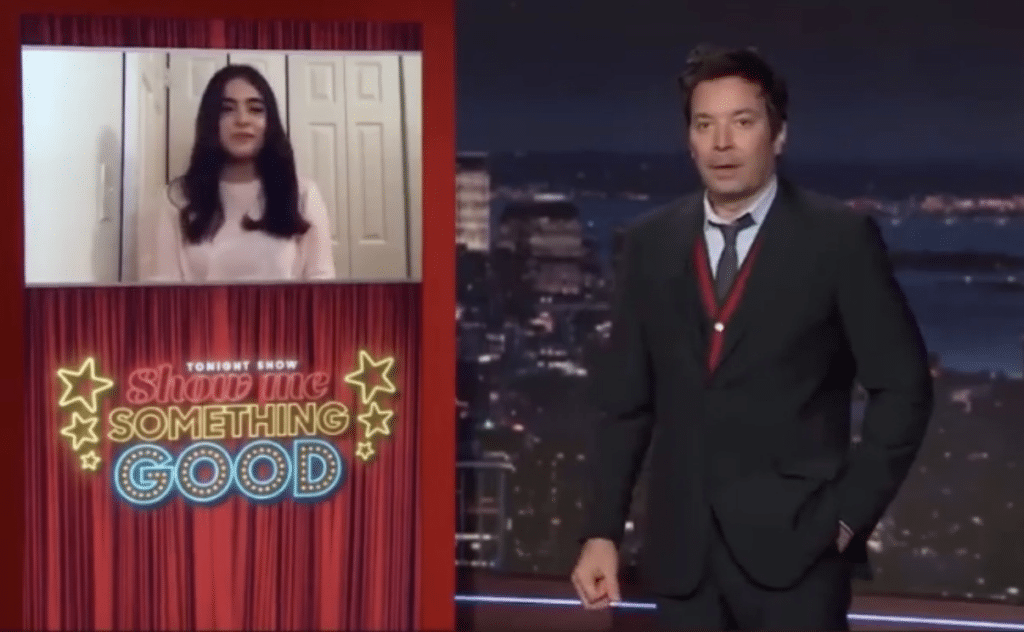
In 2020, she built on it with an original bit that reached Jimmy Fallon. “That went super viral,” she says. “A lot of people know me today based on that.” She returned to the format in 2024, and that version outperformed everything before it. “For some reason, the version in 2024 surpassed all other versions I’ve done throughout the years,” she says.
The pattern cuts both ways. Some of Rynia’s ideas now travel so widely that they no longer trace back to her at all. “Sometimes it gets too big and too lost in the mix that it can’t be traced back to me,” she says. “That’s just what I’m going through right now, unfortunately. That sucks, but I’ll take it.”
The Daily System Behind the Voices
Behind the impressions is a routine built on repetition. Rynia aims to post once a day across TikTok, Instagram and YouTube, though a missed day is strategic rather than a failure. “Sometimes, a video that goes viral needs more traction, time to reach its full potential before I could post again,” she says.
Filming happens in bursts. “A lot of creators, including myself, like to do something called bulk recording,” she says, “which is when you record a lot of stuff in one day or two days for the week, and then you batch them out for the rest of the week.”
The ideas arrive constantly. “I’m writing ideas in my notes app. I’m in the shower thinking of content,” she says. “Always thinking about content 24/7.”
Her core audience sits between 18 and 27, though she says her comments regularly include far older and younger viewers drawn in by the format itself.
What a Brand Buys When It Buys an Impression
Rynia’s act does not fit a single label, and she says brands often struggle with that first. “Sometimes, it’s weird working with me because people put me in a box,” she says. “They’re like, ‘Oh, you’re a comedian. No, you’re a music influencer. No, you’re this or that.’ I don’t put myself in a box.” The category she has settled on is comedy, since that is what reliably goes viral for her.
That specificity shows in the deals she lands. She built a Discover campaign around a Jennifer Coolidge impression, worked with the Chicago restaurant chain Portillo’s on a series filmed inside its locations, and partnered with State Farm on a campaign built entirely around her singing voice, no characters at all.
Brand deals now cover most of her income, a shift she ties to changes across every platform she posts on. “Back in the day, all the algorithms paid better on each platform, but now they’re all changed,” she says. “I’m so dependent on brand deals, which is also scary as well because it’s not consistent,” she says. Rynia is aware, too, that her narrower niche likely caps her earnings relative to a beauty or lifestyle creator with a similar following.
The Copyright Line Every Impression Has to Clear
Turning celebrity voices into paid campaigns comes with legal boundaries that shape Rynia’s editing more than her performing. “Sometimes, you cannot use pictures because it’s copyright or it’s like a paparazzi photo,” she says. “You cannot use licensed pictures, and you cannot say their name.”
Her workaround is mostly a production choice. She has moved from writing a celebrity’s name on screen to letting a photo imply who she is voicing. One brand went further and barred her from naming or picturing the subject at all, then built the restriction into the campaign itself. “They turned [it] into a game that causes more engagement,” she says. Rynia treats it as a format decision, not a burden. “It’s not even a big [deal],” she says. “It’s like, ‘Okay, text, photo, or whatever.’”
That caution has kept her from launching merchandise. Outside offers have felt unreliable, and she has not settled on the single catchphrase, something like her own aside, “Hey, aren’t you the girl [who] does impressions,” that a real product line would need.
What Changed Once an Agent Was Reading the Contracts
Before Rynia signed with CESD Talent Agency, she negotiated for herself, without knowing what her work was worth. “I was very naive to the world of brand deals,” she says. “I would let brands step all over me.”
Her agent, Eddie Pietzak, introduced protections she had not known to ask for: redlining, exclusivity terms, and limits on how many days a brand could keep her content live. “There’s so many legal things that he knows,” she says. “He deserves every penny that he gets out of a brand deal from me because I know that he knows what he’s doing and I trust him.”
That same structure put her in the room for the “Minions” premiere. Universal reached out with 48 hours’ notice and offered to cover her travel so she could perform a Minion-language piece on stage. Rynia assumes someone at the studio had been tracking her impressions work specifically, since several other TikTok impressionists in the same niche are her friends. “I felt so honored,” she says. “I was like, they chose me.”
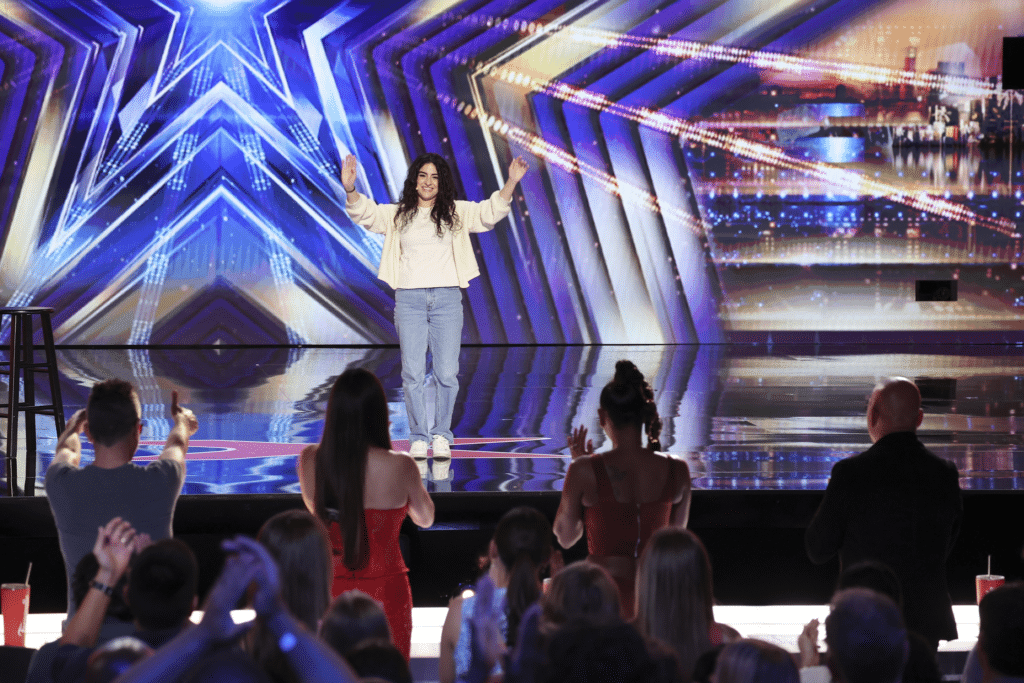
The same visibility carried her onto “America’s Got Talent,” though she is clear the show was not a strategy for growing her following so much as a use of the one she already had. On stage, she recalls, judge Mel B asked her directly why she had entered at all. Rynia saw it differently. “It’s something to do, and it’s very cool to put on my resume,” she says. “It’s a new audience seeing me, and there’s no shame in your game.”
The Ambition Waiting Behind the Voices
Rynia’s longer-term ambitions point toward “Saturday Night Live” and Broadway, though she says that goal has never shaped what she actually posts. The impressions came first, long before any traditional-media goal did. She traces it back to being the family’s class clown, someone who “always wanted to do voices and skits for people and just make people laugh.”
Still, the crossover keeps happening, built less on a single viral break than on a system she assembled herself: a recognizable trend, a daily posting habit, and representation that reads the contracts before she signs them. Rynia’s advice to other creators sitting on an unlikely skill is the one she has followed since 2019.
“If you’re talented or you think you are, or if you really have a love for something, post it and milk it, and don’t care what the comments say,” she says. “But milk it in a new way every time. I do celebrity impressions, and I keep coming back to a lot of the same ones, but I make sure I’m putting a new spin on it each time. Or I’ll jump on a trend that has nothing to do with impressions and find a way to fold my niche into it anyway. The niche stays the same, but the scenario changes every time. To be cringy is to be free.”
Subscribe to Our Newsletter
Check Out Our Podcast