





Influencer
The Body Language Creator Who Built an Audience by Refusing to Overclaim What Body Language Can Tell You

Every video on Logan Portenier’s “Observe” channel carries a disclaimer: the analyses are educated opinion, not evidence. In a content category where confident misreadings of crossed arms and darting eyes regularly pass for expertise, that caveat is doing more than legal work.
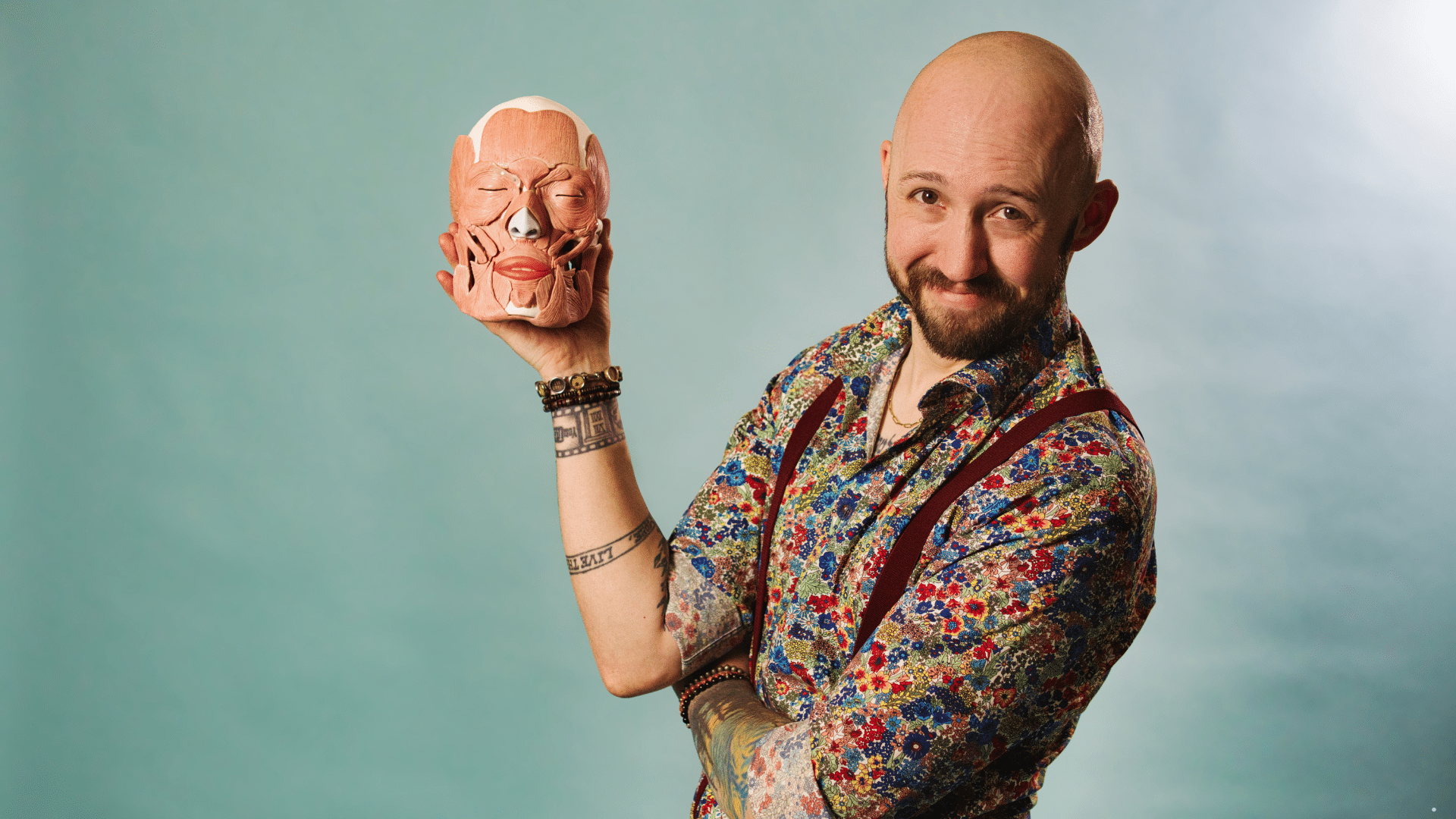
Logan is a nonverbal analyst with roughly 15 years of study in behavioral communication. His channel has grown to around 880,000 YouTube subscribers, a number that took years of posting to reach before the channel broke through around 2020. The business he has built since is organized, at every level, around the asset that the body language space on YouTube most consistently squanders: demonstrated rigor.
He came to that rigor through an unusual path. Growing up on a small farm in Montana, he read livestock by necessity and interpreted the taciturn ranchers around him by inference. “Ranchers, farm folks, they’re not necessarily the world’s best communicators,” he says. By university, he had identified nonverbal communication as a distinct discipline and was reaching out to researchers, including Joe Navarro and Paul Ekman’s team, assembling a methodology by, as he puts it, “Frankensteining and cross-referencing” what the field had to offer.
That approach defines how he runs the channel today. “I treat the responsibility of the size of the channel that I have heavily,” he says. “I don’t want to flippantly say things or direct people into a direction that they should be more knowledgeable in.”
Three Pins, Two Channels, Seven Seconds
The body language space on YouTube is not immune to pseudoscience, according to Logan. Channels present individual behavioral cues as binary signals, declaring that a particular eye movement or arm position guarantees deception. Logan’s methodology operates from the opposite premise.
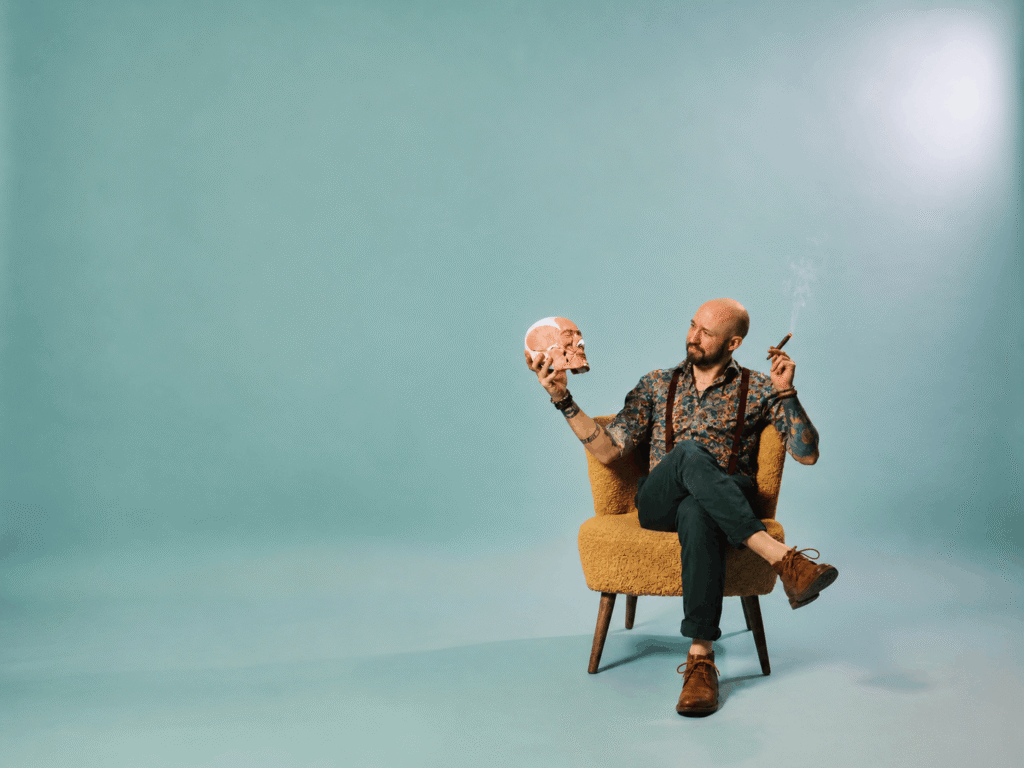
He uses a six-channel analysis system, scanning communication across six distinct signal categories from the human body. A meaningful read requires what he calls pins: two or three points of interest across at least two different channels, all within seven seconds of a relevant stimulus. Anything short of that threshold, he argues, could be a muscle twitch or an itch. “If that doesn’t happen, it could just be a fluke,” he says.
Baseline matters as much as the pins. Without knowing how a person normally presents, Logan argues, any single cue means very little. “You have to take in mind your context. You have to take in mind the account and the baseline to be accurate,” he says. “If you don’t, you’re barely above guessing.” With the right process and skills in place, he contends, accuracy can reach 95 to 100 percent.
That distinction is something Logan actively teaches his audience to apply to other channels. “Be cautious of anybody who is selling the [idea that] I have the guaranteed answers on this,” he says. His broader concern is that pseudoscientific presentations in the space make audiences write off the field entirely, treating one bad practitioner as evidence against the discipline.
The Viewers Who Needed the Information Most
“Observe’s” content pipeline runs on three tracks: trending news events, incoming audience requests, and a standing reserve list of criminal cases Logan returns to when neither of the first two produces material. True crime functions as evergreen inventory. “No matter what we do, we will never get away from true crime documentaries,” he says. “I will inevitably do analysis on something and then a couple years later there will be a documentary about it.”
The audience that assembled around that content surprised him. Early subscribers were a niche group drawn through psychology and behavioral science interests, joined later by the true crime community and viewers who found the channel through celebrity and drama coverage. But the group with the most unexpected impact came from a direction he had not anticipated.
Logan says a meaningful portion of “Observe’s” audience has autism. Nonverbal cues that most people process unconsciously are precisely what this group struggles to interpret, and Logan’s format, which breaks down individual signals, names them, and explains their interpretive weight, functions as a practical guide. “I was shocked to see how many people would reach out and just be like, hey, I have been struggling at work or struggling in my relationship or struggling with my social relationships so much because I can’t pick this up,” he says.
The Honey Fallout and the Partnership He Spent a Decade Earning
Logan turns down the majority of sponsorship inquiries, and his team vets brands before he agrees to a segment. The process has still produced miscalculations: he ran ad segments for Honey before controversy around the browser extension’s business practices emerged, and when the information became public, his audience noticed. “I can’t be upset at people for being like, ‘What did you do?’” he says. “I’m not a perfect judge of character.”
The counterpoint is the partnership he built with EmotionIntell, a UK-based firm that trains professionals in high-stakes communication and credibility analysis, drawing on Ekman’s research. Where the Honey arrangement came through standard brand outreach, the EmotionIntell relationship developed over years, driven by Logan’s interest in what their researchers knew. For someone who had spent his formative years reaching out to Ekman’s circle for methodology wherever he could find it, the eventual collaboration carries a different weight. He describes it as “otherworldly”: “to now being able to legitimately partner with one of the teams that helped pioneer the science to begin with.”
EmotionIntell, he says, wanted to understand how he had built genuine engagement around a subject most people find difficult to make compelling. Taking a niche that “is difficult to get people to genuinely be interested in” and sustaining growth around it is a skill set the company wanted to study. The arrangement, Logan suggests, runs in both directions.
The Faces AI Cannot Fake
Logan anticipated that advances in AI image generation would eventually raise questions about the relevance of nonverbal analysis. The actual effect has been the opposite.
According to Logan, the problem for AI-generated video is muscular specificity. Human expressions emerge from muscle contractions; synthetic faces map emotional patterns to a surface without that underlying drive. The result is what he calls morphing: a face appears to shift expressions, but without muscular motivation, the transition reads as pattern change rather than lived response.
He has produced content specifically to help viewers identify the tells in AI-generated video, focusing on clipped footage length, unnatural expression holds, and transitions that human visual perception registers as wrong before conscious reasoning catches up. Logan’s conclusion is that the current moment, when audiences cannot always verify whether the face they are watching is real, creates a specific function for a trained analyst. “It’s only made nonverbal analysis like this more useful, in my opinion,” the creator says.
The Real Project Was Never the Channel
Logan frames “Observe’s” current state explicitly as a bridge, and the projects he has in development share a common logic. He is building what he calls “the world’s first ultra-high-resolution slow-motion catalog” of micro-expressions across different ethnicities and gender presentations, because existing reference materials reduce to a neutral face that flashes briefly to an expression and back.
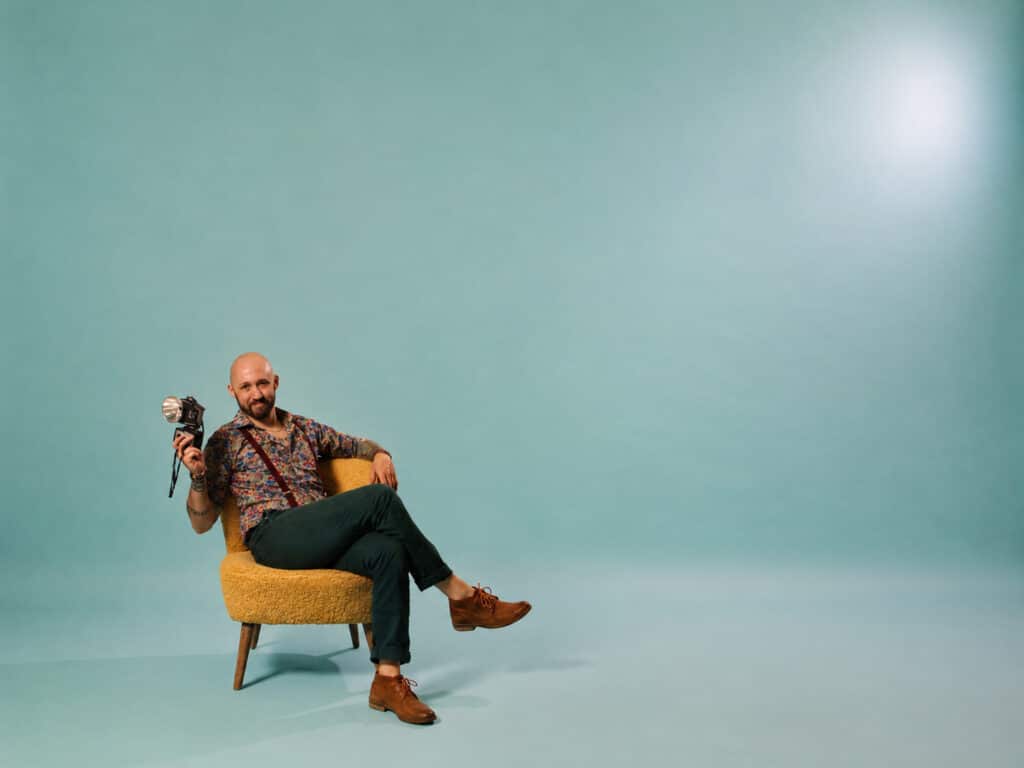
“A robot will flash an expression,” he says. “People don’t move that way.”
He is also developing a documentary on nonverbal communication and, through the Observe brand, an eventual academy that would make his assembled methodology teachable. The common thread across all of it is the same logic that produced the disclaimer on his YouTube videos: that the field deserves better sourcing than it currently has, and that building infrastructure around verified methodology is a longer and more interesting project than chasing views. “I always have a lot of plans,” he says. “My ADHD rarely lets me just sit and stew for long.”
For a creator who took eight years to break through on YouTube, that patience is not a constraint. “Bigger things are still in the works,” he says. “Definitely a part of the plan.”
Subscribe to Our Newsletter
Check Out Our Podcast