





Influencer
Sarah Trott Is Building ‘From Here to Where’ on Knowing What Brands Actually Want From Creators

A YouTube travel vlog changed Sarah Trott’s plans. While researching a sabbatical to Asia, she and her then-fiancé watched a day-by-day account of a Mount Everest base camp trek until they decided to attempt the route themselves. Two years later, she is making that same kind of content for someone else to find.
Sarah is a former broadcast journalist who spent years reporting and anchoring at network affiliates before leaving the industry to care for her father following an amyotrophic lateral sclerosis (ALS) diagnosis. What followed was a caregiving advocacy community, a podcast, and a decade of content and digital marketing roles before arriving at what she calls her true passion: travel storytelling. “From Here to Where,” her YouTube channel, launched this month with a Ritz-Carlton cruise video as its first episode and a queue of material from the Asia sabbatical she says started it all.
What makes her position unusual is a parallel role. As Associate Director of Content & Brand Development at VAI Resort, a luxury entertainment destination in Arizona she says is scheduled to open in 2028/29, Sarah has spent two years shaping brand storytelling from the operational side. The vantage point colors how she approaches her own creator business. Brands, she argues, are no longer commissioning creators primarily for audience size.
“It’s for the creative direction, the level of production and the storytelling components that have more longevity than just exposure,” she says.
An Anchor Desk Education
Sarah grew up watching the nightly news partly to avoid homework, and the female journalists on screen became her first model for a media career. She enrolled in journalism school at the University of Missouri and spent several years reporting and anchoring at network affiliates before moving to a morning anchor role in Palm Desert. “The real influencers at the time were female journalists,” she says of that period, two decades before “influencer” acquired its current meaning.
The departure from broadcast was a family emergency, not a creative dissatisfaction. Sarah left her anchor position to care for her father after his ALS diagnosis, a transition that prompted the original “From Here to Where,” a career-stories podcast for young women navigating difficulty in their twenties.
The journalism method carried across formats. “I was asking a lot of women their career stories, the lessons that they learned,” she says of those episodes. “And now I’m taking that same journalistic approach to travel. The brand has evolved to where I am at in my current life.”
The Everest Calculation
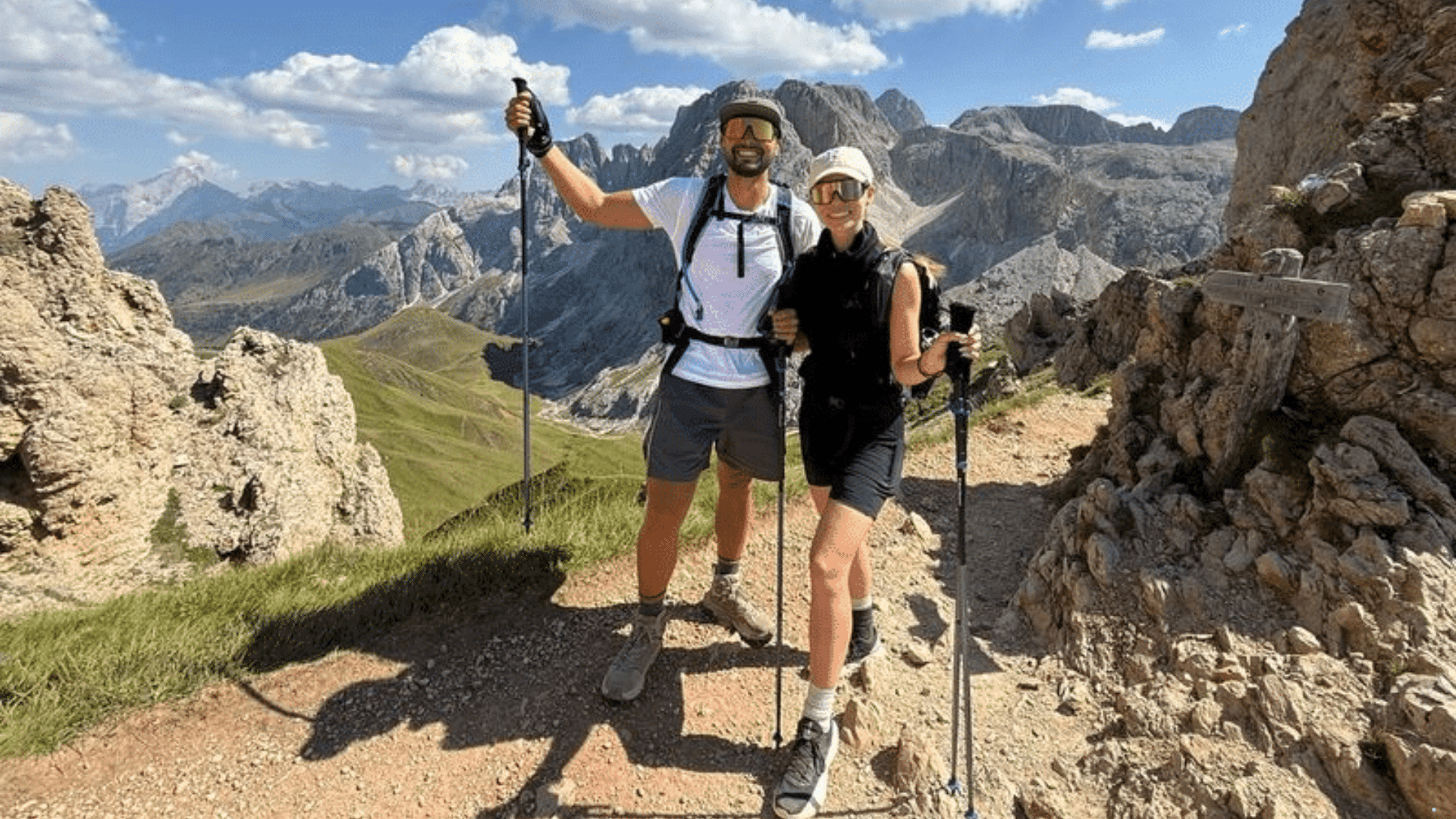
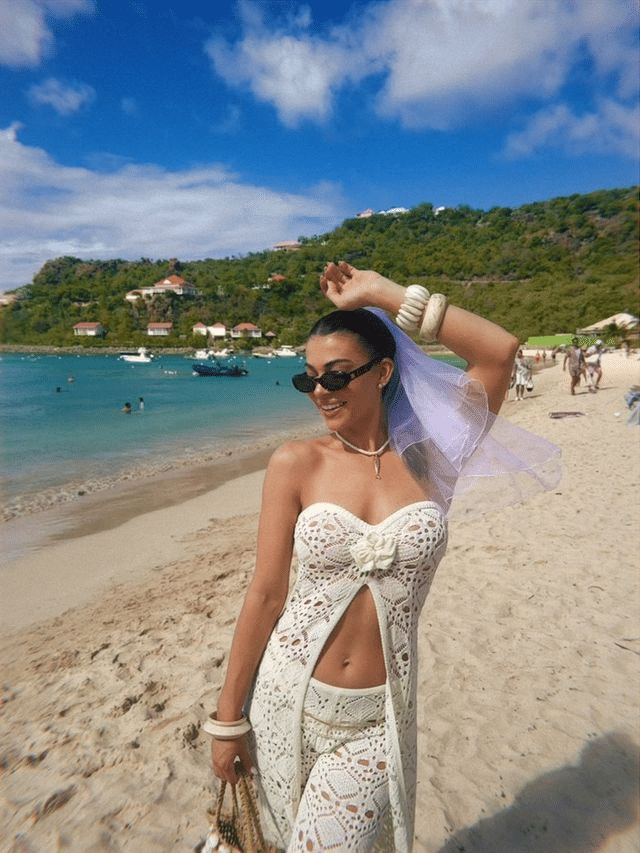
The Ritz-Carlton video is not the story Sarah reaches for when explaining why she built the channel. That story belongs to the Everest base camp trek. She and her fiancé discovered the route through a YouTube vlog, watching a creator’s day-by-day footage until they booked the trip themselves. The trek ran ten days to the point where summit climbers begin their ascent. “I saw a vlogger post the day-by-day journey, and my fiancé and I watched that, and we said, ‘That’s incredible,’” she recalls. “And it inspired us so much that we did it ourselves. And now we are making content to show others how we did it, the pros and cons.”
The experience also sharpened a niche. Sarah describes herself as someone her audience would not expect to find on a gritty ten-day mountain climb, a person who, as she puts it, always has a manicure. “From Here to Where” threads that image with experience: a personal guide on the Everest approach, premium accommodations, a helicopter to the trek’s starting point.
“On YouTube, you see a lot of backpacking travel, budget travel, and this channel is luxury, but also experiential,” she says.

What the Brand Side Reveals
Sarah’s current role at VAI Resort placed her inside a decision process most travel creators observe only from the outside. Among her first projects was a multi-episode documentary series profiling the development’s chefs, designers, and entertainment executives, building brand narrative before the resort opens.
Her clearest data point from the creator side is the Wynn Resorts partnership. Its “Maison Wynn” campaign, which positioned a weekend at the property beyond its casino offerings, brought Sarah back four or five times on repeat engagements. “That is really what I think makes the difference for both brands and creators to have that kind of consistency,” she says.
The direction she describes is visible in how hospitality brands are now briefing campaigns. “Nowadays, viewers are really smart, and they can tell, ‘Okay, this is an ad,’” she says. “Brands, hospitality brands want their partnerships to feel and look very organic.”
Repeat arrangements, she argues, are where the industry is moving. Single-post deliverables are giving way to longer engagements in which creators function as consultants and collaborators in brand creative direction. “I think there’s more of a two-way conversation that’s happening to create really meaningful and organic posts,” she says. Her filter for her own partnerships follows from that logic. She declines skincare and supplement deals because the category falls outside her established domain. “I think where I am the expert in is travel,” she says.
The AI Argument for Being Recognizable
Sarah expects AI’s expansion in the Creator Economy to strengthen the case for being human rather than threaten it. She projects that AI-generated carousel posts and text-overlay content will saturate feeds to a point where audiences struggle to distinguish produced content from generated content.
“When AI can churn out carousel posts with text overlays by the dozens, it’s really going to oversaturate the amount of content that consumers are seeing,” she says. “And I think a lot of the content on social media may start looking the same.”
The filter-preset era of early social media photography, which made destinations look almost unreal, faded as audiences shifted toward on-camera, lower-production content. She expects AI-generated saturation to trigger a comparable rotation, though she acknowledges the form is hard to predict. The underlying dynamic, she argues, will hold: when the surrounding content homogenizes, the creator who is distinguishable wins.
Long-Form as the Longer Game
The name “From Here to Where” has held through three versions of Sarah’s career: a broadcast journalism career she departed, a podcast she eventually closed, and a YouTube channel she is only beginning.
Success, she says, has a different meaning now than it did when she was chasing likes in her early posting days. “It is really about inspiring others and getting the story right and telling thoughtful, curated, journalistic-style narratives like ‘From Here to Where,’” she says.
For a creator who has also spent two years working inside a brand’s content operation, the prediction has a different weight. “I think it’s less going to be about transactional partnerships and quick exposure to creators becoming long-term ambassadors, consultants and creative collaborators with brands,” she says.
Subscribe to Our Newsletter
Check Out Our Podcast