




Strategy
Later’s CEO Is Betting Curated Conversation Beats the Marketing Conference Panel

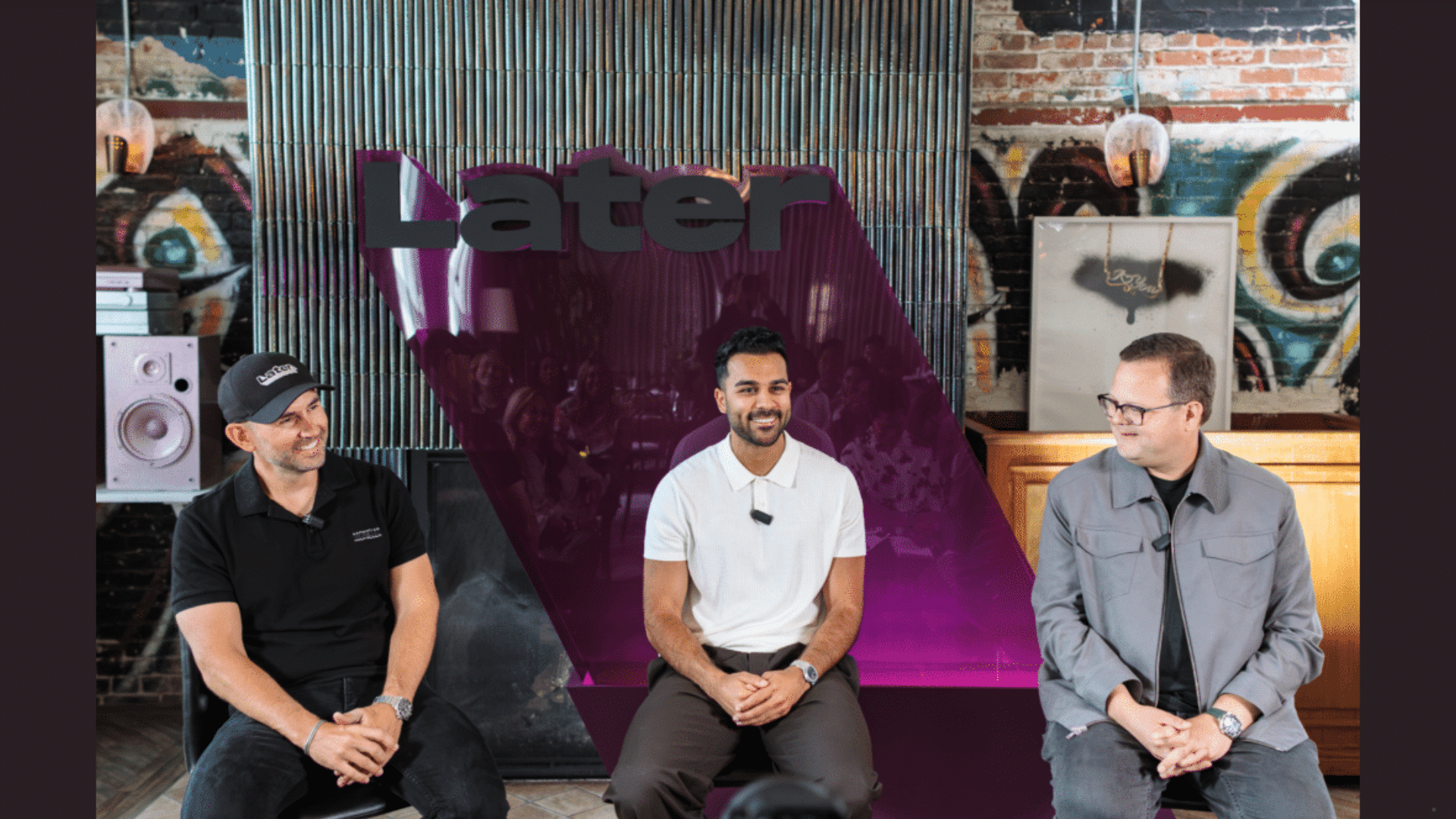
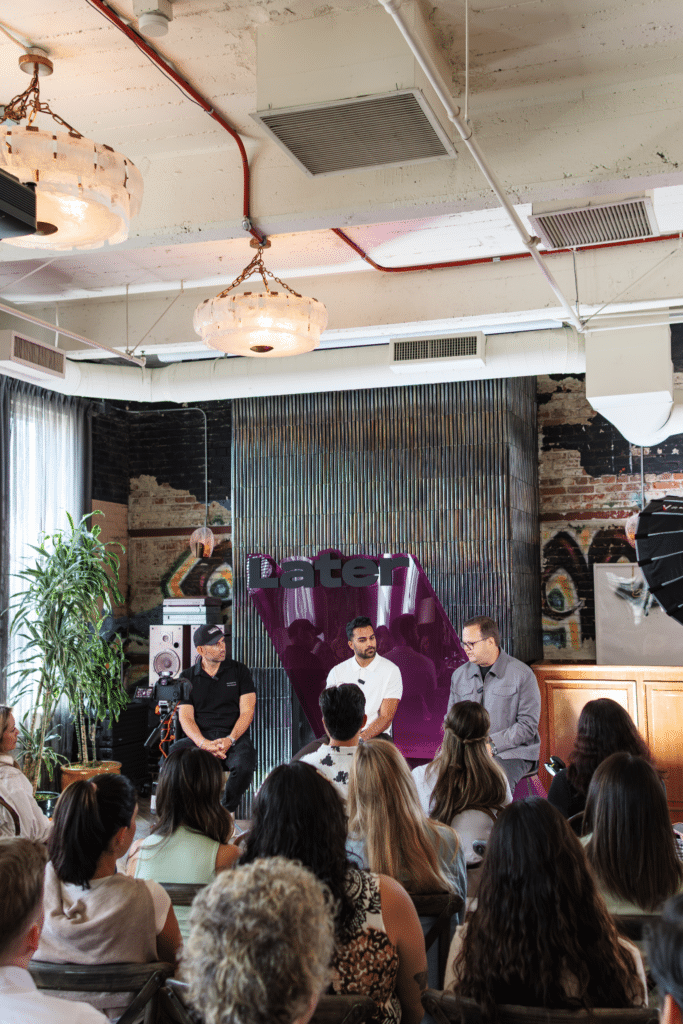
Scott Sutton has a problem with the standard marketing conference: a sponsor booth, a stage, and speakers reciting whatever their legal team approved. As CEO of the marketing technology company Later, he built a private event series called the “Made You Look Tour,” around a different bet: useful insight in the Creator Economy comes from curated conversation rather than corporate stage time. The first stop launched in Los Angeles this month, co-hosted with YouTube and capped well before the date arrived.
Scott traces the problem to a pattern rather than one bad conference. “It’s the lazy event paradigm that we’re living in, which is a booth and a panel,” he says. Good panels exist, in his view, but most speaking slots go to whoever’s marketing or legal team signed off on the script.
That dynamic crystallized for him at a conference he attended weeks before the Los Angeles launch. A strong interview segment was followed by a sponsor who took the stage alone to pitch his company for 20 minutes. It was, Scott says, “the most forced” segment of the day.
His standard for what belongs on stage is simple. “I don’t want the PR version that your marketing person or your legal person told you to say,” he says. “I want real conversation, I want real insight, I want the truth.” That standard, more than any single event, is what led him to build the Made You Look Tour, Later’s private series pairing brand executives, platform leaders, and creators in small, invite-only rooms instead of convention-hall panels.
Scott has run Later, the marketing technology company behind the tour, since February 2024, after six months as COO and, before that, nearly five years at ZoomInfo. Later serves Fortune 5000 brands such as Walmart, Procter & Gamble and Mastercard alongside a self-serve product used by more than eight million accounts.
That range, brand-side services on one end and a mass-market tool on the other, underpins what Scott describes as Later’s mission. “We want to maximize creator earnings, we want to maximize brand growth, and we want to steward the Creator Economy,” he says.
The Series Is Built to Manufacture Connections
Behind the small-room format sits an observation Scott makes about creators generally. Despite large audiences, he says many operate without peers who understand the specific pressures of the job, describing it as “a kind of lonely existence.” The series is designed to address that isolation through structure rather than chance encounters, with curated conversations, discussion prompts and workshop segments meant to seed relationships that outlast the event itself.
Scott points to two earlier examples. At a Cannes event Later hosted, both Southwest Airlines and creator Connor Wood appeared; the two have since filmed content together, according to Scott. At another event, an NFL player showed up after learning a specific brand would be there, and Scott says he messaged both parties directly, leading to conversations about a potential deal.
Neither anecdote was the product of a formal matchmaking program, Scott notes. They were what the format is meant to produce going forward.
A Playbook for ‘Graceful’ Monetization
Beyond the event format, Scott describes a recurring problem among the creators and brands Later works with: fragmented experimentation rather than a coherent approach. Creators try a new tool as it appears, keep it if it works, and drop it if it doesn’t, he says, calling the result “individual experiments, not a holistic strategy.”
His coaching varies by where a creator sits on that curve. Scott recalls asking a creator with more than 20 million subscribers why he skips affiliate links altogether. His answer, as Scott recounts it: “I just don’t want to be that guy.” He cites MrBeast as a similar case, a creator who has largely sold his own products rather than linked to others’.
For creators willing to link, Scott points to a subtler model: a creator can share product links only when asked, framing the post as a favor rather than a pitch, “because so many of you asked.” Scott also flags an underused channel for the cohorts in between. “A lot of people have no idea how powerful Facebook can be as a monetization tool,” he says. On platforms with live shopping, he advises understanding TikTok Shop’s affiliate mechanics before attempting to sell live, since, in his words, “Live is a very different beast than just a traditional posting.”
The YouTube and Snap Integrations Feed the Format
Later’s platform partnerships extend the tour’s reach beyond conversation. The company integrated with YouTube’s BrandConnect API, which Scott says gives Later direct access to creator data that helps it “better match YouTube creators with brand opportunities.” Andrew Peterson, YouTube’s Head of the Creator Economy Ecosystem, joined the Los Angeles fireside chat alongside Scott and creator Adam W.
A similar integration with Snap gave Later “access to their data and visibility” for roughly 200,000 creators on that platform, aimed at brands that want to work with Snap but don’t know how to evaluate it.
The Los Angeles session’s published agenda also addressed how artificial intelligence is changing discovery, including creator content’s growing role as a visibility signal in answer engine optimization, alongside how brands measure creator performance from discovery through conversion.
Vibe Curation, City by City
Later plans to extend the tour to New York, Chicago, Boston and Miami, with each stop expected to take on a different character based on its market. Scott frames the approach through what he calls vibe curation, the same principle he sees shaping back-to-school marketing away from checklists and toward mood. “Miami is going to feel different than New York is going to feel different than LA,” he says.
Scott ties the expansion back to the premise that shaped the Los Angeles launch: stewarding the Creator Economy, rather than extracting from it, is what earns Later a place in it. Whether that holds will depend on whether future stops produce the kind of connections Scott points to from Cannes, rather than reproducing the booth-and-panel format the series was built to avoid.
“I am excited to see it come to life,” Scott says.
Subscribe to Our Newsletter
Check Out Our Podcast