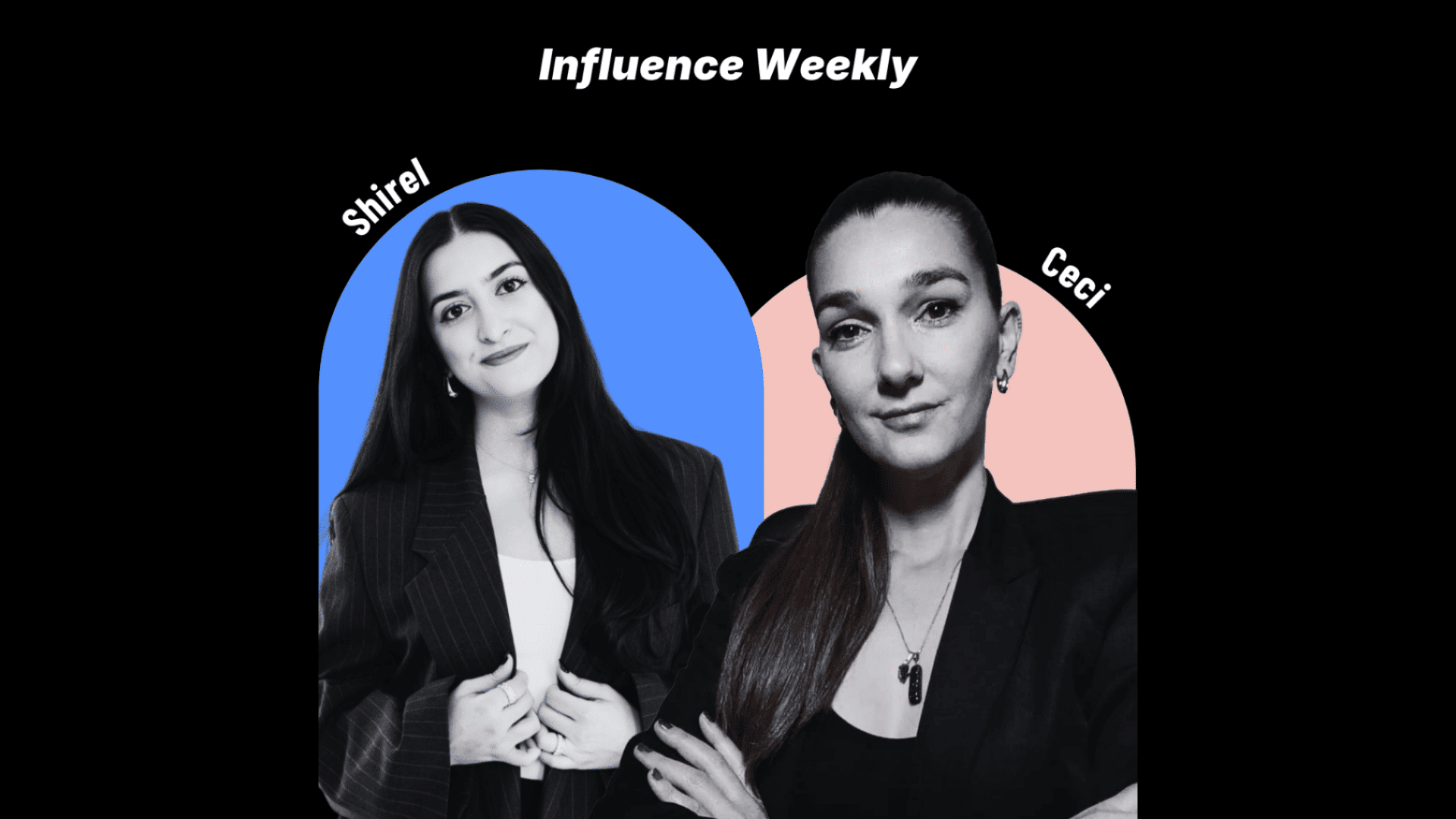
Shirel Benji Yero spent over six years watching brands set influencer rates off follower counts. Platform algorithms have since changed how content reaches audiences, and the measurement logic behind that number has broken down. The pricing and approval infrastructure hasn’t moved with it.
Shirel is the founder and CEO of Creator Origin, a boutique Influencer Marketing agency she launched in 2024 after nearly three years as an account manager at Open Influence. The agency runs full-funnel campaigns across CPG, fashion, beauty, health, and financial services brands, managing strategy, sourcing, contracting, content management, and reporting.
She sat down with Net Influencer Senior Editor Ceci Carloni to discuss what has actually replaced follower count as a buying signal, how brands should structure creator campaigns when measurement and pricing don’t agree, and why the industry’s rate negotiations have become, in her words, the “Wild, Wild West.”
1. Platform Algorithms Changed How Content Reaches Audiences
The distribution model that once made follower count a reliable proxy for audience delivery no longer holds.
“It used to be that when you get on a platform, you’re being shown the content of people that you follow,” Shirel said. That’s no longer how most platforms operate. TikTok’s For You Page established the discovery-first model, and Instagram and YouTube have adopted similar approaches. Content now reaches users who don’t follow the creator, surfaced by recommendation algorithms tuned to content relevance.
Shirel argues the shift benefits the full ecosystem. Creators build audiences outside their existing networks. Brands access creators for discoverability rather than for audience size alone. “The platforms got smart with this,” she said. “They’re capitalizing on discoverability and pushing content to people that might not even be following that person.”
Follower count is still relevant, she said, but only as part of a larger set of signals: reach, recent viewership, engagement rate, and sponsored post performance.
2. Relevance Is What Converts
Creator Origin operates on a stated principle: relevance over reach. That means evaluating creator accounts not for audience size but for credibility within a specific content category.
“You’re pretty much buying that person’s credibility,” Shirel said. An account that consistently generates viewership in a narrow niche, where comments reflect purchase intent, demonstrates trust that follower count doesn’t capture. She treats repetitive generic comments as a red flag regardless of the aggregate engagement rate.
Nano and micro creators carry an advantage here. Smaller accounts tend to engage directly with followers, responding to comments and DMs. “Their audiences feel a bit closer to them,” she said. “They actually oftentimes trust their recommendations more than a larger creator who maybe they’re just posting sponsored content all the time.”
3. Not Every Creator Is an Influencer
Shirel draws a hard line between influencers and creators, and argues conflating the two leads to sourcing mistakes.
An influencer has generated behavioral change in an audience. She points to Alix Earle as the clearest example: “Whatever she promotes turns to gold. Her audience is like, ‘I’m buying this right now.’” The influencer’s value is persuasive force with a specific audience in a specific category.
A creator may produce high-quality content without generating that behavior. Smaller accounts that specialize in production, particularly UGC-style content, can supply assets brands use across paid social, websites, and promotional materials. “Brands are realizing they can capitalize on these smaller creators and not pay, like, hundreds of thousands of dollars for production in studio,” Shirel said.
Booking a creator-type account for an influence-based objective, or an influencer-type account for content production, is a misallocation, according to Shirel. The distinction governs which account belongs in which brief.
4. Campaign KPIs Should Drive Account Mix
The debate over nano versus mega creators misses the actual decision variable, according to Shirel. Campaign structure should follow KPIs, and KPIs vary by brand.
For awareness objectives, reach matters more than engagement rate. Mid-tier and macro accounts reliably deliver consistent impressions. “If they’re constantly getting that reach on their posts, we know we can tell a brand: tap into this account for awareness,” she said.
For conversion and engagement objectives, smaller accounts outperform. Shirel describes a Seattle pop-up activation involving more than 40 nano and micro creators, most with fewer than 20,000 followers, focused on local food and experience content. The smallest accounts drove the strongest comment engagement and measurable foot traffic. “There was a line out the door,” she said.
Her recommended structure, when budgets allow, is a mix: some allocation toward larger creators for awareness, with remaining slots filled by nano and micro accounts targeting conversion.
5. Manual Vetting Still Catches What Fraud Tools Miss
Creator fraud detection tools have become standard in the vetting process. Shirel uses them and doesn’t treat them as the final word.
Her team starts with bot-detection software to flag accounts where a major share of followers appears inauthentic. Shortlisted creators are asked to share screenshots from their last five sponsored posts, which are compared against organic benchmarks. Audience demographics are reviewed for geographic alignment with campaign targets.
The most useful tell often surfaces in manual comment review. Shirel describes reviewing an account with strong average engagement metrics whose comments, read individually, were all variations of the same phrase. “It felt very bot-like,” she said. “And that’s something the tech didn’t detect.”
“Tech can sometimes not always detect everything,” she said. “Manual vetting is still very important.” The combination matters because fraud patterns have evolved past what early automated systems were built to identify.
6. Follower Tier Still Sets Rates
Follower count still drives creator rates. Shirel’s argument is that the industry’s pricing infrastructure hasn’t kept pace with its measurement logic.
“People are throwing out numbers left and right, and there is no rhyme or reason as to how they got to these numbers,” she said. Talent managers negotiate on behalf of creators, and Shirel said she has received rate quotes for nano and micro accounts comparable to mid-tier or macro accounts, with no consistent justification tied to the metrics now understood to differentiate value.
Follower tier remains the working planning proxy. Brands set a campaign budget, while agencies estimate creator access at each tier and back-calculate from there. Actual rates are negotiated individually. “A lot of times when I’m pricing a campaign, we do have to use follower tier as a baseline to understand the ballpark,” Shirel said.
She argues a standardized calculator would give both sides a defensible floor, with inputs for follower count, engagement rate, view rate, exclusivity, and usage rights. “I think it would be like a baseline and then plus or minus, depending on what exactly you charge for your service,” she said.
7. The 80% Budget Case a CMO Should Be Making
Shirel’s prescription for a CMO willing to act on the measurement shift: move creator spend to approximately 80% of the total marketing budget.
“I’m really, really seeing the value in the ROI of creators just every day proving it out with more and more brands,” she said. That shift pairs with a commitment to paid amplification. Creator content has a short organic shelf life, and the ROI case strengthens when usage rights allow assets to run across paid channels for months after organic posting.
The internal approval challenge remains substantial. CMOs at established brands are approving budgets based on follower counts they recognize. The tactic Shirel recommends is to run a mixed campaign, let smaller accounts prove their performance in the results, then use those numbers to shift the conversation. Brands like Dove, she noted, are activating nano and micro creators at scale and amplifying on paid. “A lot of brands are finally catching on,” she said. “Not all of them. It’s probably gonna take another decade.”
Cecilia Carloni, Interview Manager at Influence Weekly and writer for NetInfluencer. Coming from beautiful Argentina, Ceci has spent years chatting with big names in the influencer world, making friends and learning insider info along the way. When she’s not deep in interviews or writing, she's enjoying life with her two daughters. Ceci’s stories give a peek behind the curtain of influencer life, sharing the real and interesting tales from her many conversations with movers and shakers in the space.















Shirel Benji Yero spent over six years watching brands set influencer rates off follower counts. Platform algorithms have since changed how content reaches audiences, and the measurement logic behind that number has broken down. The pricing and approval infrastructure hasn’t moved with it.
Shirel is the founder and CEO of Creator Origin, a boutique Influencer Marketing agency she launched in 2024 after nearly three years as an account manager at Open Influence. The agency runs full-funnel campaigns across CPG, fashion, beauty, health, and financial services brands, managing strategy, sourcing, contracting, content management, and reporting.
She sat down with Net Influencer Senior Editor Ceci Carloni to discuss what has actually replaced follower count as a buying signal, how brands should structure creator campaigns when measurement and pricing don’t agree, and why the industry’s rate negotiations have become, in her words, the “Wild, Wild West.”
1. Platform Algorithms Changed How Content Reaches Audiences
The distribution model that once made follower count a reliable proxy for audience delivery no longer holds.
“It used to be that when you get on a platform, you’re being shown the content of people that you follow,” Shirel said. That’s no longer how most platforms operate. TikTok’s For You Page established the discovery-first model, and Instagram and YouTube have adopted similar approaches. Content now reaches users who don’t follow the creator, surfaced by recommendation algorithms tuned to content relevance.
Shirel argues the shift benefits the full ecosystem. Creators build audiences outside their existing networks. Brands access creators for discoverability rather than for audience size alone. “The platforms got smart with this,” she said. “They’re capitalizing on discoverability and pushing content to people that might not even be following that person.”
Follower count is still relevant, she said, but only as part of a larger set of signals: reach, recent viewership, engagement rate, and sponsored post performance.
2. Relevance Is What Converts
Creator Origin operates on a stated principle: relevance over reach. That means evaluating creator accounts not for audience size but for credibility within a specific content category.
“You’re pretty much buying that person’s credibility,” Shirel said. An account that consistently generates viewership in a narrow niche, where comments reflect purchase intent, demonstrates trust that follower count doesn’t capture. She treats repetitive generic comments as a red flag regardless of the aggregate engagement rate.
Nano and micro creators carry an advantage here. Smaller accounts tend to engage directly with followers, responding to comments and DMs. “Their audiences feel a bit closer to them,” she said. “They actually oftentimes trust their recommendations more than a larger creator who maybe they’re just posting sponsored content all the time.”
3. Not Every Creator Is an Influencer
Shirel draws a hard line between influencers and creators, and argues conflating the two leads to sourcing mistakes.
An influencer has generated behavioral change in an audience. She points to Alix Earle as the clearest example: “Whatever she promotes turns to gold. Her audience is like, ‘I’m buying this right now.’” The influencer’s value is persuasive force with a specific audience in a specific category.
A creator may produce high-quality content without generating that behavior. Smaller accounts that specialize in production, particularly UGC-style content, can supply assets brands use across paid social, websites, and promotional materials. “Brands are realizing they can capitalize on these smaller creators and not pay, like, hundreds of thousands of dollars for production in studio,” Shirel said.
Booking a creator-type account for an influence-based objective, or an influencer-type account for content production, is a misallocation, according to Shirel. The distinction governs which account belongs in which brief.
4. Campaign KPIs Should Drive Account Mix
The debate over nano versus mega creators misses the actual decision variable, according to Shirel. Campaign structure should follow KPIs, and KPIs vary by brand.
For awareness objectives, reach matters more than engagement rate. Mid-tier and macro accounts reliably deliver consistent impressions. “If they’re constantly getting that reach on their posts, we know we can tell a brand: tap into this account for awareness,” she said.
For conversion and engagement objectives, smaller accounts outperform. Shirel describes a Seattle pop-up activation involving more than 40 nano and micro creators, most with fewer than 20,000 followers, focused on local food and experience content. The smallest accounts drove the strongest comment engagement and measurable foot traffic. “There was a line out the door,” she said.
Her recommended structure, when budgets allow, is a mix: some allocation toward larger creators for awareness, with remaining slots filled by nano and micro accounts targeting conversion.
5. Manual Vetting Still Catches What Fraud Tools Miss
Creator fraud detection tools have become standard in the vetting process. Shirel uses them and doesn’t treat them as the final word.
Her team starts with bot-detection software to flag accounts where a major share of followers appears inauthentic. Shortlisted creators are asked to share screenshots from their last five sponsored posts, which are compared against organic benchmarks. Audience demographics are reviewed for geographic alignment with campaign targets.
The most useful tell often surfaces in manual comment review. Shirel describes reviewing an account with strong average engagement metrics whose comments, read individually, were all variations of the same phrase. “It felt very bot-like,” she said. “And that’s something the tech didn’t detect.”
“Tech can sometimes not always detect everything,” she said. “Manual vetting is still very important.” The combination matters because fraud patterns have evolved past what early automated systems were built to identify.
6. Follower Tier Still Sets Rates
Follower count still drives creator rates. Shirel’s argument is that the industry’s pricing infrastructure hasn’t kept pace with its measurement logic.
“People are throwing out numbers left and right, and there is no rhyme or reason as to how they got to these numbers,” she said. Talent managers negotiate on behalf of creators, and Shirel said she has received rate quotes for nano and micro accounts comparable to mid-tier or macro accounts, with no consistent justification tied to the metrics now understood to differentiate value.
Follower tier remains the working planning proxy. Brands set a campaign budget, while agencies estimate creator access at each tier and back-calculate from there. Actual rates are negotiated individually. “A lot of times when I’m pricing a campaign, we do have to use follower tier as a baseline to understand the ballpark,” Shirel said.
She argues a standardized calculator would give both sides a defensible floor, with inputs for follower count, engagement rate, view rate, exclusivity, and usage rights. “I think it would be like a baseline and then plus or minus, depending on what exactly you charge for your service,” she said.
7. The 80% Budget Case a CMO Should Be Making
Shirel’s prescription for a CMO willing to act on the measurement shift: move creator spend to approximately 80% of the total marketing budget.
“I’m really, really seeing the value in the ROI of creators just every day proving it out with more and more brands,” she said. That shift pairs with a commitment to paid amplification. Creator content has a short organic shelf life, and the ROI case strengthens when usage rights allow assets to run across paid channels for months after organic posting.
The internal approval challenge remains substantial. CMOs at established brands are approving budgets based on follower counts they recognize. The tactic Shirel recommends is to run a mixed campaign, let smaller accounts prove their performance in the results, then use those numbers to shift the conversation. Brands like Dove, she noted, are activating nano and micro creators at scale and amplifying on paid. “A lot of brands are finally catching on,” she said. “Not all of them. It’s probably gonna take another decade.”
Listen to the full conversation on “The Big Three” podcast.
Subscribe to Our Newsletter
Check Out Our Podcast