





Technology
RAD Amplify Uses Audience Signals to Predict Creator Campaign Performance

RAD Amplify starts creator marketing campaigns where most platforms end: the audience. The New York-based company, a standalone unit of martech company RAD Intel, analyzes social conversations across TikTok, X, and Reddit to identify which micro-communities are active around a brand before a single creator enters the equation, then uses a proprietary scoring system to forecast which partnerships will perform.
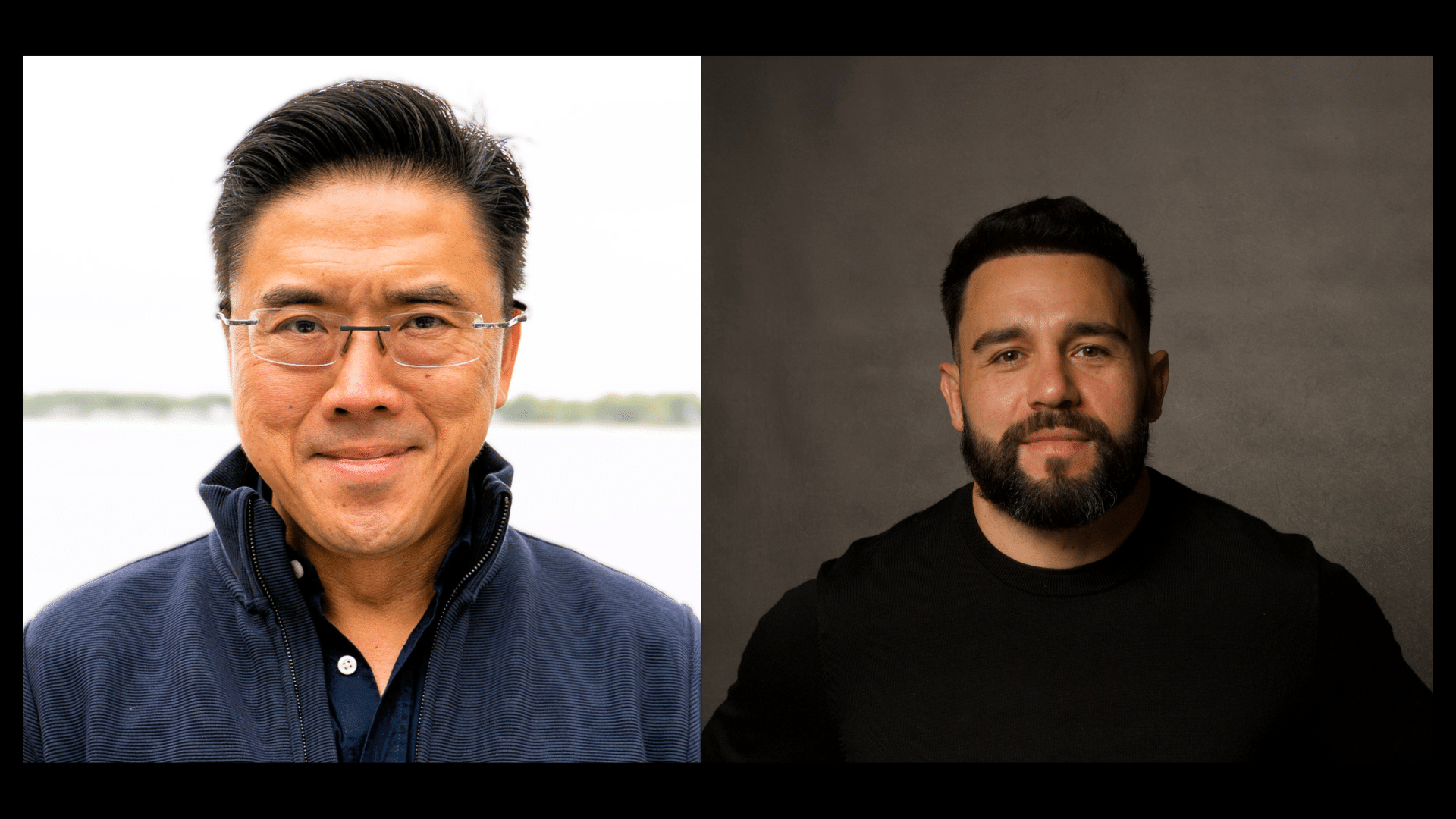
Rick Song, RAD Amplify’s CEO, brings more than 25 years in digital advertising to the role, including commercial leadership at Nielsen, Yahoo, Microsoft, and Rocket Fuel, and a term as Chairman of the Advertising Club of New York from 2021 to 2023. After two years observing RAD’s technology while working with the company through Brand Innovators, he joined as CEO in January 2026. His read on the market he is entering is direct. “The practice, the discipline of creator marketing, is not fully baked or established,” he says. “It’s all over the place.”
That assessment shapes why RAD Amplify operates as a managed service rather than a self-serve tool. The company has been building its platform for approximately five years, with its most current version dating to this year. John King, who joined as SVP of Marketing three months ago after helping grow SparkCognition into Texas’s first AI unicorn, is building out the company’s commercial presence alongside Rick.
Their shared thesis is that creator marketing is accumulating investment faster than the operational standards to manage it.
Audience Intelligence Is the Starting Point
Most creator marketing platforms organize around follower counts, past brand mentions, category tags, and engagement rates. RAD Amplify’s platform works from the other direction.
“There are a lot of technologies where you can search by keyword or followers or brand mentions,” Rick says. “We really start with understanding the communities, the audiences, before matching them to the creators.”
The system ingests active social conversations to identify which micro-communities are generating signal around a brand, category, or vertical. From that map, the RAD Score stack-ranks creators by projected affinity with those communities. Rick argues the approach surfaces creator matches that a conventional database search would miss, and that those matches are more likely to produce commercial outcomes.
“There are plenty of ways to identify creators, and they’re probably experiencing a level of creator fatigue across the industry,” he says. “We’re starting where the conversations are happening around your brands and your passion points, and then matching them to the creators we believe will perform best.”
Predicting Campaign Performance Before Budget Is Committed
RAD Amplify’s core commercial pitch is temporal: campaign performance should be projected before spend is committed, not evaluated after. “The status quo is: assign the budget, test, find out what’s working and what’s not,” John says. “With RAD Amplify, we’re at a place where we can project what we think performance is going to look like.”
Rick adds, “We can look at where historical budget could have performed better, where audiences and creators were missing, and quantify where the status quo missed the mark,” he says.
The company is developing measurement and reporting capabilities to close the loop between projection and outcome, though Rick says those tools are not yet public.

Photo: Rick Song at the Trade Marketing Summit
AI Generates the Recommendation; Humans Review It
Every recommendation RAD Amplify’s system produces is reviewed by a human client success team before it reaches a brand. “We want to make sure every recommendation has a human lens,” Rick says. “There might be nuances the technology missed.”
The platform uses proprietary LLMs to address hallucinations and brand safety, two concerns that have complicated enterprise adoption of AI-powered marketing tools broadly. Rick does not frame this as a compromise. “With all the things coming out from the big AI companies, we probably need more human intervention than ever,” he says.
The managed-service structure positions RAD Amplify as a complement to agencies rather than a replacement. Rick notes that the company frequently works embedded within existing agency relationships, supplying intelligence and activation support to clients already running influencer programs through agency partners.
In a Category of Tools, the Company Is Positioning as an Engine
John contrasts RAD Amplify’s full-cycle ambition with what he describes as a crowded field of point solutions in creator marketing technology. “A tool is a specific instrument used for a very specific purpose,” he says. “An engine moves everything that’s attached to it.”
That framing reflects the company’s intent to cover the full campaign workflow, from audience signal and creator discovery through activation, reporting, and measurement. Rick describes AI and social media together as having removed the linear purchase funnel. “Real-time purchases are happening live every day, in every moment,” he says.
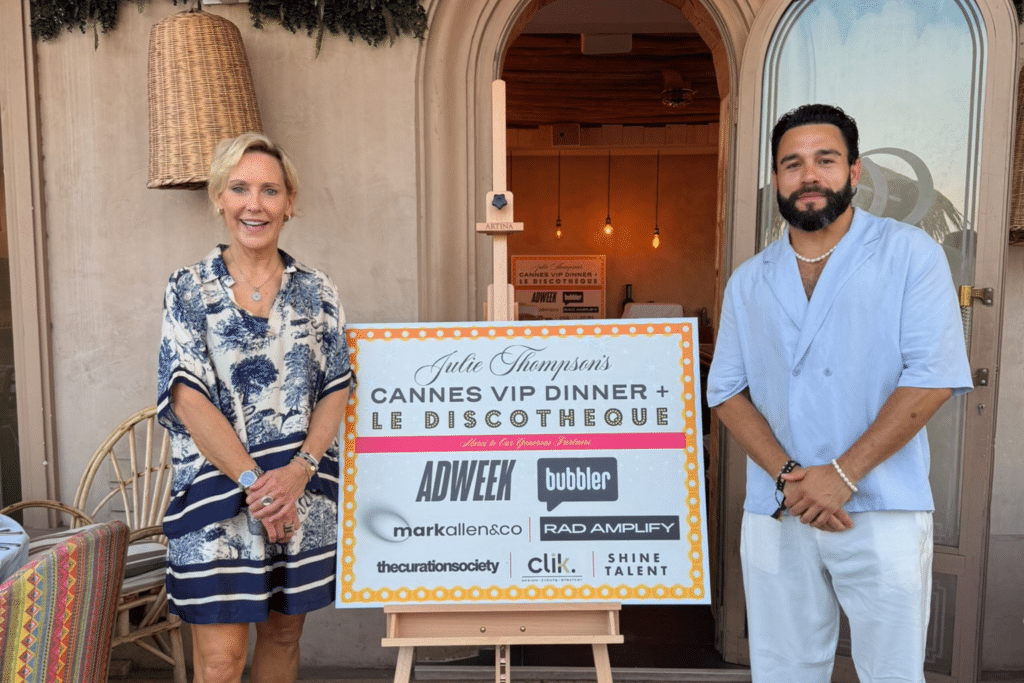
Photo: John King at Julie Thompson’s ADWEEK Dinner in Cannes
Closing the Loop Between Prediction and Proof
RAD Amplify has added four commercial hires in under a year, a pace Rick connects to market momentum rather than a strategic pivot. “We see the momentum in the industry happening,” he says. “We’re just ensuring we’re continuing to build to meet the needs of the marketplace.”
The company’s immediate development focus is completing its measurement infrastructure, the layer that would allow a campaign’s projected performance to be compared against its actual results within a single managed workflow. “We want to be a full-funnel turnkey solutions partner,” Rick says.
John brings the company’s positioning back to its foundational argument. Creator marketing has moved from experimental to a primary budget line, he says, but has done so without the infrastructure that typically accompanies a major media channel. “In a category of tools,” he says, “we’re an engine. That’s what we’re building toward.”
Subscribe to Our Newsletter
Check Out Our Podcast