







Tech
Out2Win Launches AI Infrastructure to Make Athlete-Influencer Marketing Scalable

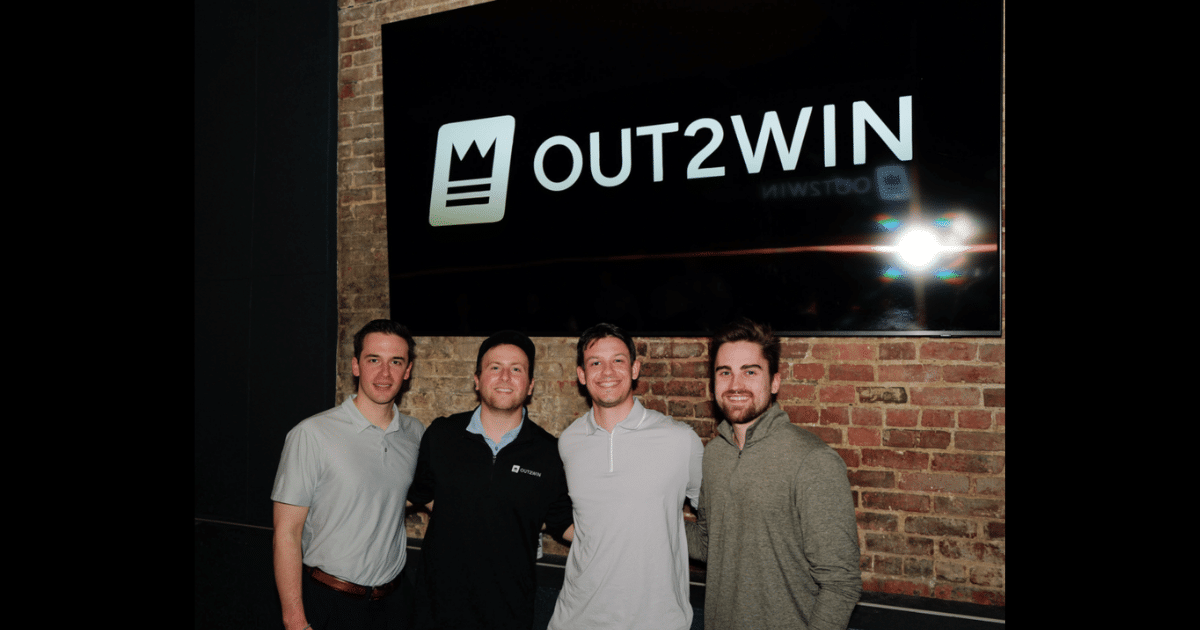
Athlete-Influencer Marketing has become one of advertising’s fastest-expanding categories, but running campaigns at scale has remained a labor-intensive process. Brands activating dozens of athletes at once still manage outreach by hand, negotiate over email, and measure performance by instinct. Jack Adler, founder and CEO of New York-based Out2Win, and his team are launching Autopilot, an AI agent suite designed to run the entire campaign process from talent matching through paid media amplification.
NIL legislation opened college athletics to commercial partnerships in 2021, and among the first to build infrastructure around it was Jack, who launched Out2Win that year after seeing an opportunity to connect brands with college athletes as social creators. The company has since grown into what Jack describes as an “AI-native agency” running campaigns for more than 140 brands, Amazon and Nike among them. The launch of Autopilot represents Out2Win’s third product iteration: AI agent infrastructure that automates the managed service the company offers while keeping its team of athlete marketing specialists embedded at key decision points.
That design reflects a philosophy Jack has arrived at after five years of watching campaigns succeed and fail. “In this era of AI and tech evolution, what’s becoming more important is relationships and hospitality and, really, services,” he says. The observation is counterintuitive for an AI product launch, but it explains why Autopilot is not a self-service tool.
Out2Win began as a platform brands could use independently, added a managed services arm when it became clear outcomes required human involvement, and has now built AI infrastructure to run those managed campaigns at scale. “Everything we’re doing is powered by tech and data from our platform,” Jack says. “But now we’re deploying it through a services model that delivers outcomes versus just a tool to use.”

The Operational Drag That Was Stalling Athlete Campaigns
The problem Autopilot was built to solve is not a shortage of brand interest in athlete marketing. It is the operational load that makes running those campaigns consistently difficult for teams stretched across multiple channels.
“Campaigns can be really tedious,” Jack says. “The operational lift behind it can drag teams down because these marketing teams aren’t just running influencer campaigns; they’re doing a million things.”
The consequence, he says, was notable. “We were seeing brands cutting spend behind influencer campaigns because it wasn’t delivering the results that they were looking for.” Jack attributes that underperformance to two compounding failures: brands were not finding the right athletes for their campaigns, and even when the fit was reasonable, execution was inconsistent.
Measurement added a third layer of uncertainty. Without a system pulling data automatically, brand teams were often left to assess performance informally. “Sometimes, it’s just a vibe of whether it performed well or not,” Jack says. Autopilot addresses this through a live analytics dashboard that tracks CPM over time, individual talent performance, and audience sentiment, with a sync function that updates the data on demand throughout a campaign.
Talent Sourcing Has Been Too Dependent on Who You Already Know
Among the specific breakdowns Jack identifies in how brands currently run campaigns, sourcing ranks first. The default practice is to activate people already in a brand’s network rather than search the broader field of available athletes. “The talent sourcing side, a lot of it is relationship-driven, sometimes in a way that it shouldn’t be,” he says. “It’s like, ‘Who do I know?’ Those are the only people I’m going to choose from.”
Autopilot addresses this by scanning a brand’s website, brief, and existing content against a database Out2Win describes as containing more than 400,000 athletes and sports creators. The system scores each candidate for fit and surfaces a ranked list with an AI-generated rationale for each selection. Brands approve or decline individual athletes before contracts are issued.
Relationship-based outreach will not disappear. When campaigns involve larger talent, Out2Win’s team handles communication and negotiation directly. “There will always be a level of human involvement, especially as you’re working on some of the partnerships with larger talent,” Jack says. The intent is to remove the relationship constraint from sourcing, where data should drive the decision, while preserving it at the stage where it still matters.
What the System Guarantees and What It Does Not
Autopilot introduces a performance guarantee powered by its AI-native optimisation system. When a brand sets a budget and selects an optimization goal, either impressions for awareness or clicks for traffic, the platform generates a forecast that becomes a contractual floor. A $5,000 campaign, for example, carries a guaranteed minimum of 800,000 impressions, with a make-good provision if the campaign underperforms.
Jack is explicit about the limits of that guarantee. It covers delivery, not conversion. “We do not guarantee sales, because too much of that sits outside our control,” he says. Paid media amplification runs behind every campaign, which gives Out2Win more leverage over impressions and clicks than an organic-only model would allow. But category demand, pricing, and the brand’s path to purchase ultimately determine whether traffic converts, and those variables belong to the brand.
The guarantee reflects confidence built over a specific track record. “The reason that we’re guaranteeing these results is: one, we do have a paid media optimization component behind it,” Jack says. “But two, we’ve been running these campaigns to the point where we’ve generated the confidence in what type of results it can generate.”
Five Athletes, the Brand’s Best-Selling Week on Amazon
The early result Jack highlights in most detail is a campaign for Accelerator Active Energy, a beverage brand that came to Out2Win looking to build excitement among younger consumers through athlete content. The campaign ran across TikTok and Instagram using five college athletes and produced what Out2Win reports as the brand’s best-selling week on Amazon in 2026, with a peak asset click-through rate of 15.6%.
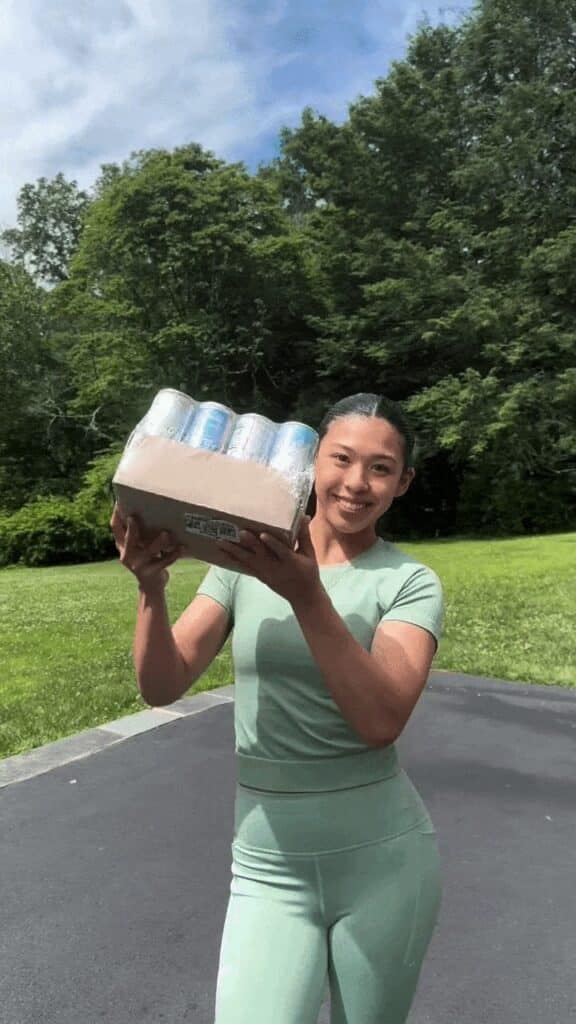
Two elements drove that outcome, according to Jack. Athlete content performs as ad creative because it appears native to the feed rather than intrusive. “It looks like the rest of the feed instead of an interruption, and the person in it has real credibility with that audience,” he says. The second element was the campaign’s traffic optimization setting, which directed clicks toward Accelerator’s Amazon storefront rather than distributing impressions broadly, ensuring reach led somewhere purchases could actually happen.
Jack describes the mechanism as repeatable and the specific result as contingent on what the brand brought to the campaign. “Give us that setup again, and I would expect a similar outcome,” he says, noting that Accelerator had a strong product in a category with real demand and a clean path to purchase.
Athlete Marketing Is Bigger Than High-Production Campaigns With Big Names
One argument Jack returns to when describing Autopilot’s potential concerns a widely held assumption about what athlete marketing requires. Many brand marketers approach the channel expecting high production costs and top-tier talent as the minimum viable entry point.
“Brands think that to work with athletes it has to be high production content that costs a lot and only is with the top tier talent,” he says.
Scaled campaigns across college athletes and sports creators can drive returns through what Jack describes as a “halo effect” generated across hundreds of creators, particularly when amplified with paid media. He notes that Autopilot was built to make campaigns of that size operationally tractable. “Working with hundreds of influencers doesn’t have to require levels and levels of more execution,” he says.
That shift also changes which metrics matter most in talent selection. Jack pushes back on the view that follower count has become obsolete. “I don’t agree that follower count is no longer a significant metric,” he says, “but I do agree that it’s no longer the only metric that matters.” Content quality, which he acknowledges is difficult to quantify, is increasingly a factor in how Autopilot scores and ranks talent recommendations.
Building a Channel Brands Can Run Consistently
The longer-term ambition Jack articulates for Autopilot is less about individual campaign performance and more about making athlete marketing behave like a repeatable channel. “We’re building a system that just allows for influencer campaigns to not only be more repeatable but more scalable,” he says.
The AI infrastructure is focused on athlete marketing for now, because that is where Out2Win has five years of performance data and established relationships. The same framework applies across Influencer Marketing broadly, and Jack does not rule out eventually extending it.
The most immediate open question is whether Autopilot eventually becomes available as a fully self-service product. Jack says it can, but the timing depends on what early managed service results show. For now, Out2Win keeps its team embedded throughout, and will make that product decision when the data supports it rather than on a fixed timeline.
For brand marketers watching the athlete channel, Jack’s advice is to pay closer attention to the UGC opportunity that scaled micro-influencer campaigns represent. “We’ve shown through campaigns like Amazon and Accelerator Energy that we can drive really efficient results with creators involved at scale,” he says.
Subscribe to Our Newsletter
Check Out Our Podcast