






Tech
SelfMade’s Will Sartorius on Replacing the Creative Brief With a Scraper

Will Sartorius is CEO of SelfMade, a New York-based performance marketing agency, and a driving force behind Skipper, an AI-powered creative intelligence platform the company is currently rolling out in beta. His thesis is straightforward: the data brands need to make better creative decisions already exists, sitting in Amazon reviews, Reddit threads, Facebook comments, and product testimonials across the web. The problem is that almost no one has built a systematic way to use it.
“I raised my hand at a conference and asked, ‘If email is entirely data-driven, why are we still brainstorming paid creative?’” Will says. “And everyone sort of said, ‘Well, it’s just harder.’ That’s when the light bulb went off.”
Will’s path to building creative intelligence software runs through Deutsche Bank, a fitness startup in a Snap incubator program, a direct-to-consumer shoe brand, and an improbable agency turnaround. He joined SelfMade in 2021 as an integrated marketing associate, rose through the ranks, and in early 2023 found himself holding the company together after a failed acquisition left it burning cash and losing clients.
SelfMade was founded in 2015 by Brian Schechter as an Instagram posting app, built on the assumption that commerce would primarily migrate to the platform. The company raised roughly $19 million but arrived early to a market that wasn’t ready. It pivoted to conventional agency services, attempted an acquisition that unraveled, and by the time Will took over as CEO, the company’s roughly $3 million in revenue had largely evaporated.
The timing coincided with ChatGPT’s public release. Will’s team had been manually tagging customer reviews with personas, angles, and emotional triggers to inform creative strategy. When he realized AI could systematize that process, the agency’s direction shifted. “Once we built a prompting system around it, those insights started selling like hotcakes,” he says.
When the Algorithm Created a Volume Problem
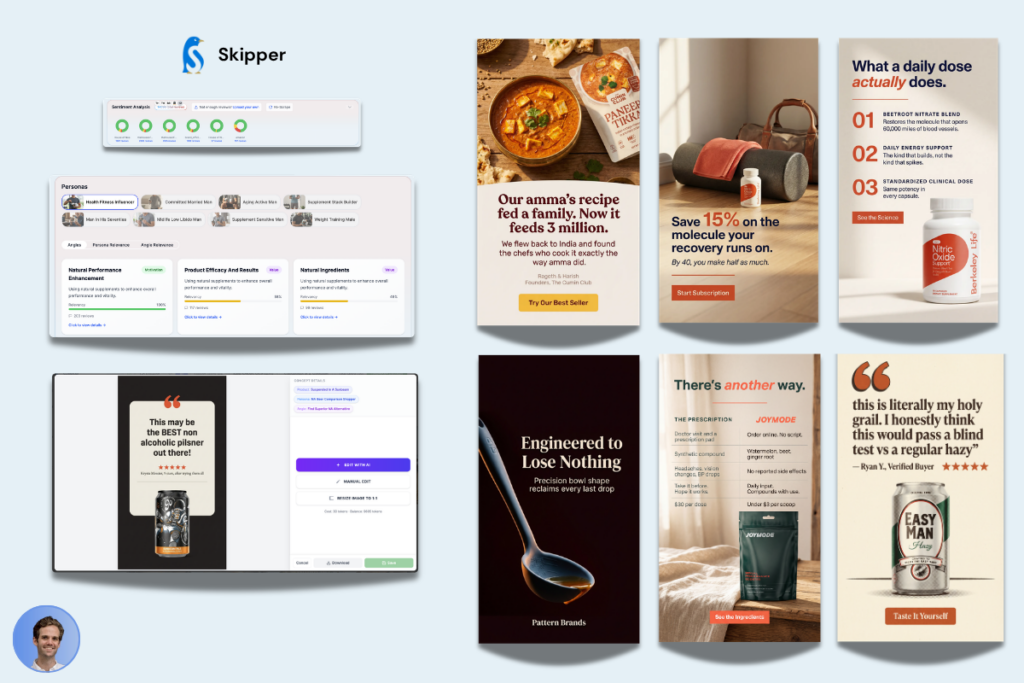
The immediate catalyst for Skipper was Meta’s Andromeda system, which restructured how the platform distributes advertising inventory. Under the new system, each creative is treated as a unique unit, rewarding variety and penalizing repetition. Brands that had been cycling through a handful of ad formats suddenly needed 10 to 20 visually distinct creatives per campaign, consistently.
“We needed a lot more volume, and I didn’t think the solution was just hiring more people,” Will says. “We had all this great social listening data. The question was how to translate it into briefs, and then from briefs into ads, at scale.”
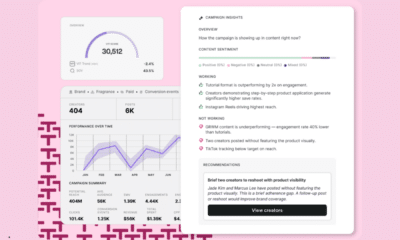
The answer was Skipper. The platform runs approximately 25 scrapers across sources such as Reddit, Amazon, TikTok, X, Facebook, and brand websites. It pulls customer reviews, filters noise, and tags each piece of content with a persona, an angle, and an emotional driver. It then groups those signals into coherent audience segments, extracts brand assets including colors, fonts, and tone, and generates on-brand static ads. Users can edit outputs directly inside the platform using canvas-style tools or export briefs and prompts to work within their own workflows.
SelfMade positions Skipper as the self-service tier of a broader offering that spans AI-only creative, AI creative combined with human UGC (user-generated content), and full-service media buying.
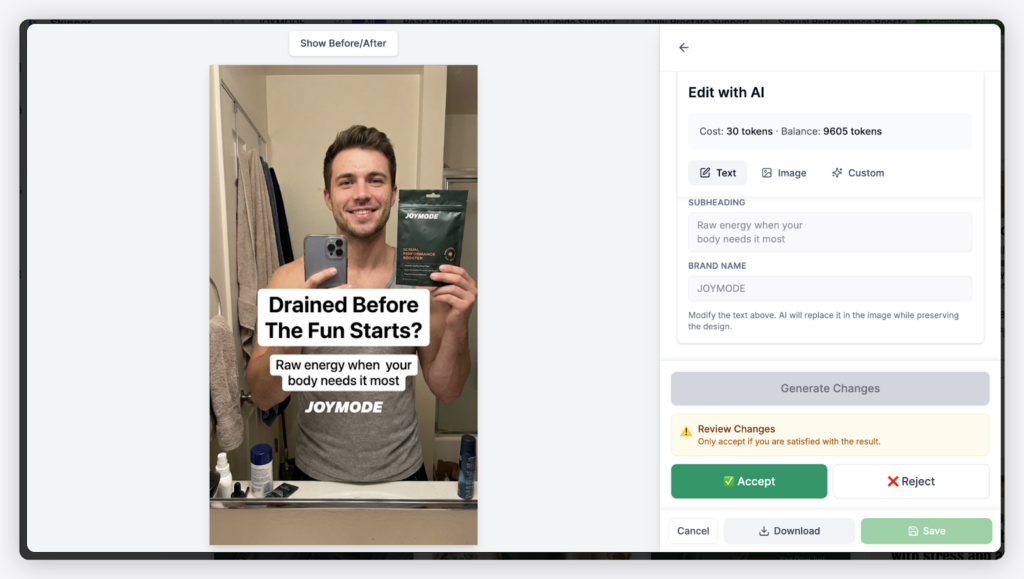
Image: Ad Editor
The Research Layer No One Is Talking About
Will’s competitive argument centers not on ad generation itself but on the layer beneath it. Any team with access to image generation models can produce static ads. The question is whether the inputs are worth anything.
“Sure, you can generate ads in any model you want,” he says. “But if you don’t know who your buyers are, what they care about, and which ad type fits them, it’s just going to be a lot of guess-and-check.”
The persona-angle-emotion taxonomy Skipper builds from social listening creates what Will calls swim lanes. Strategists or AI systems aren’t starting from a blank page; they’re working within a defined brief derived from what real customers have actually said.
“Human beings work better under constraints,” Will says. “If I say, ‘Give me ten briefs,’ I’m going to get mediocre work. If I say, ‘Write a brief for this persona, this angle, this emotion, for this product,’ the output is dramatically better.”
The platform also tracks how personas shift over time, using recent scraping data to prioritize which audience segments to target now. A competitive intelligence layer pulls top-performing ads from Meta’s ad library, ranks them by estimated impressions, and feeds recommendations back into the creative system.
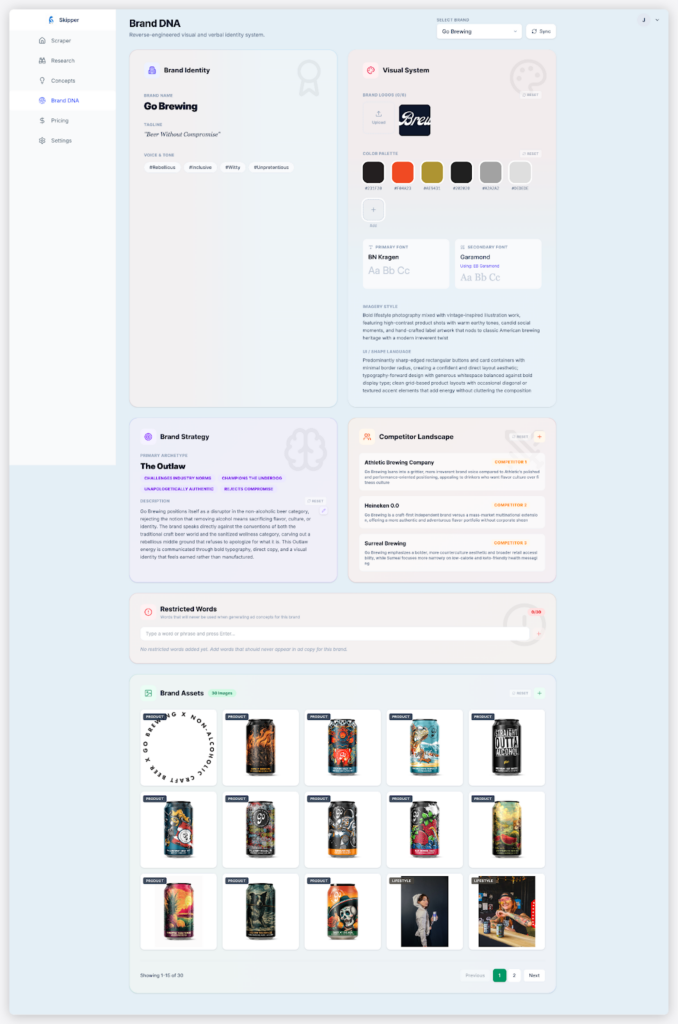
Image: Brand DNA
What People Get Wrong About AI and Creative Work
Will is direct about where AI fails in creative workflows and where those failures originate. The problem he encounters most often is teams treating AI as a shortcut rather than a system.
“Garbage in, garbage out,” he says. “If you aren’t building a step-by-step process, you’re just guessing every time. And the one consistent thing about AI is that it’s inconsistent.”
At SelfMade, his editors initially feared that AI-generated statics would eliminate their roles. Will’s counterargument is that the tools free those editors to do work that actually requires judgment, while repetitive execution moves to AI. He points to a real dynamic he sees across agencies: pressure from leadership to “use AI” produces a flood of low-quality AI output, rather than genuinely better work.
Will frames the current moment as a narrow window. “We have about a year, maybe two, for us to get really good at these platforms before they’ll just be able to do all of this themselves,” he says. “Capitalize on what you can right now.”
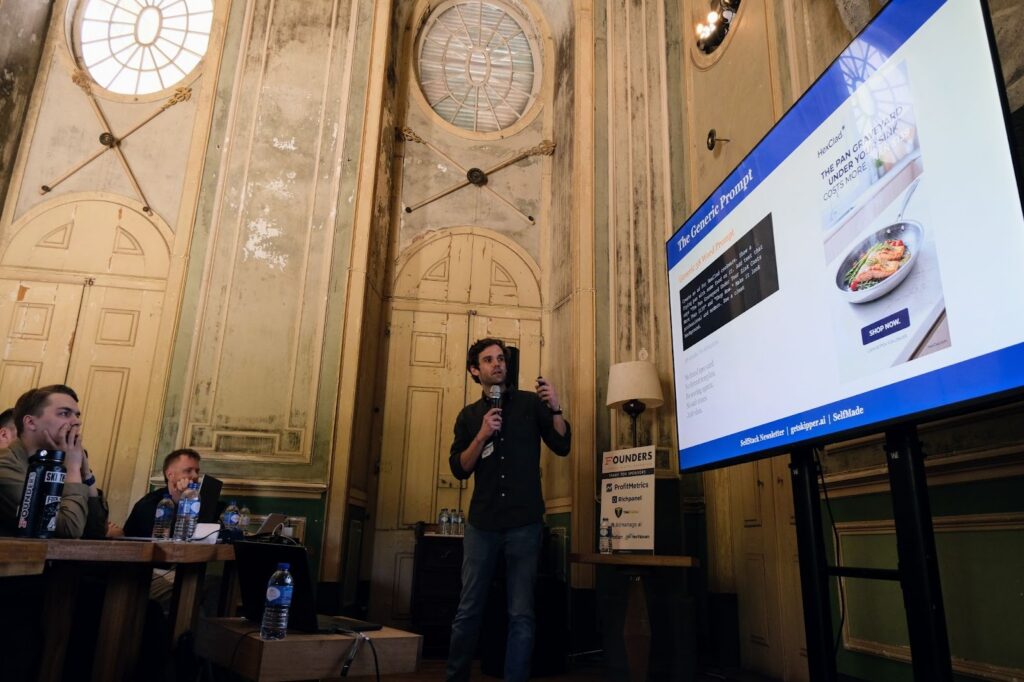
The 80/20 Rule for the AI Creative Era
Will’s practical framework for surviving what he sees as a wave of AI-generated creative saturation involves splitting output between automated volume and deliberate human craft. He recommends that roughly 80% of a brand’s creative output come from AI-generated statics and animations designed to meet campaign volume requirements, with the remaining 20% reserved for longer-form, human-led work.
“There is a huge space right now to do long-form human-led content,” he says. “If you do that well, you will cut through a lot of noise. Find the holes where AI cannot solve for, and you will win.”
That human-led 20%, in Will’s model, means commissioning thoughtful scripts and working with creators to produce content that runs two to four minutes, formats where generative AI still falls short. The AI volume buys the creative team cover with leadership while preserving space to do strategic work.
“You can tell your CEO we are generating AI statics, we are generating content,” he says. “So that gets them off your back, and then you can actually do the thoughtful work you really want to be doing.”
What Skipper Becomes Next
SelfMade is currently testing Skipper with its own agency clients before opening broader access, a design that lets the team refine outputs under real campaign conditions.
Planned additions include video animations using Google’s Veo models, direct Meta integration to close the loop between social listening and ad delivery, and UGC script generation derived from the persona and angle data Skipper already produces. An API is also in development, allowing other platforms to integrate Skipper’s research layer directly into their own tools.
The longer-term question Will is working toward is how far the social listening foundation can extend beyond paid creative, into organic content strategy, product messaging, and audience intelligence more broadly.
For brands still running bi-weekly brainstorming sessions, the implication is direct. The customer data is already out there. Will’s argument is that the question is no longer whether to use it, but how systematically.
“We have all of this great research that we’ve built,” he says. “The sky is really the limit in terms of what we do with that.”
Subscribe to Our Newsletter
Check Out Our Podcast