







Tech
InfluenConnect™ Wants to Be the Skyscanner of Global Influencer Marketing

When a global brand wants to book an influencer in Japan or Singapore, it often doesn’t call them directly. It calls an intermediary, who calls another, who calls another. By the time a creator is contracted, three or four brokers have taken their cut, and the brand has little idea whether it paid a fair price.
Carol Chan, founder of InfluenConnect™, calls this the flight-booking problem. Before online booking platforms, travelers called agents who offered two or three options, no price context, and no view of alternatives. She sees the same structure in cross-border Influencer Marketing today.
“You have no idea how many other choices are out there and how much this price compares to the others,” she says.
InfluenConnect™, launched in 2024, is Carol’s attempt to bring that transparency to a market she knows from both sides. The London-based SaaS platform aggregates more than 120,000 influencers across 23 social media platforms and 46 countries, connecting Western brands with creator ecosystems in Asia that most influencer tools don’t reach.
Carol brings a decade of cross-border agency experience to the venture: she previously founded Comms8, and before that spent years in regional and international media strategy at PHD, ZenithOptimedia, and MediaCom.
“I wanted to make it easier for brands to find creators around the world in a more transparent, brand-safe way,” Carol says.
The Four-Broker Problem
The fragmentation Carol describes is most severe in cross-border campaigns. According to her, a brand booking a creator in another country can pass through as many as four intermediaries before reaching the talent, with each layer adding cost and opacity.
“You can imagine how the money goes to all these different intermediaries rather than to the creators,” she says. “Something is not quite right here.”
That friction has practical consequences. Campaigns that require creators across multiple Asian and Western markets become logistically unwieldy, and brands often have no reliable benchmark for assessing whether a creator’s asking price is competitive.
Carol’s answer is a unified workflow spanning discovery, outreach, content approval, and live performance tracking. The platform’s AI pricing intelligence draws on historical booking and market data to signal whether a creator’s self-set price is in range. Platform fees are disclosed upfront and visible to both sides. Creators set their own prices; brands see the full breakdown.
“I made a good margin from booking in the past, but something needs to change,” Carol says. “I want to provide infrastructure that is more transparent for both sides to work together.”
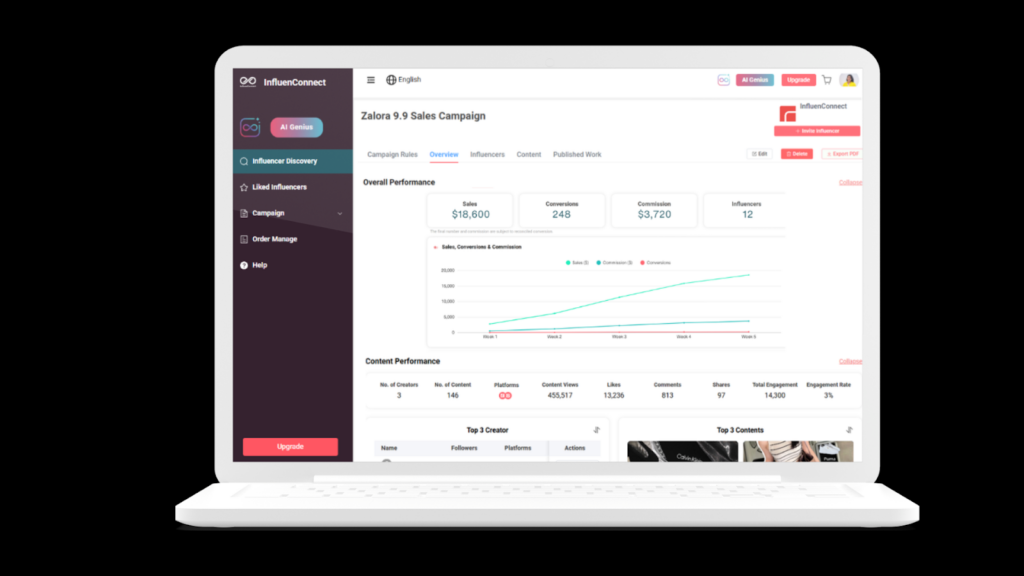
Image: InfluenConnect™ Campaign Performance Dashboard
What Western Brands Get Wrong About Asian Platforms
Most influencer tools cover Instagram, TikTok, YouTube, and perhaps Twitch or Pinterest. According to Carol, this reaches Western internet users but misses roughly half the world.
Asia’s dominant platforms, including WeChat, Douyin, Red Note, Bilibili, LINE, and KakaoTalk, operate on fundamentally different mechanics. Treating WeChat like Instagram is one of the most common mistakes Carol encounters. “WeChat is a very closed platform,” she explains. “Your content will only be visible to followers. People can’t see it unless they really search deeper.”
Platform strategy differs at the infrastructure level, too. As Carol explains, many Asian platforms function as search engines within the social layer, meaning keyword density and SEO logic matter as much as content quality. Driving traffic to external URLs, standard on Western platforms, often doesn’t work in closed systems that keep users inside.
“It’s not about translating content into the local language,” she says. “It’s about how you use that as search content.”
There is also a dimension most Western marketers miss entirely: the private community layer. Asian creators frequently maintain dozens of messaging groups alongside their public profiles, giving them concentrated influence within niche communities that follower counts don’t capture. “Each creator now easily has maybe 20 or 50 different groups,” Carol says. “They have very strong power in influencing those localized VIP community groups.”
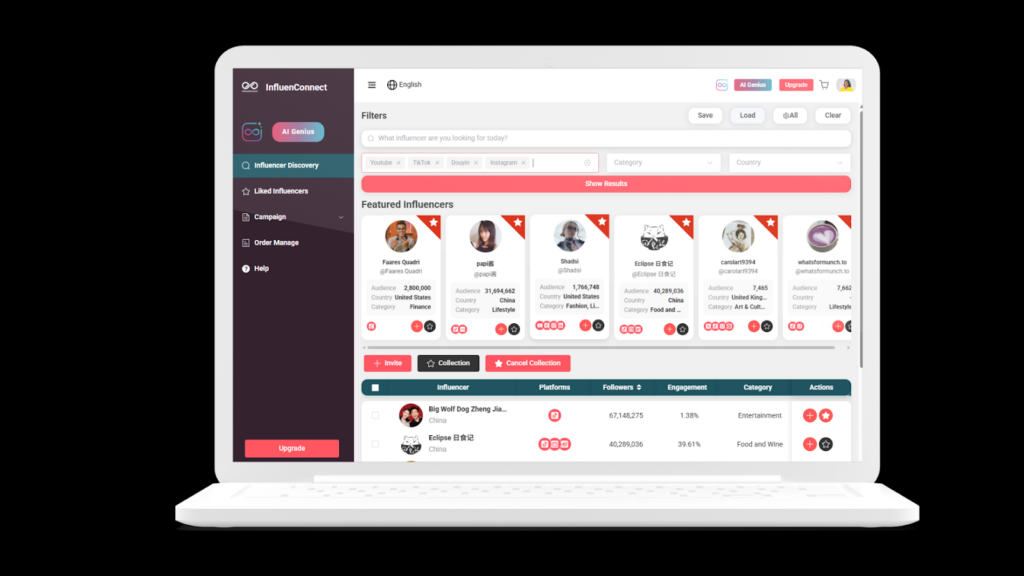
Image: InfluenConnect™ Creator Discovery
How the Platform Works
InfluenConnect™ is built as an end-to-end campaign tool, not just a discovery database. Brands search by platform, content category, country, and creator type. They create campaign briefs with budget parameters and invite creators to apply or decline within 24 hours, a design Carol says reduces the waiting dynamic that wastes time on both sides.
Content workflows are managed inside the platform: creators upload posts for brand review, brands approve or request revisions, and performance data streams in once content is live. For e-commerce integrations, sales attribution from individual creators is tracked within the campaign dashboard in real time.
The campaigns Carol cites span different sectors. For “Genshin Impact’s” UK and France activation, AI-powered search and audience analysis identified local cosplay and gaming creators, delivering 3.6 million-plus impressions while cutting creator search time by 70%. For the game’s UK anniversary campaign, connecting offline activations with digital amplification generated 73.2 million impressions and 19% growth in app downloads.
For UNDP’s “Weather Kids” climate campaign, InfluenConnect™ reached sustainability-focused creators across Asia, many of whom participated pro bono because the platform allowed them to signal that preference. The campaign generated 6.72 million impressions through outreach to 120 organizations and influencers, and was shortlisted at Cannes Lions.

Image: InfluenConnect™ Creator Profile & Price Intelligence
The Case Against Impression Buying
The data from those campaigns points to a broader argument Carol makes about how brands measure Influencer Marketing. “Brands are no longer satisfied with impressions alone,” she says. “They increasingly want to know which creators are driving downloads, sales, traffic, or sign-up behavior.”
That shift exposes a persistent misconception: that larger creators automatically deliver better results. “Better matching often beats broader casting,” Carol says.
The Yakult (Japanese probiotic milk brand) campaign illustrates the logic. Filtering creators by ethnicity, location, and cultural relevance to moments like Lunar New Year and Mid-Autumn Festival produced reach from creators who were contextually right for the brief, not just visible in the right markets. For Zalora (an online fashion retailer), a campaign built around 80-plus key opinion consumers, using short-form TikTok and Instagram content timed to sales peaks, drove e-commerce conversion rather than awareness.
“Many of them actually still stay on to be brand ambassadors” after the campaign ended, Carol notes.
The Case for Pricing Transparency
Carol reveals that her push for pricing transparency has drawn skepticism within the industry. “Some people say I’m mad, that I’m closing my own profit,” she says. “But I think this is what the market needs.”
Her position is that transparency benefits the whole ecosystem. Creators who know what platforms charge and what market rates look like can set prices that reflect their actual value. Brands that see comparable data stop overpaying for opaque intermediary layers and start investing in high-performing mid-tier creators they would otherwise overlook.
“The money a brand spends on creators will go to creators,” Carol says. “Creators will get much better rewards than now.”
InfluenConnect™’s longer-term ambition is to function as a pricing index for global Influencer Marketing, using aggregated booking data to establish benchmarks across markets. The goal, Carol says, is infrastructure that the Creator Economy currently lacks: structured, traceable, and readable by both humans and machines.
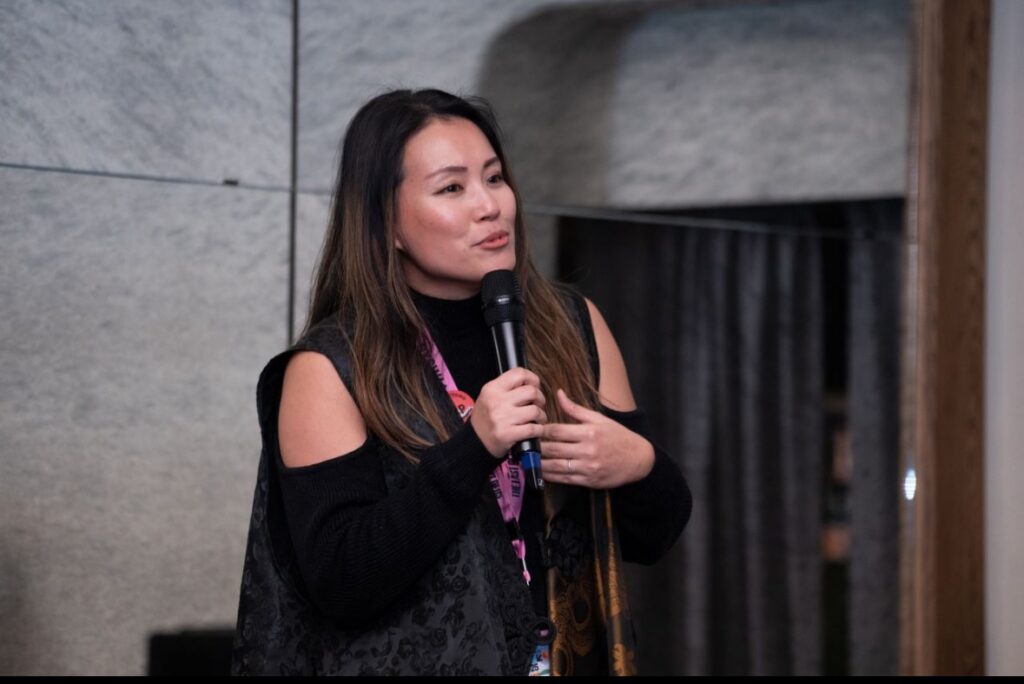
Photo: Carol Chan speaking at SXSW London
The Infrastructure Layer
Carol’s thesis, that the Creator Economy’s cross-border layer is still running on pre-internet logistics, positions InfluenConnect™ less as an Influencer Marketing tool and more as a structural intervention.
As Influencer Marketing’s share of global advertising spend continues to grow, the pressure to account for where the money actually goes will intensify. Carol argues that the platforms best positioned for that shift will be those that can show brands not just who the creators are, but what they cost, why they were chosen, and what they delivered.
“We want to be the driving force to make the Creator Economy much more efficient, transparent, and fair,” she says.
Subscribe to Our Newsletter
Check Out Our Podcast