






Influencer
How ‘The Stella Show’ Is Adapting to the Tween Gap After Growing to 7 Million YouTube Subscribers

This summer, Stella Wallace walked onto a stage at VidCon and explained to a room of industry professionals what tweens actually want to watch. She is 11 years old.
The panel was organized through Zigazoo and featured Stella alongside her friend Britain. It was the first time in five years that the Wallace (W) family had attended the conference as invited guests rather than paying attendees. Stella’s mother, Erika Wallace, watched from the crowd. Afterward, the two went back to making YouTube videos, once a week, the way they always have.
Erika and her husband, James, have been building “The Stella Show” since Stella was four years old. What began as a joint production with Stella’s older brother, Jameson, who eventually stepped back to let it become Stella’s channel, has grown into seven years and more than seven million subscribers. Now, the channel is at a turning point it did not choose: the audience that watched Stella’s childhood play is growing up, and the business has to follow.
“I hope that when I look at Stella, I think about how I grew up watching ‘Full House’ and the Olsen twins,” Erika says. “I’m hoping that Stella’s audience will do the same. They’ll grow up with her when she was little and then go through her life stages.” The reference points she cites are the Olsen twins and Hilary Duff, creators who retained audience loyalty long past childhood. Getting there requires navigating a stretch of business territory that few family channels have successfully crossed.
The Tween Gap Nobody Warned Them About
“The Stella Show” built its loyal base on content for young children. As Stella has aged into 11, the channel has shifted toward what Erika calls the “tween space,” adding a recurring series called “Teen Talk” featuring four of Stella’s closest friends. But the commercial infrastructure has not kept pace.
The brand deal pipeline reflects the problem directly. Stella has aged out of the toy category. She is not yet old enough for skincare or beauty brands. The space sits between two well-established commercial lanes, with few brands positioned to serve it. “We’re in this bit of a dry land that we’re just in for the tween space,” Erika says. There are also a few tween-focused creators on YouTube to model what that category might look like.
The audience has partially dispersed in the meantime. Viewers who watched Stella as young children migrated to older creators as they aged. Erika has found an unexpected recovery route through TikTok, where former fans are rediscovering the channel through short-form video. The comments follow a consistent pattern: a viewer who grew up with Stella discovers her again, older and still posting. Erika uses the comment sections to pull them back. “We still make content. We haven’t gone anywhere,” she says. “Come back and check us out.”
YouTube Is the Business, Instagram Is the Experiment
“The Stella Show” operates on a division of labor. James writes, films, and edits the YouTube channel and treats it as his primary creative domain. Erika manages Instagram and TikTok for both “The Stella Show” and the “Teen Talk” series. The two halves operate under fundamentally different standards.
YouTube is the primary revenue source and is treated accordingly. Because the channel is classified as “Made for Kids,” certain tools are unavailable, including clickable affiliate links in video descriptions and audience comments. These constraints come with the territory of children’s content compliance, and the family does not work around them.
“We really try to stay within those parameters because we don’t want to get kicked off,” Erika says. “It would be very scary because this is our main bread and butter.” The family has modest additional income through pocket.watch, which distributes “Stella Show” content to the HappyKids app and the “Ryan and Friends” platform, but YouTube ad revenue remains the primary foundation.
Instagram and TikTok serve different functions. Erika posts more frequently and with less curation, accepting that not everything will land. James rarely permits content from those platforms to migrate to YouTube. The division is both editorial and operational: YouTube is where the livelihood is, and the other platforms are where Erika can experiment without consequence.

What Brands Consistently Get Wrong
One past brand deal stands out in the Wallaces’ memory for the wrong reasons. A major brand required them to blur the wallpaper in their home and flag every piece of artwork for rights clearance. The video performed poorly. Erika’s diagnosis is direct: “You shouldn’t hire a content creator, a family to make content in their home, if you want it to just look like a blank space studio.”
The mechanism, she says, is equally clear: “The minute you make it like an ad, YouTube knows, and it gets very few views.”
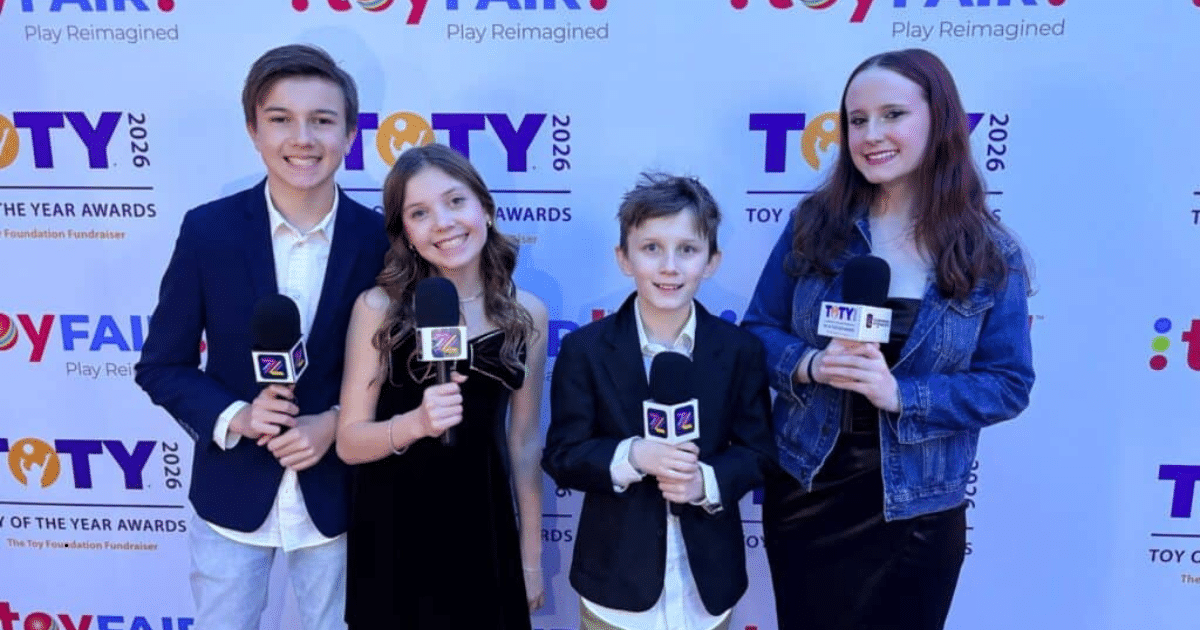
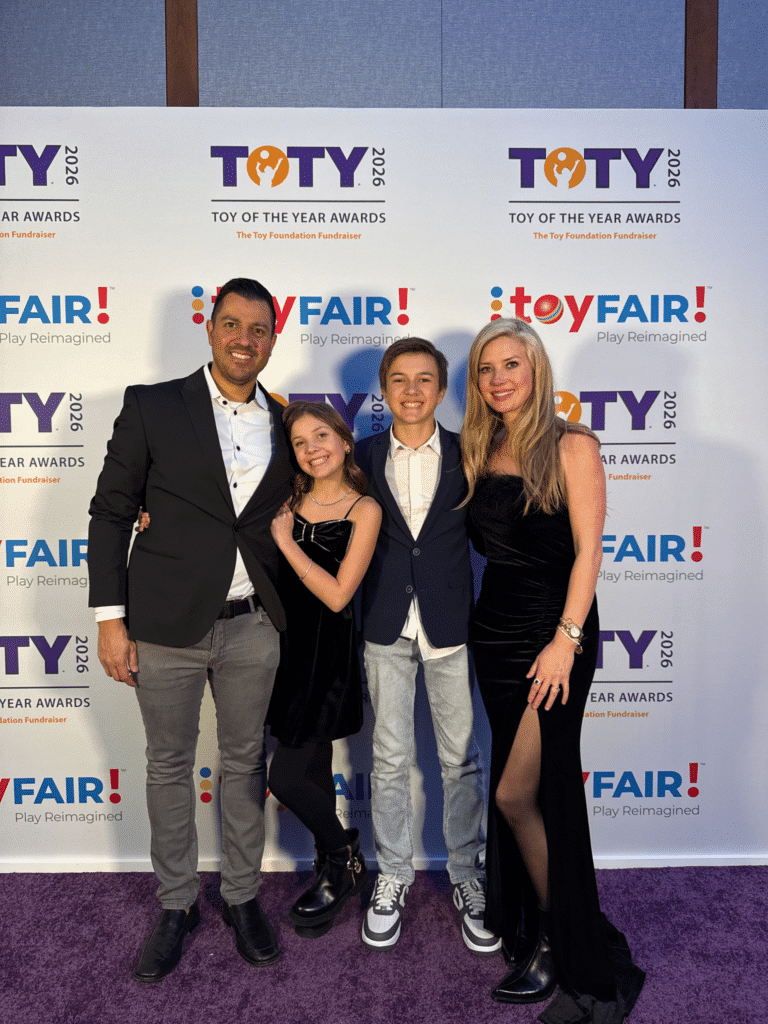
The family’s strongest current brand relationship is with Zigazoo. Through that partnership, Stella was named an ambassador for Urban Air, attended Toy Fair in New York for two consecutive years, and received the VidCon invitation that put her on a stage this summer. The relationship functions as a collaboration rather than a transaction, which Erika cites as the distinction.
Stella also holds the final say over whether the family takes any deal. For a recent New York trip built around a toy product, she agreed to participate on one condition: she could bring a friend.
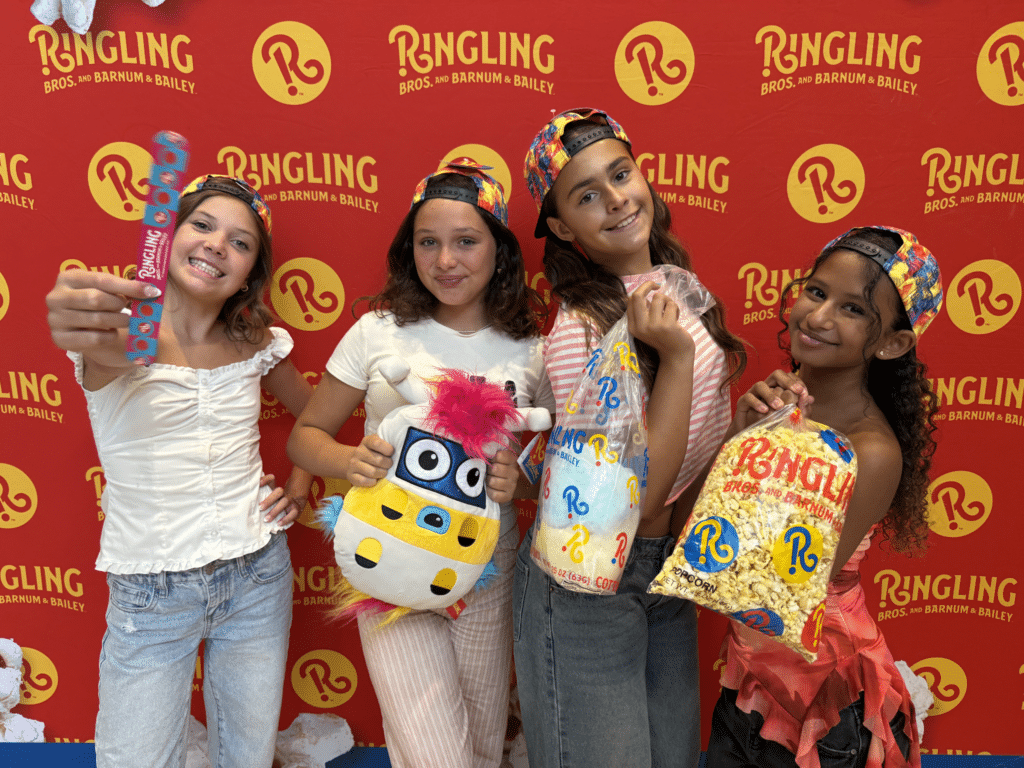
The family also pursues non-paid partnerships when the experience justifies it. An upcoming Ringling Bros. and Barnum & Bailey circus collaboration will bring Stella and the full “Teen Talk” group to a performance at no charge. “I love a good experience,” Erika says. “We do lots of things where we’re not making anything monetarily, but we’re getting a cool experience out of it.”
A Platform Built Around a Boundary
Erika manages every aspect of Stella’s social media presence, and she intends to keep it that way until Stella is an adult. “If I can make her not be on there till 18, that would be my biggest dream,” she says. “Because social media is hard.”
Comments are disabled by default on the “Made for Kids” YouTube channel. On Instagram and TikTok, which Erika controls entirely, the exposure is filtered before it reaches Stella.
The family films once a week, leaving the rest of Stella’s schedule for school, friends, and ordinary childhood. School life is kept off-camera entirely: the family never films at school, avoids references to it in content, and conceals Stella’s school uniform in photos to prevent identification of where she attends. Stella is returning to traditional school this fall for middle school, after a year of homeschooling.
The homeschool year produced something Erika considers more lasting than any brand deal. As part of an entrepreneurship course she designed herself, Stella built a candle business from scratch. The premise came from a simple observation. “We drink a lot of soda in this house,” Stella says. “Instead of wasting all the cans, we could use them for something.”
The result is soda-can candles in three sizes, color-matched to the cans, planned for a farmer’s market launch alongside a fan meet-and-greet. A swimwear line is also on Stella’s horizon, the product of an actual dream she had. Erika, who studied fashion design and worked in the swimwear industry before YouTube, is prepared to support whatever direction Stella chooses.
What Tweens Actually Want
“The Stella Show’s” next chapter keeps returning to the same question the channel has always been asking: what does Stella want, and how does the platform serve her as the answer keeps changing?
At VidCon this summer, Stella offered a version of that answer from a stage. “I spoke about what tweens actually want,” she says. The audience was full of adults trying to figure out the same thing.
Her role model for what comes next is Salish Matter, Jordan Matter’s teenage daughter, who built a large following as a child and carried it into adolescence. “I kind of want to be a little bit in the path of that,” Stella says. “Teen Talk” is part of that path, a format Erika describes as the junior version of “Glow House,” the teen creator collective.
For Stella, the goal is simpler than any industry framework: “I’m just gonna keep going.”